

The energy superpower in focus: China is ready to drive the global energy agenda


A manufacturing hub home to 1.4 billion people, China’s approach to securing, producing, consuming, and distributing energy has implications for every territory. In a world where energy systems are evolving to meet rising demand while geopolitical uncertainty influences traditional production centres, what China does matters more than ever for decades to come.
 As governments and industries prioritise energy resilience amid competing pressures for resources and seek to develop, finance, and deploy next-generation energy systems … China stands as a centre of progress.
Conflict in the Middle East has prompted some nations, including China, to re-examine where they secure reliable, affordable energy and how countries build robust systems for a future in which economic advancement drives demand growth and decarbonisation reshapes the way energy is produced, traded and deployed.
As governments and industries prioritise energy resilience amid competing pressures for resources and seek to develop, finance, and deploy next-generation energy systems that are secure, flexible, and capable of supporting long-term growth, China stands as a centre of progress.
Energy security
Energy supply security has become a critical issue in 2026 as the Israel-US conflict with Iran impacts global markets.
Recent conflicts have highlighted the vulnerability of key supply routes on which numerous Asian countries, including China, rely for power generation and economic development. Resilient supply chains will feature among the primary subjects explored in high-level strategic conference sessions and leadership roundtables across the three days, as well as in a world-class exhibition showcasing the latest technologies and scalable solutions across the energy value chain.
Sector focus
Beijing Energy Congress 2027, taking place at the China National Convention Center from 13-15 January 2027, will provide a platform where global energy leaders, policymakers, investors, and technology innovators converge to collaborate, gain actionable insights, and access real-world solutions essential for shaping future energy systems. It will highlight eight key sectors as China’s 15th Five-Year Plan (2026–2030) shapes the nation’s role in the next stage of the global energy transition, and will take place in an era of urgent change, offering compelling insight, enabling crucial dialogue, and hosting essential solution providers.
As the world tackles existing and evolving energy challenges, keeping cities and data centres powered requires innovative thinking and smart solutions.
The sectors — oil, natural gas and LNG, hydrogen, renewables and low-carbon solutions, energy manufacturing, nuclear energy, electrification, AI, digitalisation and technology, and shipping and logistics — will drive discussion as industry leaders assess how the policy direction of the Five-Year Plan will shape energy markets, investment priorities, and international partnerships.
Influential minds
Attendees will engage with exhibitors and industry visitors among the industry’s most innovative and effective minds across every value chain segment. As the world tackles existing and evolving energy challenges, keeping cities and data centres powered requires innovative thinking and smart solutions.
China’s plan lists embedding energy security into the nation’s overall national security framework.
Participants will connect with energy leaders, technical experts, policymakers, project developers, entrepreneurs, investors, financiers, traders, and offtakers.
Strategic conference
The Beijing Energy Congress will provide a vital forum for China and the global community to shape energy policy, innovation, and long-term growth. The conference will bring together CEOs, ministers, policy leaders, financiers, and technology innovators to address key challenges and opportunities in hydrocarbons, LNG, hydrogen, renewables, electrification, low-carbon solutions and more.
Discussions will examine the strategic forces shaping the future of energy in China, including scaling clean energy, ensuring the reliable role of hydrocarbons in system stability, and deepening international cooperation.
Participants will focus on policy, capital, technology, and global partnerships, addressing key issues such as diversifying oil and gas supply, expanding new energy sources while maintaining reliability, developing bankable projects, enhancing cross-border trade and investment, and aligning global and Chinese market expectations.
Spotlight on China’s energy landscape
The four-year strategy, which ran from 2021 to 2025, outlined an overall objective to enhance new energy absorption and storage capabilities. This included:
- Accelerating development of next-generation information tech, biotechnology, new energy and materials, high-end equipment, new energy vehicles, green environmental protection, aerospace, marine equipment, and other industries.
- Driving down wind and photovoltaic power generation costs, and establishing a complete hydrogen energy value chain.
- Highlighting construction of large wind and photovoltaic power bases, and piloting photovoltaic and thermal power generation.
- Prioritising construction of energy security capabilities to ensure stable supply.
20MW+
Of offshore wind turbines are planned in China’s 15th Five-Year Plan.
80%+
Fossil fuels have exceeded this figure in the long term from the perspective of the world energy supply structure.
China’s 15th Five-Year Plan also includes four key areas and cites accelerating new energy system construction and building an “energy superpower” as overall objectives:
- In the area of industry planning, the blueprint lists boosting the development of emerging strategic industry clusters in new energy and materials, aerospace, and low-airspace economy, along with other areas, as a key aim.
- In the technological innovation sphere, the plan lists developing 20MW+ of offshore wind turbines and 15MW+ of onshore wind turbines; commercialising flow batteries and compressed-air energy storage; and achieving breakthroughs in fusion research.
- Under industrial synergy, the latest five-year plan details establishing “centralised and distributed” systems among its aims, alongside building bases that integrate wind, solar, hydrogen, ammonia, and methanol power generation.
China’s plan lists embedding energy security into the nation’s overall national security framework and building a “three lines of defence” system. This covers supply chain resilience, systematic adjustment, and emergency response.
Enhancing China’s international footprint
China’s “go global” strategy promotes efforts to build production capacity around the world while internationalisation efforts shift from the exporting of products only to that of complete industry chains.
KPMG says Chinese wind power enterprises are constantly improving their “go global” business model and localising services. Export volumes of photovoltaic modules continue to rise alongside breakthroughs achieved through technological iteration. KPMG acknowledges challenges during this globalisation journey, including ambiguity of government policies, market entry barriers, supply instabilities, and difficulties in secure financing for technology-innovative entities.
Key insights from China’s energy sector outlook
This summary distils major developments across energy storage, fossil fuels, and power generation based on external industry analysis. The takeaways below are derived from KPMG’s sector findings.
Power
China’s clean energy generation capacity continues to grow at pace. While AI is driving global power demand growth, clean energy sources are advancing the transition.
Key takeaways
- Global electricity output rose by 3%+ to 32,200TWh in 2025 (from 31,256TWh in 2024): China accounted for about 33% of this, whilst the Asia Pacific region accounted for 50%+.
- Data centre power demand could more than double by 2030: rapid AI development is driving this and is expected to reach about 945 terawatt-hours.
- At least 40% of total power output now stems from low-carbon and zero-carbon energy.
- China’s clean energy generation capacity reached 4,248TWh in 2025, a year-on-year increase of 14.4%: this included hydropower, nuclear power, wind power, and solar power and accounted for 60%+ of China’s installed power generation capacity by the end of 2025.
- In a KPMG sector survey, 96% of respondents believe clean energy can meet AI power needs: 33% signal limited grid infrastructure as a main obstacle, and at least half of ultra-large enterprises plan to purpose-build power generation capacity within three years.
Fossil fuels
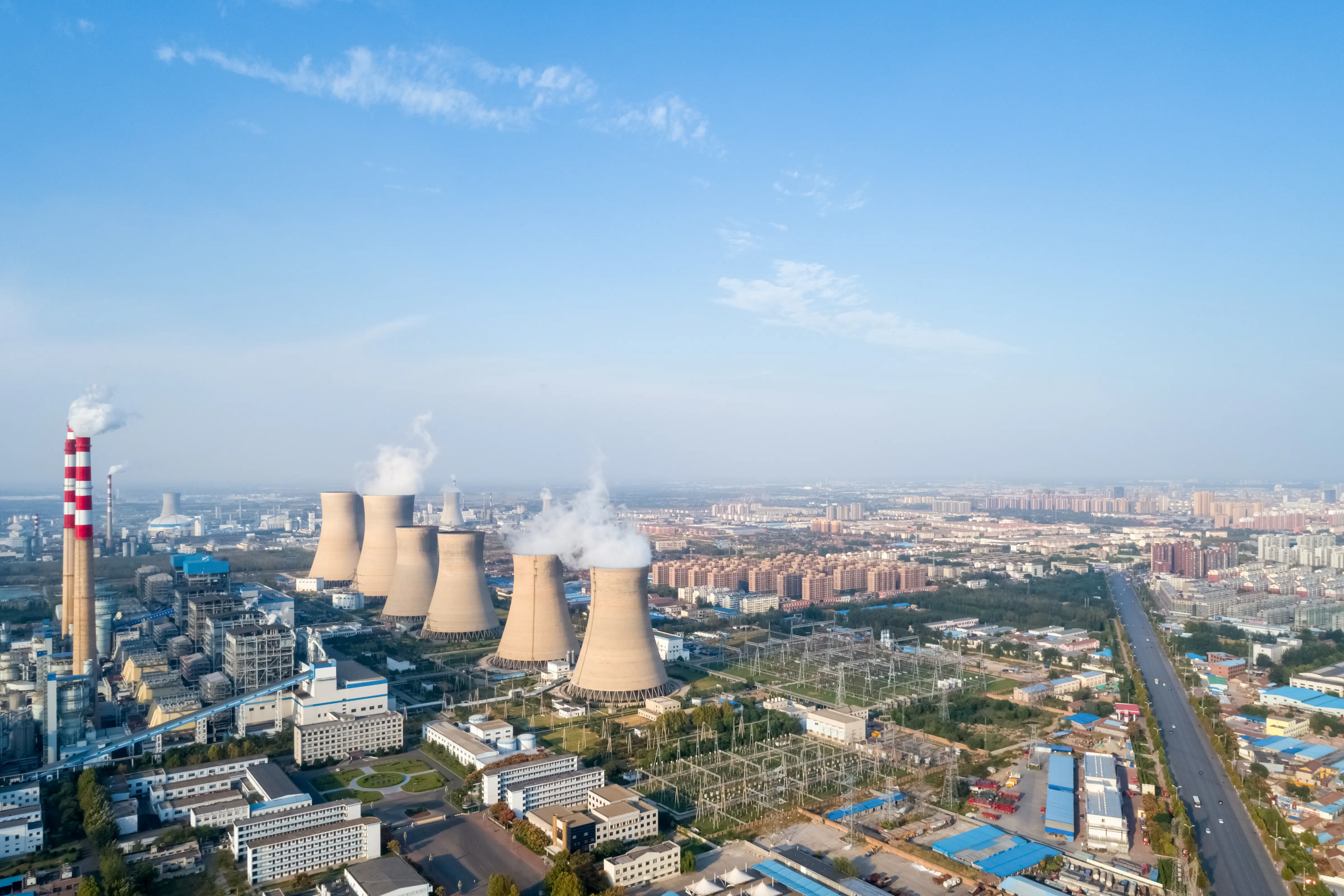
The primary source of global energy continues to be fossil fuels, with oil the largest single source. It provides a third of total energy demand, while coal is still extensively used, but carbon goals are being pursued.
Key takeaways
- About 30% of global fossil fuel consumption is natural gas: China, the US, Russia, and Iran were the largest producers in 2024, comprising 53% of global gas output.
- Global coal demand hit a record high (16EJ) in 2024: the Asia Pacific region consumed as much as 83%, including 67% demand from China, primarily for power generation.
- Dual carbon goals are being addressed by methods including CCUS and AI-driven efficiencies.
- Geopolitical conflicts continue to be the most critical factor impacting fossil fuel price and supply.
Energy storage
China will continue to play a significant role in the rapid growth of battery energy storage systems. New technologies and all-solid-state batteries can evolve storage from simply supporting power adjustment to becoming key in emerging power systems.
Key takeaways
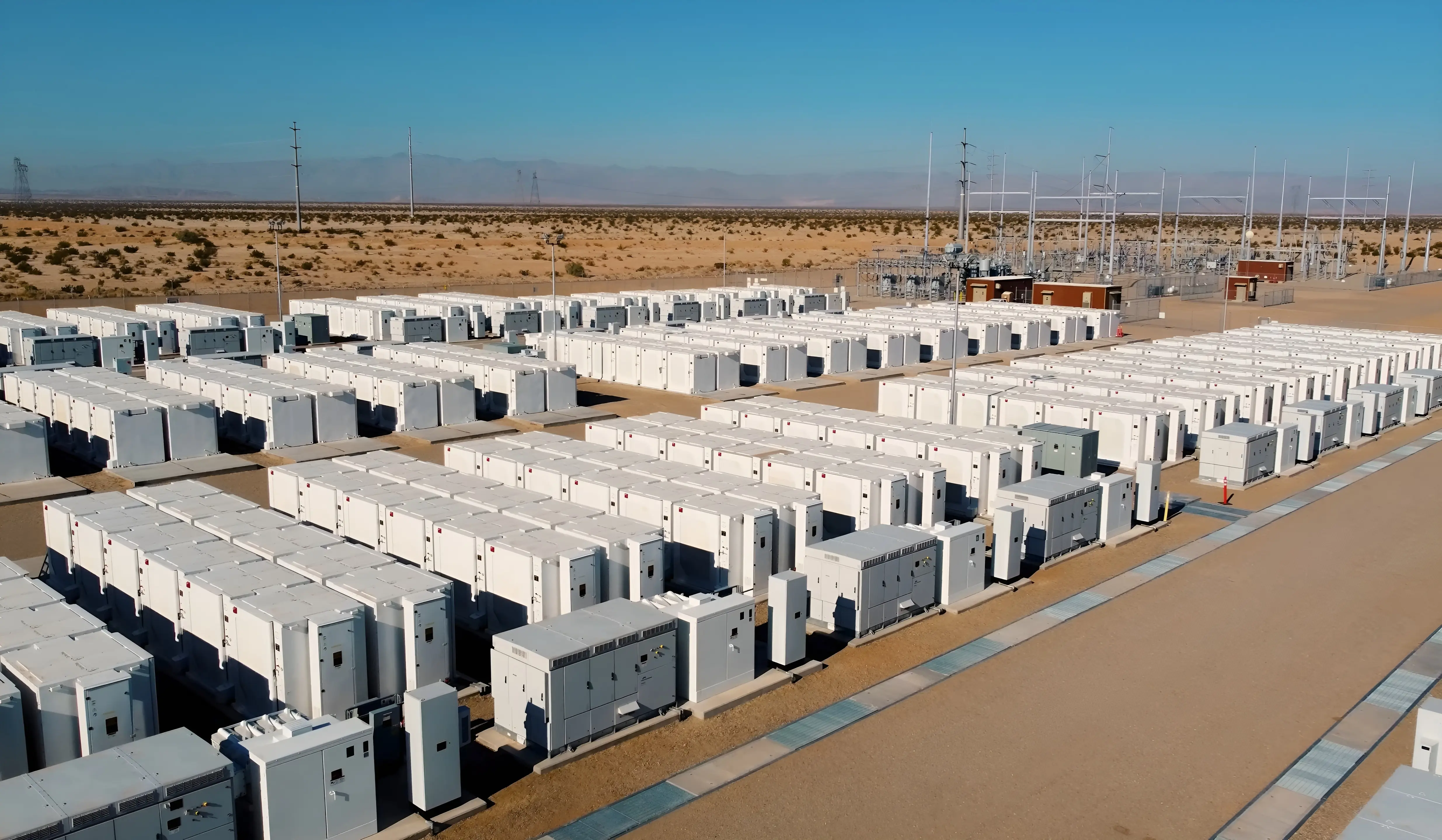
- Global installed battery energy storage capacity for grids more than doubled — up 113% — in 2024 to reach 126GW: China has 60% of total installed capacity.
- China’s 15th Five-Year Plan calls for the “vigorous development of new energy storage capacity”: this is in addition to pumped-storage capacity and marks a golden development period for new energy storage.
- Solid-state batteries will reshape the competitive landscape of multiple industries and are a focus of tech research: use in new energy vehicles, eVTOL low-altitude aircraft, and power batteries could bring great market potential.
Hydrogen energy
With hydrogen now formally recognised as an energy category under the 2025 Energy Law and backed by a comprehensive three tier energy policy system, China is accelerating deployment across the value chain. At the same time, advancements in electrolyser capacity and AI driven optimisation are reshaping global cost curves and positioning the country as a central force in the future green hydrogen economy.
Key takeaways
- China has established a three tier hydrogen policy system enabling industrial-scale rollout: Top level design → mechanism foundation → local implementation.
- China’s hydrogen market is set for massive expansion, driven by:
→ A complete industrial supply chain
→ Annual production capacity of 50+ GW electrolysers
→ Decreasing equipment costs, which profoundly influence the global cost curve.
- AI-optimised hydrogen systems are accelerating:
→ Electrolyser efficiency to exceed 90% (up from 60–80%)
→ AI-driven cost reductions of ~15% and energy-use cuts up to 10% expected by 2030
Circular economy
Policy direction under the 15th Five-Year Plan elevates recycling, conservation, and green utilisation as fundamental pillars, while rapid expansion in the scale of the recycling industry and patent activity points to accelerating innovation. Strengthening leading enterprises and expanding full chain circular practices are increasingly viewed as central to meeting China’s long term sustainability and supply chain resilience goals.
Key takeaways
- China’s 15th Five-Year Plan emphasises a direction of “comprehensive conservation, circular utilisation, and green and low-carbon”, with improved total resource management systems.
- The value of China’s resource recycling industry is set to grow from RMB 3.6 trillion (2022) to RMB 10 trillion by 2030.
Patent applications in green/low carbon subsectors (2020– 2024) demonstrate consistent year on year growth across:
- Fossil energy decarbonisation
- Energy efficiency and recovery
- Clean energy
- Energy storage
- CCUS
Nuclear energy
China is entering a pivotal period for next generation nuclear technologies — particularly fusion — where rising investment, rapid technological breakthroughs, and policy prioritisation are accelerating progress from laboratory research toward early commercial pathways.
Key takeaways
- Global energy policies are shifting toward “affordability + supply stability”, leading many countries to reassess nuclear, including SMRs and fusion.
- Since 2025, investment in fusion has surged, with primary market financing exceeding RMB 10 bn.
- Global nuclear fusion financing in 2025 totalled over USD $9.7 bn.
AI + Energy
AI is now widely seen by industry leaders as an enabler of net-zero progress, and under the 15th Five-Year Plan, AI + Energy has been elevated to a national strategic priority. This signals a move toward deeply integrated digital energy ecosystems in which intelligent optimisation, system wide coordination, and computing–power synergy become fundamental to China’s energy transition.
Key takeaways
- China’s data centre consumption surged from 2022 to 2024, reaching nearly 180 billion kWh.
- 97% of energy executives surveyed view AI as a positive force in accelerating net zero.
- During the 15th Five-Year Plan period, AI + Energy will be a national strategy that promotes deep system integration and an intelligent ecosystem for energy transformation.
- This Market Outlook report was produced for Beijing Energy Congress. For more information and to register as a delegate, visit: Beijing Energy Congress 2027








