

Reform UK Pushes North Sea in Biggest-Yet Energy Firm Meeting


(Bloomberg) -- Reform UK Deputy Leader Richard Tice told energy giants his poll-leading party would focus on cutting bills rather than investing in green energy if it wins the next general election.
In his biggest round table to date with the industry on Thursday morning, Tice — who is also his party’s energy spokesman — met with representatives of BP Plc, EDF Energy, Shell Plc and SSE Plc among others. The event was hosted by the Centre for a Better Britain (CFABB), a think-tank separate to Reform but which is staffed by several former colleagues of party leader Nigel Farage.
Several attendees said Tice gave little new information as to how his party would pursue its goals of withdrawing green energy subsidies and making the UK’s energy cheaper. Most of the conversation centered around his existing plans to increase drilling for oil in the North Sea, they said.
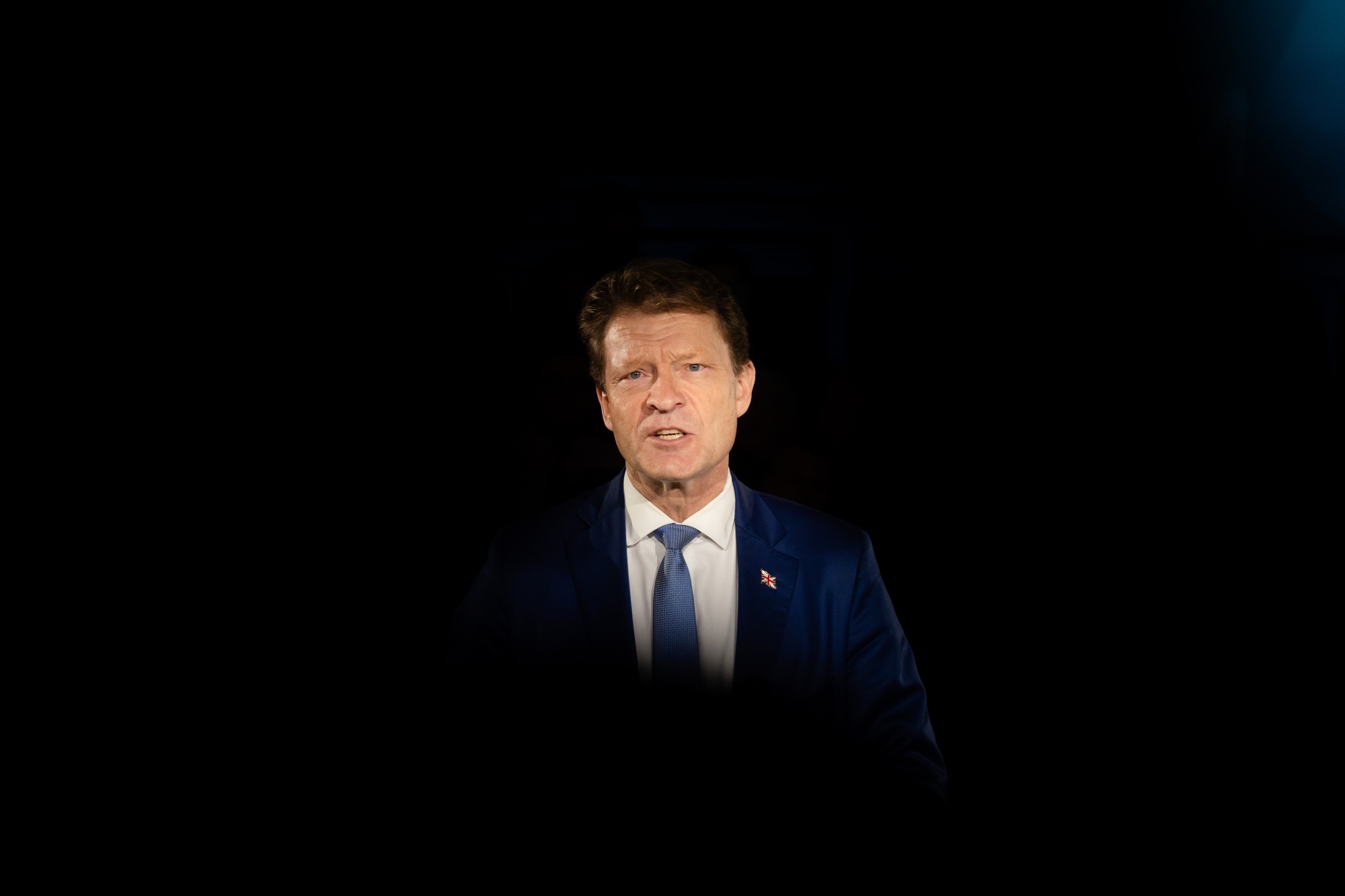
Reform’s policies are important because the populist right-wing party has led national polls for more than a year, and has made big advances in local elections. That raises the possibility the party could form a government after the next election, due in August 2029 at the latest, implementing energy policies that would upend two decades of broad Labour-Tory consensus of increasing investment in renewable energy.
Tice said his future policies would be informed by the work done by think-tanks such as CFABB, which announced on Thursday that it will convene three working groups comprised of industry experts, engineers and consultants to produce suggestions over the coming months for better energy policy. One would be focused on cost, another on energy usage and availability, and another on physical energy supply, it said.
The think-tank also published a report saying energy usage in the UK is falling because high costs have caused a decline in industry, rather than because efficiency is improving. Successive governments had created policy to lower energy usage without properly considering the effect on business and industry, CFABB said.
“If you are anti-energy, you are anti-growth by definition,” Tice told Bloomberg in an interview after the event. The debate around whether cleaner energy should be pursued at the risk of making it more expensive “has not been framed correctly, and I’m going to help re-frame it,” he said.
Reform over the past year has stepped up efforts to prove it’s a government-in-waiting, despite winning only 5 seats in the House of Commons in 2024, a tally that’s since swelled to 8 amid a handful of defections from the Tories. The party has held private events with swathes of business leaders and industries in an attempt to convince influential figures that it can move beyond the anti-immigrant right-wing populism that underpinned its rise in popularity.
Tice has coined the phrase “net stupid zero” to describe the UK’s energy policy, saying high energy costs are holding back business and squeezing household spending. In a recent interview with Bloomberg’s Zero podcast, he said that he didn’t believe climate change was being caused by man-made emissions, and has advocated for increased North Sea drilling and shale fracking in the UK.
Reform’s relentless endorsement of sovereign fossil fuel extraction is also piling pressure on the Labour government. Several cabinet ministers are open to increased drilling in the North Sea, according to people familiar with the matter, and privately doubt whether Energy Secretary Ed Miliband’s dedication to green technologies is wise. Former Labour Prime Minister Tony Blair earlier this week wrote an essay advocating for cheaper fuel and drilling in the North Sea, adding to the pressure on Prime Minister Keir Starmer.
Miliband, however, contends that green energy will be cheaper in the long run, as prices will be less susceptible to shocks such as the war in Iran. The UK’s Climate Change Committee said in March that the cost of reaching net zero by 2050 would be equal to a single fossil fuel spike similar to the one resulting from Russia’s invasion of Ukraine in 2022.
Several people at Thursday’s event said there were no arguments or stand-offs between attendees, despite some coming from green energy companies. Two people said the issue of renewables didn’t really come up, with one describing it as the elephant in the room.
The CFABB paper said that the high cost of energy, its falling use and declining indigenous production in the UK “describe an economy whose energy foundations are weakening at a moment when AI, electrification, defense and re-industrialization will require them to strengthen.”
The UK should aim for “transparent prices and competitive auctions” in energy rather than “administrative mandates and quotas,” CFABB’s Jonathon Kitson wrote in the report, adding that energy security should take priority over the transition from fossil fuels to renewables.
Kitson said there should be a “working presumption” in favor of the development of UK fossil fuel extraction, while regulation should be simplified. He added that social objectives such as support for those who struggled to afford their fuel bills should be funded through general taxation, rather than through additions to electricity tariffs.
©2026 Bloomberg L.P.








