

London’s Expats Struggle to Adapt to Extreme Heat Without Air Conditioning


(Bloomberg) -- Vanessa Chan, who moved to London from Hong Kong three years ago, has been stunned by the extreme heat she’s experienced in the UK capital over the past few days.
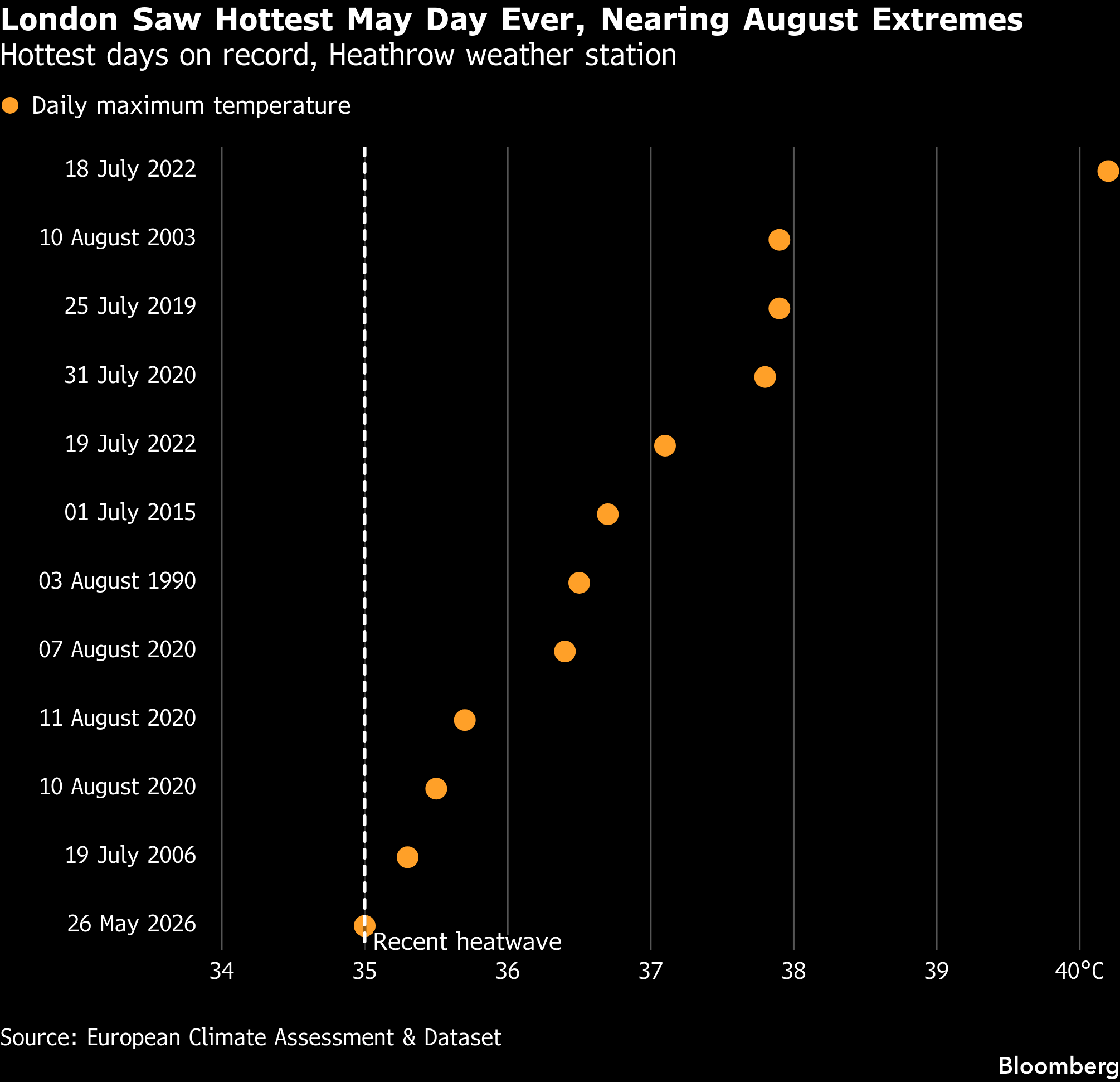
On Monday, Britain had its earliest ever tropical night of the season, defined as a temperature above 20C (68F). On Tuesday, the daytime temperature soared above 35C, a record for the time of year. Both extremes were registered in London, which thanks to its concentration of stone facades and asphalt roads is fast becoming Britain’s sweatiest location.
For Chan, the shock of the heat has been compounded by what she characterizes as a surprising absence of solutions to help Londoners deal with high temperatures. That’s as the UK warms faster than the global average, with man-made climate change increasing the risk of dangerous heat waves.
“The whole infrastructure in the UK is not designed for the heat,” she says. The 34-year-old, who lives with her husband in a modern block of flats in southeast London, says her rental doesn’t allow for proper air conditioning. And even if she were permitted to install an AC unit, she says she would struggle to afford it.
It’s an experience familiar to other expatriates trying to adapt to British heat waves. April Richardson, a writer who grew up in Atlanta, Georgia, says her duplex apartment in an older building in Brighton, a coastal city south of London, is like living “inside of a brick pizza oven.”
Richardson, 47, says she’s tried to keep cool with a regular fan and has resorted to sleeping on the floor in her living room, which is downstairs and slightly cooler than the bedroom. She can’t even get any respite in shops or restaurants, because these are generally also without air conditioning.
“It’s hard to get anything done,” she said. “It just feels like you’re walking through soup.”
It’s a similar picture in some of London’s most expensive boroughs. For example, in Kensington & Chelsea — where the average home costs about £1.3 million ($1.7 million) — AC units usually require special permission, and are sometimes effectively prohibited due to concerns they’d clash with the historical facades common to the area.
Gary Woodward, managing director of Airconco, an air conditioning installer based in north London, says he’s dealt with lots of expats desperate for cooling options.
“They go to rent an apartment and there is no air conditioning, and they’re a bit baffled by it,” he says. “If they’re from outside the UK, they do see it as a necessity.” He says his company is booked out until the end of the summer.
Even those lucky enough to have air conditioning at home continue to face overheated spaces when they’re out and about. More than half the trains that make up London’s famous underground network — known as the Tube — have no air-conditioning; many schools, hospitals, buses, museums, restaurants and cafes also go without it.
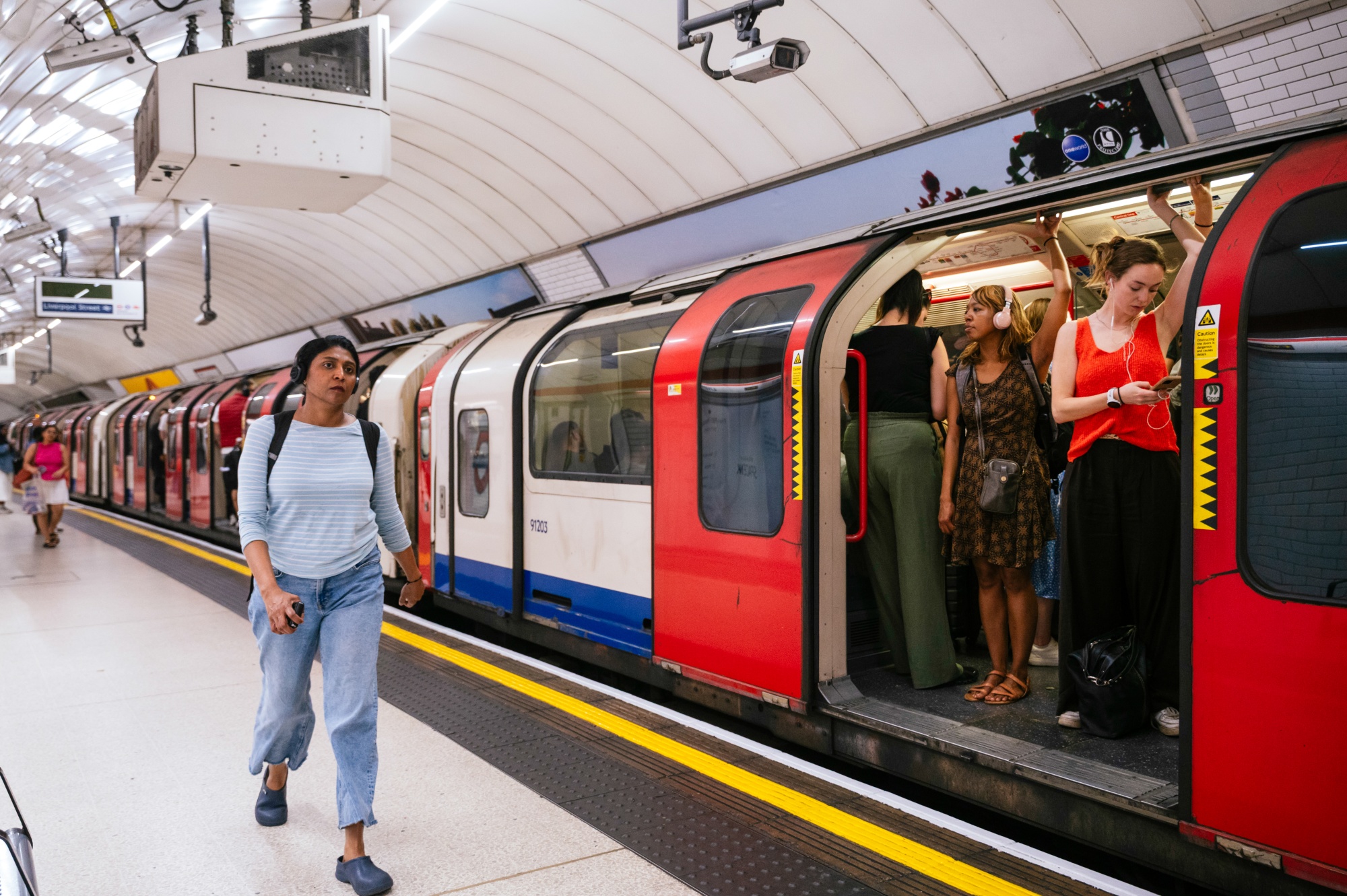
In London, “there’s nowhere to retreat to. It’s hot outside and then it’s even hotter inside,” says Dimple Rana, heat resilience leader at Arup, the buildings consultancy.
“Much of the country was designed for a climate that no longer exists,” says Andy Love, founder and managing director of Shade the UK, a community interest company that works with government and authorities to manage overheating risk in buildings. “We have spent decades largely prioritizing warmth, airtightness and winter performance, often without fully considering how buildings would behave during prolonged hot weather.”
The failure of Britain’s buildings to shield people from extreme heat now represents an “architectural crisis,” he says.
As the UK gets continually hotter, large parts of the population have no clear path to adequate cooling. Though adoption of air conditioning has doubled over the past three years, it’s still only installed in 7% of UK homes. Another 8% have portable units, which are cheaper to buy but less efficient and costlier to run.
During the latest heat wave, UK sales of portable air conditioning units and fans soared. Retailer Currys saw purchases of such products jump more than 2,700% year-on-year over the latest holiday weekend, while John Lewis Partnership Plc saw an 800% surge, spokespeople for the companies said.
London’s local government has long been opposed to embracing air conditioning, citing the added energy consumption such units entail and their impact on carbon emissions. It also warns that widespread use of AC units will worsen urban heat islands, as the hot air sucked out of buildings gets pushed onto city streets.

But as Londoners like Chan struggle to cope with rising temperatures, those running the city are now under growing pressure to reconsider. This month, the Climate Change Committee (CCC) — a body that advises the UK government — said it’s no longer acceptable to reject air conditioning as a key tool to help Britons cope with the increasingly dangerous heat levels they face.
“Air conditioning is going to be essential, particularly in places where we have vulnerable people, like hospitals and care homes,” said Julia King, the CCC’s adaptation chair.
Meanwhile, early-season heat waves such as the one now gripping Britain and other parts of Europe are particularly dangerous because people haven’t had time to acclimatize, says Garyfallos Konstantinoudis, a lecturer at the Grantham Institute for Climate Change and the Environment at Imperial College London. The Institute says England and Wales may see 250 additional deaths as a result of the current heat wave.
Love of Shade the UK says more focus should be placed on ensuring Britain’s buildings are constructed in ways that avoid trapping heat. That way, people stay cool even if there’s a power outage that renders AC units useless, he says.
London’s planning policy requires developers and homeowners to demonstrate that they’ve tried passive cooling measures, such as shading. Only then are they allowed to add air conditioning.
But the CCC says solutions such as shading may no longer be enough in a warmer Britain, particularly in London. It’s now advising that air conditioning be part of the country’s “plan for more active cooling.” That means investing in air conditioning in public buildings, applying maximum temperature regulations for workplaces, and subsidizing air conditioning for people who can’t afford it.
Last year, the UK government announced £2,500 subsidies for air-to-air heat pumps, a type of home heating which can also provide cooling. However, those funds aren’t yet available because certification standards for installers and equipment aren’t ready.
The Mayor of London’s Office has launched a consultation to update the city’s development strategy, including settling on cooling solutions. At the same time it’s resisting recent proposals from the national government to standardize planning rules across the country, out of concern that such a measure would remove London’s ability to set more stringent environmental requirements in the capital.
A spokesperson for the Mayor of London said that current policy “doesn’t rule out air conditioning, it recommends new developers consider passive measures in new homes in the first instance, such as external shading and glazing areas, to minimize the need for householders to use air conditioning, which helps to lower their energy costs.”
Round Our Way, a climate nonprofit, estimates that extreme heat has caused somewhere between 1,300 and 3,000 deaths — each year — over the past four summers in England. Around 90% of those dying were people over the age of 75. Pregnant women and young children are also among the most vulnerable to heat.
Chan says that when it gets too hot in her apartment, she goes to a nearby supermarket to cool off. Her air-conditioned central London office is also a refuge, if she can brave the hot train ride to get there.
She says the heat is even preventing her from enjoying some of London’s greatest cultural landmarks, such as the British Museum.
On busy summer days, the heat can make it “very hard to breathe,” Chan said.
©2026 Bloomberg L.P.








