

Oil Drops as Israel and Lebanon Agree to Conditional Ceasefire


(Bloomberg) Oil fell following three days of gains after Israel and Lebanon agreed to a ceasefire if Hezbollah also stops hostilities, which would remove a key sticking point in talks to end the Iran war.
Brent traded around $97 a barrel, while West Texas Intermediate was near $96 after rising almost 10% over the first three sessions of the week. The agreement hinges on “a complete cessation” of fire from Iran-backed Hezbollah, according to a joint statement from Israel, Lebanon and the US.
Washington and Tehran have sketched out a framework to extend their truce by two months and reopen the Strait of Hormuz, but negotiations are stalling and sporadic fighting has resumed. Iran warned it could target sites inside Israel if attacks on Beirut continue, according to the semi-official Tasnim news agency, which cited the country’s foreign minister. He also said little tangible progress has been made in the talks.
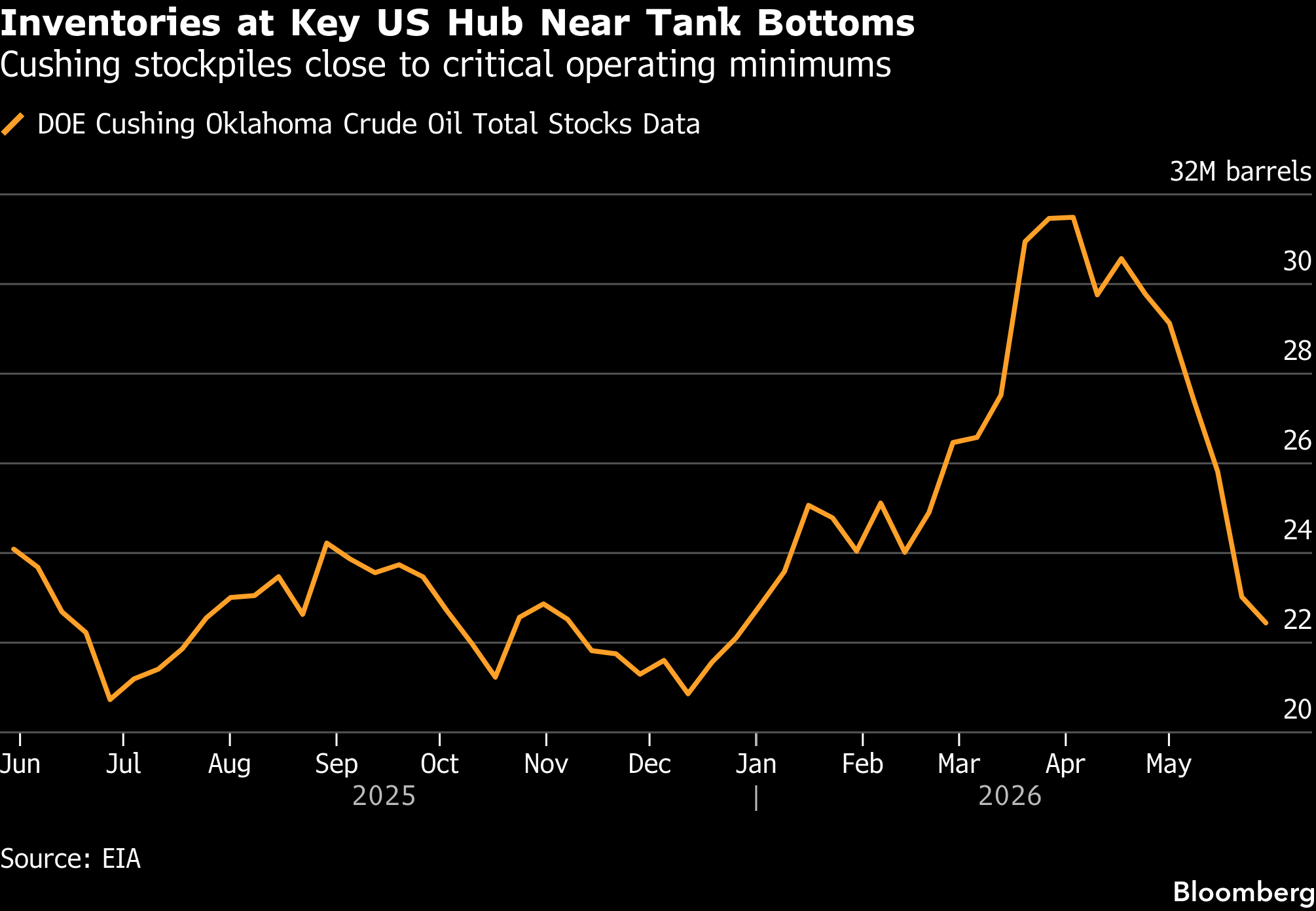
Oil prices have recovered from last week’s decline as renewed clashes damped hopes for a sustained ceasefire and a reopening of the key shipping route. At the same time, global supply buffers are shrinking. US figures on Wednesday showed crude inventories at Cushing, Oklahoma — the delivery hub for WTI — fell for a sixth straight week, nearing minimum operating levels.
Even if an Israel-Lebanon ceasefire caps some near-term price gains, risks remain elevated while the strait stays effectively closed. Brent could climb as high as $130 a barrel in the fourth quarter as inventories tighten, said Robert Rennie, head of commodity research at Westpac Banking Corp.
“The market is asleep at the wheel, even as we drive rapidly toward aggressive tightening in crude and product markets,” Rennie said.
President Donald Trump said the Strait of Hormuz would reopen “immediately” if Iran signs a memorandum of understanding to halt hostilities, adding that some areas in the waterway would need to be cleared of mines. He downplayed the threat those pose to commercial shipping.
The strait remains the market’s central focus. Roughly a fifth of global crude supply typically passed through the chokepoint prior to the war, and its near-closure has pushed energy prices higher, raising concerns about a spike in inflation and slowdown in economic growth.
The conflict in the Middle East has pushed observable oil-product inventories below a five-year average, and crude prices could “skew higher” as US-Iran talks falter, Citigroup Inc. analysts including Eric Lee said in a note.
Separately, the Republican-led House voted to halt the US war with Iran, underscoring growing concern within Trump’s party months ahead of midterm elections. The measure is unlikely to immediately affect military operations, as the Senate would still have to pass the resolution, and provisions in the 1973 War Powers Act that the House invoked are legally controversial anyway.
©2026 Bloomberg L.P.








