

Oil Swings Before Weekend Talks After Attacks Hit Saudi Capacity


(Bloomberg) -- Oil switched from gains to losses, ahead of weekend talks between Iran and the US that will dictate the path ahead for a fragile ceasefire.
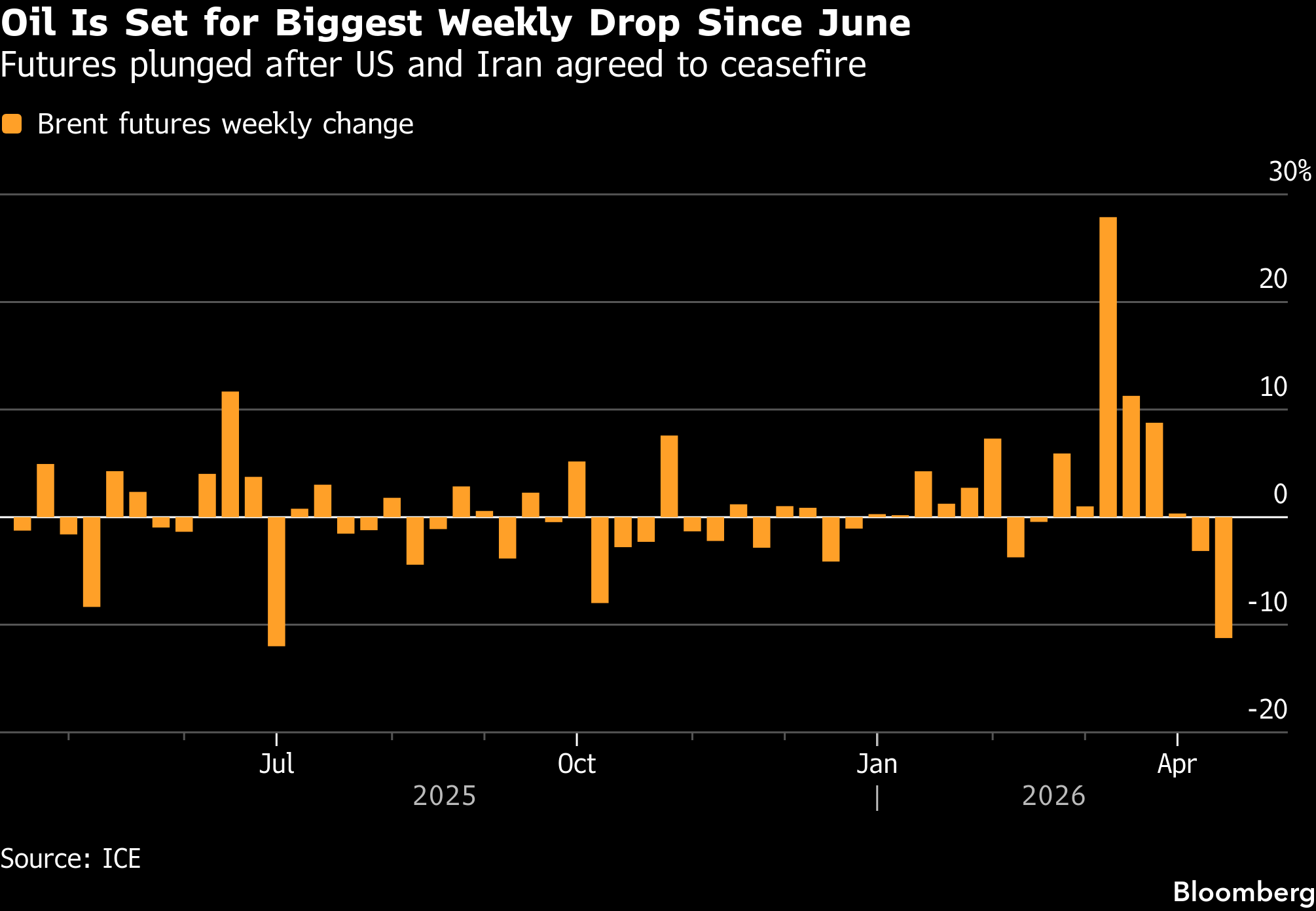
Brent traded near $96 a barrel, with futures down about 12% this week, on track for their biggest retreat since June. US Vice President JD Vance is expected to lead US discussions with Iranian officials in Islamabad on Saturday. Traffic through the crucial Strait of Hormuz, meanwhile, remains at a near-standstill.
Saudi Arabia on Thursday said strikes on its energy infrastructure crimped flows through an East-West pipeline the kingdom has been using to export crude via the Red Sea. The attacks cut output capacity by more than 600,000 barrels a day and reduced the pipeline flows by 700,000 barrels a day.
Oil markets have been extremely turbulent since the war began and prices remain more than 30% above pre-conflict levels. Attention is now turning to how sustainable the truce announced this week will be, and whether a lasting peace can emerge that will restart flows through the Strait of Hormuz.
“The weekend meeting is flip-a-coin time, although I think the chance of a deal or something that looks like a deal is the most likely outcome,” said Ole Hansen, head of commodities strategy at Saxo Bank. “The futures market is sending a signal of resilience given we are six weeks into the closure and prices still trading below $100,” he added, referring to the waterway’s near-halt.
Countries heavily reliant on Middle Eastern supplies, including Japan, have begun tapping inventories. The Asian nation will release about 20 days of oil from its stockpiles in May, Prime Minister Sanae Takaichi said. In China, state refiners were given the green light to tap into commercial reserves, while India’s largest private refiner has started to cap fuel purchases at pumps to manage stocks.
US President Donald Trump said on Thursday he was “very optimistic” about a deal with Iran and Israel was “going to low-key” it with strikes on Tehran-backed Hezbollah militants in Lebanon, although Prime Minister Benjamin Netanyahu reiterated his position that the ongoing attacks weren’t part of the US-Iran ceasefire deal. Trump later threatened Tehran over charging fees in the Strait of Hormuz.
“There are reports that Iran is charging fees to tankers going through the Hormuz Strait,” Trump wrote Thursday on social media. “They better not be and, if they are, they better stop now!”
The waterway’s near-closure since the end of February has disrupted a fifth of global oil and liquefied natural gas flows, triggering a severe supply shock.
Trump described Iran’s leaders as “much more reasonable” than their public comments would suggest in a phone interview with NBC News. However, Iran’s new supreme leader, Mojtaba Khamenei, said in a statement on Telegram that Iran “will definitely bring the management of the Strait of Hormuz to a new stage,” though it was unclear if he was referring to past Iranian demands to retain control of the waterway that the US has rejected.
“The market is refocusing on the reality of flows through the Strait of Hormuz, which remain far from normalized and are unlikely to snap back quickly,” said Rebecca Babin, a senior energy trader at CIBC Private Wealth Group.
Elsewhere, Ukraine’s top negotiator with Russia said he sees progress toward a potential peace deal. Brent’s gains briefly eased following the comments.
©2026 Bloomberg L.P.








