

US, Iran Agree to Extend Truce Pending Trump Backing, Report Says


(Bloomberg) -- Iran and the US have reached a deal to extend a truce and work toward an agreement to end the war, Axios reported, sending oil prices lower on hopes the three-month conflict could be nearing a resolution.
The agreement is for a 60-day extension of the ceasefire and for negotiations to start on Iran’s nuclear program, Axios said, citing two US officials and a regional source involved in the negotiations. US President Donald Trump still needs to approve the terms, it said.
Oil prices fell on the news to near $94 a barrel, having earlier gained on a more pessimistic outlook for a deal. The Axios report sent the S&P 500 to a new record high.
The memorandum of understanding would state that shipping through the vital Strait of Hormuz would be “unrestricted,” Axios reported. Iran would have to remove all mines from the strait within 30 days, according to the report.
The news followed overnight clashes between the US and Iran, with both sides accusing the other of breaching the ceasefire that started in early April.
US forces shot down four Iranian drones fired at a commercial ship and hit a launch unit near the Strait of Hormuz, according to a US official, who said the strikes were defensive and the ceasefire remains intact. Iran targeted the US base from which the assault came, state-run Press TV reported in a post on X.
The US and Kuwait said the Gulf state had intercepted a ballistic missile fired by Tehran toward the country.
Speaking on Wednesday, Trump asserted that no one nation would control the Hormuz waterway, which has emerged as one of the key obstacles in resolving the conflict. The effective closure of the strait since the start of the war in late February has strangled about a fifth of the world’s oil and liquefied natural gas supplies, leading to a surge in prices and rising inflation.
“It’s international waters,” Trump said during a cabinet meeting. “The strait’s going to be open to everybody” and the US will “watch over it.”
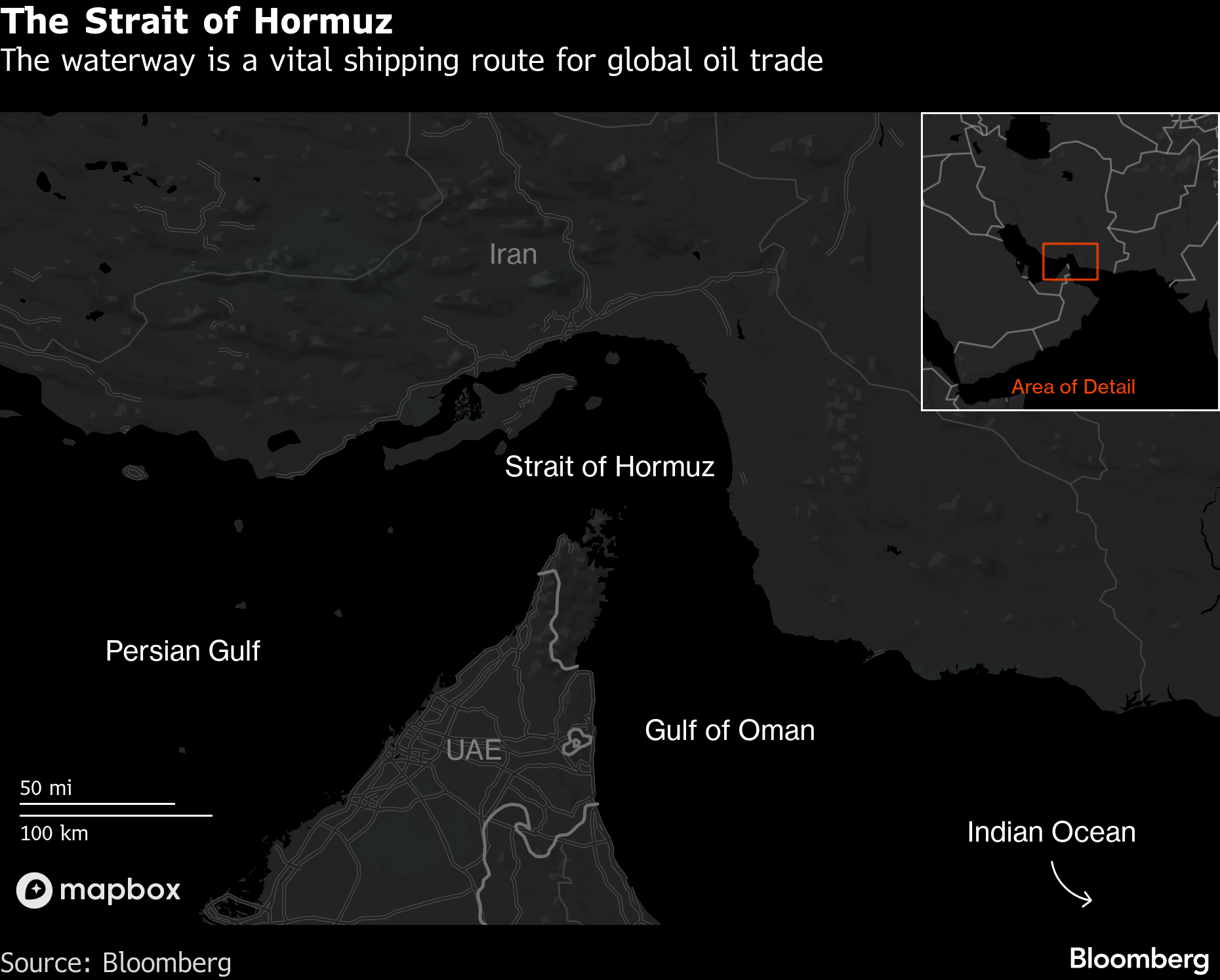
Trump didn’t indicate what steps the US might take to ensure the free transit of vessels. The US Treasury said it took action against Iran’s Persian Gulf Strait Authority, accusing it of launching a new attempt “to monetize its campaign of state-sponsored terror by extorting vessels transiting the Strait of Hormuz.”
Iran has expanded its claimed jurisdiction and set out new rules for vessels seeking to transit the waterway. That involves seafarers dealing with the new Iranian agency and sometimes getting payment requests of as much as $2 million for safe passage.
The Islamic Revolutionary Guard Corps said 26 commercial ships and oil tankers have transited the waterway in the past 24 hours after obtaining permission, the semi-official Tasnim news agency reported, citing an IRGC statement. Vessels attempting unauthorized entry into the Persian Gulf were stopped by Iran’s naval forces, it said.
Just two ships were observed transiting into the Persian Gulf, while a Chinese fuel tanker apparently paused midway on its voyage out, according to ship-tracking data compiled by Bloomberg.
The US president has instituted his own blockade of Iranian ports and called for allies to assist with the effort to open the strait so that commercial vessels can resume safe passage. He’s also threatened to resume major airstrikes against Iran — all to little avail.
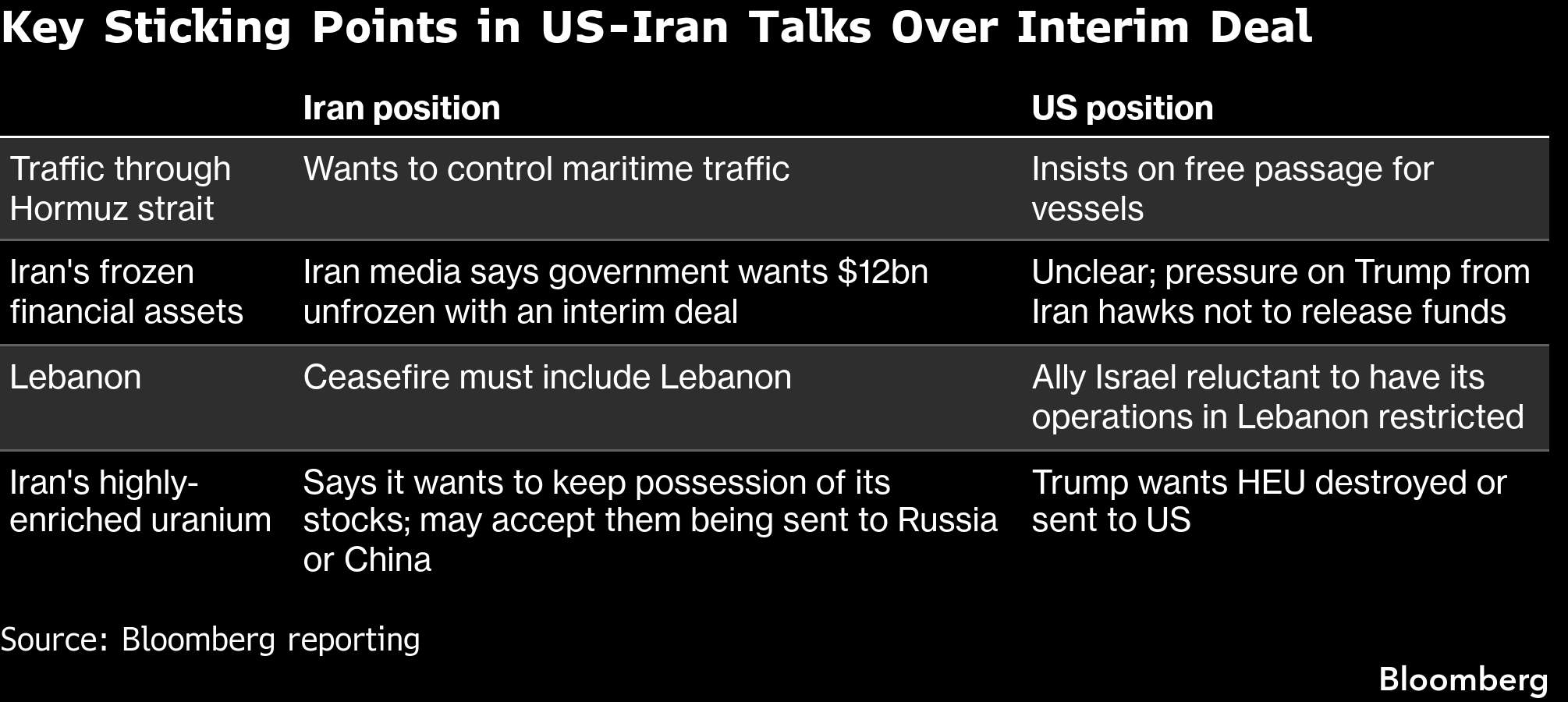
Trump has continued to suggest that an accord is close, but finds himself caught between Iranian demands for an end to attacks as well as financial relief, and pressure from Republican hawks to finish the job — or at least not to sign a bad deal.
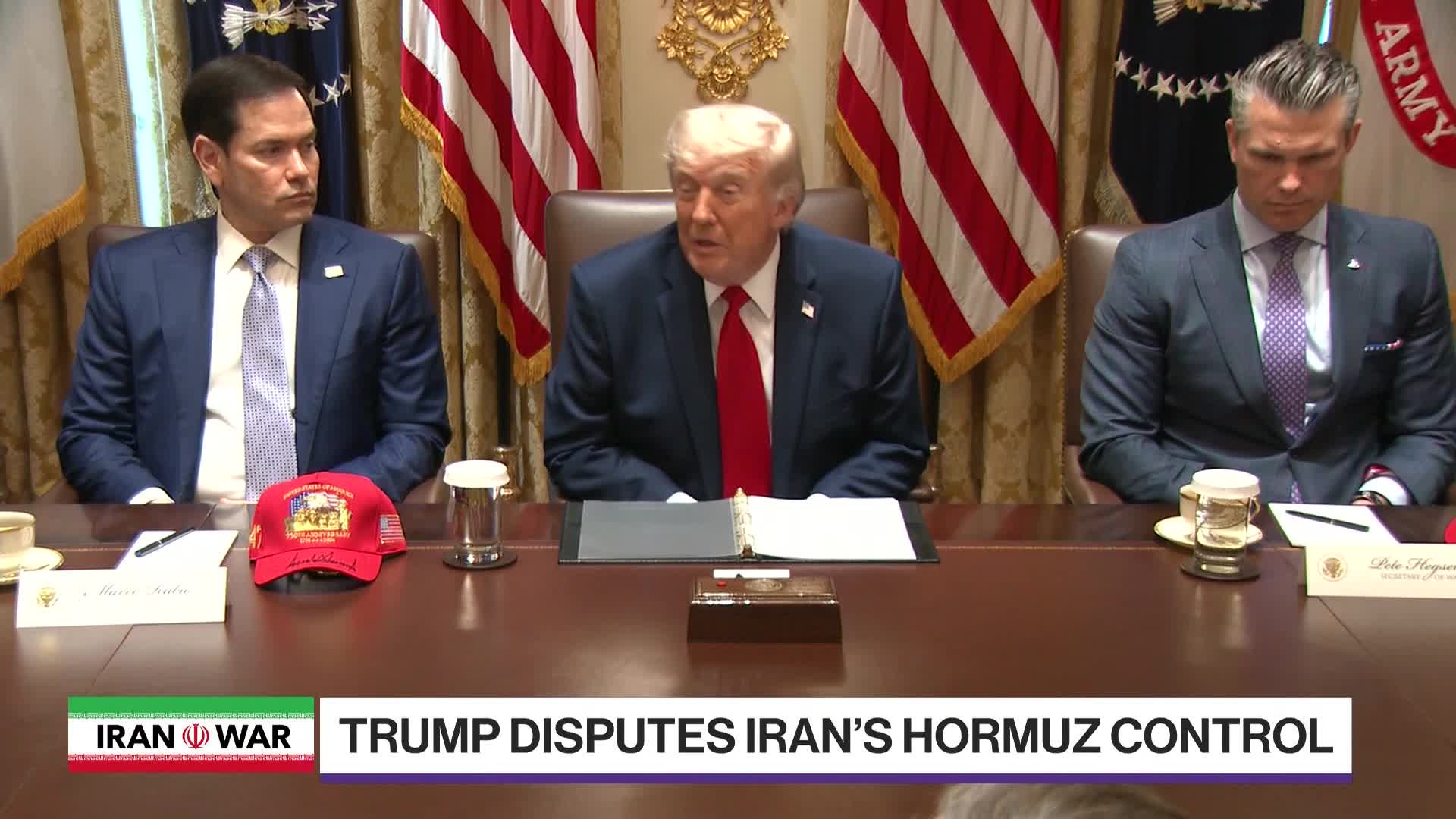
Adding to the challenge are his own comments over the years lambasting his predecessors for signing or considering deals similar to the one that has the best chance of success.
Both Iran and the US have said their talks, via mediators such as Pakistan and Qatar, are making progress. Late Wednesday, Iranian President Masoud Pezeshkian and Pakistani Prime Minister Shehbaz Sharif spoke about the ongoing diplomatic efforts, according to a Telegram post.
Marco Rubio, Trump’s secretary of state, said on Tuesday it would take a few more days to reach an agreement. An Iranian delegation returned to Tehran this week following talks in the Qatari capital that yielded good progress, according to a diplomat with knowledge of the visit.
The two sides, who agreed to a ceasefire in early April, also need to agree on what portion of Iran’s $24 billion of financial assets will be unfrozen and how quickly. On Thursday, the semi-official Tasnim news agency reported that Tehran wants all of its assets that are blocked by the US to be released.
Trump on Wednesday said “we’re not talking about any easing of sanctions — no money, no nothing.” But then he added: “When they behave properly and when they do what’s right, we’ll let them have their money.”
Here’s more on the Iran war:
- Commercial shipping through the Strait of Hormuz dwindled to only a few mostly Iran-linked vessels crossing on Wednesday, underscoring the stop-start nature of traffic through the world’s most vital energy chokepoint.
- When Tehran oil infrastructure caught fire in March following Israeli strikes, the blaze produced toxic fumes detectable across an area the size of Italy, according to fresh research.
- Israel stepped up attacks on Lebanon, killing at least 14 people and striking Beirut. That potentially complicates US-Iran talks on an interim peace deal.
©2026 Bloomberg L.P.








