

Strait of Hormuz Traffic Remains Thin Amid Peace-Deal Uncertainty


(Bloomberg) -- Commercial vessel traffic through the crucial Strait of Hormuz appeared to remain limited over the past day, amid uncertainty over prospects for a US-Iran peace deal.
Just two inbound commercial transits were observed on Tuesday morning, following two outbound ships on Monday, according to ship-tracking data compiled by Bloomberg.
Shipowners had recently become more optimistic about a pickup in traffic with guidance from the US, and Iran’s semi-official Tasnim news agency on Tuesday said 24 vessels transited the waterway over the past 24 hours after obtaining permission from the Islamic Revolutionary Guard Corps. The figure is difficult to confirm independently because electronic interference and tracking gaps suggest the total may bundle smaller coastal craft with large commercial ships.
President Donald Trump is still hopeful the US can reach an interim peace deal with Iran soon, after the Islamic Republic threatened to suspend talks because of Israel’s escalating attacks in Lebanon. Officials in Tehran are discussing their “final text” to send to the US, Iran’s Mehr news agency reported, citing a person close to the negotiating team. The report reiterated that the country’s negotiators were wary of the US, saying it had breached previous pledges.
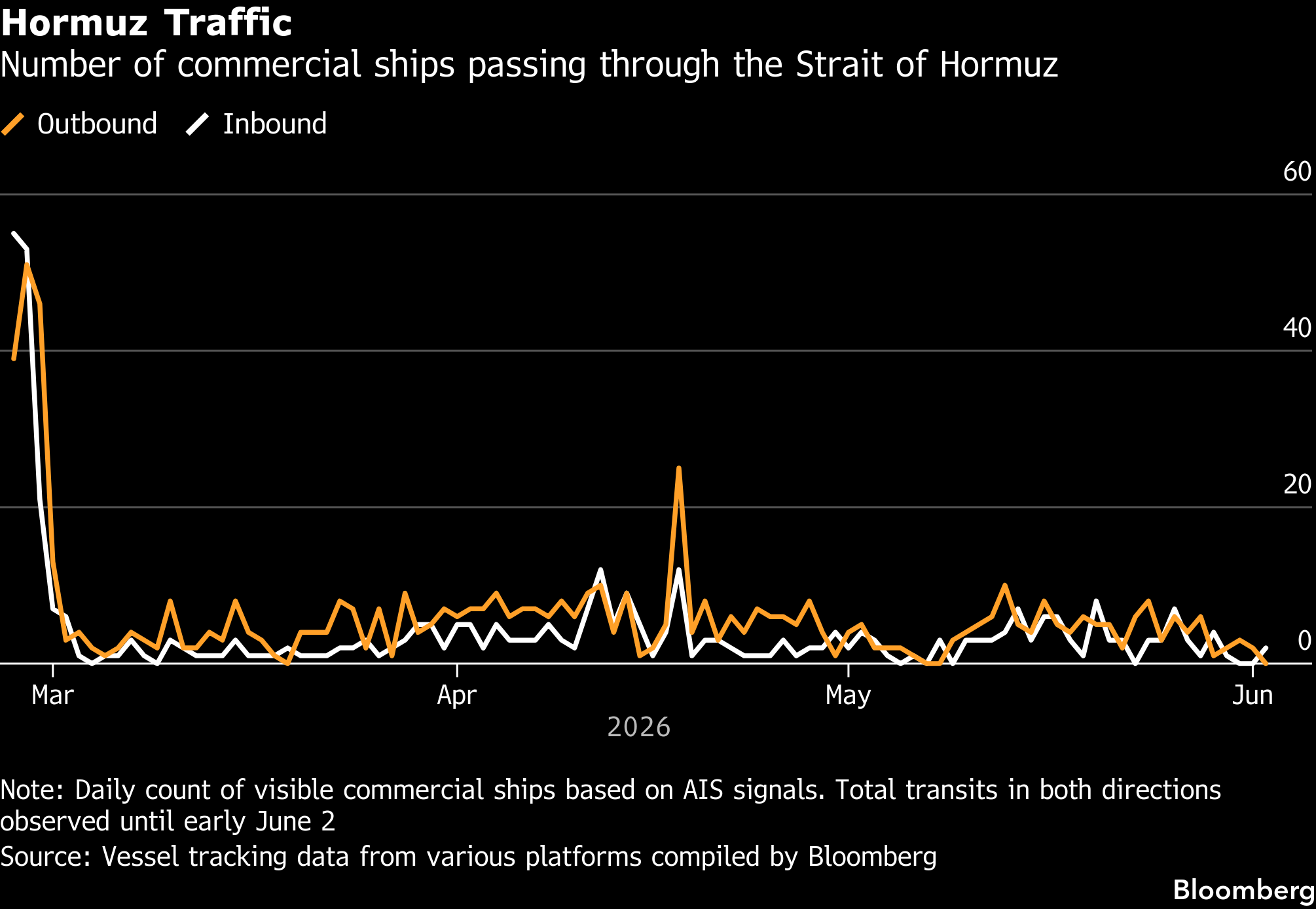
An Iranian fuel carrier and a Chinese oil products tanker entered the Persian Gulf on Tuesday, after an Iranian liquefied petroleum gas carrier and a Turkish bulker exited the waterway on Monday.
Regional shipping patterns remain disrupted by the US blockade of Iranian vessels in the Gulf of Oman. On Monday, American military officials reported that a total of 121 commercial ships have been rerouted.
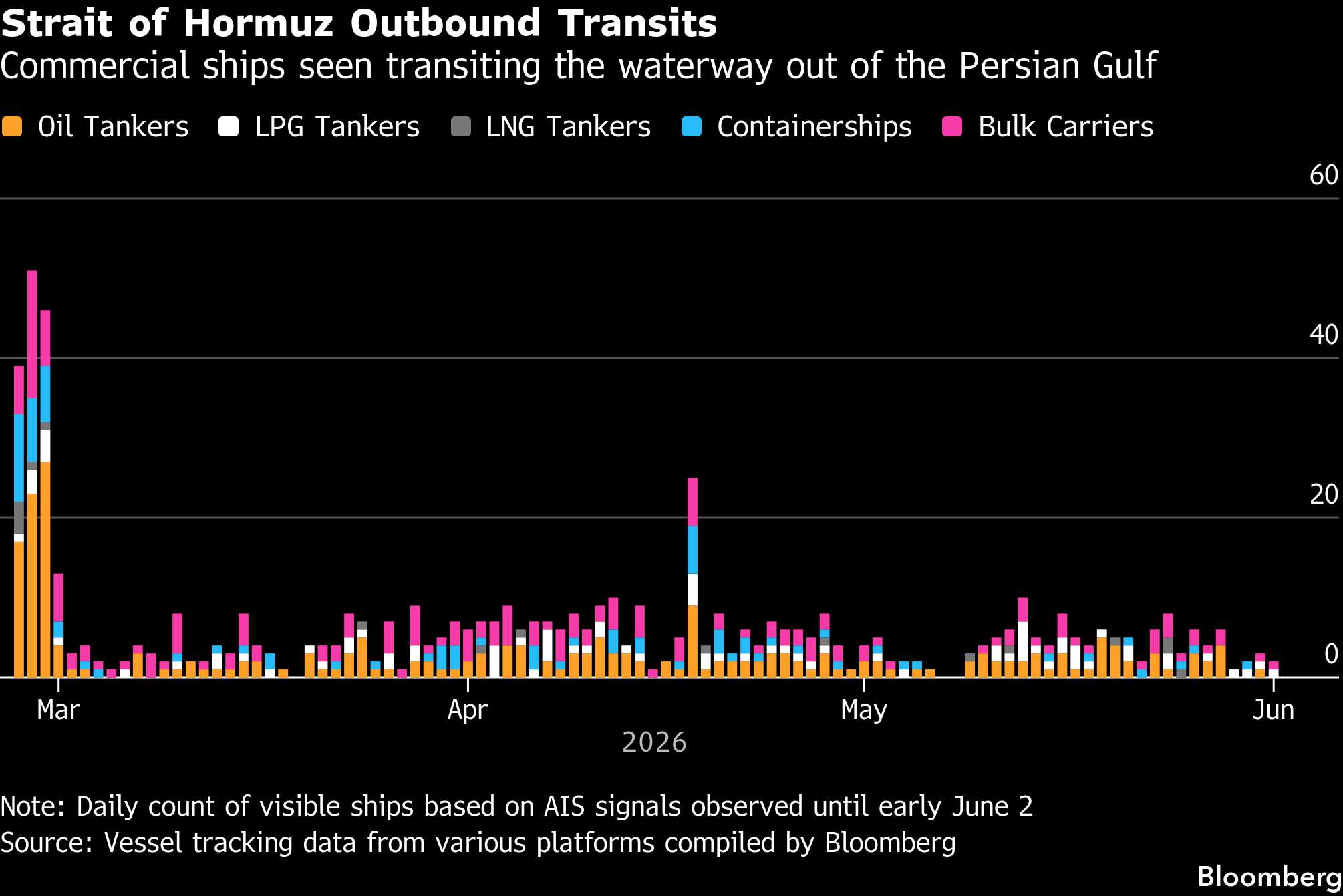
Persistent AIS interference continues to obscure vessel movements, with transit counts likely to be revised as ships reappear beyond high-risk waters.
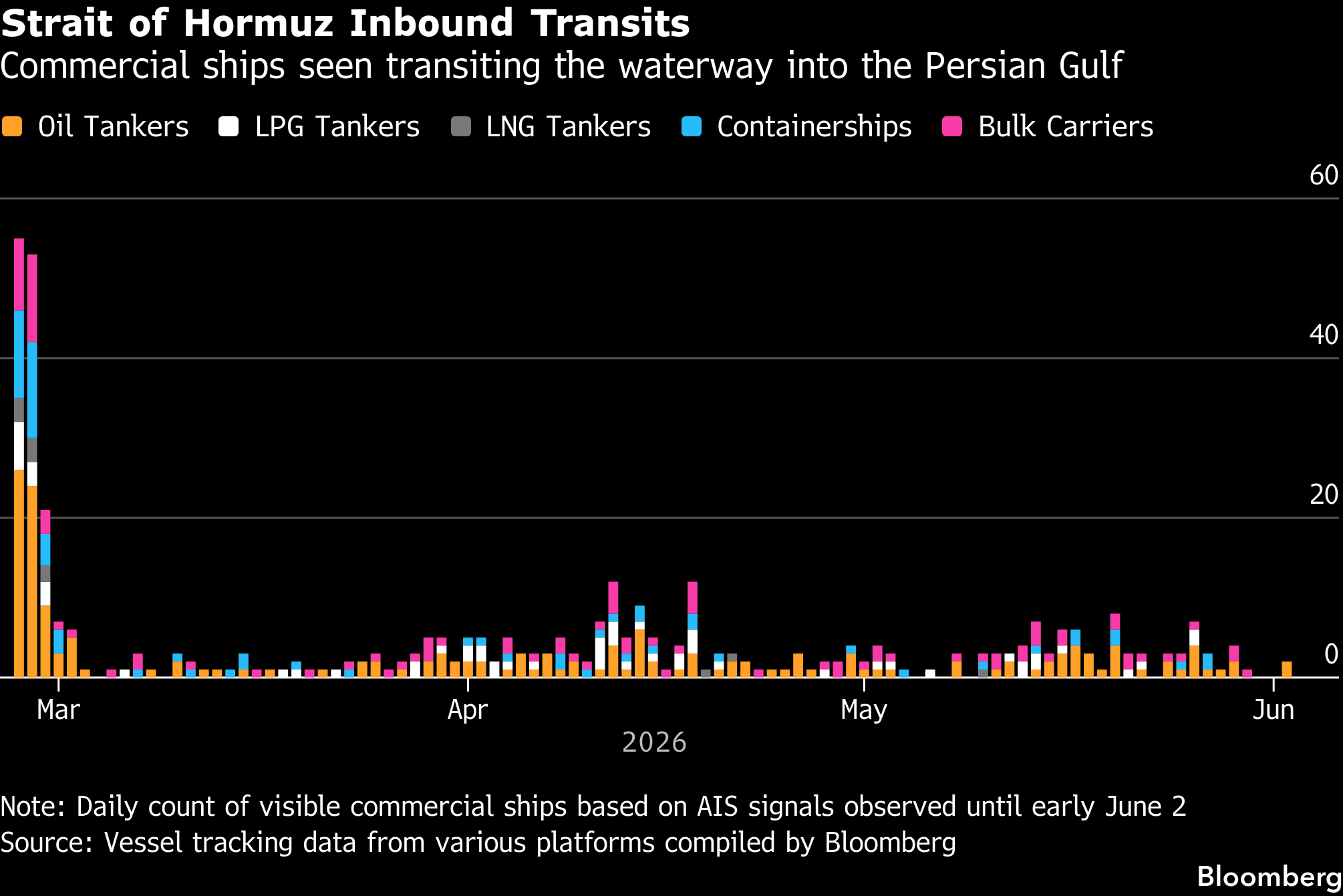
The US naval presence may also be distorting the observations. Iran-linked vessels entering or leaving the Gulf could be switching off AIS signals to avoid detection, making it harder to track flows in real time.
Even before the US barred movement to and from Iranian ports, it was common for Iran-linked vessels to “go dark” when approaching Hormuz. Signals were often not restored until well into the Strait of Malacca — around 13 days’ sailing from Iran’s Kharg Island.
NOTES:
Because vessels can move without transmitting their location until they’re well away from Hormuz, automated positioning signals were compiled over a large area covering the Gulf of Oman, the Arabian Sea and the Red Sea to detect those that may have departed or entered the Persian Gulf.
When potential transits are identified, signal histories are examined to determine whether the movement appears genuine or is the result of spoofing — where electronic interference can falsify the apparent position of a ship.
Some transits may not have been detected if vessels’ transponders haven’t been switched back on. Iran-linked oil tankers often steam from the Persian Gulf without broadcasting signals until they reach the Strait of Malacca about 10 days after passing Fujairah in the UAE. Other ships may be adopting similar tactics and won’t show up on tracking screens for many days.
This tracker will be published during heightened tensions involving Iran, and aims to capture traffic for all classes of commercial shipping.
©2026 Bloomberg L.P.