

Sheinbaum Leans on Private Investors to Fix Beleaguered Grid


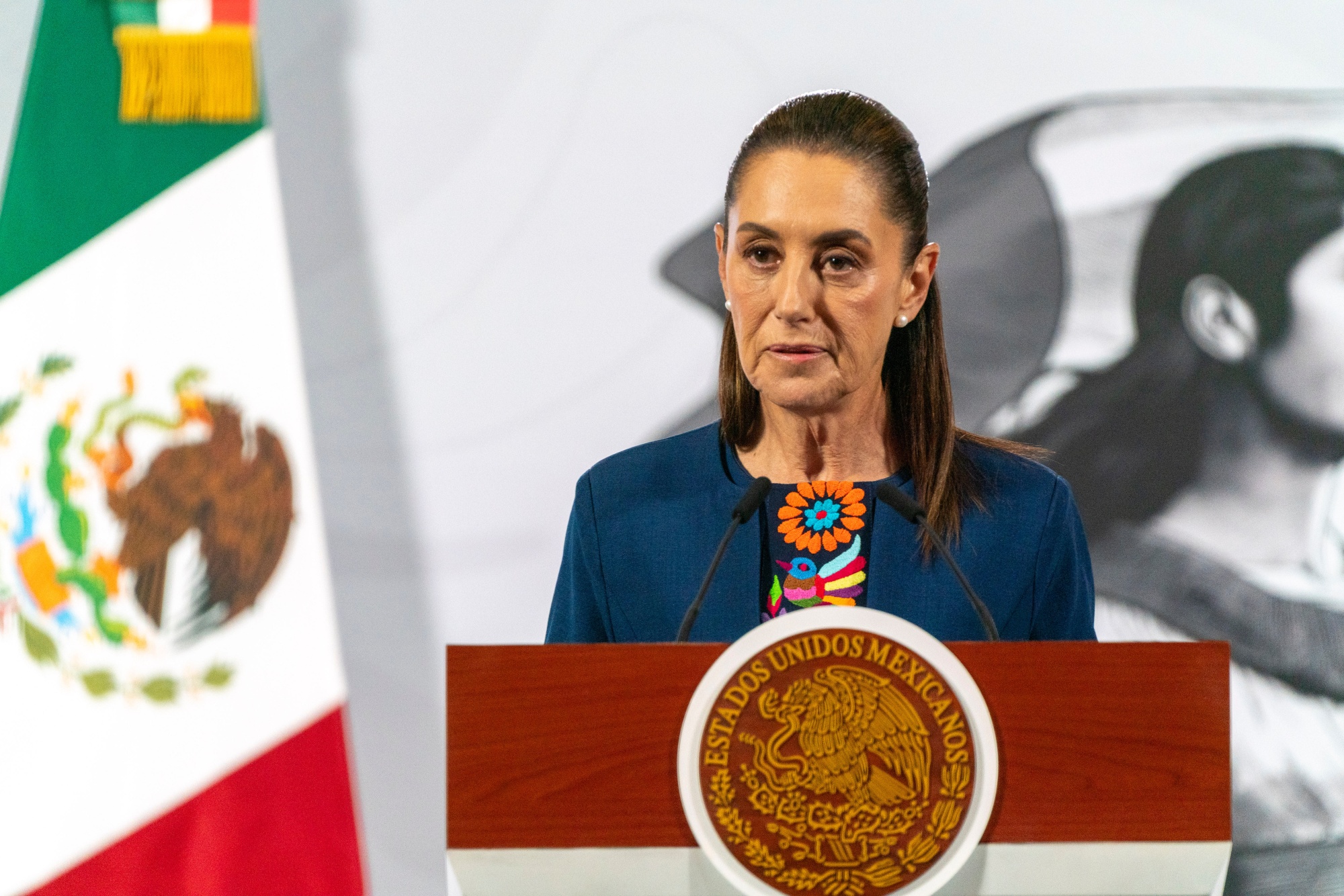
(Bloomberg) Investment in Mexico’s struggling electricity sector is showing fresh signs of life as a slew of deals in power plants, renewables and infrastructure offer momentum to President Claudia Sheinbaum’s push to modernize the grid.
European, US and domestic developers including Copenhagen Infrastructure Partners, Cox Energy, BlackRock Inc. and Grupo Mexico have signed deals totaling about $4 billion in recent weeks to expand the nation’s power output and fortify the grid. Billionaire Carlos Slim is exploring a foray into battery storage. And Mexican infrastructure investment manager MIP Real Assets is seeking to invest more than $12 billion for projects involving renewable energy and highways.
In the 20 months since Sheinbaum’s swearing in, the pace of promised electricity investment has already eclipsed the total under predecessor Andres Manuel Lopez Obrador’s six years in office, according to the Mexican Institute for Competitiveness. It’s the first sector to attract significant capital in Mexico’s broader struggle to revamp its infrastructure.
While the pledged investments fall well short of the $56 billion that Sheinbaum says Mexico needs for the grid, they mark a clear shift from the years under AMLO when the flow of capital into the sector all but evaporated. Nonetheless, it remains far from certain the nation can attract the money it needs with laws in place requiring the government to retain majority control of energy assets.
“It’s been a roller coast ride for the last seven years in the energy space, and now, the biggest change has been an openness and receptiveness toward the private sector,” said Carlos Barrera, chief executive officer at Atlas Renewable Energy in Miami. “We’ve gone from cautious, to cautiously optimistic, to cautiously bullish on Mexico.”
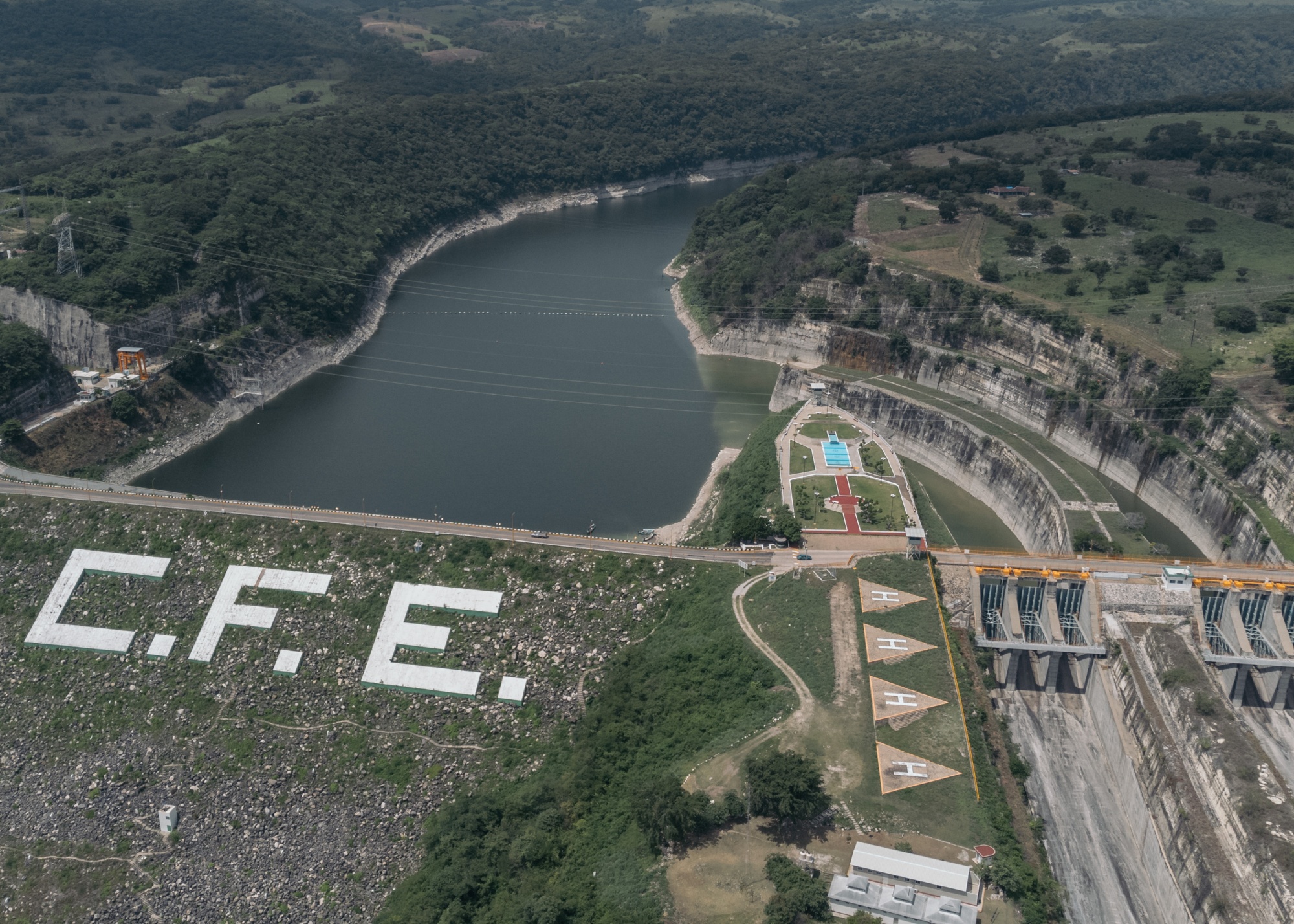
One of Mexico’s key impediments to attracting private power-sector investments is a law requiring state-owned Comision Federal de Electricidad, or CFE, to maintain at least 54% ownership of the nation’s electric plants. It’s shaping up to be a point of contention in negotiations to extend the United States-Mexico-Canada trade agreement.
“The main concern that’s been expressed in preliminary trade talks is that Mexico is giving CFE favor in electricity dispatch,” said Jose Maria Lujambio, a partner at Cacheaux, Cavazos & Newton in Austin, Texas.
Sheinbaum is trying to entice investment in Mexico’s blackout-prone electricity sector with $23.4 billion in government spending on transmission and generation projects. For every dollar of state funds, the president’s plan foresees almost $1.40 in additional investment from the private sector.
The Western Hemisphere’s fourth-largest economy operates on an electrical grid that isn’t keeping up with booming demand. The manufacturing, automotive and tech industries are in expansion mode in Mexico, lured by cheaper labor costs and proximity to the US market.
Electricity consumption is forecast to grow around 3% per year on average across the country, according to Mexico’s energy ministry. Even so, in some places, like the tech hub of Queretaro, that figure will be closer to 6%, according to Mauricio Reyes Caracheo, director of that state’s energy agency.
As it stands now, the Mexican grid is prone to seasonal blackouts, especially along the sweltering Gulf Coast and in the northern desert. The system has less than half the backup capacity as neighboring Texas.
Almost a century of strict state control of the energy sector discouraged international investment, leaving responsibility for power generation and transmission in the hands of sclerotic bureaucratic institutions.
Although that structure remains largely intact, the dam began to break in April when the government published new regulations outlining how private electricity generators can sell power. The rules are part and parcel of Sheinbaum’s broader energy reforms aimed at boosting private participation while preserving the prerogatives of state-owned Comision Federal de Electricidad.
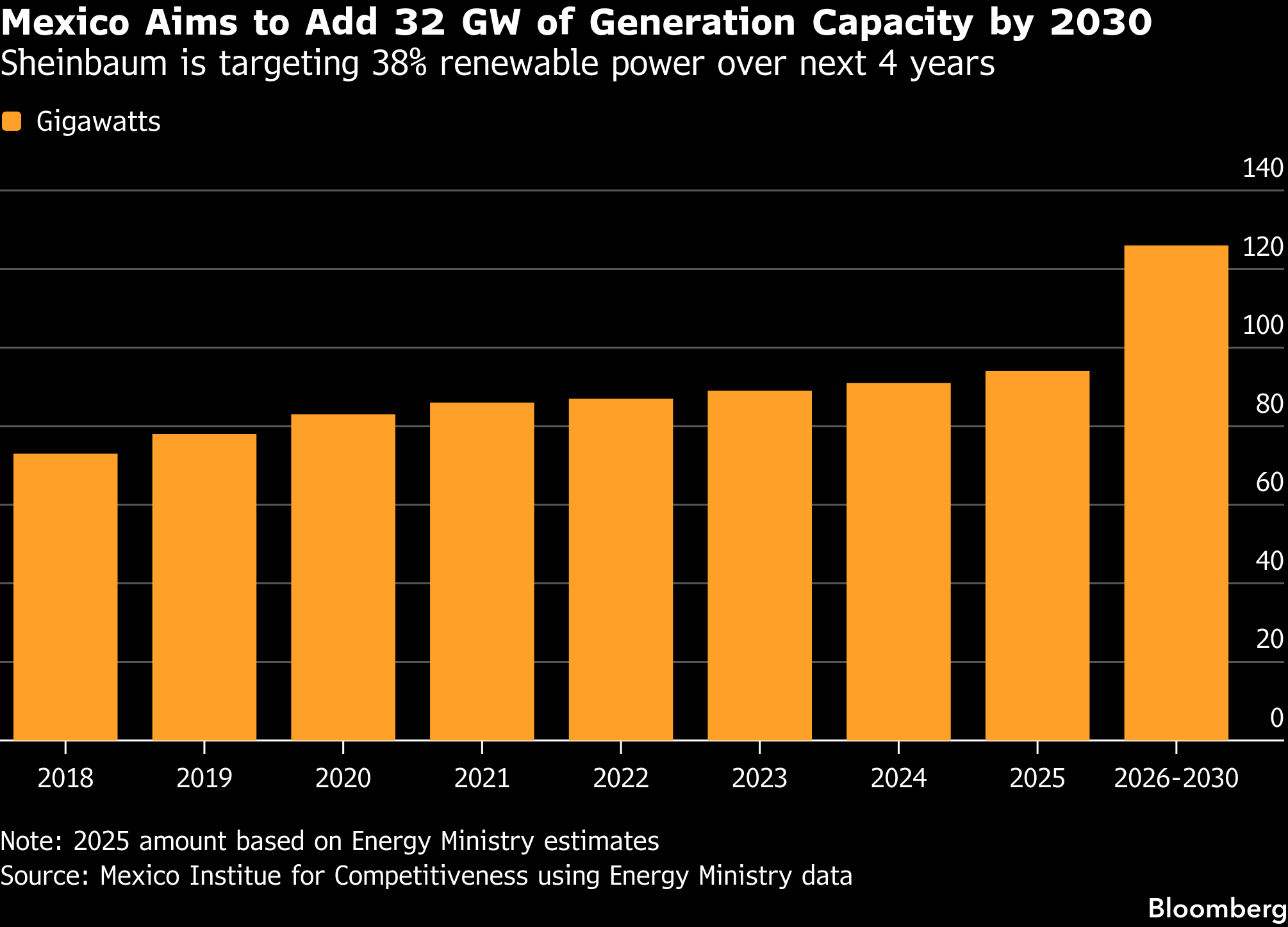
CFE is planning more than 100 power generation projects and 10,000 kilometers (6,200 miles) of new power lines, according to the energy ministry. Those public projects, along with private investment and joint ventures to be tendered later this year, could add nearly 30 gigawatts of capacity to Mexico’s roughly 100 GW grid by 2030, according to BloombergNEF.
The government has already received more than 70 proposals for public-private ventures since January, and approvals for many of the projects are expected within months, Energy Minister Luz Elena Gonzalez said at a May event.
“We are monitoring the strategic plan for the electricity sector on a daily and weekly basis to ensure that investments are carried out according to schedule,” Gonzalez said.
That sense of urgency is different from the previous administration’s lackadaisical approach, according to Daniel Bustos, chief executive of midstream company Esentia Energy Development.
“They respect the deadlines, and that changes everything,” Bustos said in an interview. “Consistency is what private companies look for.”
Other challenges remain. Mexico is heavily dependent on US natural gas, which currently fuels about 60% of the grid, a dependency Sheinbaum is trying to change. Meanwhile, sluggish growth in the broader economy, strained fiscal accounts, and a heavily indebted Pemex sparked a May credit ratings downgrade from Moody’s Ratings.
For Oscar Ocampo, an analyst at the Mexican Institute for Competitiveness, those challenges make Sheinbaum’s goals and deadlines extremely ambitious.
“Whether they reach that goal or not, they’re very clear about the need for private investment,” Ocampo said. “They’re awakening investors’ appetites and that’s very important.”
©2026 Bloomberg L.P.








