

Explained: why is the Strait of Hormuz so critical for oil markets?

Feb 28, 2026

US and Israeli strikes on Iran and the Islamic Republic’s retaliatory strikes across the region on Saturday have once again brought the spotlight back on the Strait of Hormuz – the narrow and vital shipping lane that connects the Gulf with the Arabian Sea and which Iran has frequently threatened to blockade. The Strait serves as a critical terminal for global oil and gas shipments, and its closure could trigger a major surge in global energy prices.
What is the strategic importance of the Strait of Hormuz?
The Strait of Hormuz transports approximately 25% of the world's crude oil from major suppliers including Saudi Arabia and Iraq. More than 16.5 million barrels of oil a day flow through the strait, including the bulk of Iran’s exports, according to Reuters. Exports from Qatar, the world’s third-largest liquefied natural gas (LNG) exporter, must transit through the Strait of Hormuz. The strait also serves as a strategic chokepoint for crude exports and refined petroleum products such as diesel from the Gulf.
However, both Saudi Arabia and the UAE have alternative shipping routes at their disposal, thereby partially mitigating the impact of any disruption. Saudi Arabia can divert shipments by using the East-West Crude Oil Pipeline (Petroline) that links oil fields in the Eastern Province to the Red Sea port of Yanbu. The UAE can similarly bypass the Strait of Hormuz by moving ADNOC’s 1.5 million barrels a day through a pipeline that ends on the Gulf of Oman coast in Fujairah.
What is the current situation?
Multiple analysts and outlets reported on Saturday that oil loading operations were continuing in Saudi Arabia, the UAE, Kuwait, Qatar, and Iraq. There were reports of some oil companies and trading houses having suspended oil and fuel shipments through the Strait of Hormuz, while Tanker Trackers reported a few tankers taking a U-turn on the strait. The UK Navy said on X late Saturday that there was “significant” military activity at the Strait. A disruption or blockade of this key trade route would choke shipments of oil and LNG from Iraq, Kuwait, Saudi Arabia and the UAE.
Who protects commercial shipping in the Strait and what’s the latest update?
The US Fifth Fleet, based in the Kingdom of Bahrain, is tasked with protecting commercial shipping in the area. On Saturday, the Kingdom said the Fifth Fleet’s service centre in Bahrain was hit by a missile attack, and videos showed plumes of smoke rising from the base. CNN reported earlier this week that the US Navy had reduced staffing at its 5th Fleet headquarters in Bahrain to “mission critical” levels. Fox News reported that the same location was evacuated in a similar manner ahead of US strikes on Iran last June.
What would be the likely impact on oil prices?
Oil prices had already climbed to six-month highs ahead of the strikes on Saturday, and an OPEC+ supply meeting was scheduled for Sunday. According to Vandana Hari, founder and CEO of Vanda Insights and a columnist with Energy Connects, the all-out war has landed the region in uncharted territory.
"Iran's retaliation risks dragging the neighbouring countries into the conflict. The biggest immediate question for the oil market will be the state of oil flows through the Strait of Hormuz. It would fall on the US naval and military armada in the region to ensure the waterway remains open and safe for navigation against any Iranian threats. If the flows are impacted, expect oil prices to go ballistic," she told Energy Connects.
What markets are most likely to get impacted?
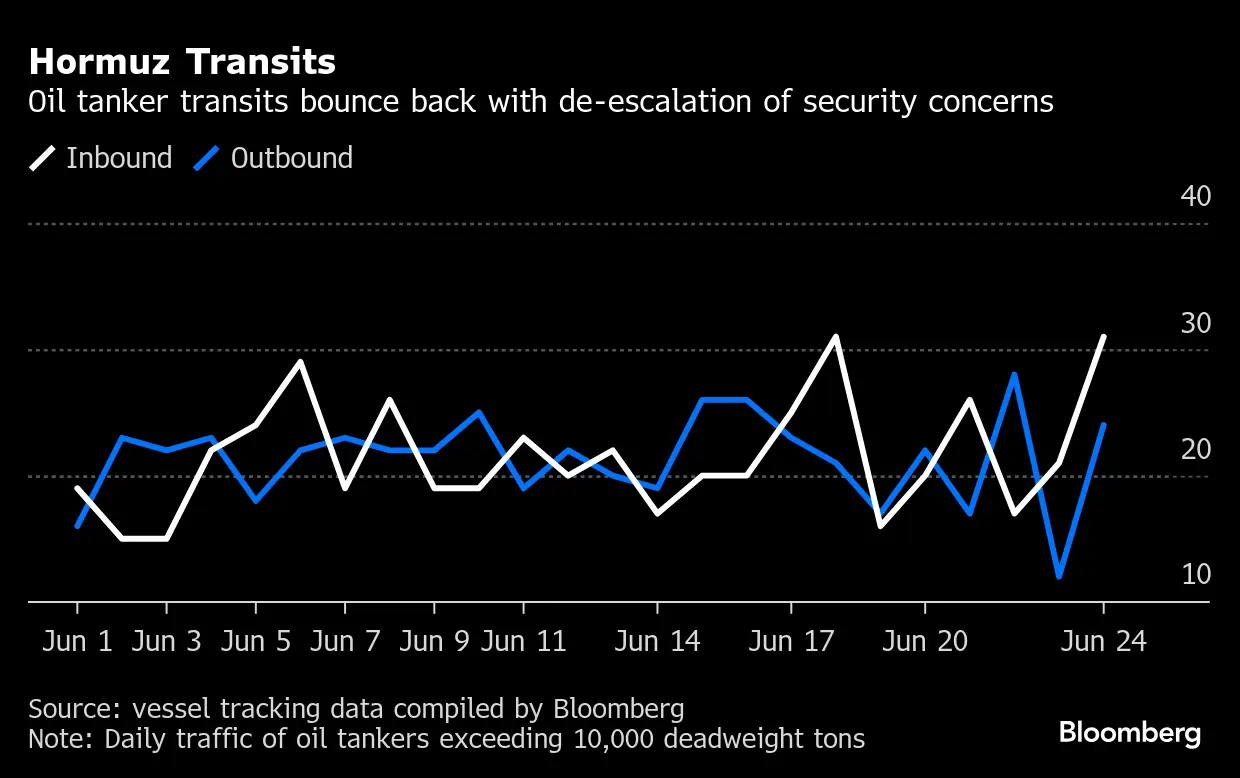
A shutdown of the Hormuz Strait would mainly disrupt Asia-bound oil tankers from the Middle East. Last June, at the height of escalating tensions during the 12-day conflict between Israel and Iran, the benchmark rate for a supertanker carrying 2 million barrels of crude from the Middle East to China hit a new high before traffic through the Strait of Hormuz rebounded.
How have oil exporters been preparing for contingency?
According to Reuters and data from Vortexa, OPEC+ top producers Saudi Arabia and the UAE have raised oil exports in recent days as part of contingency plans. The US Energy Information Administration said last June that about 2.6 million barrels per day (bpd) of unused capacity from existing UAE and Saudi pipelines could be available to bypass the Strait of Hormuz.
What forms could the shipping disruptions take?
While Iran has in the past threatened a full blockade of the Strait, analysts suggest that they are more likely to disrupt shipping operations than impose a prolonged blockade. During the US and Israel air strikes on Iran last June, an average of 1,000 vessels per day experienced GPS signal interference near Iranian waters, causing tanker collisions, according to Bloomberg.
What do historic price movements reveal?
According to Barclays, Brent crude could rise to around $80 per barrel in the event of a material supply disruption. “While it is entirely possible that an escalation does not lead to a supply disruption and the $3-5/b risk premium in oil prices fades quickly, even a 1 mb/d supply outage would further question the widely expected supply glut and push Brent to $80/b, in our view,” the bank said.
While global investment banks such as JP Morgan have estimated the impact of a full blockade of the Strait of Hormuz as pushing international oil prices beyond $120-130 per barrel, Bloomberg Economics analysis reveals that historical price movements show oil prices “tend to rise 4% for every 1% decrease in supply”.
Energy Connects includes information by a variety of sources, such as contributing experts, external journalists and comments from attendees of our events, which may contain personal opinion of others. All opinions expressed are solely the views of the author(s) and do not necessarily reflect the opinions of Energy Connects, dmg events, its parent company DMGT or any affiliates of the same.








