

Kremlin Still Key for US Atomic Power Despite Looming Import Ban


(Bloomberg) -- The US nuclear industry remains heavily dependent on Moscow for the enriched uranium that fuels reactors generating about a fifth of the nation’s electricity, highlighting the challenge of meeting a 2028 deadline to end Russian purchases.
US reactor operators bought about 3.28 million separative work units, or SWUs, of Russian enrichment services in 2025, equal to almost 26% of their total purchases, according to data published Wednesday in the Energy Information Administration’s latest uranium marketing report. That compares with 17% a decade earlier.
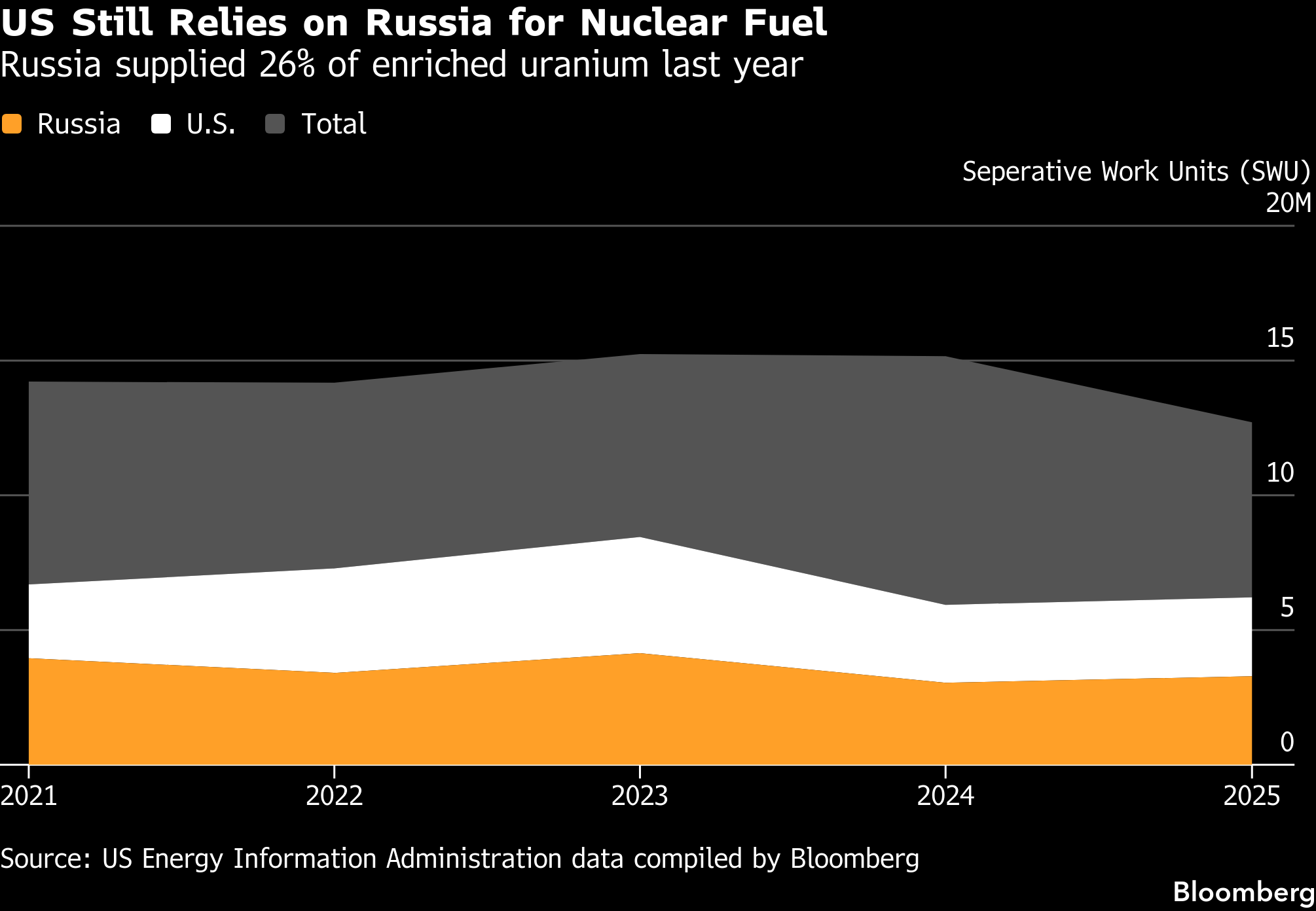
The vulnerability is growing more urgent as Washington promotes a nuclear revival driven by power demand from data centers and electrification. Existing utilities are seeking to extend reactor lives and restart plants, while developers of small modular reactors need to secure fuel for projects over the next decade.
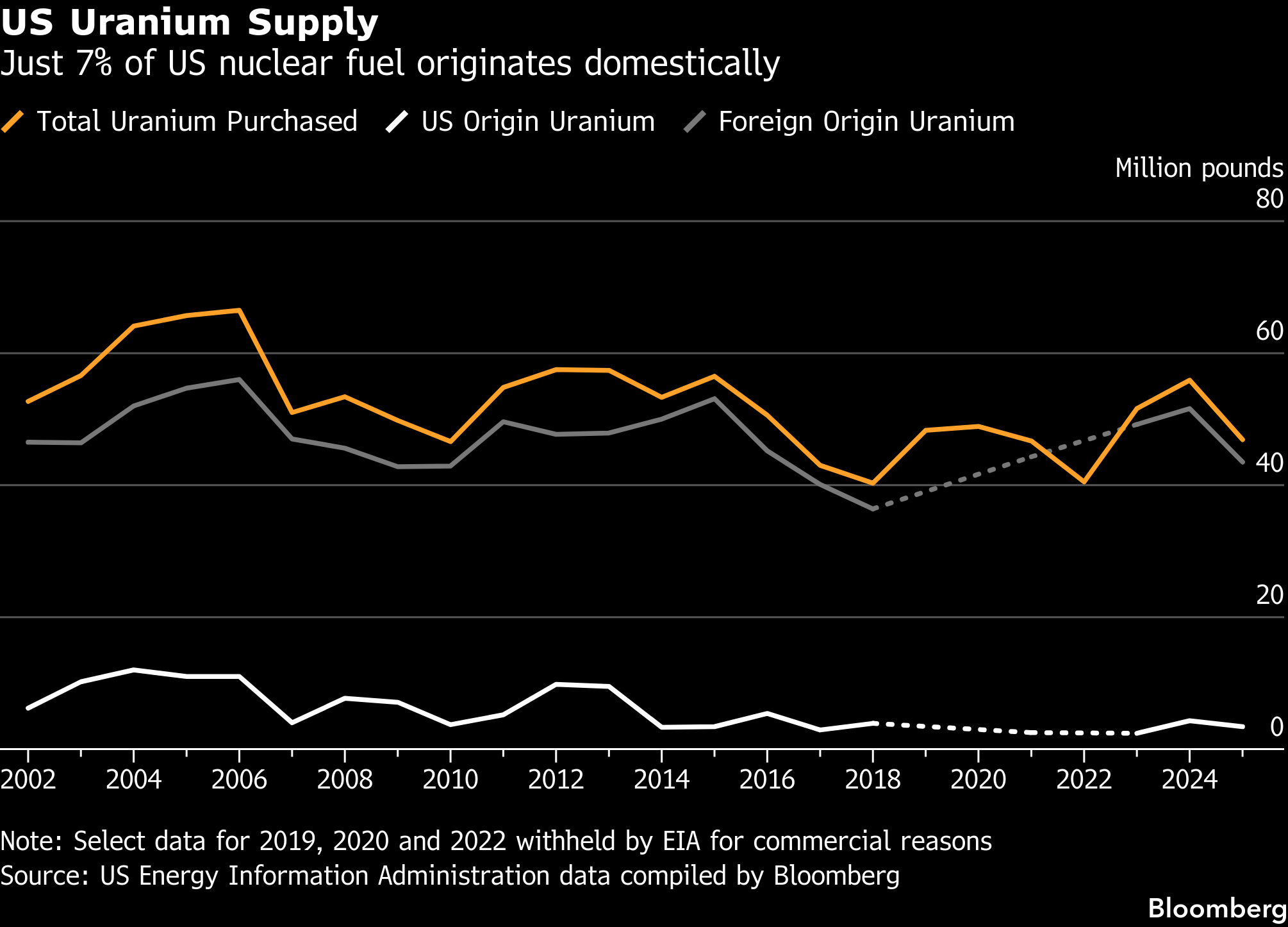
Both groups also remain exposed to international trade, even as the Trump administration disrupts supply chains with sanctions and tariffs. Foreign sources supplied 77% of the enrichment services purchased by US operators in 2025. Russia was the largest single source.
A 2024 US law bans Russian uranium imports but allows the Department of Energy to grant waivers when alternative supplies are unavailable or imports are deemed to be in the national interest. That authority expires no later than January 2028.
The arrangement creates a political choke point because deliveries are contingent upon both US waivers and Russian export licenses, leaving utilities exposed to a further deterioration in relations between Moscow and Washington. Sanctions have already transformed trade in oil, gas and other energy commodities since Russia’s invasion of Ukraine.
Domestic and allied enrichment projects are advancing, but their timing leaves a gap. Urenco USA — owned by the British, Dutch and German nuclear consortium — is adding about 700,000 SWU of annual capacity by early 2027. Larger projects from Centrus Energy and Orano aren’t expected until 2029 and beyond.
©2026 Bloomberg L.P.








