

Australia’s ‘World-First’ Data Center Rules Hit First Hurdle


(Bloomberg) Prime Minister Anthony Albanese’s proposed “world-first” national environmental and energy controls for Australia’s A$150 billion ($105 billion) data center pipeline hit their first hurdle, with two of the country’s jurisdictions opting not to back the planned rules.
Federal, state and territory energy ministers met virtually Tuesday to discuss the proposed curbs as Australia’s rapidly expanding data center industry — fueled by demand for artificial intelligence and hyperscalers including Microsoft Corp. and Meta Platforms Inc. — attracts opposition from community and environmental groups.
Queensland state and the Northern Territory opposed most measures related to putting guardrails on the data center sector, including introducing a national set of regulations, according to a government statement issued after the Energy and Climate Change Ministerial Council gathering. All states and territories must support the federal policy for it to proceed.
The federal government will work with states, territories and market bodies on a detailed policy design, with the potential for introduction of more stringent local requirements, the council said in its communique. The ministers are set to meet again in September.
New data centers would need to add at least as much electricity generation to the grid as they consume, Albanese said in a policy speech earlier in July that laid out plans to embrace the sector while shaping how it develops. Bringing these issues into a single national framework would be a global first, he said.
He said operators would be expected to build renewable generation, minimize water use, maximize energy efficiency and fund any additional water infrastructure required, though he provided few details on how the policy would work.
Australia is among a growing number of countries trying to regulate AI without stifling innovation while ensuring adequate power supplies for the energy-hungry data centers that underpin the technology. A surge in data center investment is also helping support the country’s slowing economy.
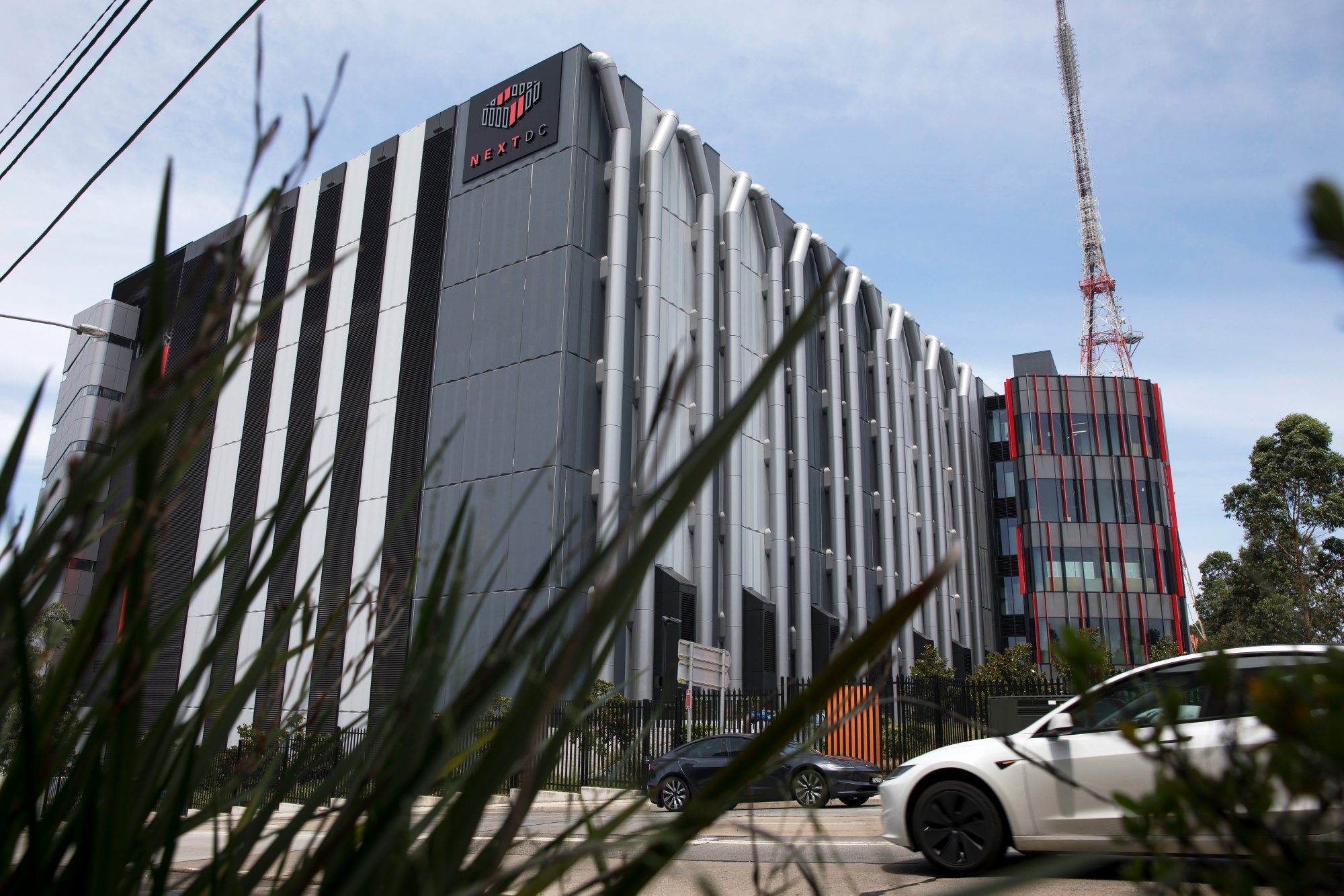
Australia is emerging as one of Asia’s top locations for data center construction due to its high potential for renewable energy, stable political environment and strong connectivity with the rest of Asia via low-latency submarine cables, Bloomberg Intelligence analysts led by Matt Ingram said in a June report.
Data center investment could hit A$150 billion by 2030, Commonwealth Bank of Australia associate economist Lucinda Jerogin wrote in a note. Six gigawatts of potential capacity are planned, with demand driven by appetite for hyperscale cloud and AI infrastructure, she said.
The country was second only to the US in terms of dollars invested in the sector in 2024, according to a report from real estate group Knight Frank.
Buy-In
Queensland has previously stated that it doesn’t support the imposition of renewable power requirements in order to remain an attractive market for investors, Premier David Crisafulli said prior to Albanese’s policy announcement.
The measures enjoy public support. A YouGov survey commissioned by Australia’s Climate Council found that 82% of respondents agreed that new data centers should be made to pay for extra renewable energy and storage infrastructure that meets their power needs.
National rules on data centers would stop states and territories from competing with each other, according to Rob Nicholls, a senior researcher at the University of Sydney’s Centre for AI, Trust and Governance.
“The policy the PM has announced doesn’t work unless there’s buy-in from all the states and territories,” Nicholls said. “Part of the reason you have a policy is to avoid a race to the bottom from the states.”
Chief Executive Officer Belinda Dennett of industry group Data Centres Australia — whose members include Google, AirTrunk and Microsoft Corp. — said the group is supportive of the principle that new electricity demand should be backed by new supply, with many operators and customers already underwriting renewable energy.
Still, the industry wants clarity on three key issues, Dennett said, including whether the compliance obligation falls on the data center operator or the tenant, when that obligation takes effect, and what energy usage is being offset — the facility’s actual electricity consumption or its nameplate capacity.
©2026 Bloomberg L.P.








