

Nuclear AI Startup Fermi Promised Land and Ample Power. But It Couldn't Sign a Single Client


(Bloomberg) -- For a brief moment, no startup rode the data center boom better than Fermi Inc.
Co-founded by a former Texas governor and a brash entrepreneur, Fermi offered companies racing to build data centers the two things they crave most: open land and an astonishing amount of power.
The firm leased a site near Amarillo on which it planned to build power plants generating 17 gigawatts of electricity — three times the amount typically consumed by New York City. Hyperscalers could install their data centers on the site itself and tap directly into that power, which would come first from natural gas turbines and later from nuclear reactors.
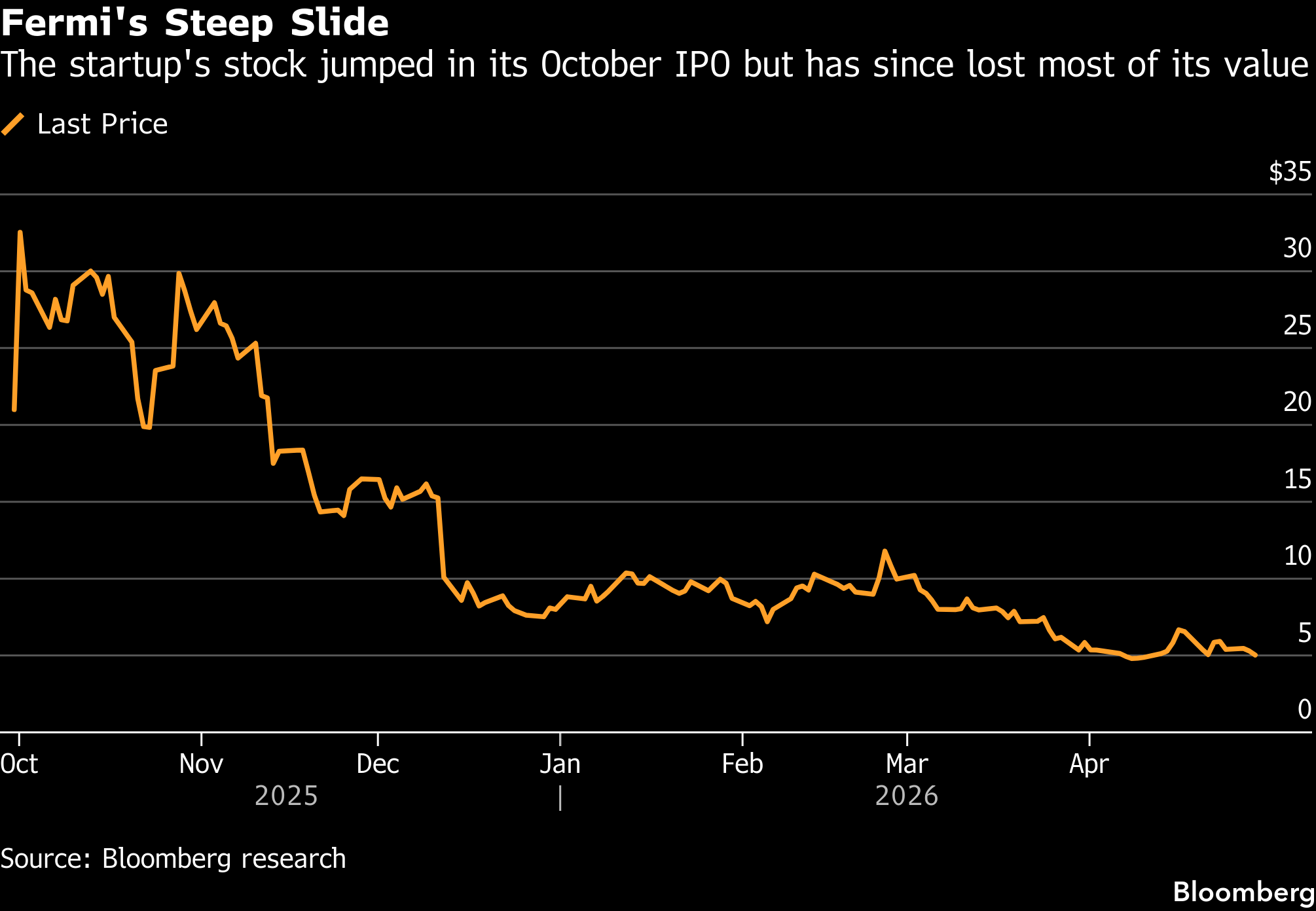
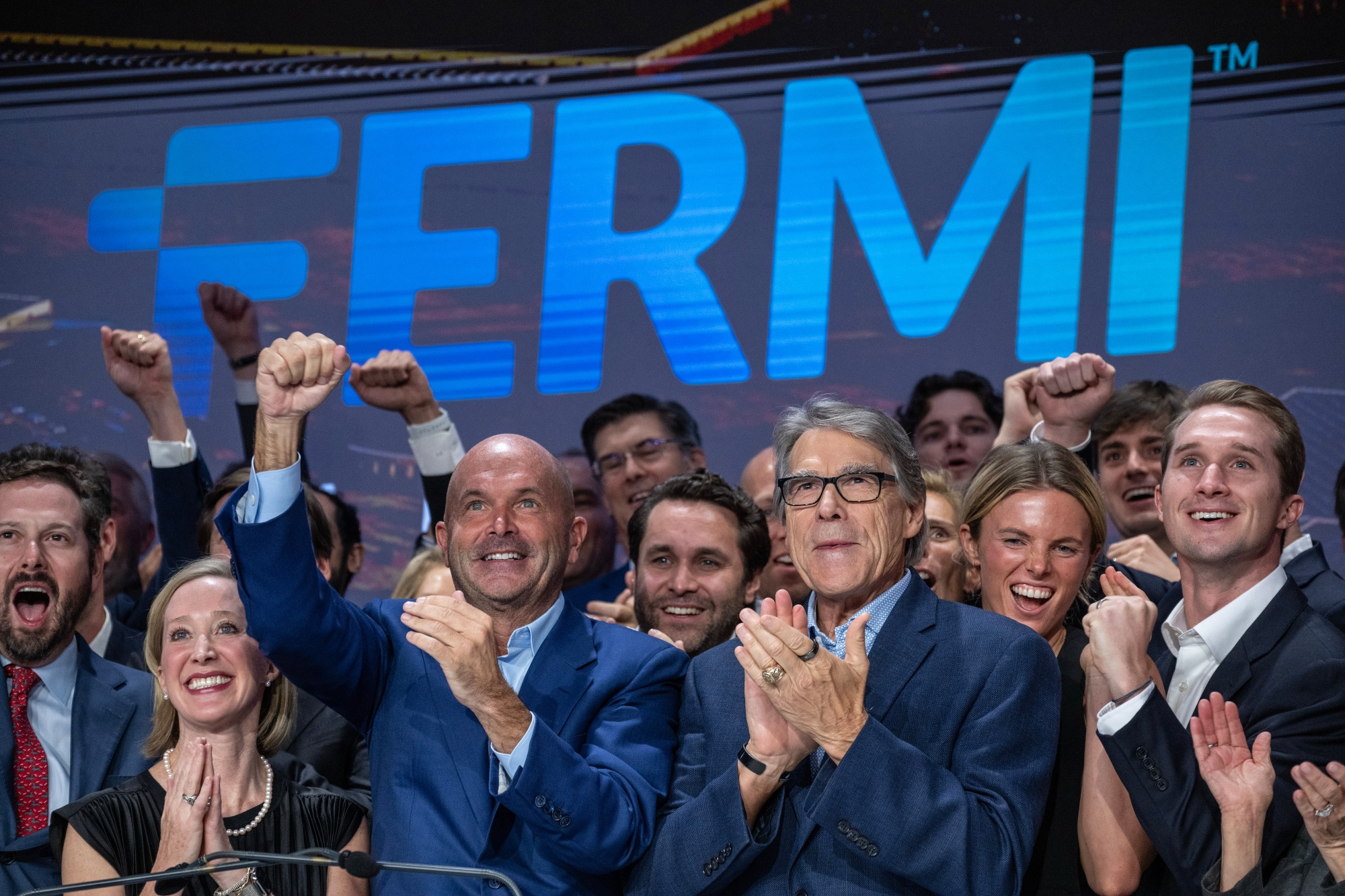
The pitch ticked so many boxes — artificial intelligence, nuclear energy, political connections — that some investors found it irresistible. Fermi went public in October worth more than $19 billion in market value, despite reporting no revenue or signed customers.
Now, the startup’s board has fired its top executive, Toby Neugebauer, after months of negotiations failed to secure a single client. Chief Financial Officer Miles Everson left as well. Not one to go quietly, Neugebauer claimed he was removed without cause and called for an immediate sale of the company he co-founded with ex-governor Rick Perry, who also served as US secretary of energy during President Donald Trump’s first term.
Fermi, in a filing Thursday, said Neugebauer was fired for conduct that violated his employment agreement as well as the company’s policies but did not give further details. The company also said he had been removed from the board of directors, after initially reporting that Neugebauer would remain on the board.
Neugebauer, in response, called the board’s actions “completely misguided” and said he would continue trying to maximize value for the company’s shareholders. On Friday, he sued the company and three of its directors, alleging wrongful termination.
“As a co-founder and the largest shareholder who has yet to sell a single share, no one believes more in the future of what we built at Fermi than I,” he said Friday in a statement to Bloomberg. He otherwise declined to comment for this story.
Fermi’s stock, meanwhile, has tumbled 84% from its peak. The company’s more than 5,000-acre site in the Texas panhandle — dubbed Project Matador, or the President Donald J. Trump Advanced Energy and Intelligence Campus — remains mostly unfinished. And some analysts see a cautionary tale of the market’s AI enthusiasm running ahead of reality, with investors betting on companies whose grand projects may never get built.
“Going from zero to a 17-gigawatt AI hyper campus in one leap before they had a single tenant or a dollar of project finance — that was a lot in hindsight,” said Timm Schneider, an energy analyst and founder of the Schneider Capital Group.
Fermi is not actively pursuing a sale, according to a company statement. The board had considered removing Neugebauer for a while, and his departure has prompted “positive feedback” from investors, potential tenants, vendors and other partners in the project, the statement said.
“Given recent changes in leadership, which position the Company for its next chapter of growth and evolution from a startup to a scaled enterprise, the Company firmly believes a sale is not in the best interest of its continued momentum on Project Matador, ability to serve potential tenants and long-term value creation for shareholders,” the statement read. Fermi declined to comment for this story beyond the statements made in its press releases and regulatory filings.
The son of a former Texas congressman, Neugebauer first made his name and his fortune as a co-founder of Quantum Energy Partners in 1998, a Houston-based private equity firm focused on oil and gas. He left after the firm scored big on an early bet in the Barnett Shale natural gas field, just as the US shale boom was getting underway.
Neugebauer kept up the family interest in politics. He grew close enough to Senator Ted Cruz, and so involved in his fundraising, that the Texas Tribune referred to him as Cruz’s “consigliere.” He also befriended Perry, who as governor once accepted a flight on Neugebauer’s private jet, according to the Texas Observer. (A spokesperson for Perry, who otherwise declined to comment for this story, said, “At all times during his tenure as Governor, Rick Perry complied with all travel-related ethics requirements — often paying expenses out of pocket.”)
Neugebauer’s best known post-Quantum venture blended both business and politics. He raised $50 million to launch an “anti-woke” banking startup called GloriFi in 2022, only to see it file for Chapter 7 bankruptcy the following year. He’s now being sued by GloriFi’s bankruptcy trustee over allegations including securities fraud, misrepresentations to investors and gross negligence. Neugebauer responded that an independent investigation found no wrongdoing on his part, and he filed his own suits against investors accusing them of running a coordinated attack to destroy his reputation.
With Fermi, Neugebauer saw an opportunity to tap into the AI-inspired frenzy to build data centers. The project location was the key.
Leased from the Texas Tech University System, the site lies within the crossroads of several natural gas pipelines, of which Fermi has an agreement to tap one. That connection would provide enough gas to supply about 2 gigawatts of power generation — more than enough electricity for an initial round of tenants. The land is also near America’s largest nuclear weapons production facility, potentially easing the permitting process for the reactors that Fermi — named after physicist Enrico Fermi, creator of the world’s first atomic reactor — plans to install.
It’s hard to overstate how tantalizing to investors, and difficult to build, 17 gigawatts of power is. A single gigawatt is roughly the output of a large nuclear reactor and can supply about 750,000 average homes. Most gas-fired plants don’t produce that much electricity. Now, hyperscalers want to build so many energy-hungry data centers that in Texas alone, peak electricity demand is expected to quadruple in the next six years, rising by 282 gigawatts. No one’s sure how to meet the need.
The idea of giving data centers their own, dedicated power supply not dependent on the grid may sound tempting, but former US Department of Energy official Jigar Shah said banks don’t want to finance it. The grid, drawing power from many sources, is more reliable than a handful of expensive, on-site plants, he said.
He considers Fermi a failure “of monumental proportions” and says similar, off-grid data center projects elsewhere deserve more skepticism than they’ve received. The company does have an agreement for a .2 gigawatt connection to the local grid, but Neugebauer in an interview last month described it as an insurance policy to help Matador get up and running.
“We’re allowing these types of projects to continue to be viewed as viable when they most certainly are not,” said Shah, who ran the department’s Loan Programs Office during the Biden administration.
While executing Fermi’s plan would be hard, political tailwinds seemed favorable.
Perry and his son Griffin signed on as Fermi’s co-founders, and the company incorporated in early 2025 as Trump returned to office, determined that the US should “dominate” the fast-growing AI industry. On the company’s first earnings call in November, Neugebauer bragged that Trump’s current energy secretary, Chris Wright, and Interior Secretary Doug Burgum had intervened in trade negotiations with Germany to help Fermi secure gas turbines from Siemens Energy AG.
For Fermi’s plan to work, the company needed to land at least one anchor tenant, which would then help unlock project financing. In November, the company reached a $150 million agreement with a potential tenant. But the following month, Fermi reported in a filing that the deal had fallen through, triggering a 46% sell-off in the company’s stock.
Fermi’s filing didn’t identify the client that balked. But Neugebauer told Business Insider the tenant in question was Amazon.com Inc., and people familiar with the discussions confirmed Amazon’s identity to Bloomberg this week. Talks between the companies, the people said, broke down after Amazon sought to cut the contract’s duration from 20 years to 15 years, and after the tech giant estimated that Matador would reliably supply less electricity than Fermi proposed. Amazon declined to comment on the reported talks and said the company has had no recent business engagements with Fermi.
In February, the Amarillo Globe-News reported construction had paused at Fermi’s site. By April, site improvements were still mostly unbuilt, according to a widely-circulated short seller report. “Really there was just lots of dirt. It was a piece of dirt with a dream,” an investor who visited the site in February told the short sellers, Fuzzy Panda Research.
Neugebauer kept pitching. Clad in his usual tweed jacket, he worked the rooms at the Semafor World Economy conference in Washington DC last month, trailed by another Fermi employee carrying a stack of give-away cowboy hats. But on April 17, the board removed him as CEO.
The split leaves Fermi in an awkward position. Neugebauer remains the company’s largest shareholder, with a stake worth about $1.4 billion, according to the Bloomberg Billionaires Index. His sons hold restricted stock units with a combined grant date value of $68.5 million, according to a recent company filing.
Perry, meanwhile, retains his board seat and his stock holdings, worth about $80 million. Perry’s son Griffin has shares worth just over $300 million and sold 15% of his stake for $56 million after a lock-up period ended in March. Griffin Perry did not respond to requests for comment.
Fermi’s ground lease agreement with Texas Tech, reviewed by Bloomberg News, gave the university the right to terminate the lease if the company couldn’t secure a tenant by the end of last year. But after Neugebauer’s removal, the school system signaled its continued support for Fermi.
“Project Matador has the potential to deliver generational impact—not just for TTUS, but for national security, American energy independence, and the future of advanced research and industry in West Texas,” said Chancellor Brandon Creighton in a Fermi press release announcing the executive changes.
For now, the board has created an interim “Office of the CEO,” with two co-presidents taking over Neugebauer’s role while a permanent replacement is sought. Although the stock has been battered, some analysts are encouraged by the changes, saying Neugebauer’s own hard-charging personality may have been an obstacle to landing a tenant.
“We view this transition as changing the ‘tone at the top’ but maintaining the same tenacity and vigor the industry has seen from an operational perspective,” said Evercore analyst Nicholas Amicucci in a note.
(Updates with details about a lawsuit filed against Fermi Inc., in paragraph seven.)
©2026 Bloomberg L.P.








