

US Extreme Heat and Storms to Stress Power Grid Through Weekend


(Bloomberg) -- A searing heat dome over the eastern US that’s disrupting some Independence Day festivities in Washington, DC, and drove power demand to record levels, is threatening to bring potentially dangerous thunderstorms across the region this weekend.
Severe storm warnings peppered the New York City area Friday evening, as wind gusts up to 70 miles (113 kilometers) per hour hazarded to snap tree limbs onto nearby power lines. Another round of storms is expected from New York to Washington heading into Saturday evening, as Fourth of July fireworks celebrations are set to begin, according to commercial forecaster AccuWeather.
“We have these storms kind of running around the edge of the heat dome, using it as a source of energy,” said Melissa Constanzer, a senior meteorologist at AccuWeather.
The storms could add new challenges for utilities and grid operators trying to keep the lights on as temperatures — which surged into the triple digits in many American cities this week — remain 10F to 15F above average through the weekend.
Consolidated Edison Co., which runs New York City’s electric utility, offered to distribute dry ice in parts of Queens and Brooklyn Friday night after cutting off power to almost 10,000 customers, citing equipment problems driven by heavy usage and extreme heat. On Friday night, it said that power had been restored to more than 93,000 customers who were impacted by weather-related outages, and it was working to return power to more than 30,700 customers.
More than 240,000 homes and businesses in New Jersey were without power Friday night, according to PowerOutage.com. New Jersey Transit said some rail services were suspended due to the impact on equipment related to extreme temperatures.
PJM Interconnection LLC, a power grid serving 67 million people across 13 states from the District of Columbia to Chicago, said demand on July 2 likely surpassed the previous record of 165.563 gigawatts set in August 2006.
The Great American State Fair — a two-week festival of patriotic-themed events along the National Mall in Washington — closed for several hours Friday amid the heat. The National Independence Day Parade, scheduled to take place at 10:30 a.m local time in Washington, was canceled due to heat, organizers said on Friday night. Highs in the nation’s capital were expected to be over 100F.
The hot weather underscores the extent to which increasingly extreme temperatures are reshaping American life, and the systems that underpin it.
More than 197 million people spanning from Kansas to Maine found themselves under extreme heat warnings or heat advisories on Friday, according to the US Weather Prediction Center. The heat is hitting ahead of the July 4 celebrations for America’s 250th birthday and another busy weekend of World Cup football.
The Athletic reported that soccer fans in Philadelphia will have access to additional hydration stations and misting tents to cool down during the last mile heading into the stadium for Saturday’s World Cup match between France and Paraguay. Humidity will bring temperatures in the city to 105F, according to the National Weather Service.

The combination of swampy, moist air and intense sun has driven power consumption to new heights, as homes and businesses crank air conditioners to stay cool.
Even before the latest bout of intense heat, US grids were struggling with a data center buildout that has upended two decades of stagnant power demand. And now they’re even more susceptible to outages in periods of extreme temperature fluctuations, with implications for everything from residential air conditioners to hospital lighting.
Con Ed asked tens of thousands of homes across the New York City region to conserve energy amid high heat this week, throttling back voltages. Those households were asked to not use washers, dryers and microwaves, and to use only one air conditioner if they have two, the company said in a statement.
The PJM grid, home to “data-center alley” in Northern Virginia, published a swathe of emergency alerts this week as temperatures climbed. The Department of Energy issued an order to ensure that all generating units would operate at maximum capacity, including backup sources, to prevent blackouts. That’s already the second time it has had to do so this summer.
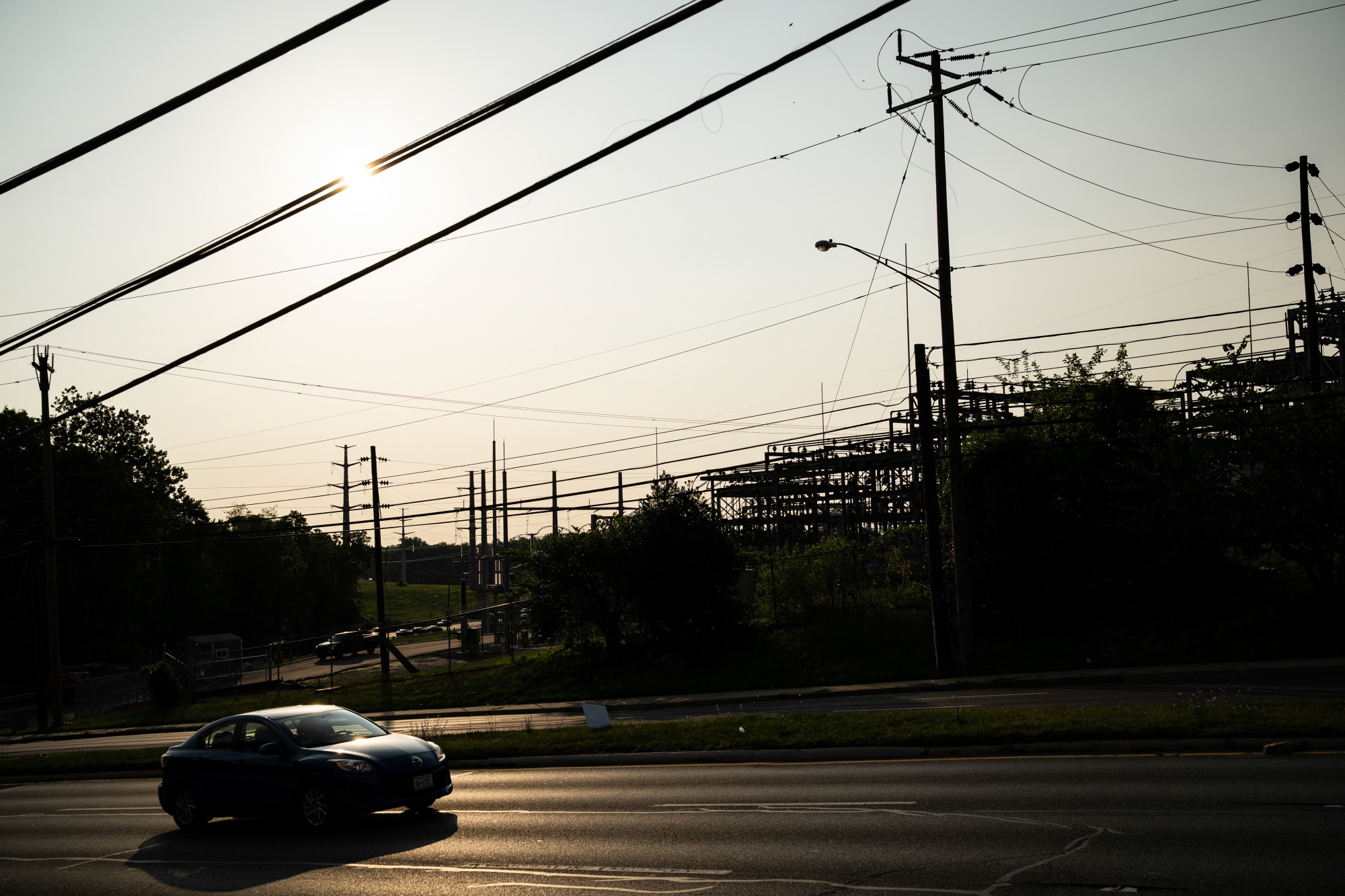
Despite all that, demand looks to have hit a record, with an official figure to come after a 60-day period needed to calculate the performance of its demand response resources. Data on Thursday had showed that instantaneous load was approximately 162.7 gigawatts between 5 p.m. and 6 p.m., but that had been suppressed.
It had previously said a record this summer was “unlikely, but plausible.”

Temperatures in Central Park touched 98F on Friday afternoon local time, a day after the city experienced its hottest day since 2012 with the heat hitting 100F. Oppressive temperatures and humidity are forecast across the city and the eastern half of the US through the weekend.
While electricity usage is set to ease slightly Friday amid holiday travel, cooling demand may spike again as the hot and humid conditions persist. The risk of failures at power plants or other critical equipment rises with high sustained demand.
©2026 Bloomberg L.P.