

How Free Batteries Help NYC Small Businesses Save on Electric Bills


(Bloomberg) -- At Café Mars in Brooklyn, an all-electric kitchen means better air quality for the chefs whipping up short-rib ravioli and tofu cannolis, fewer carbon emissions — and a $4,000 electric bill.
“Our electricity bill is insane. And that’s a tough thing,” said Paul D’Avino, the Italian restaurant’s owner and co-chef.
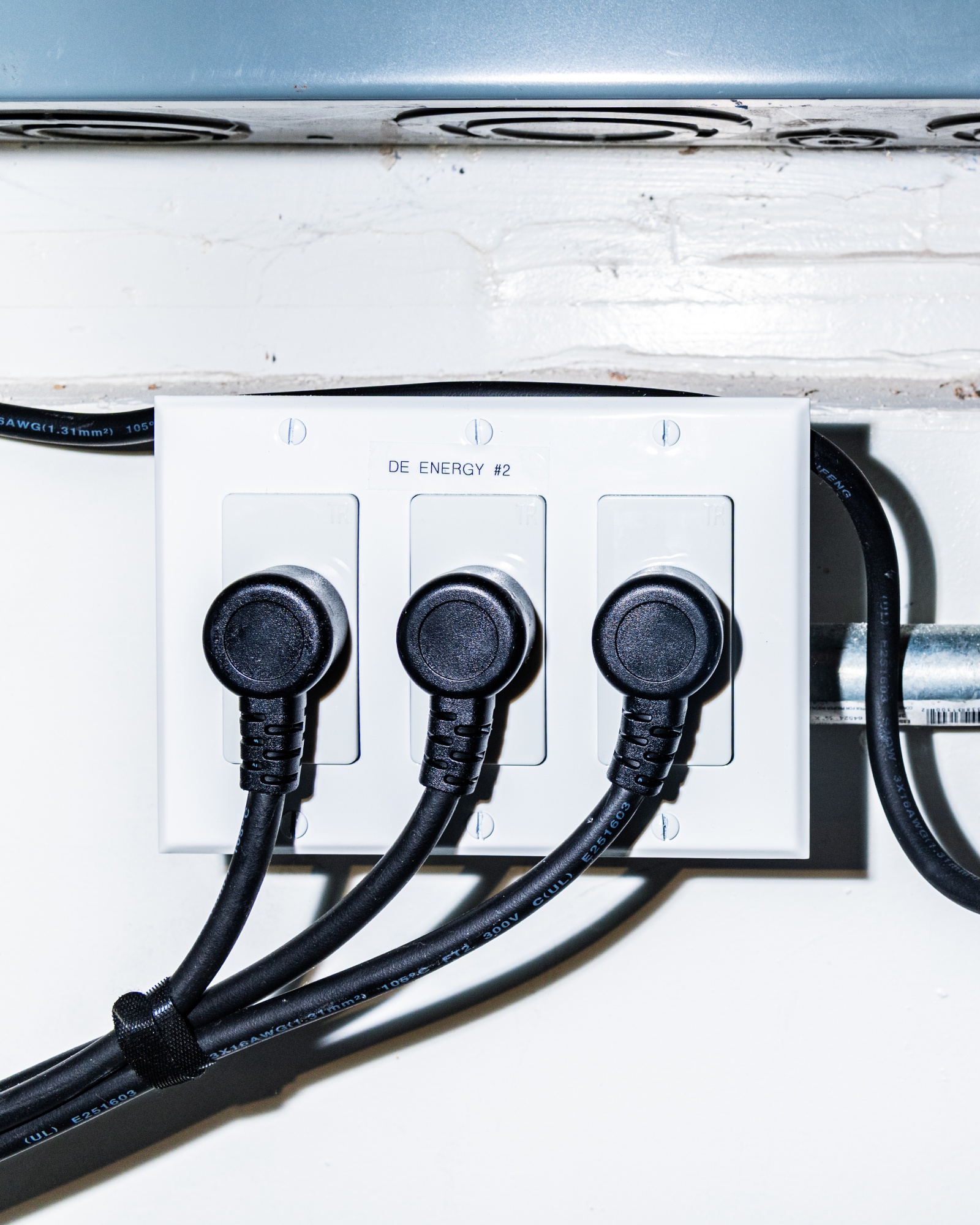
So this summer, the 45-seat eatery is using six free plug-in batteries provided by David Energy, a startup power supplier.
The batteries allow the energy provider to buy and store energy when demand is low at night, and then discharge it during the day to avoid peak pricing, saving businesses like Café Mars 3% to 5% on their monthly bill.
“We are funding the battery up front and then we are extracting the value out of that battery in the power market,” said James McGinniss, David Energy’s chief executive officer. “And that value generated is enough to give our customers a discount, pay back the capital expenditures on the battery and leave some margin leftover for David Energy.”
As electricity prices soar and battery costs fall, a growing number of power providers and smart home companies including Tesla Inc., Sunrun Inc. and Base Power Inc. are setting up these kinds of networks to tap into customers’ EV or standalone batteries when supplies are tight, profiting from swinging electricity prices. Experts say the practice can bolster the grid without adding new transmission capacity.
“This all becomes enabled because batteries have gotten much cheaper through time,” said Allison Weis, global head of storage at Wood Mackenzie.
Electricity prices rose 6.1% in New York City last year, squeezing small businesses with notoriously tight margins. Unlike residential customers, businesses like Café Mars pay hefty demand charges — which make up nearly half of the restaurant’s bill — based on the highest amount of electricity used at a single moment each month, in addition to being charged for the total amount of energy they consume. The restaurant’s power bill is one of its biggest expenses.
Even small gaps between the grid’s power and what consumers are drawing can send prices through the roof, said Yury Dvorkin, a grid researcher at Johns Hopkins University. “The cost of a battery is nothing compared to how much money you can make on the price arbitrage,” he added.
The battery networks, known as virtual power plants, are often set up so that the broker can sell power back to the grid when prices are high. But many of these installations face a lengthy permitting process from the New York City Fire Department.
To get around this, David Energy provides customers with plug-in batteries and doesn’t sell any power back to the grid. Instead, it stores power in its customers’ batteries when prices are low, and passes a portion of the savings to them. The company uses software that predicts when energy demand will peak and can automatically switch a business from grid power to the batteries, allowing customers to skirt the highest prices.
“These are permissionless, quote, batteries, which is sort of the magic of them,” said McGinniss.

Since December, David Energy has installed nearly 1,500 batteries at 150 businesses across the city and has signed contracts to deploy 2,000 more.
Batteries could reduce reliance on fossil-fuel-powered peaker plants, which kick in when high energy demand puts the grid under strain, said Dvorkin. In New York, for example, they may come online on sweltering summer days where residents blast their air conditioners. Under state environmental regulations, these peaker plants are set to be phased out, but the New York Independent System Operator, the non-profit that manages the state’s grid, has continually extended their use, citing risks of outages.
Later this year, David Energy also plans to start procuring solar power for its customers through power purchase agreements and eventually owning its own solar farms.
“Over the next few years we think we could match all of our peak daytime demand with solar and batteries,” McGinniss said.
Solar energy is the cheapest source of electricity, which David Energy hopes will bring more savings to businesses while reducing emissions. For now, David Energy only operates in New York City, but McGinniss said the company plans to expand to other metropolitan markets early next year.
The batteries at Café Mars, installed in mid-May, shaved $104 off the restaurant’s latest monthly electric payment. Still, said D’Avino, in the dining industry, even humble savings can make a difference.
“Even if it’s 1% of our bill, that’s better than 0%,” he said.
©2026 Bloomberg L.P.








