

Saudis Lower July Oil Prices, Though Still at Decades High


(Bloomberg) Saudi Arabia cut the price of its main crude grade to Asia for a second straight month, though the premium for barrels to the kingdom’s largest market remained near the highest in decades.
State producer Saudi Aramco will lower the price for Arab Light crude for buyers in Asia next month by $6 a barrel to a premium of $9.50 more than the regional benchmark, according to a price list seen by Bloomberg. A $5 reduction was expected by refiners and traders in a Bloomberg survey.
The Saudis lowered prices for all grades by $10 a barrel to customers in Europe and the Mediterranean, while prices for varieties for North America were shaved by $2 a barrel.
As the US and Iran drag out talks aimed at extending a ceasefire in their conflict, global oil markets remain disrupted by the continued closure of the Strait of Hormuz. With tankers stuck inside the Gulf and empty vessels prevented from entering to pick up new cargoes, the region has drastically scaled back production, shutting in fields and slowing or halting refineries.
Aramco has been the mainstay of Gulf crude exports because it has been diverting oil through a cross-country pipeline to the Red Sea port of Yanbu. That allows the company to ship as much as 70% of its pre-war exports while supplying crude to the country’s west coast refineries.
Those facilities have been pumping out products like diesel and jet fuel as Aramco seeks to capitalize on margins that have surged for refiners.
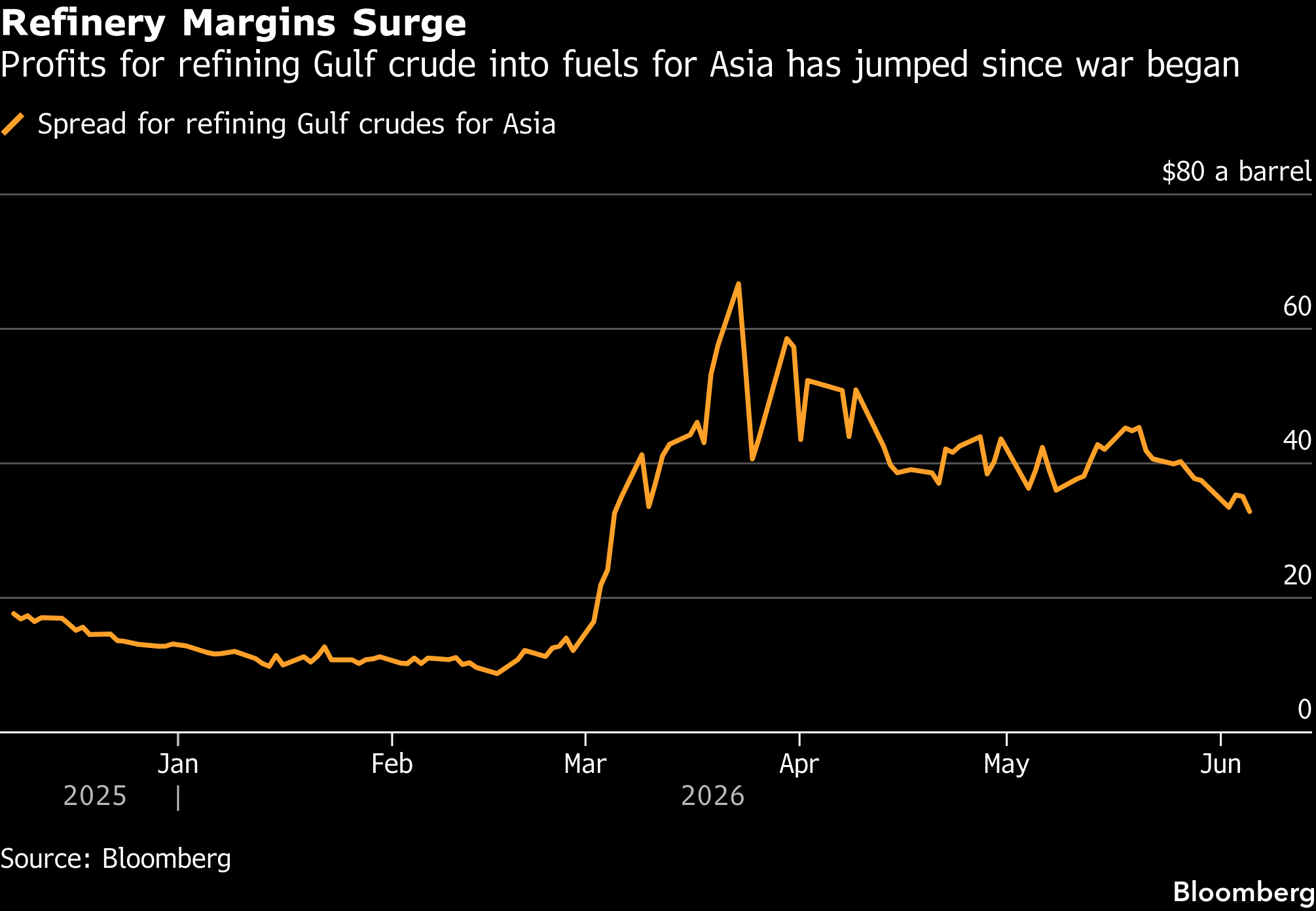
The profit from turning crude into products remains high, but slipped at the end of May, possibly reflecting declining demand as consumers deal with higher prices. Aramco traditionally prices its crude to shadow refiners’ profits, potentially explaining its decision to cut official prices for July.
The OPEC+ producers group, led by Saudi Arabia and Russia, decided to raise production targets for July by 188,000 barrels a day at a meeting on Sunday. The increase is largely symbolic with Hormuz still mostly shut, though it indicates that the group won’t restrict members from pumping oil onto markets once the Iran conflict is resolved.
©2026 Bloomberg L.P.