

Oil Heads for Weekly Loss as Ship Attack Clouds Hormuz Outlook


(Bloomberg) -- Oil was on track for a weekly decline after transits through the Strait of Hormuz accelerated, although an attack on a cargo ship has renewed concerns about safe passage through the vital waterway.
Brent crude slipped below $74 a barrel and West Texas Intermediate was near $70 on Friday. Both benchmarks climbed more than 2% in the previous session — the first increase this week — after the container ship Ever Lovely was struck by an unknown projectile while sailing southeast of Oman.
Ships had been openly transiting the waterway following early progress toward a lasting agreement to end the US-Iran war, adding millions of barrels to the global market. Further talks between Washington and Tehran are likely to be protracted on issues including nuclear policy, but oil futures have rapidly declined recently and are on track for a third weekly loss.
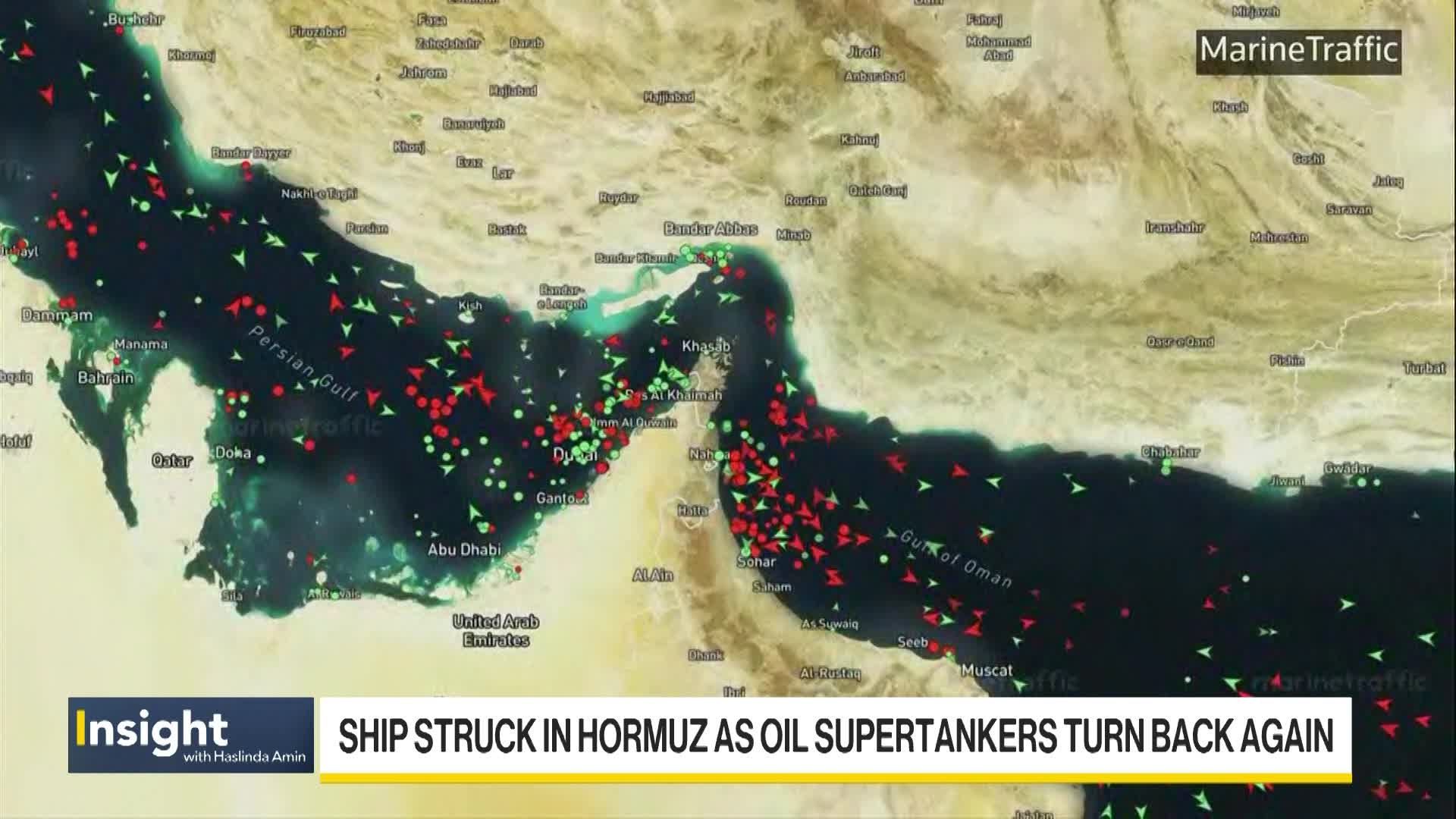
A White House official said it was too soon to say who carried out the strike on the vessel. The official, who spoke on condition of anonymity, said there were no deaths or environmental damage, and that it was able to continue sailing.
The attack has rattled the fragile confidence of shipowners and crews, though ships continued to transit through the narrow corridor on Friday. A handful of tankers turned around early on Thursday after reportedly getting warnings from the Iranian Navy, while the International Maritime Organization said it was pausing its evacuation operations in the strait.
Two key exit routes through Hormuz have emerged because the normal one through the middle is thought to have been mined. One is near Iran, while the other hugs Oman’s coastline and is protected by the US. Iran’s Persian Gulf Strait Authority said Thursday that any transit happening in routes outside its framework would not be protected by “safe-passage guarantees.”
Late Thursday, US President Donald Trump said the strait was open. He made the remarks at the White House while saying Iran would buy US farm goods with money from unfrozen assets, a claim disputed by Tehran.
The attack caused a “short-covering move,” said Dennis Kissler, senior vice president for trading at BOK Financial Securities Inc. “If you add in a market that has been extremely oversold, prices are more likely to move into a ‘back and fill’ correction before any new selling emerges.”
Earlier this week, Gulf oil was streaming out of the waterway at the fastest pace since the war began. Goldman Sachs Group Inc. said it sees Gulf exports now running at almost two-thirds of normal levels, while the pace of visible global inventory declines has slowed.
Gulf producers have been rapidly raising output, but are finding it difficult to secure tankers to ferry the oil out. Iraq has been forced to order a production halt at one of its key fields due to the shortage. The United Arab Emirates, Kuwait, and Qatar are all boosting supply.
Iraq is seeking a higher OPEC production quota to recoup oil sales lost during the war, even raising the prospect on it could consider leaving the group. The country’s oil ministry later said an exit hasn’t been proposed, and consideration of a move isn’t the government’s official position.
©2026 Bloomberg L.P.








