

War Brings Winter of Discontent for the World’s Workhorse Fuel


(Bloomberg) -- A diesel squeeze spurred by wars in the Middle East and Ukraine is setting the stage for an even worse crunch as demand rises ahead of the Northern Hemisphere winter.
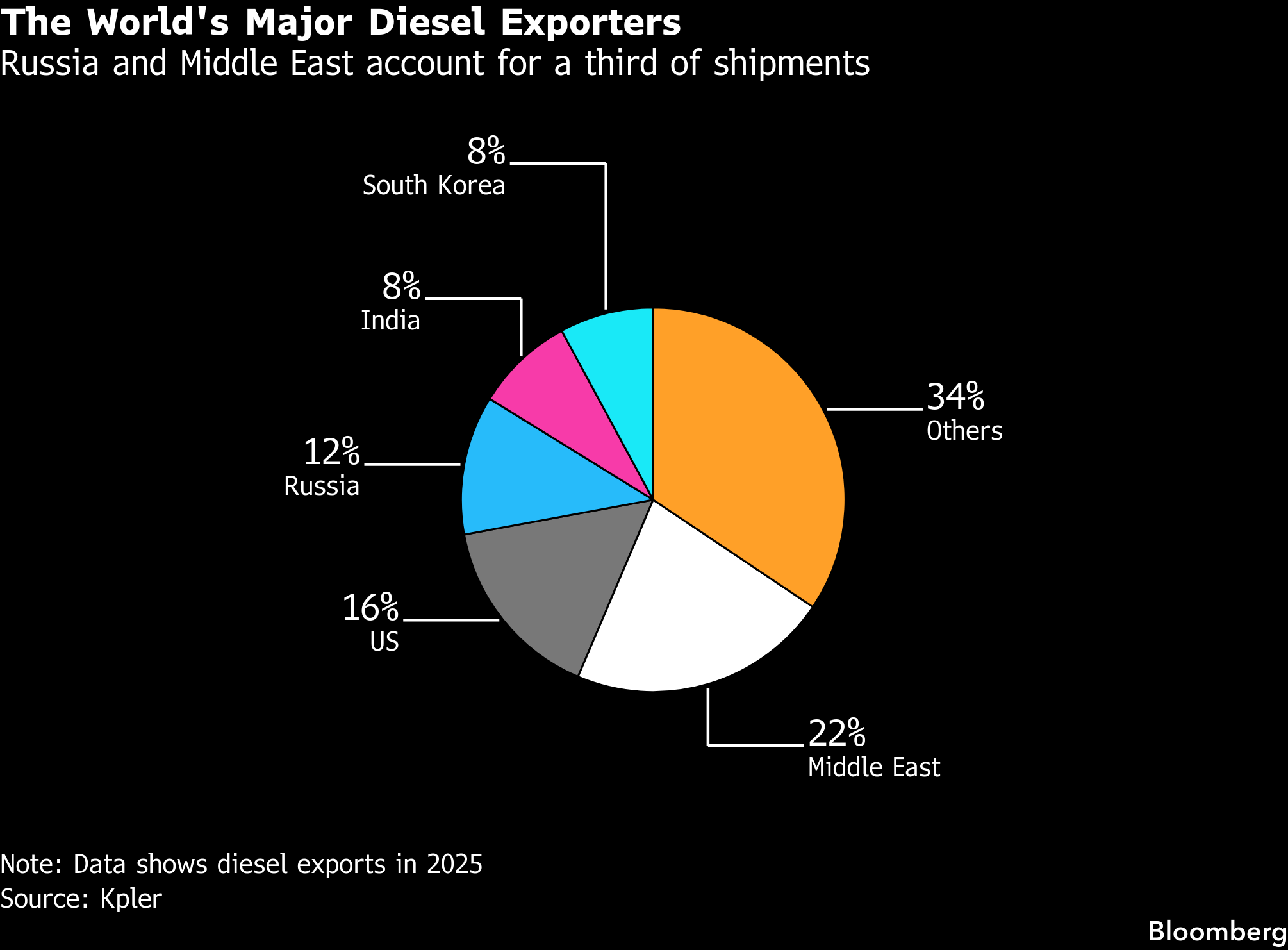
Disruptions in the Strait of Hormuz and damage to Gulf refineries, as well as a wave of Ukrainian attacks on Russian plants have severely constrained exports from regions that together accounted for around a third of global diesel exports last year.
Europe — which lacks processing capacity and relies most heavily on imports — is the most vulnerable area to a shortfall. Refiners in the US and Asia are running flat out, but with demand set to rise and stockpiles dwindling the situation will intensify in the coming months. Buyers typically stock up on diesel — a workhorse fuel that’s used in transport, industry and heating - before the temperature cools.
To make matters worse, there’s likely to be more consumption of diesel this year by some Asian power generators, who are turning to the fuel as they can’t get enough liquefied natural gas due to the war in the Middle East. Barring a breakthrough in either of the conflicts, Asian and US refiners will also probably cut down on diesel exports as winter approaches to meet growing demand in their own regions.
“Europe has a tremendous diesel problem,” said Eugene Lindell, head of refined products at consultancy FGE NexantECA. “It will get ugly in the sense that you will probably see extremely high flat prices” and this will feed through to freight costs, inflation and political pressure on governments, he said.
Price gains are already running well ahead of oil. The ICE Futures Europe diesel price, a global benchmark, has risen almost 40% from a low on June 18, while Brent crude has climbed around 5% over the same period. Given diesel’s vital role in transport, construction and industry, there’s set to be a major inflationary impact, which could happen even if oil prices remain relatively stable.
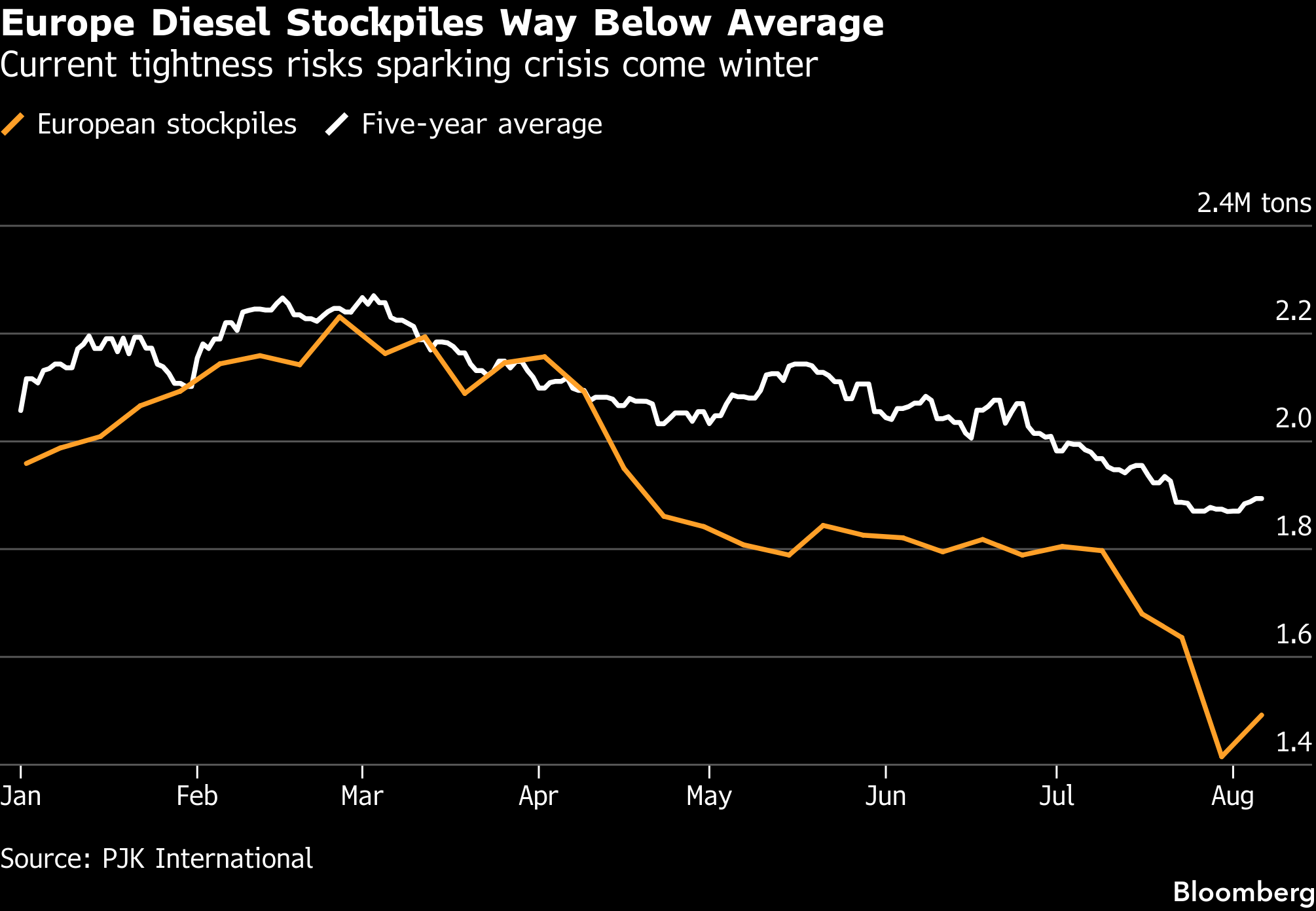
Diesel stockpiles in key importing areas have fallen over the last few months, and are well below seasonal averages. European inventories are down the most, dropping around 30% since the end of March.
Europe’s supply challenges are also being compounded by sanctions, according to Rachel Ziemba, an adjunct senior fellow at the Center for a New American Security, a Washington-based think tank. Restrictions on buying Russian refined products remain in place, while tighter European Union sanctions are increasingly limiting imports of fuels refined from Russian crude in third countries, she said.
US refiners shipped a record amount of distillate fuels, a category dominated by diesel, last week, with much of it going to Europe. That’s unlikely to continue, though, as American demand rises.
Little Relief Coming
“Gulf Coast refiners can’t keep exporting diesel to Northwest Europe indefinitely. They have their own fish to fry,” said Zameer Yusof, head of clean petroleum products analytics at Kpler. Coming up to the first quarter of next year, they would typically start channeling cargoes toward the East Coast states for the winter heating demand season, he said.
There’s also not likely to be much relief for Europe from Asia. Refiners there will have to meet their own region’s demand and may prioritize making kerosene, a heating fuel for countries including Japan, reducing the amount of diesel they can export, according to June Goh, a senior oil market analyst at Sparta Commodities.
While most traders say there are signs that Europe will face high diesel prices this winter, there are still several weeks before that buying begins. Much will depend on the temperatures later in the year, as well as whether high processing rates from the world’s oil refiners will be enough to take the sting out of the market between now and then. How much diesel China exports over the next few months will also be critical.
The situation highlights how regions that don’t have enough of their own refining capacity are especially vulnerable to global energy supply shocks. Europe is likely to be particularly hard hit relative to the other two major short markets, Africa and Latin America, which all compete for Atlantic Basin diesel, FGE’s Lindell said.
“We never fully recovered from refining losses in the Middle East, and have also lost Russian capacity,” Goh said. “The misery of Europe is not an immediate crisis, but one down the line,” she said, referring to the diesel crunch.
©2026 Bloomberg L.P.