

Trump Lashes Out After Iranian Demands as Deal Hopes Dim


(Bloomberg) -- US President Donald Trump lashed out on Monday against Iran’s demands for war compensation as part of talks to wind down the conflict, dimming hopes of a quick deal that would reopen the vital Strait of Hormuz and pushing up oil prices.
“I am likewise demanding compensation from Iran, for all of the people that they have killed and gravely wounded with their roadside bombs and many conflicts,” Trump wrote on social media. “Additionally, compensation should be paid to the families of the hundreds of thousands of innocent protestors that Iran has killed over the last 50 years.”
The sweeping new demands from Trump, which he said will be put “firmly into any, and all, future negotiations,” are almost certain to be rejected by Iran, and come after Tehran reiterated requests for reparations over the weekend and on Monday. Shortly after his post, Trump expanded the scope of his new demand, saying Iran should be responsible for “damages and death to the people of Lebanon, Syria, Yemen, and Gaza,” without offering any details.
The hardening on both sides makes it unlikely that Washington or Tehran will be able to agree to any immediate pact on Hormuz that could help end the war. Trump and other US officials had recently cheered markets by suggesting a deal with Tehran was getting closer, with both Iran and Oman in parallel discussions over the Strait of Hormuz.
Brent crude rose more than 4% on Monday to over $87 a barrel, extending a rally of more than 5% over the previous three sessions. European diesel futures surged more than 10% as refineries in Saudi Arabia and Russia also came under attack, further tightening the market for the fuel considered the workhorse of the global economy.
While Trump insisted on Monday that compensation for Iran “was never mentioned in any of our negotiations or meetings,” the 14-point memorandum of understanding that Iran and the US agreed to in June details plans for Washington and regional partners to develop a $300 billion fund for the “rehabilitation and economic development” of Iran after the war.
On Monday, Iranian officials reiterated demands for reparations and tied it to the opening of Hormuz.
“As long as hostile actions continue, the conditions for ensuring the safety of this waterway are not in place,” Iran’s foreign ministry spokesman Esmail Baghaei told reporters. “Its reopening is contingent on the US ceasing its illegal actions, lifting the siege and compensating for damages.”
Trump had earlier signaled on Sunday that he was prepared to let economic pressure on Iran build, rather than launch fresh military strikes to force a reopening of the crucial waterway for oil and gas flows.
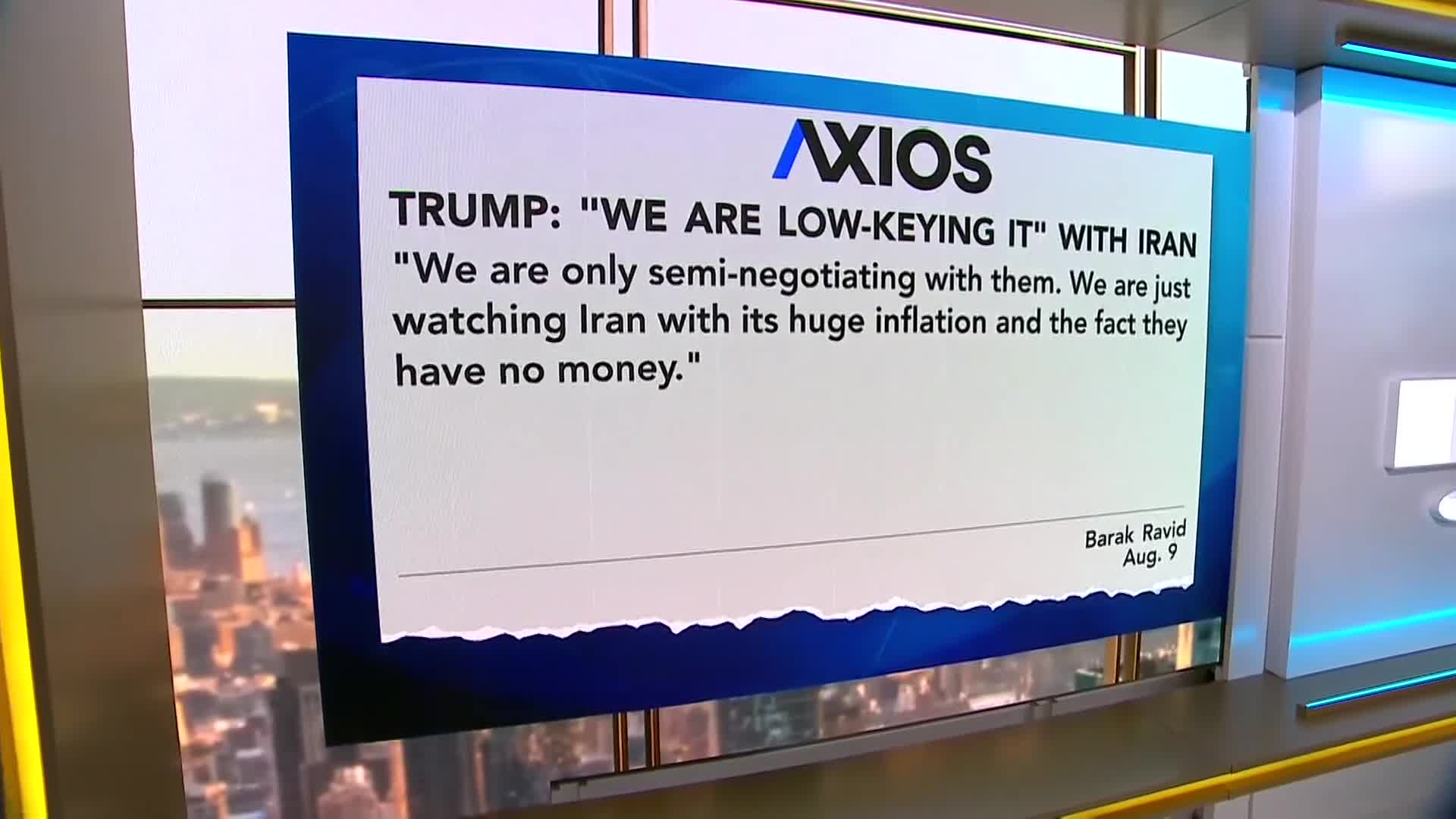
“We are just watching Iran with its huge inflation and the fact they have no money,” Trump told Axios in an interview on Sunday, saying that a US naval blockade of the country was deepening its financial woes. “We are low-keying it.”
The president’s comments had marked a shift from his repeated threats to escalate the bombing campaign against Iran and come amid lingering talks between Tehran and Oman to reopen Hormuz.
Iran had reemphasized its determination to continue wielding control over Hormuz in the face of US opposition by naming hard-line former Islamic Revolutionary Guard Corps commander Mohsen Rezaee to its top security post over the weekend.
An advocate for full Iranian control over the waterway, he served as military adviser to Iranian Supreme Leader Mojtaba Khamenei and will now head the Supreme National Security Council, which coordinates decisions on the war and negotiations to end it.
Rezaee replaces Mohammad Bagher Zolghadr, a fellow hard-liner who accepted a new position as political adviser to the supreme leader. The appointments were reported by the state-run Islamic Republic News Agency late Sunday.
Over the weekend, Iranian Foreign Minister Abbas Araghchi said a pact with Oman to establish a shipping route through the strait was “very close,” without providing details on the substance. He ruled out direct talks with the US for now, but said the two sides are exchanging messages through intermediaries.
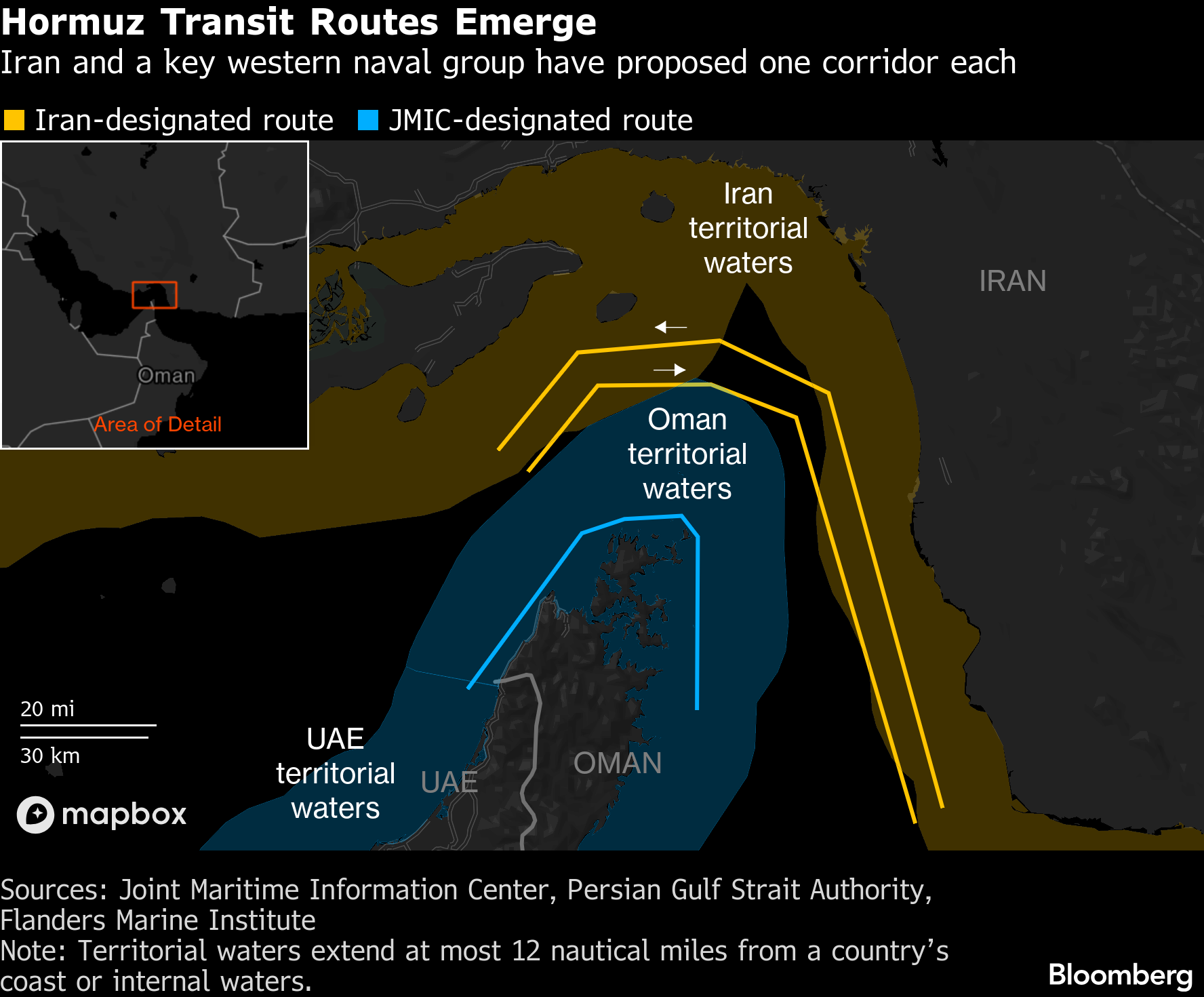
The Strait of Hormuz, through which one-fifth of the world’s oil and liquefied natural gas transited before the war, has become a key sticking point in the negotiations to bring a lasting end to the fighting that began when the US and Israel staged airstrikes on Iran on Feb. 28. Trump has demanded free passage for months.
Tehran’s demands for a full reopening include the US lifting its naval blockade on Iranian ports, the release of frozen assets and compensation for war damage. It has also called for a permanent end to attacks on groups it backs in Lebanon, Iraq, Yemen and Gaza. It’s unclear how strictly Iran will stick to the list of conditions.
Some of the demands will be difficult for the US to meet alone. In Gaza, a proposal by US-backed mediators to disarm Iran-backed Hamas and push Israeli army out of the Palestinian enclave was rejected by Israel’s Prime Minister Benjamin Netanyahu on Sunday.
In Yemen, clashes between the Iran-backed Houthi rebels and forces from the internationally recognized government supported by neighboring Saudi Arabia, have escalated. The Houthis claimed to have struck Saudi Aramco’s Jazan refinery on Sunday, while Saudi authorities reported a fire that was quickly extinguished, with no injuries.
The incident would mark at least the second blaze at the 400,000 barrel-a-day complex in a month. Satellite images in late July showed a tank fire following another claimed Houthi attack.
(Updates with new Trump comments from third paragraph.)
©2026 Bloomberg L.P.