

Iran’s Oil Lifeline Faces ‘Biggest Test Yet’ as China Steps Back


(Bloomberg) -- Iranian oil shipments to China, a resilient trade that’s survived years of US sanctions to provide a crucial economic lifeline to Tehran, is coming under huge strain from waning demand and an American blockade.
China’s independent oil refiners, known as teapots, have dialed back purchases and cut operating rates as they grapple with mounting economic losses, while recent US sanctions have made some buyers wary about the Iran trade. That’s prompted sellers to slash prices to try and entice buying interest.
Iranian crude flows to China tumbled to about 160,000 barrels a day in May, down from 1.8 million barrels a day in February, according to data compiled by Bloomberg. US and Israeli strikes on Iran started at the end of that month.
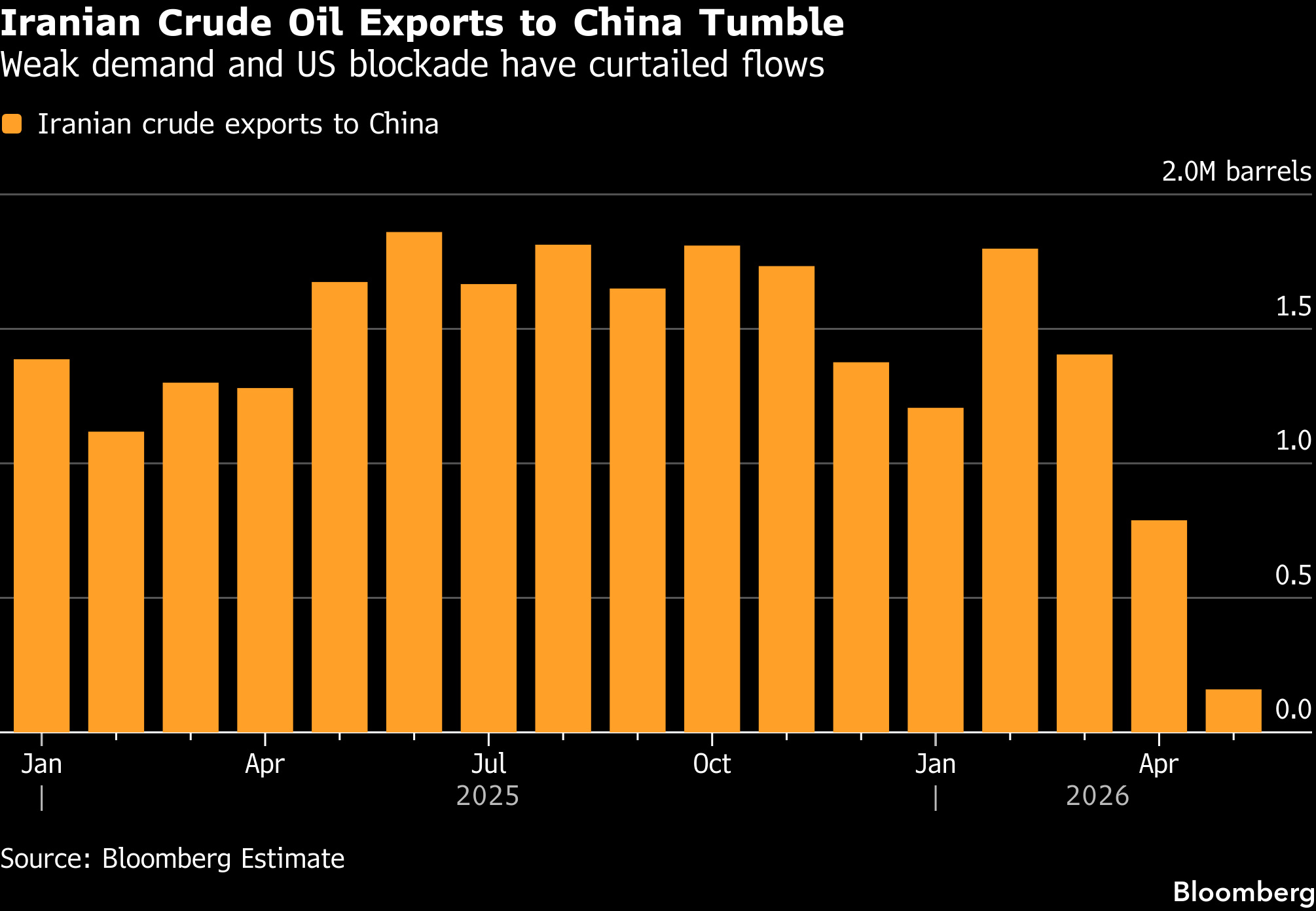
Even if there was big appetite for Iranian barrels, the US naval blockade has choked off flows. While other producers in the Persian Gulf are getting some of their crude out through the Strait of Hormuz, consultant Vortexa Ltd. estimates no oil from Iran has transited the waterway this month.
“The Iran-to-China oil trade is facing its biggest test yet,” said John Driscoll, chief strategist at JTD Energy Services Pte. in Singapore, who has spent four decades covering the oil industry, including as a trader and consultant.
The US blockade marks the first time a physical barrier has been put in place to hobble the Iranian oil trade, following decades of economic sanctions meted out by Washington that have often been skirted by workarounds. The volume of crude from the Islamic Republic outside of the Persian Gulf that buyers could easily access has plummeted since the blockade started in mid-April.
Overall, there are about 132 million barrels stored on tankers inside and outside of the Persian Gulf, data from Kpler shows. Of that total, at least 57 million barrels are on ships idling and in transit off China and the Singapore and Malacca Strait, a near 55% decline since the blockade.
Beijing had instructed the teapots to make fuels at all costs to help cushion the impact from the Iran war, though that mandate was recently relaxed after their losses increased. The independent processors are by far the biggest buyers of Iranian crude, typically accounting for about 90% of sales.
China’s restrictions on fuel exports early on in the conflict have led to swelling inventories, meaning refiners don’t need to keep running at high rates. Energy Aspects forecasts teapots will reduce their overall runs by another 200,000 barrels a day in June from May. Russian oil is also getting cheaper.
“China has access to a lot of other oil,” said Fereidun Fesharaki, FGE NexantECA Chairman Emeritus, a veteran of the oil and gas industry with decades of experience. “There is no pressure at the moment.”
Recent US sanctions on giant independent refiner Hengli Petrochemical (Dalian) Refinery co. have also deepened caution around Iranian oil, with traders saying there is little incentive to take risks when margins are already thin.
The fallout is increasingly visible in Iran. Oil production slumped 19% last month and export revenues are coming under pressure, though earlier windfalls from higher prices and accelerated exports have so far cushioned the blow.
©2026 Bloomberg L.P.








