

PetroChina Profits Point to Nimbler Future Post-Peak Oil Demand
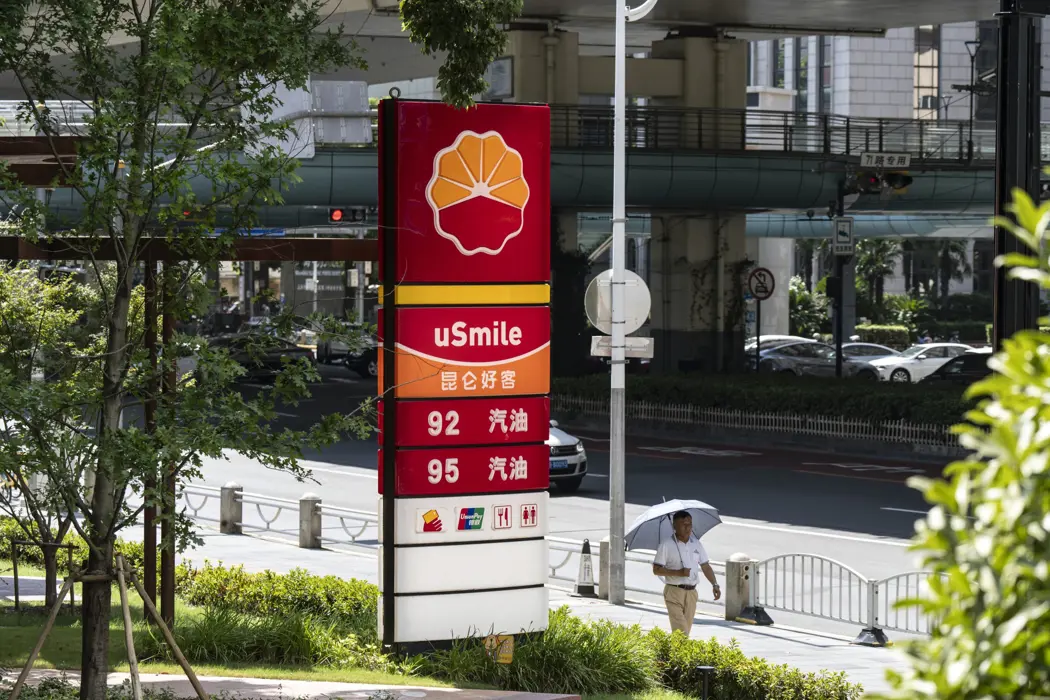

(Bloomberg) -- PetroChina Co.’s rising profits from trading and chemicals point to how China’s oil majors are adjusting to a new era of declining demand for gasoline and diesel.
Chemicals profits more than doubled and international trading helped drive a 50% jump in marketing profits, PetroChina said in an exchange filing on Sunday. While that was a fairly small part of an overall 22% increase in first-half profits, it shows new avenues for growth as the accelerating shift to electric vehicles and higher crude prices erode demand for gasoline and diesel.
PetroChina has invested heavily over the last few years in petrochemical facilities to convert oil byproducts into everything from fibers to plastics, areas where it expects demand to keep rising even as fuel consumption shrinks. Its ability to source feedstock domestically helped it outperform Sinopec, which lost money in its chemicals business in the first half.
Sinopec's growth
Sinopec, China’s largest oil refiner and PetroChina’s sister company, said last week that the US-Iran War and the country’s own clean energy innovations had probably helped tip oil demand into decline, with the country’s consumption likely peaking last year.
Overall net income for PetroChina rose to 103.9 billion yuan ($15.5 billion) for the six months through June, compared to 85.2 billion yuan in the first half of last year. Revenue climbed 5.3%.
Much of that was due to higher oil prices caused by the Iran war. Brent crude averaged about $87 a barrel from January through June, compared with around $71 in the same period in 2025. The global benchmark touched a four-year high above $126 a barrel in late April, but has since given up most of its gains. The outlook remains uncertain though, given the conflict has now been going six months with no sign of ending.
Refining, Trading
PetroChina also operates a large refining operation. For that unit, higher oil prices translate to more expensive feedstock costs. The company wasn’t able to pass those along to consumers, as the government curbed fuel exports and capped domestic prices to curb inflation.
Still, the oil major was shielded from some of the impacts of global volatility, as its robust domestic production network meant it wasn’t as exposed to higher freight and insurance costs linked to shipping disruptions, Morgan Stanley analysts including Jack Lu said in a note.
PetroChina itself marked a 5.8% drop in fuel sales in the first half of the year and shrunk its fleet of gas stations.
It has also become a more nimble international trader. Investments in clean energy as well as oil and gas storage have allowed the country to become more flexible in terms of imports, and PetroChina has been particularly aggressive at re-selling its liquefied natural gas cargoes to other markets when prices are advantageous.
The company’s shares rose as much as 2.1% in Hong Kong on Monday.
©2026 Bloomberg L.P.