

Breakthrough Technologies of the Year

Revisiting the moments when energy innovation moved beyond pilots and entered full commercial scale

The year 2025 marked a decisive shift from pilot projects to large-scale, commercially deployed energy innovations. Across power generation, grids, fuels, hard-to-abate sectors, and digital systems, breakthrough technologies moved into real-world operation, securing major investments, long-term offtake agreements, and proving scalability. What unites these breakthroughs is not novelty alone, but execution: technologies that reduce costs, emissions, and risk while integrating into existing industrial systems.
From enhanced geothermal systems delivering 24/7 clean power using oil and gas drilling techniques, to AI-designed carbon-capture solvents that slash development timelines, 2025’s innovations prioritised speed, scalability, and bankability. Hard-to-abate industrial and transport sectors such as iron and steel, cement, waste-to-energy, or shipping saw credible decarbonisation pathways advance from concept to construction. Meanwhile, digitalisation and AI matured from experimental tools into operational platforms, transforming grid management, offshore operations, and asset maintenance.
The following breakthroughs deployed across Europe, the Middle East, Africa, Asia, and the Americas are globally relevant. They tackle shared challenges: energy security, surging electricity demand, workforce constraints, and decarbonisation without supply disruption. These technologies cement 2025 as the year when clean energy, industrial decarbonisation, and AI-enabled operations scale in a tangible, operational way.
ADNOC SECURES FUTURE-PRODUCTION LINKED FINANCING FOR OFFSHORE GAS
LEAD DEVELOPER: ADNOC
LOCATION: UAE
WHAT
ADNOC has secured $11 billion in financing linked to future offshore gas production to develop the Hail and Ghasha projects in Abu Dhabi, which are expected to produce around 1.8 billion cubic feet of gas per day by the end of the decade.
WHY IT MATTERS
It uses future-production linked financing, a relatively new structure in the oil and gas sector, allowing ADNOC to fund major projects without relying on existing reserves as collateral. It accelerates development of gas capacity (1.8 Bscf/d) with reduced upfront capital risk, while lowering financing costs by leveraging strong credit and partnerships with global banks and strategic energy companies. Production is also accelerated efficiently compared to slower traditional financing and development models, while supporting large-scale production (1.8 Bscf/d) - aligns with a $150 billion capex plan to boost crude capacity to 5 MMbpd by 2027.

BREVIK DELIVERS CARBON - CAPTURED CEMENT PLANT
LEAD DEVELOPER: Brevik CCS
LOCATION: Norway
WHAT
Heidelberg Materials’ Brevik CCS captures 400,000 tonnes of CO2 annually, enabling evoZero®, cement and showcasing a breakthrough model for large scale industrial carbon capture through Norway’s Longship initiative.
WHY IT MATTERS
Brevik CCS marks a breakthrough for the cement industry as the first industrial-scale facility capable of capturing around half of the plant’s process CO2 emissions each year.
400K
tonnes
This enables production of evoZero®, a carbon captured cement that makes near zero emissions concrete achievable. By integrating capture, liquefaction, temporary onshore storage, and shared offshore transport and storage via Norway’s Longship and Northern Lights infrastructure, the project lowers unit costs compared with standalone CCS developments, creating a more viable pathway for deep decarbonisation in a hard to abate sector. As the world’s first full chain CCS installation in cement, it is widely regarded as a blueprint for global deployment.
CO2 REMOVAL BREAKTHROUGH IN AZERBAIJAN
LEAD DEVELOPER: Caspian AI Institute
LOCATION: Azerbaijan
WHAT
In 2025, Azerbaijan’s Caspian AI Institute, in collaboration with SOCAR and supported by Boston Consulting Group, used AI to design new carbon-capture molecules that significantly increase CO2 absorption efficiency. This marks one of the first tangible breakthroughs in AI-driven energy innovation, which moves beyond theoretical studies.
WHY IT MATTERS
AI was used to design entirely new carbon-capture molecules, delivering a step-change over conventional solvents by substantially improving CO2 uptake and capture efficiency, showing how data-driven molecular design can unlock performance levels that traditional trial-and-error chemistry has struggled to reach. By replacing slow, trial-and-error chemical R&D with AI-driven design, the approach cuts development costs and time, lowering the overall cost of carbon-capture deployment for energy and industrial operators. Once validated, AI-designed solvents can be integrated into existing and planned carbon-capture systems as those markets expand, providing a clear pathway from lab-validated formulations to large-scale industrial absorption units.
AFRICA’S FIRST GREEN HYDROGEN HUB LAUNCHED
LEAD DEVELOPER: Cleanergy Solutions Namibia
LOCATION: Namibia
WHAT
Namibia’s new green hydrogen hub at Walvis Bay showcases Africa’s first fully integrated production and refuelling facility, combining off grid solar electrolysis, vehicle refuelling, and a Hydrogen Academy for local skills development.
WHY IT MATTERS
The Walvis Bay facility delivers a step change beyond small pilot projects by integrating renewable power, hydrogen production, refuelling infrastructure, and workforce training on a single commercial site, directly fuelling multiple end uses rather than producing hydrogen only for lab-scale demonstrations. A modular electrolyser and refuelling setup, combined with concrete plans to extend hydrogen use from road vehicles to rail and harbour vessels, creates a clear pathway to larger volumes and additional offtakers, which can underpin future investment in bigger production units. The project offers a replicable model for other African countries and emerging economies seeking to build green hydrogen value chains that serve both domestic markets and global demand. The official inauguration marks the facility’s transition from construction to operation, demonstrating Namibia’s intent to become a regional hydrogen hub.
BRAZIL’S GRID GOES SMART
LEAD DEVELOPER: Eletrobras, Neoenergia and CPFL
LOCATION: Brazil
WHAT
Brazil’s power sector is moving towards a smarter, more resilient grid as major utilities scale up digitalisation and clean energy integration. Eletrobras, Neoenergia and CPFL are all advancing AI, automation and smart metering, signalling a gradual shift to data driven grid management across the country.
WHY IT MATTERS
Recent initiatives represent a step change from traditional grid operations by using AI to predict outages, automating network operations, and deploying smart metres that provide real time visibility of consumption and system conditions.
$7
billion
Digital tools that reduce outages, optimise maintenance and integrate renewables more efficiently help lower system costs over time, making investments in grid intelligence cost effective compared to purely hardware based upgrades and emergency repairs. Brazil is positioning itself as a regional reference for smart grids in emerging economies.
GREEN AMMONIA BUNKERING DRIVES SHIFT
LEAD DEVELOPER: Envision Energy
LOCATION: China
WHAT
Envision Energy has completed the world’s first green marine ammonia bunkering operation, using green ammonia from its integrated wind-solar-storage hydrogen ammonia project in Chifeng to refuel a dual fuel vessel at Dalian Port. The project’s ammonia holds recognised low carbon certifications and has enabled the ship to substitute up to 91% of conventional fuel, significantly cutting operational emissions and positioning Dalian as a multi fuel green maritime hub in Northeast Asia.
WHY IT MATTERS
This operation marks a shift in marine bunkering by replacing most of a vessel’s fossil fuel with certified green ammonia in a dual fuel engine, proving that high substitution rates are technically achievable and that integrated green hydrogen to ammonia supply chains can directly power ocean going ships. Although green ammonia is currently more expensive than conventional marine fuels, using a large, renewables based production site and engines capable of flexing between ammonia and traditional fuels helps manage costs and reduce early stage risk, building the scale needed for future price declines.
TRIPLE-FRAC ADVANCES FOR CHEVRON
LEAD DEVELOPER: ADNOC
LOCATION: UAE
WHAT
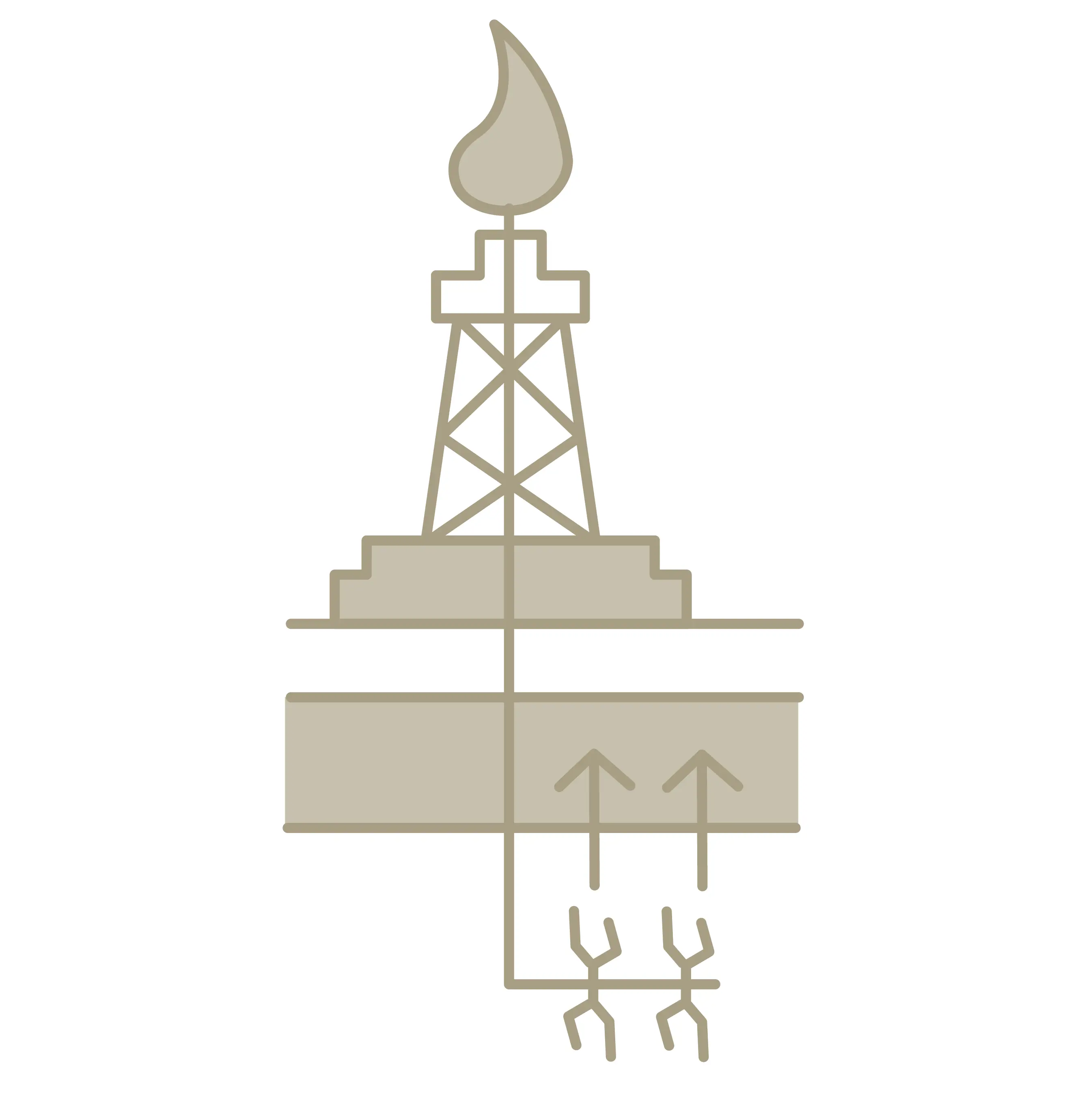
In 2025, Chevron expanded its “triple-frac” technique in the Permian Basin— fracturing three wells at once to speed completions and lower costs. The company aimed to use it on about 50–60% of wells (up from ~20%), helping wells reach production ~25% faster and reducing per-well costs by around 12%, supporting stronger capital efficiency and returns.
WHY IT MATTERS
Triple frac delivers a step-change over conventional single-well fracking by allowing Chevron to complete several wells in parallel, shortening their overall completion schedule by about 25% and increasing through put of the same fleet and crews. It cuts completion costs per well by around 12% and brings production forward, which improves capital efficiency and project economics and helps Chevron stay competitive. Chevron used triple-frac on roughly 50–60% of its Permian wells in 2025, showing clear commercial scalability within one of the world’s largest oil production regions
Chevron used triple-frac on roughly 50–60% of its Permian wells in 2025, showing clear commercial scalability within one of the world’s largest oil production regions
60%
Although developed for the Permian, the operational model can be replicated in other shale and tight-oil basins worldwide where operators seek to squeeze more output from existing equipment and crews.
IN NUMBERS

25%
shortening of overall completion schedule, due to triple-frac

20%
YoY growth of triplefrac use, in Chevron's Permian wells in 2025

12%
reduction in completion costs per well

3x
simultaneous well fracturing achieved
GECKO AND ADNOC EXPAND PARTNERSHIP
LEAD DEVELOPER: ADNOC and Gecko Robotics
LOCATION: UAE
WHAT
ADNOC and Gecko Robotics expanded their partnership to deploy AI driven robotics, enhance UAE National training, boost efficiency, reduce downtime, and advance the UAE’s energy technology leadership.
WHY IT MATTERS
ADNOC’s introduction of AI powered robotics and advanced analytics across its gas assets replaces traditional manual inspection and maintenance, enabling predictive, data driven decision making at a scale not previously possible. These technologies work to reduce downtime, enhance maintenance efficiency, and lower operational costs com-pared to conventional asset management approaches. By investing in locally developed robotics and AI capabilities, ADNOC can also decrease reliance on imported technologies and outsourced services. The multi year rollout across ADNOC’s extensive gas operations demonstrates strong scalability, with potential for future UAE based manufacturing of robotic systems. As global energy producers pursue similar efficiency gains, ADNOC’s ambition to become the world’s most AI enabled energy company sets a new industry benchmark.
HAFSLUND, MICROSOFT AGREE TO EUROPE CARBON REMOVALS
LEAD DEVELOPER: Hafslund Celsio
LOCATION: Norway
WHAT
Hafslund Celsio and Microsoft agree to 1.1 million tonnes of carbon removals, enabling Norway’s Klemetsrud CCS project to deliver large scale waste to energy decarbonisation and CO2 storage.
WHY IT MATTERS
The Klemetsrud project integrates large scale carbon capture with an urban waste to energy plant, delivering permanent removals from biogenic CO2 while significantly reducing fossil emissions.
1.1
million tonnes
This represents a major advance beyond conventional incineration and standard district heating systems. By leveraging an existing facility, shared Longship and Northern Lights transport and storage infrastructure, and a long term carbon removal agreement with Microsoft, the project spreads capital costs and secures stable revenue streams, improving the competitiveness of CCS With around 500 similar plants in Europe, Klemetsrud demonstrates how waste to energy with CCS can deliver durable removals and low carbon heat for cities worldwide.
HYDROCARBON PROCESSING LAUNCHES AI CO-PILOT
LEAD DEVELOPER: Hydrocarbon Processing
LOCATION: Houston, USA
WHAT
Hydrocarbon Processing AI gives engineers, operators, and technical managers in the downstream oil and petrochemical sectors fast, reliable answers to complex technical questions, using advanced natural language processing to draws on Hydrocarbon Processing’s proprietary library of process handbooks, technical articles, case studies, and market data.
WHY IT MATTERS
Hydrocarbon Processing AI provides a step change over traditional manuals and static databases by letting users ask questions in plain language and receive contextual, synthesised answers within seconds, which dramatically reduces the time needed to locate and interpret critical technical information. By reducing the need for extensive manual research or external consultancy, the platform offers a more affordable solution for accessing high-quality technical knowledge. It supports both individual users and enterprise clients and can handle increasing volumes of queries and users, making it suitable for wide commercial deployment. The technology is software-based, cloud-deployable, and built on an expanding content repository.
GOOGLE NOW AN INVESTOR IN FERVO
LEAD DEVELOPER: Fervo Power
LOCATION: USA
WHAT
Fervo Energy raised USD 462M to expand advanced geothermal projects, backed by Google and Breakthrough Energy, building Utah’s massive Cape Station to deliver scalable, clean power 24/7.
80%
WHY IT MATTERS
Fervo is leading a new wave of enhanced geothermal by applying oil and gas style horizontal drilling and hydraulic stimulation to create engineered reservoirs in hot granite. This innovation enables far deeper, hotter wells than conventional geothermal and has cut drilling time and costs by nearly 80% at depths of about 4,800 m and temperatures of 271 °C. The company has signed a 15 year, 320 MW power purchase agreement with a major utility, with its first plant expected online in 2026.
The project is designed to power roughly 375,000 homes, with room for tenfold expansion. With 500,000 acres of geothermal rights, Fervo is positioned for significant scale up; its modular, repeatable well designs support rapid growth from single wells to multi hundred megawatt facilities. A $462 million funding round in 2025 advanced its flagship Cape Station toward full commercial deployment.

IN NUMBERS
$462 million
amount raised in private funding
375,000
number of homes that can be powered by 2028

500,000
acres of geothermal rights held by Fervo
24/7 CLEAN BASELOAD POWER IN ABU DHABI
LEAD DEVELOPER: Masdar
LOCATION: UAE
WHAT
Masdar has started building what is described as the world’s first GW scale solar plus battery plant, combining 1 GW of solar PV with around 19 GWh of battery storage.
WHY IT MATTERS
This project, commissioned in 2025, represents a major shift from conventional solar farms by pairing gigawatt scale PV with long duration battery storage to deliver firm, round the clock baseload power. It directly substitutes for fossil fired plants, offering unsubsidised baseload renewable electricity – which demonstrates that combining 1 GW of solar with 19 GWh of LFP battery storage can compete economically with traditional generation, benefiting from LFP’s balance of cost, cycle life, and safety. As a gigawatt scale reference using mature PV and battery technologies, the project provides a replicable blueprint for utilities and developers, with modular battery blocks and standardised solar designs enabling rapid deployment elsewhere. With AI and data centres driving steep growth in 24/7 electricity demand, it shows how solar plus storage can reliably meet these needs with clean power.

TIDAL POWER GROWTH AT PROTEUS
LEAD DEVELOPER: Proteus Marine Renewables
LOCATION: UK/France/Japan
WHAT
Proteus Marine Renewables’ 2025 milestones show tidal power maturing from pilot to early commercial scale, with multi year reliability, megawatt scale deployments, and EU backed projects across three countries, with the MeyGen Tidal Energy Project in Scotland, the first 1.1MW tidal turbine (Proteus AR1100) in Japan and the NH1 tidal energy pilot farm in Normandy.
WHY IT MATTERS
These three projects demonstrate continuous, multi year operation in extreme environments, deploying MW class machines in Japan and France, and moving from single device demonstrations to full pilot farms that can meaningfully contribute to local power systems.
1.1
mw
Long operating lifetimes, high availability and shared infrastructure at sites such as MeyGen and Raz Blanchard have improved capacity factors and spread fixed costs, which help tidal energy move closer to cost competitive levels with other forms of renewable generation. The combination of modular turbine families (AR500, AR1100, AR3000), proven deployment in multiple countries, and clear expansion plans, from four to potentially over a hundred turbines at MeyGen and a commercial pilot farm at NH1, shows a realistic pathway from early projects to large arrays supplying tens to hundreds of megawatts.
DIGITAL TWINS TRANSFORM SHELL'S OFFSHORE OPERATIONS
LEAD DEVELOPER: Shell
LOCATION: Global
WHAT
Shell is deploying real-time dynamic digital twins to optimise offshore gas operations, letting engineers test scenarios against live data and act before issues disrupt production. The approach has helped avoid unplanned shutdowns, improve subsea compression performance, and reduce hydrate risk.
WHY IT MATTERS
The architecture can be replicated across offshore assets and adapted for onshore sites, allowing Shell to scale fleet-wide and add AI features over time without redesigning core systems. Real-time dynamic digital twins help avoid shutdowns, optimise subsea compression and reduce risk—cutting costs and improving uptime as an alternative to hardware-only reliability upgrades. Shell’s September 2025 update signalled the shift of dynamic digital twins from pilots to an institutionalised tool across its offshore gas portfolio, laying the groundwork for broader AI operations.

SOFTWARE DRIVEN FLEXIBILITY SPURS UPGRADES
LEAD DEVELOPER: Siemens
LOCATION: Germany
WHAT
Siemens has introduced Gridscale X Flexibility Manager, a software platform that taps flexible resources such as EVs, heat pumps, batteries and local generation, and has been co developed with European Distribution System Operators (DSOs) including KNG in Austria, Alliander in the Netherlands and Elvia in Norway.
WHY IT MATTERS
Gridscale X Flexibility Manager shifts grid planning from hardware upgrades to real-time congestion management. Using forecasting and automated control of flexible loads and generators, it unlocks extra capacity on existing infrastructure—offering DSOs a cost-effective alternative to major reinforcements.
40%
It can raise usable capacity by up to 20%, reduce the need for new lines and transformers, and cut investment costs by up to 40%. Rapid to deploy with minimal added hardware, it scales as flexibility markets and regulation evolve. As demand rises from EVs, heat pumps, distributed solar and data centres, it helps integrate new loads and renewables while maintaining reliability.
VULCAN TO CO PRODUCE LITHIUM, HEAT, POWER
LEAD DEVELOPER: Vulcan
Energy
LOCATION: Germany
WHAT
Vulcan Energy secured more than $2.5 billion to build its Lionheart geothermal lithium project, producing lithium hydroxide and renewable heat and power to support Europe’s EV supply chain and decarbonisation.
WHY IT MATTERS
The Lionheart Project integrates Direct Lithium Extraction with deep geothermal heat and power, enabling Vulcan Energy to co-produce battery-grade lithium and continuous renewable energy from the same geothermal brine. This marks a major advance over conventional hard-rock mining and standalone geothermal plants. By avoiding energy-intensive, polluting extraction methods, leveraging existing geothermal infrastructure, and securing blended public–private financing, Lionheart aims to deliver competitively priced lithium and clean energy while reducing exposure to commodity-price volatility. The project will produce 24,000 tonnes of lithium hydroxide annually alongside significant heat and power output, creating a pathway for modular expansion across Germany’s Upper Rhine Valley and other suitable brine reservoirs. Once operational, it could supply lithium for roughly 500,000 EV batteries per year while providing renewable heat and electricity.