

Budget Electric Cars Lure Europe’s Drivers After Fuel Price Jump


(Bloomberg) -- Demand for affordable electric vehicles is soaring in Europe as the fuel price increases caused by the Middle East conflict spur lower-income households to go green.
Inquiries about EVs costing less than €30,000 ($35,000) on Mobile.de, Germany’s largest car marketplace, have jumped 87% since the start of March, led by models like Renault SA’s Zoe. That’s outstripping a 77% rise in inquiries about all EVs, regardless of price.
In the UK, inquiries about EVs between five and seven years old tripled in April from a year earlier, well ahead of newer, more expensive electric cars, according to data from Auto Trader, the country’s largest marketplace.
The Middle East conflict has revived consumer interest in EVs, in part because of higher fuel costs for combustion-engine vehicles. Demand has also been boosted by incentives in Germany, Europe’s largest EV market where buyers can get as much as €6,000 off the price of a new electric car.
“What the Iran war is doing is creating a focus on affordability because there’s high inflation and uncertainty in the world,” Mobile.de Chief Executive Officer Ajay Bhatia said in an interview. People aren’t buying pricey EVs, “they’re going for the more affordable ones,” he added.
By contrast, inquiries — defined as contact with the seller — about cars that run on petrol were only up slightly, while interest in diesel models dropped.
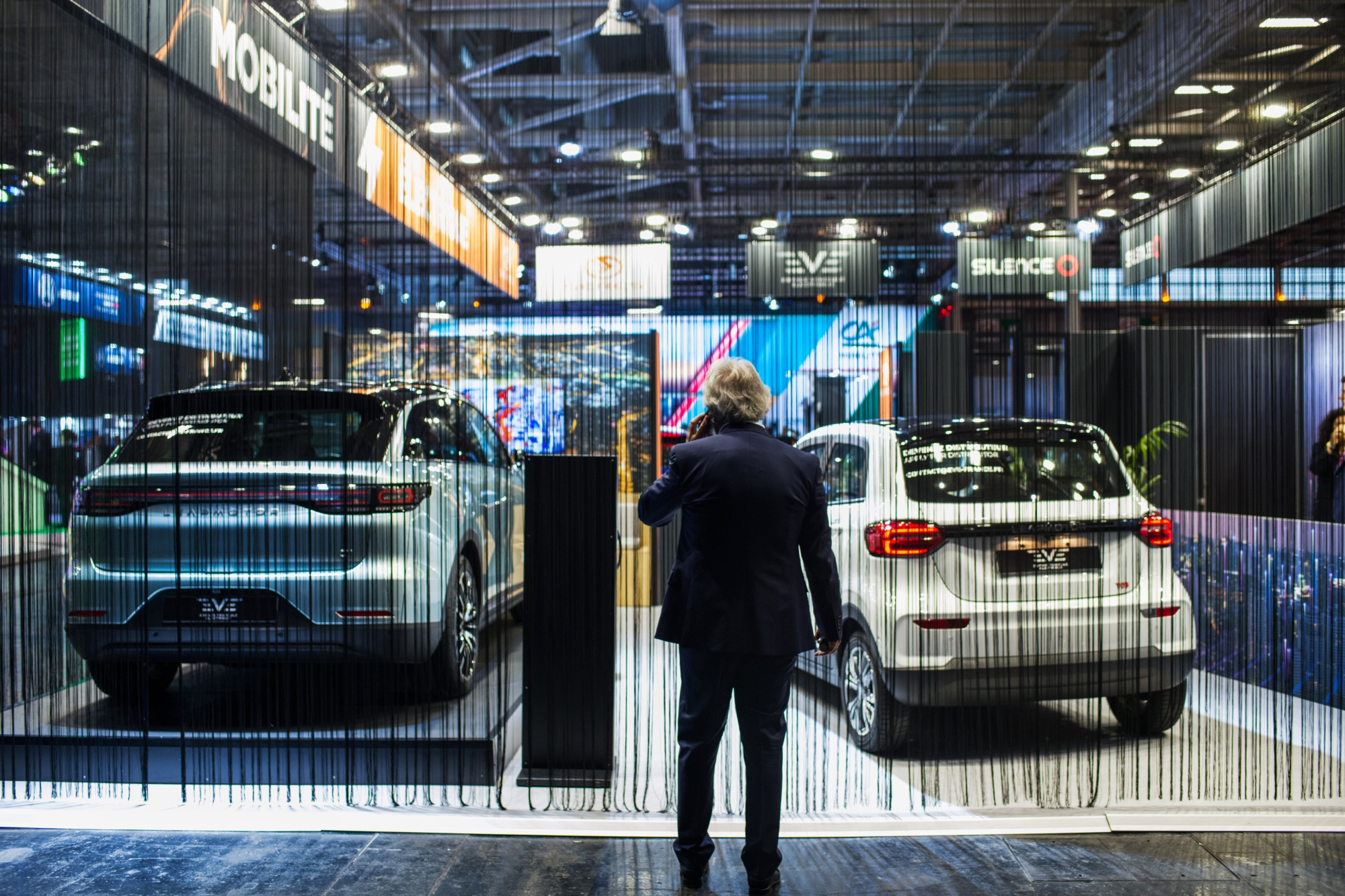
There’s a wave of new, more affordable EVs arriving in Europe from local automakers racing to catch up with rivals in China. Brands from the country have been gaining ground in the region with cheaper electric models that have the latest technology. For example, drivers can lease the Leapmotor T03 city car from €49 a month in Germany, less than a typical mobile-phone bill.
In the UK, the region’s second-largest EV market, residual values of battery-powered cars have been far more robust over the past couple of months than they have been for some time, according to Cox Automotive Inc., a sign of increasing buyer interest.
EVs less than a year old retained their value better than combustion models, Cox data shows. While their value dropped 8% between February and April, petrol and diesel cars both slumped by more than a fifth over the same period. EVs between one and two years old lost none of their value in that time, while petrol and diesel both fell.
Still, it’s too early to tell whether the increased demand will translate into higher sales for good, industry executives and analysts have cautioned.
©2026 Bloomberg L.P.