

From Food to Petrol, Europe Seeks to Tame Iran Price Shock


(Bloomberg) -- European governments are rushing to stem rising energy and food prices as the Middle East war threatens another wave of inflationary pressure.
Germany will limit price changes at gas stations to once per day, its economy minister announced Wednesday. Greece will cap profit margins on fuel and groceries for the next three months, while Italy will look at using extra VAT revenue from higher automotive fuel prices to cushion the impact on consumers, and punish companies taking advantage of the crisis.
“We will do everything we can to prevent speculation on the crisis,” Italian Prime Minister Giorgia Meloni told lawmakers Wednesday. We are “paying the utmost attention” to the potential economic repercussions of the Iran war.
The measures show how seriously the European Union is taking the threat of an inflationary spike brought on by the war in Iran, which has effectively halted the flow of goods and energy through the Strait of Hormuz. That’s left the bloc exposed to intense competition on the global market, and EU leaders are due to meet in Brussels next week to discuss, among other issues, how to bring energy costs down.
European Commission President Ursula von der Leyen said the institution is considering a cap on natural gas prices as part of a broader effort to curb the fuel’s influence on power bills. The last time the bloc did so was during the energy crisis following Russia’s invasion of Ukraine, though it was never triggered.
So far, 10 days of the Iran conflict have cost European taxpayers an additional €3 billion ($3.5 billion) in fossil fuel imports, von der Leyen said. “That is the price of our dependency.”
In addition to the national and regional measures being discussed in Europe, OECD countries agreed Wednesday to discharge 400 million barrels from emergency oil reserves coordinated by the International Energy Agency, its largest ever release.
Even before the US and Israel launched strikes on Iran, Europe was grappling with how to prevent factories closing because of high costs. A string of crises — from the Covid-19 pandemic to the Ukraine war — have caused prices of key goods to surge, and helped spur populism across the bloc. The latest wave of instability in the Middle East is fueling the rush across national governments to find quick-fix solutions.
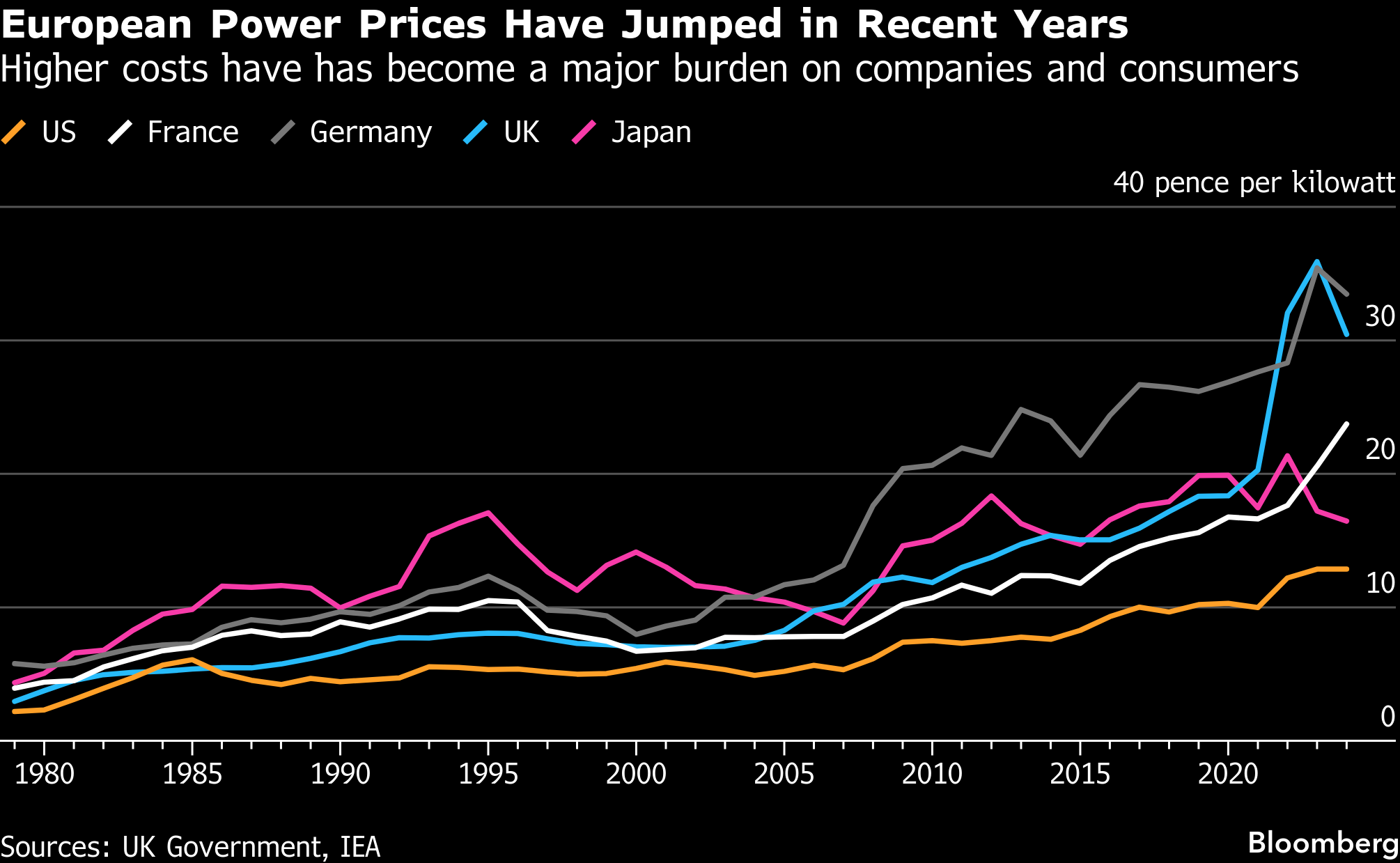
European gas prices are up around 50% since the conflict started. Oil prices are around 25% higher.
Last month, Italy already kicked off a unilateral effort to lower national energy prices before the latest price surge, with a decree that would strip carbon costs from power bills, which officials now hope to advance. Other countries, such as Poland and the Czech Republic, have also called for a weakening of some of the EU’s Emissions Trading System, a key pillar of the bloc’s climate regulation, in order to ease the burden on companies.
Austria has vowed to redistribute any excess tax revenue from higher fuel prices to consumers. It announced a string of measures on Wednesday, including prolonging a 20 terawatt-hour strategic gas reserve program, bringing forward a cap on household power prices to July, and forcing fuel vendors to limit price increase frequencies to three times a week.
“We’re sending a message that this economic turmoil should not lead to speculation phenomena that will escalate an already existing problem,” Greek Prime Minister Kyriakos Mitsotakis said.
Other countries are still evaluating possible measures. The French government has been monitoring for price anomalies at gas stations and will hold a meeting on Thursday to discuss how to protect consumers from rising costs.
The fear is that the longer the Iran conflict drags on, the more pronounced any price spike is likely to become. Peter Kazimir, a Governing Council member at the European Central Bank, said the institution risks having to raise interest rates sooner than expected as a result of the war and its impact on inflation.
“We will be ready to act if needed,” he told Bloomberg.
(Updates with quote from Greek Prime Minister in 12th paragraph.)
©2026 Bloomberg L.P.








