

Germany to Slash Renewable Subsidies As Solar Surge Tests Grids


(Bloomberg) -- Germany plans to scale back renewable-energy subsidies in a sweeping overhaul of its funding system, as surging solar output puts growing strain on the country’s power grid.
From 2027, new renewable generators should receive support “in a way that benefits both the market and the system,” according to a draft law published by the Economy Ministry late Friday. That means rewarding projects that respond more closely to electricity demand and don’t worsen grid congestion.
Fixed feed-in tariffs for new installations would be gradually phased out under the proposal.
The changes could slow investment in onshore wind and solar projects, where developers already face higher costs and falling revenues as power prices increasingly turn negative. Still, the ministry is sticking to its target of raising renewables’ share of Germany’s gross electricity consumption to 80% from about 58% by 2030, and plans additional auctions for wind capacity.
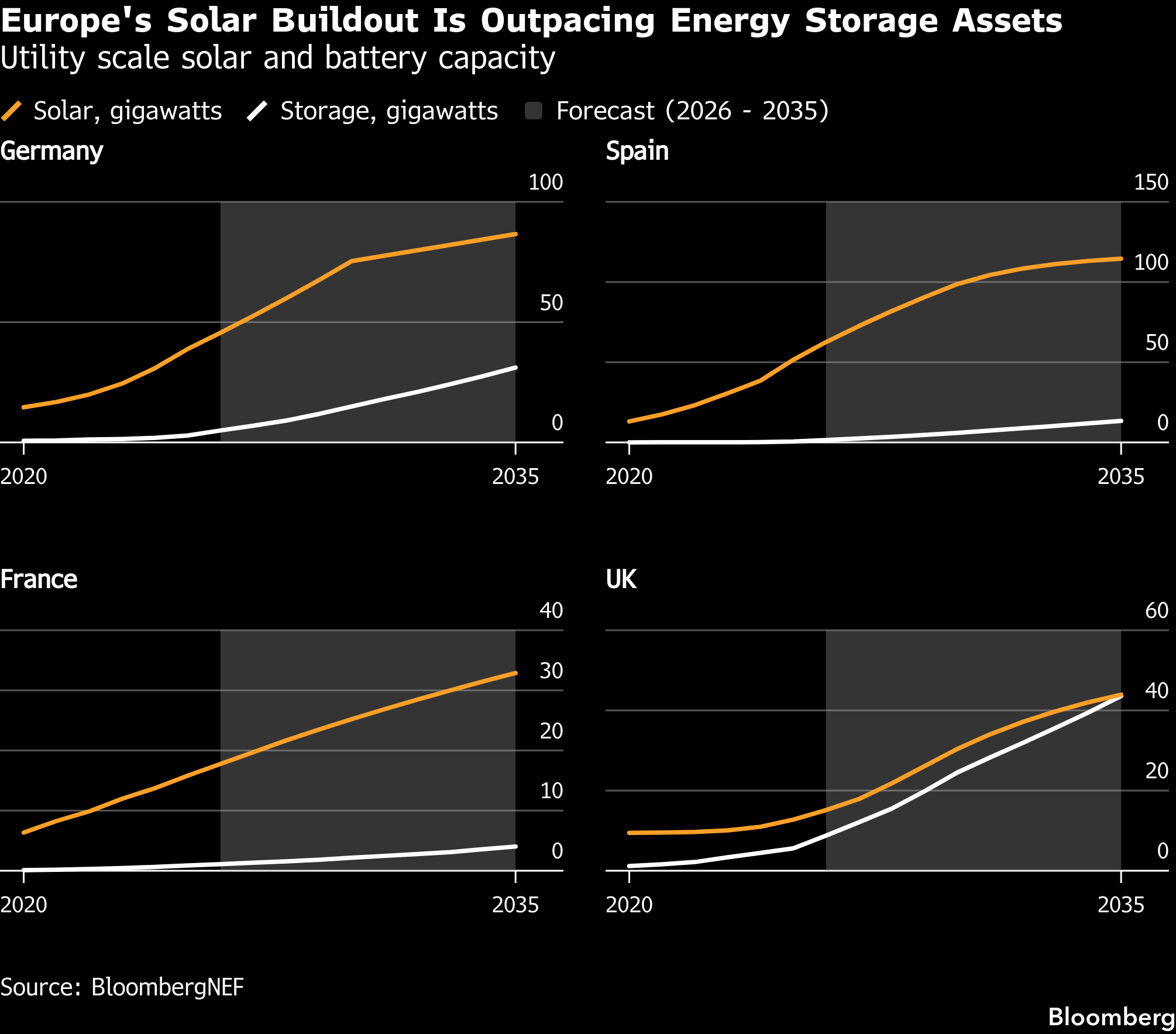
Germany’s feed-in tariffs, generally granted for 20 years, and recent efforts to cut red tape have helped renewable capacity expand at a record clip. But power lines have failed to keep pace, creating bottlenecks and forcing operators to temporarily curtail generation. Producers can claim compensation for the lost output.
The state is expected to spend about €16 billion ($18.3 billion) on renewable support this year, fueling criticism as Chancellor Friedrich Merz’s government seeks to rein in spending, including on pensions and healthcare. Additional payments for curtailed generation of as much as €3 billion have also drawn criticism.
As part of the reform, grid operators would be allowed to reduce curtailment payments for new projects in areas where the network is already frequently congested. The provision is a softer version of an earlier proposal opposed by developers.
To comply with European Union requirements, the draft Renewable Energy Act would also cap subsidies and introduce a clawback mechanism allowing the state to recover excess profits. That would bring Germany’s system closer to the Contracts for Difference model used by the UK, where the state tops up generators’ revenue when market prices are low but recovers money when prices rise above a predetermined level.
The proposal would also end subsidies for solar installations smaller than 25 kilowatts and require larger projects to be paired more frequently with batteries, helping to shift power supply into the evening. The draft law is subject to changes as the ministry solicits input from stakeholders.
©2026 Bloomberg L.P.