

Data Centers and Coal Helped Drive Up US Emissions in 2025

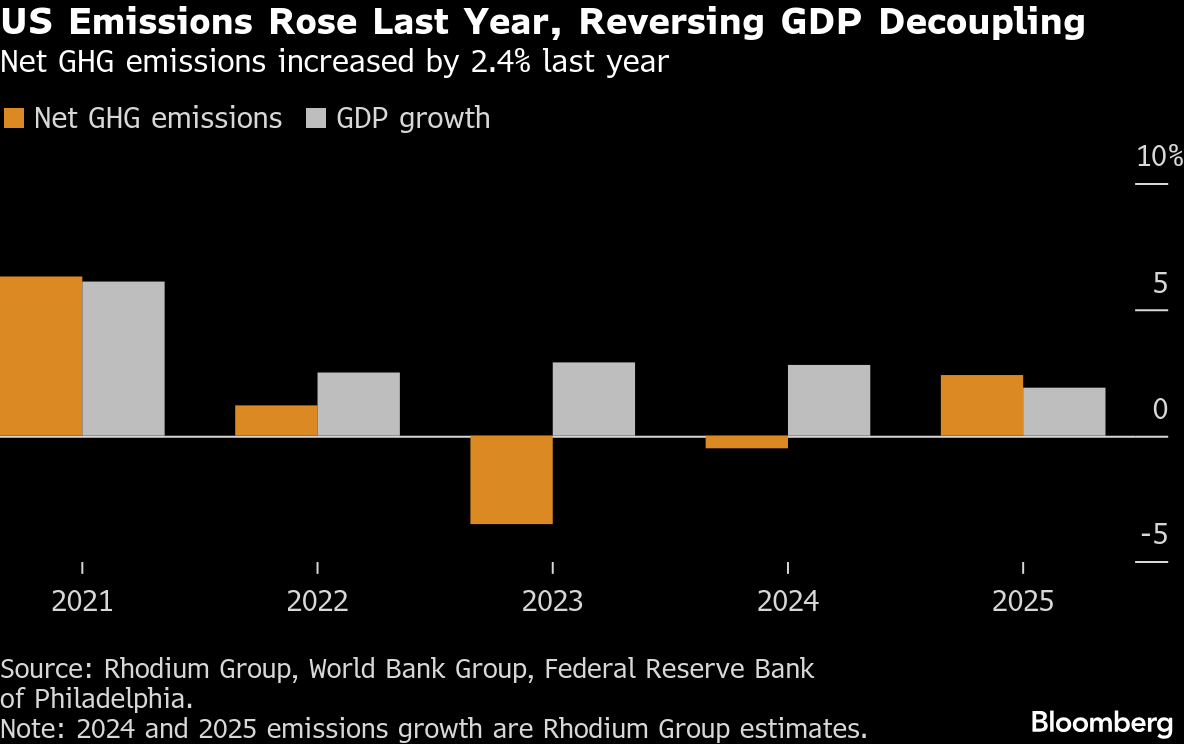
(Bloomberg) -- US greenhouse gas emissions ticked higher last year following two years of declines, according to an estimate released Tuesday by the Rhodium Group, a research firm. They rose more than the country’s gross domestic product, reversing the earlier decoupling of emissions from economic growth.
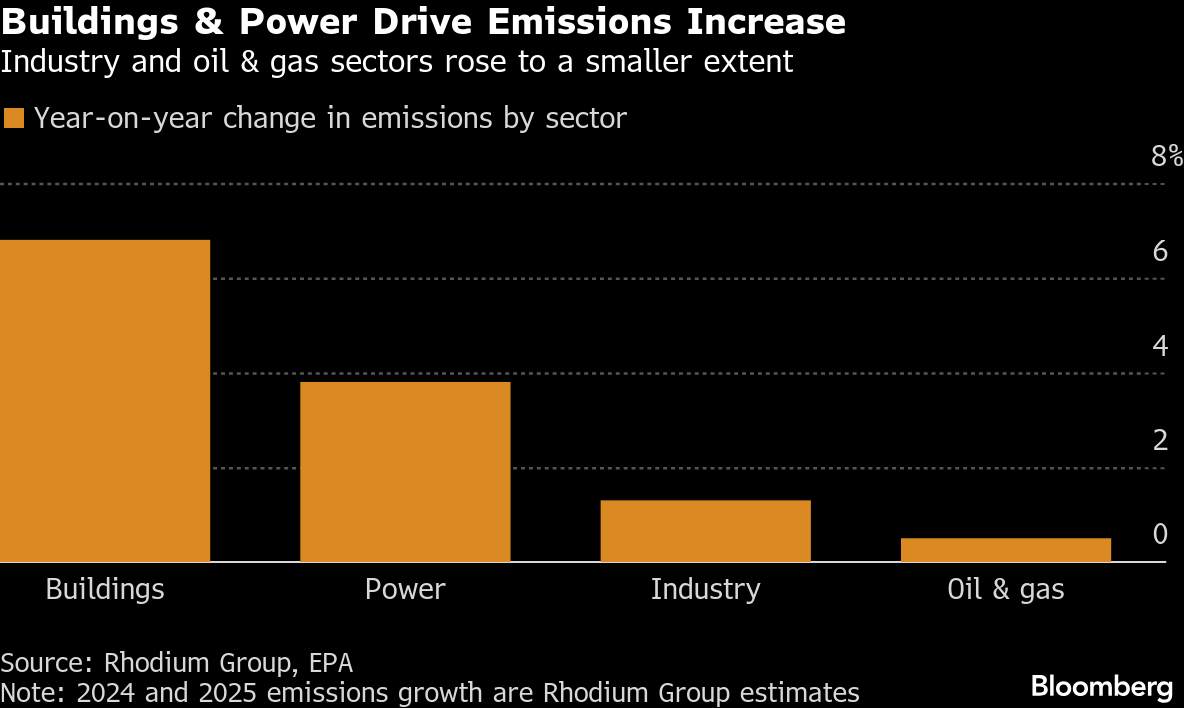
The 2.4% jump was driven by the buildings and power sectors, according to the new report. Colder winter temperatures increased demand for space heating, while data centers and cryptocurrency mining pushed electricity usage higher. Coal generation jumped 13% last year compared to 2024 — the second time in the past decade that the fuel’s use increased in the US, reflecting higher natural gas prices.
Analysts said the finding underscores the need for more clean sources of power as demand goes up. To get emissions heading down again, “we need to see continued strong deployment of renewable resources and batteries in the power sector,” said Michael Gaffney, a Rhodium research analyst and one of the report’s authors.
The increased demand for heating drove up emissions from buildings by 56 million metric tons, or 6.8%, according to the report. The power sector’s emissions rose by 3.8%, reflecting higher electricity usage and more coal burning.
Globally, carbon dioxide emissions are estimated to have hit a record high in 2025. Rising US emissions was likely a major factor in that, Climate Trace, a nonprofit supported by former US Vice President Al Gore, said in a report last summer.
Since President Donald Trump returned to the White House last January, his administration has rolled back clean energy and EV tax incentives, tried to block some renewable projects and pushed to accelerate fossil fuel production. But analysts said that Trump administration policies did not meaningfully impact emissions for 2025.
“We aren’t yet seeing the direct effects of these policy changes in US emissions,” Gaffney and his coauthor Ben King wrote. “That could change in the coming year or two, particularly if data center electricity demand continues to surge and the grid responds with more output from existing fossil generators instead of new, clean resources.”
The report’s authors also said that tracking future emissions will be more difficult, following moves by the administration to stop collecting certain data related to climate change.
“The loss of this data means we are heading into murkier waters when it comes to understanding the second-largest emitter of GHGs in the world,” Gaffney and King wrote.
©2026 Bloomberg L.P.