

NTT Data Eyeing $9 Billion Outlay for Japan Data Centers


(Bloomberg) NTT Data Group Corp. expects to spend at least $9 billion through 2033 to quadruple computing capacity to 1 gigawatt, addressing a surge in demand in Japan.
The country’s biggest data center operator, which is owned by government-backed NTT Inc., intends to add roughly 750 megawatts of capacity over the next seven years to meet soaring demand from companies seeking to catch up in AI, people familiar with the matter said.
That would mean spending at least ¥1.5 trillion ($9.6 billion) for construction and equipment installations, estimated the people, who asked not to be named as the discussions are private. That’s based on the assumption that each megawatt of data center capacity installed in Japan costs ¥2 billion to ¥2.5 billion, excluding the cost of AI accelerators such as Nvidia Corp.’s.
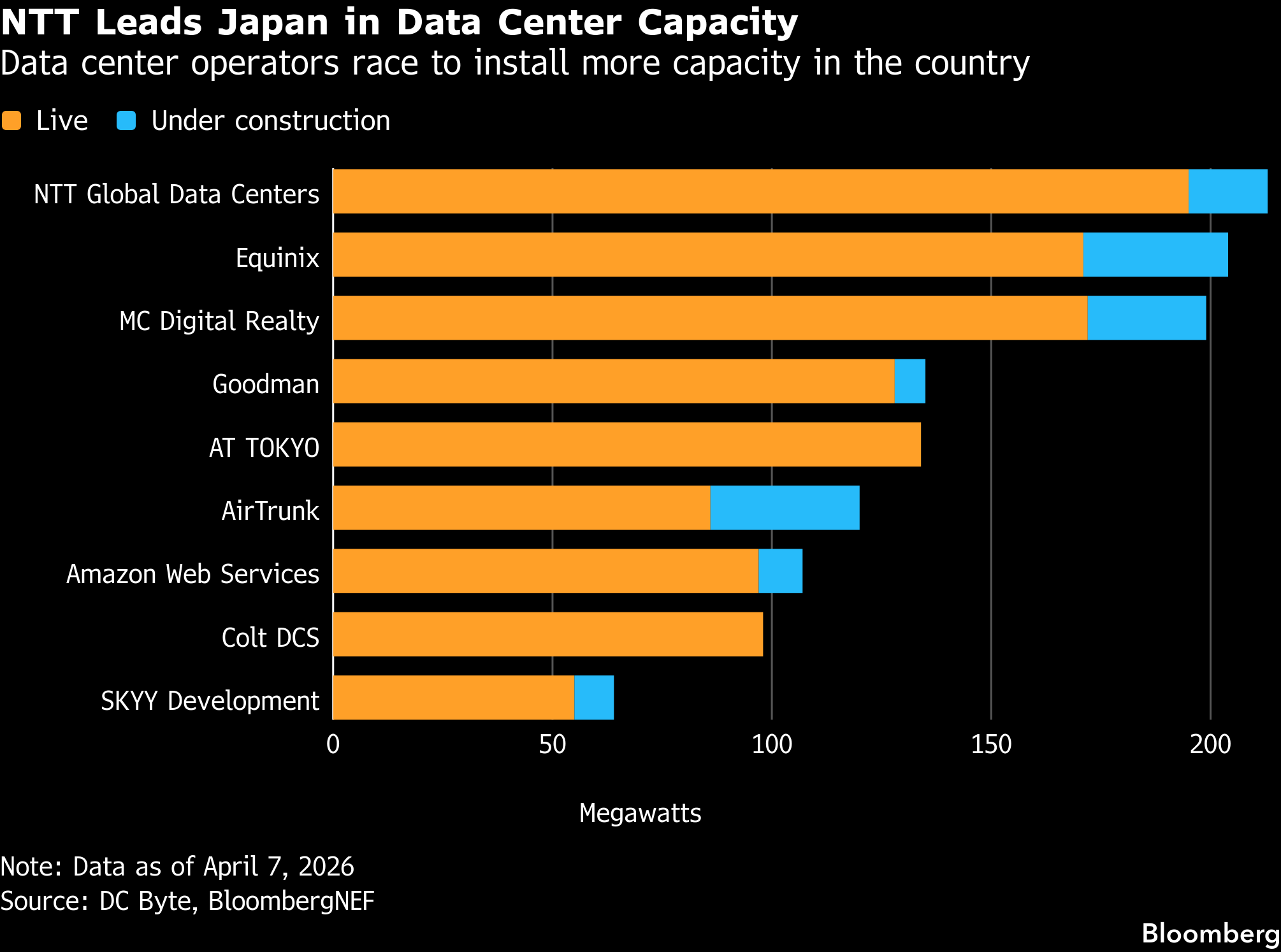
The scale of the investment is subject to changes in pricing and demand for computing capacity, the people said. An NTT Data spokesperson said the company does not disclose investment plans, citing company policy. Computational demand is expected to grow in tandem with the size of the economy, the fourth largest in the world, according to Yasuo Suzuki, who headed NTT Data’s data center operations in the Asia Pacific through July.
NTT Data, which competes globally against the likes of Digital Realty Trust Inc. and Equinix Inc., is fielding interest from companies seeking to secure around 100 MW of capacity for AI inferencing, Suzuki said.
The company now plans to add a total 42 MW of capacity this year and begin construction on a 100 MW data center next year in Tochigi, a prefecture just north of Tokyo. NTT Data expects its spending on data centers to grow about 33% to around $3.3 billion this fiscal year to March.
“From where we stand, we don’t see much competition,” Suzuki said in an interview earlier this year. “There aren’t many players building data centers due to a number of reasons, leaving limited supply against high demand.”
Shares of parent NTT fell about 1% in Tokyo morning trading. A ¥1.5 trillion investment may weigh on the stock, potentially putting it at a disadvantage against global rivals with access to deep pools of capital, said Yasuhiro Ono, chief executive officer of infrastructure investment firm Deepstone Partners.
“It’s difficult to gauge how much of the data center capacity will end up being used,” Ono said. “But because the power constraint is real, the gap between high demand and low supply will likely persist.”
Questions about long-term demand and growing fears that big tech firms are building more data centers than they need have been pummeling AI-related shares around the world. But NTT Data has seen little sign of slowing demand.
Companies like Amazon Web Services and Microsoft Corp. are racing to expand their own data centers in Japan while also seeking more capacity from NTT Data, according to Suzuki. Global cloud providers comprise more than 80% of the Japanese unit’s data center business revenue, he said.
The bigger issue is the country’s longstanding shortage of grid capacity, making it difficult to connect power-hungry data centers quickly. NTT Data relies on its partnerships with utilities such as Tokyo Electric Power Co.
Some regions of the country — such as Inzai, Chiba prefecture, just east of Tokyo — suffer from chronic shortages in transmission capacity. In those areas, it will likely take 8 to 10 years to secure the necessary approvals to meet data centers’ electricity needs, according to Suzuki. Due to such bottlenecks, data center capacity is taken up by customers as soon as it becomes available, he said. NTT’s rival SoftBank Corp. is eyeing an investment in Tepco to secure the electricity required for its aggressive data center plans.
©2026 Bloomberg L.P.