

The US Has a Chance to Rival China in Rush for Longer-Lasting Batteries


(Bloomberg) -- Accelerating demand for long-lasting energy storage offers a rare opportunity for US and European clean technology companies to compete with China’s globally dominant battery sector.
Installations of long-duration systems — an umbrella term for so-called super-batteries that can store and deliver electricity for many hours or even days — are surging as the world looks to better harness renewable energy. Deployments are forecast to almost quadruple this year after a record 2025, according to BloombergNEF.
China has built a commanding lead in lithium-ion batteries, which generally hold up to four hours of discharge and can delay the use of daytime solar power until the evening demand peak. Storage over far longer time periods — to handle sustained spells of low renewables output, or to ensure grid stability — has greater potential for competition as it encompasses a wider range of technologies.
Those options include batteries using a more eclectic mix of metals, or systems that can store energy in hot bricks, tap the potential of gravity, or compress air into caverns.
“The race is still pretty much open,” and there’s no one-size-fits-all solution, said Frederic Godemel, executive vice president for energy management at Schneider Electric SE, a supplier of power equipment including server racks and cooling technology.
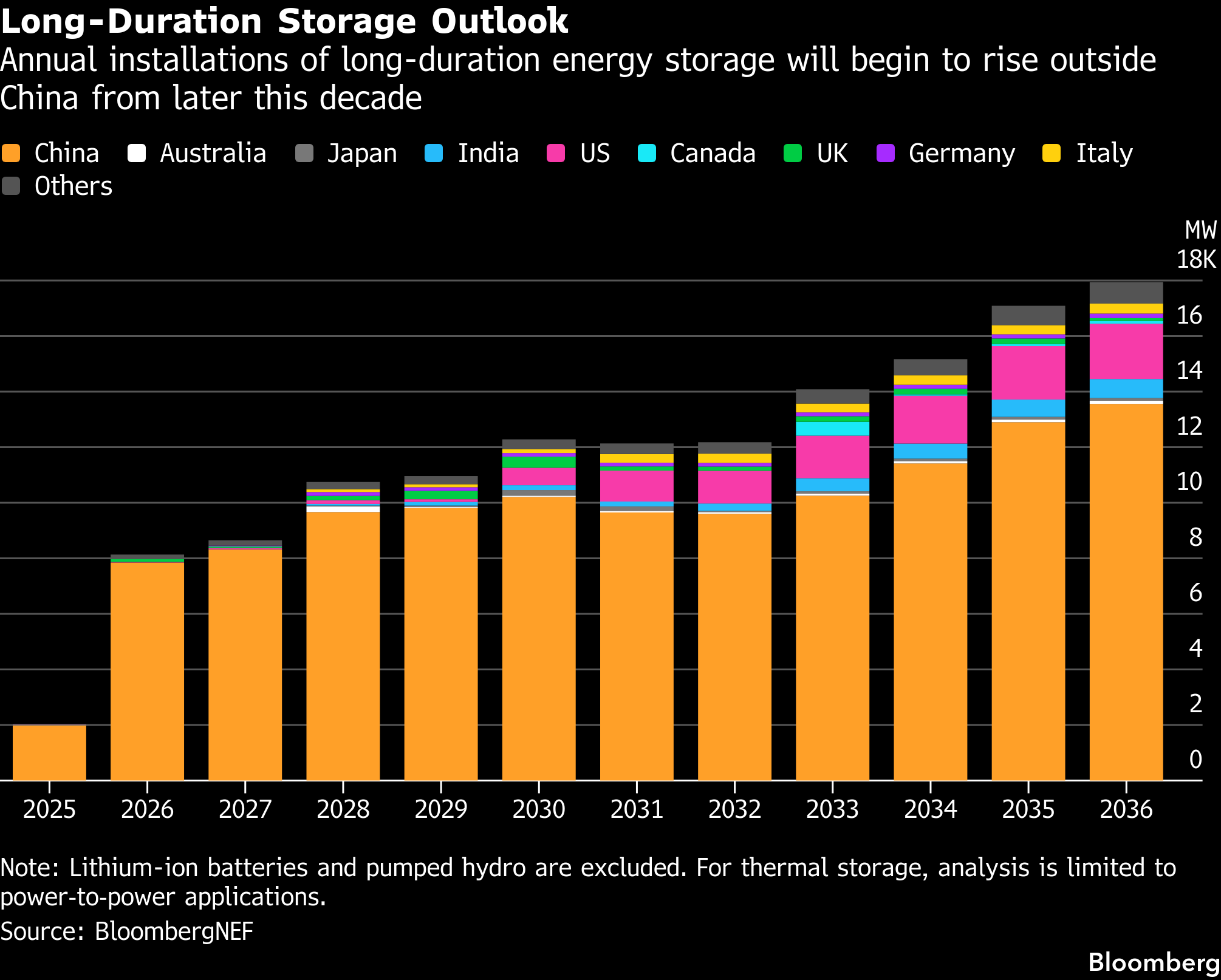
While China currently accounts for about 72% of cumulative long-duration storage capacity — including almost all installations last year — the US is the second-largest market and expected to ramp up deployments later this decade, as are nations including Germany, India and Japan, BNEF said last month. US installations could be accelerated further as the boom in data center construction adds fresh demand for reliable power.
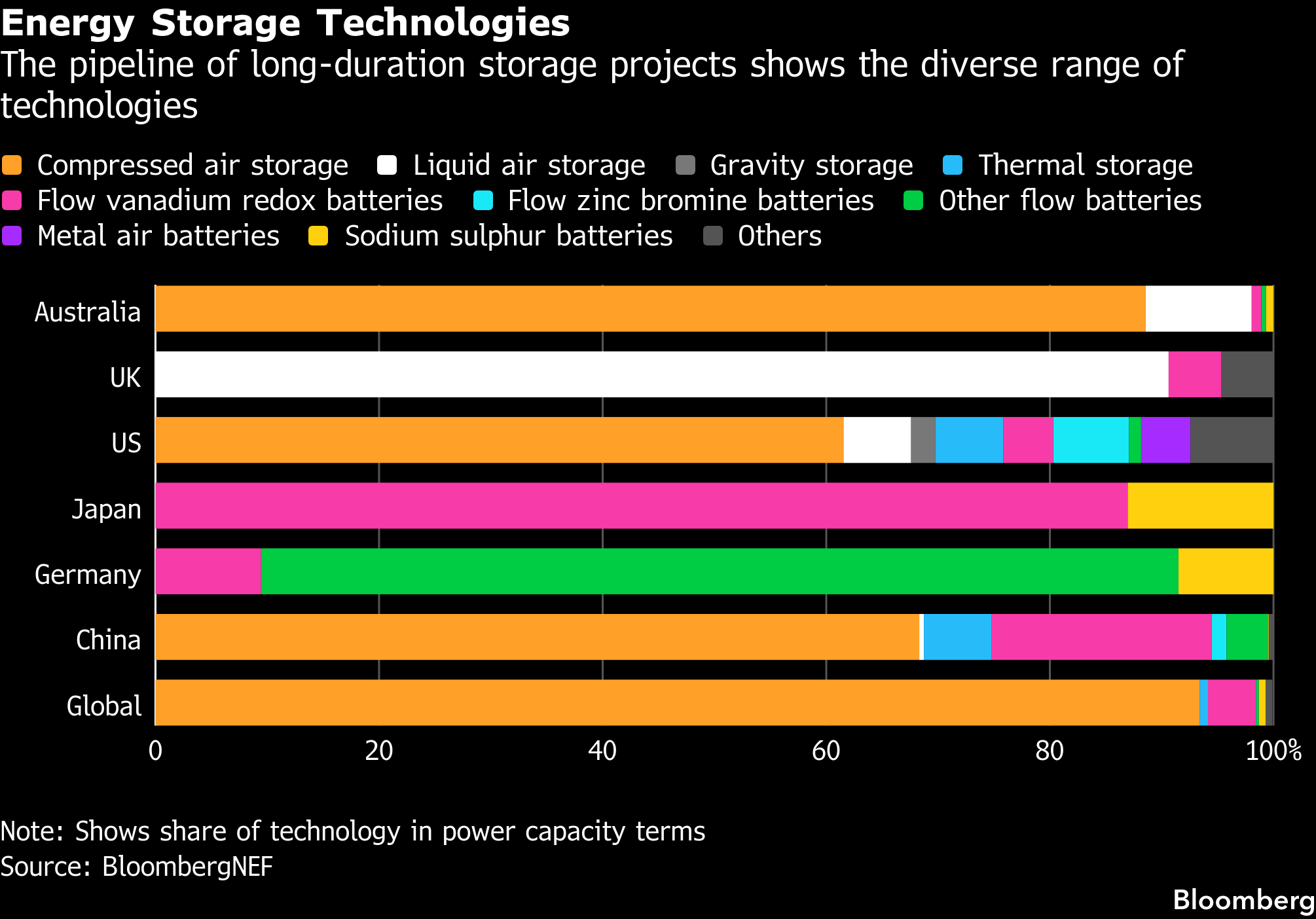
“China leads in scale,” said Yiyi Zhou, a BNEF analyst specializing in energy storage. “The US has the most diversified type of technology in development.”
Unlike in other areas of clean technology, Chinese companies also have less potential to become major exporters and capture market share overseas. China is focused on a narrower set of technologies than other countries, and long-duration storage — often referred to as LDES — can typically need specific designs for particular locations.
“Long-duration storage is not a commodity like solar panels,” said Zhou. “I don't expect LDES to be easily exported at a large scale.”
That’s likely to support domestic supply chains, and the UK and Italy are among nations already setting policies to encourage deployments. Developing viable and cost-effective methods for 10 to 100 hours or more of storage “should be a priority for governments anticipating future high shares of variable renewable electricity supplies” or weather-related disruptions to hydropower, the International Energy Agency said in a February report.
Long-duration storage technology is “one of the critical missing pieces for deeply decarbonized power systems,” said Kostantsa Rangelova, a global electricity analyst at climate think tank Ember.
Soaring US demand for electricity and a shortage of natural gas turbines — which complicates the prospects of quickly adopting the fuel — also “opens up a door” for long-duration storage that can complement renewables, said Gabriel Kra, co-founder of Prelude Ventures, a venture capital firm that has invested in Form Energy Inc., a Somerville, Massachusetts-based startup.
“There is nothing that I see in the evidence or the data that would suggest that Chinese companies, or any particular Chinese company, has any advantage right now,” Kra said.
Form Energy, which deploys iron-air battery technology that can feed electricity to power grids for 100 hours, completed an agreement last month with a data center developer. In February, the company struck a similar deal to supply utility Xcel Energy Inc. for a Google site in Minnesota.
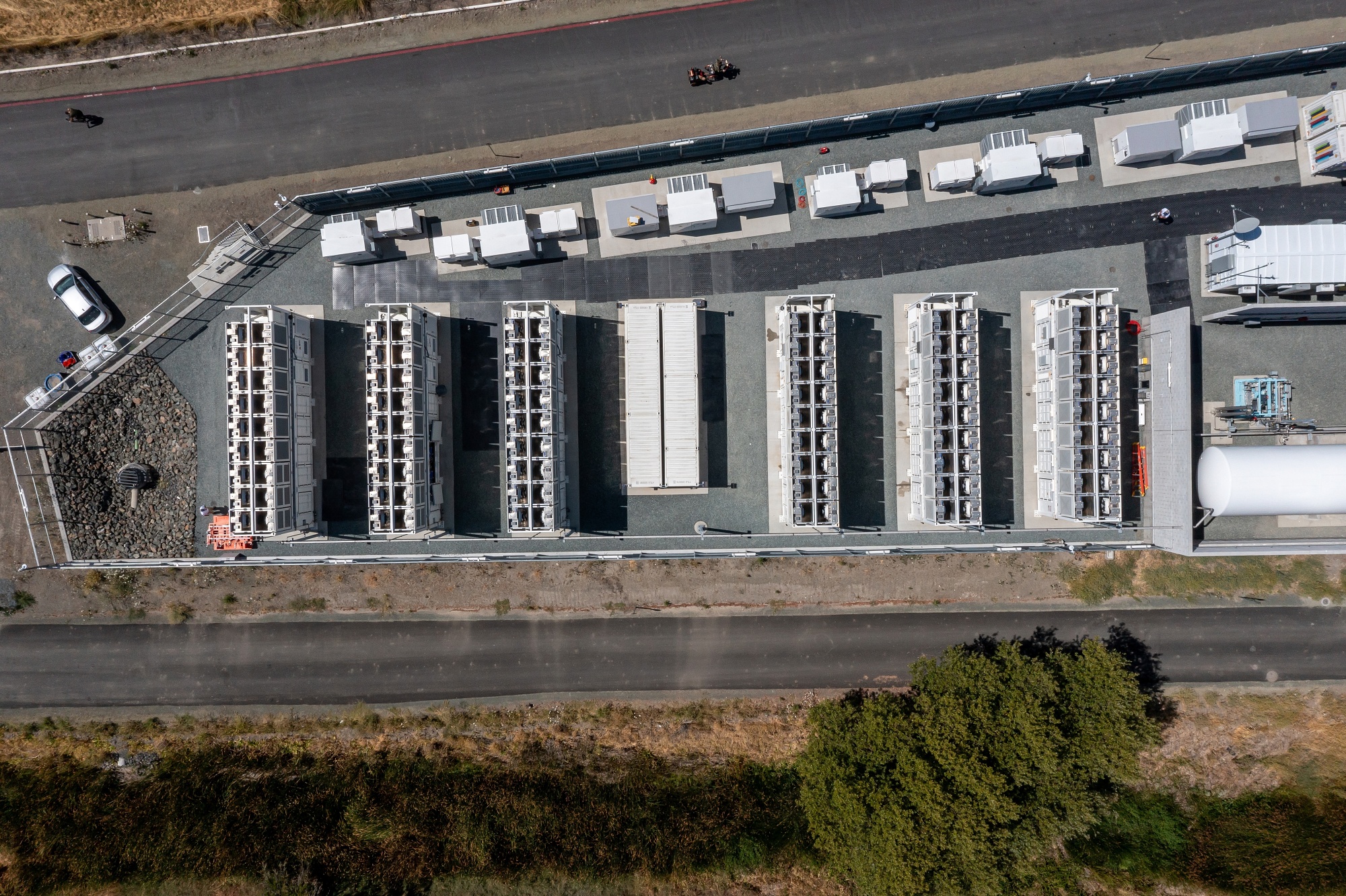
California is set to host one of the world’s largest compressed air energy projects — which works by squeezing air into tanks or natural caverns and releasing it through a turbine to generate electricity. Because long-duration storage assets need both technical expertise and local knowledge, it’s unlikely startups outside China will lose ground to “a Chinese developer coming and competing in our backyard,” said Curtis VanWalleghem, chief executive officer of Toronto-based Hydrostor Inc., the Kern County project’s developer.
“We know this market extremely well, where to put things, and we have the special technology,” he said. “Our solution has a unique value proposition, that when we optimize around it, we can win.”
While the sector is forecast to grow outside China and deliver new opportunities to startups, the world’s No. 2 economy will remain the crucial market for long-duration technologies. Yet China’s frontrunner companies aren’t domestic battery titans like Contemporary Amperex Technologies Co. Ltd., which are largely engaged in pushing the potential of existing product types.
Zhongchu Guoneng Technology Co., a VC-backed spinout from the Chinese Academy of Sciences that uses compressed air technology, and Dalian Rongke Energy Storage Group Co., a vanadium-flow battery company, are currently among the nation’s leading firms, according to BNEF. China’s government is also supporting dozens of pilot projects testing alternatives to lithium-based technologies.
©2026 Bloomberg L.P.