

India’s Power Use Sees Slowest Growth In Years on Cooler Weather


(Bloomberg) -- India’s electricity consumption in the fiscal year through March grew at the slowest pace in six years, after a mild summer reduced the use of air conditioners and copious rains curbed demand for farm irrigation.
Energy supplied by state power retailers during the year rose almost 1%, the worst performance since 2021 when electricity use declined due to the pandemic, according to data from the power ministry’s Central Electricity Authority. The past fiscal year also saw the first annual decline in peak power demand in at least two decades.
While cool weather alleviates the extreme heat typical of Indian summers, providing relief to outdoor workers and farmers in particular, it forces power plants to ramp down operations and slowdown purchases of coal, causing a surge in stockpiles at mines.
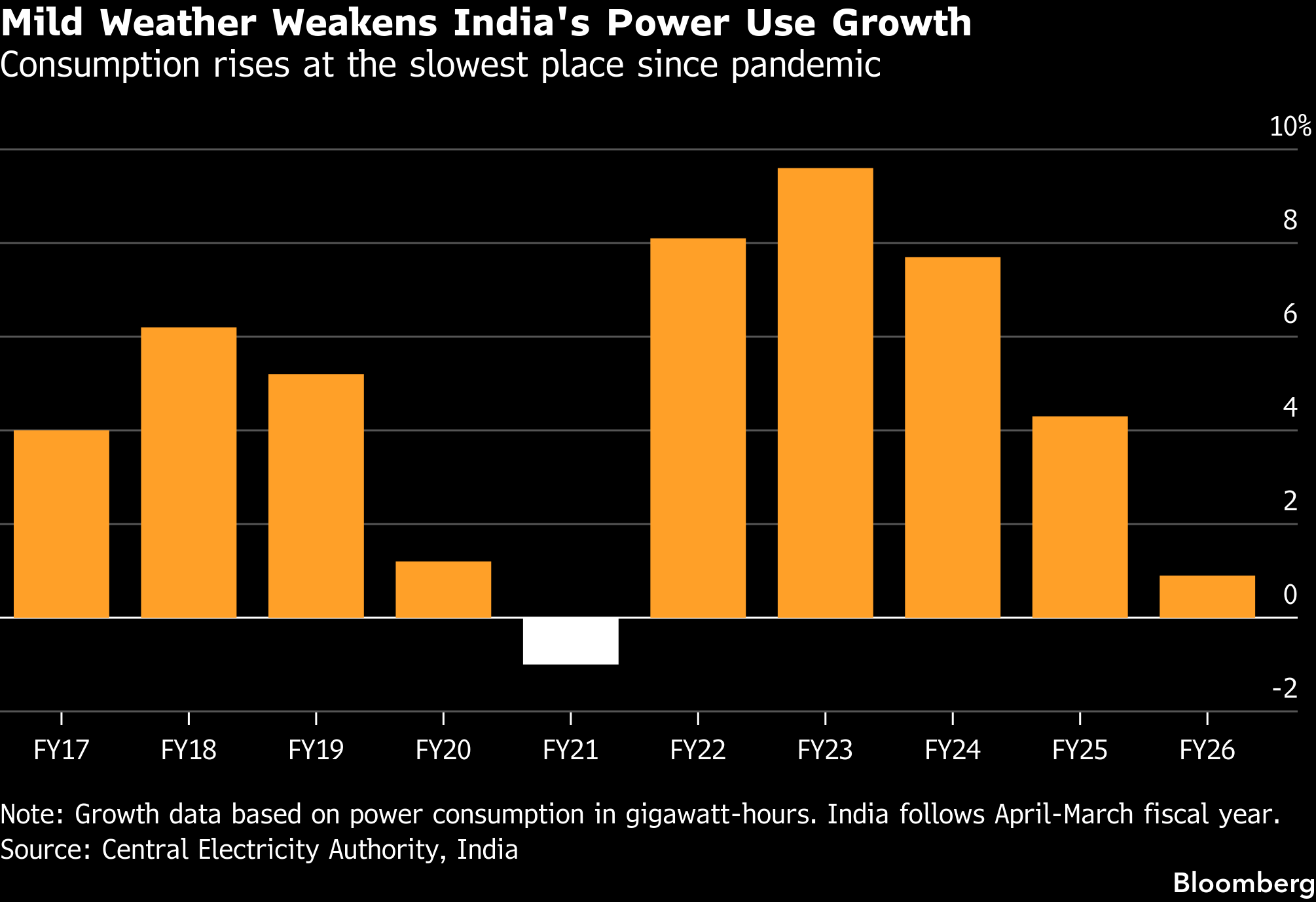
India’s power consumption growth is historically tied to the weather, with summer heat waves being the biggest driver. Now, electrification is creating new demand avenues, such as the use of electric heaters during winter.
“As cooling needs have contributed significantly to India’s demand growth in the past five years, the impact of a milder summer could be meaningful even if the economic activities stay intact,” said Anish Mandal, a partner with Deloitte South Asia who leads new energy and energy transition at the company.
To be sure, the power ministry data only captures supplies from state retailers, which account for about 80% of the country’s last-mile connections. Growing installations of rooftop and off-grid solar systems, together constituting about 31 gigawatts capacity, are shrinking the market served by regional utilities.
Electricity demand is expected to rise more sharply this year on expectations of a hotter summer.
©2026 Bloomberg L.P.