

Iran War Is Pushing Consumers to Break Up With Fossil Fuels


(Bloomberg) -- Just weeks ago, the US electric car market looked moribund. Amid plummeting EV sales, dealers were offering discounts as Detroit automakers scrapped electric lineups to make more gas-guzzling SUVs.Then oil prices surged after the US and Israel attacked Iran.Now, a used electric car showroom in San Francisco suggests the tide is turning again. As gasoline prices climb — hitting $6.81 a gallon at a nearby station on Wednesday — a flurry of drivers are making appointments to check out Ever’s lightly used EVs, many priced under $30,000.
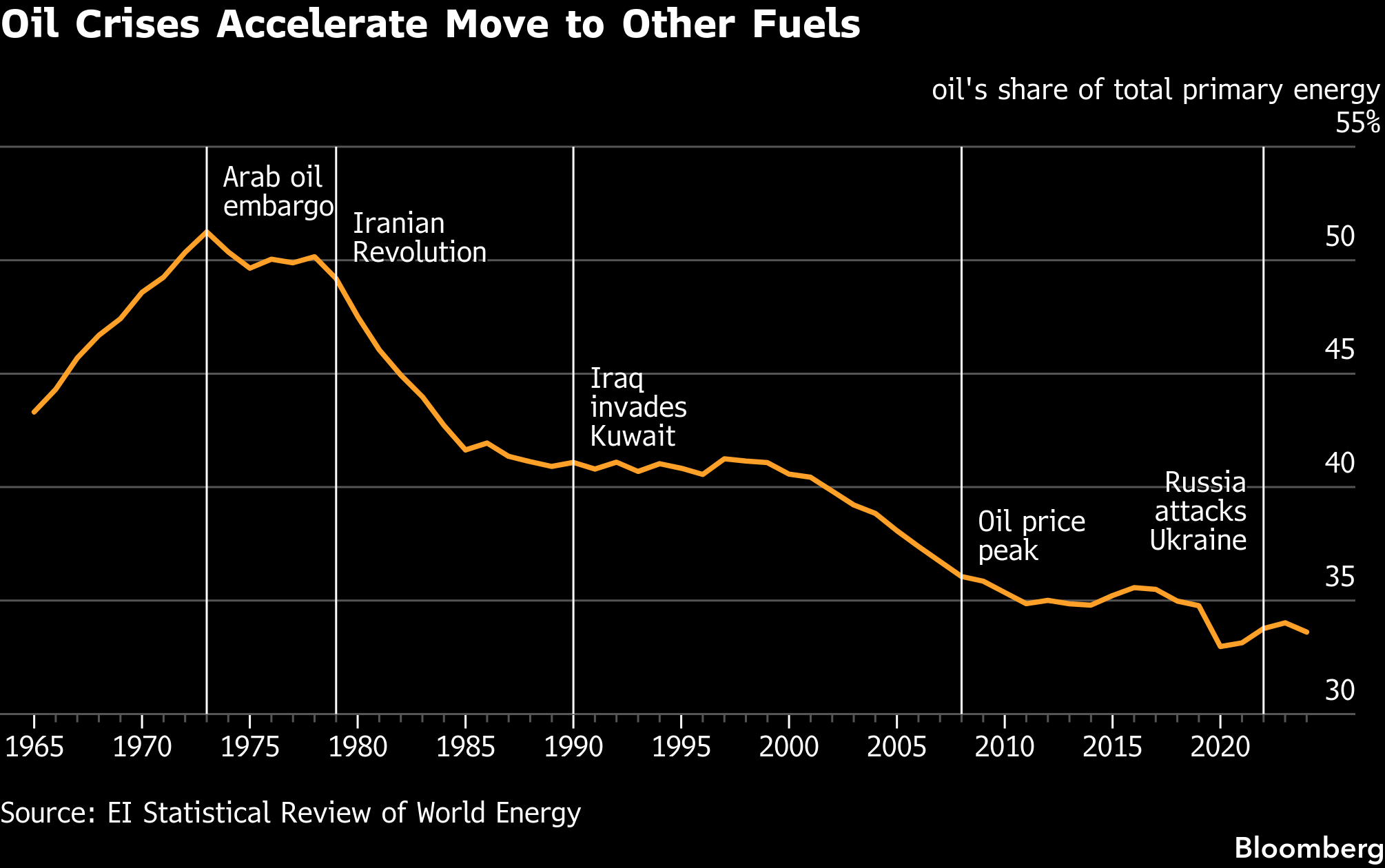
“Gas prices are coming up in almost every customer conversation,” said Maximilian Quertermous, Ever’s co-founder and chief operating officer. “The momentum of the last few weeks is among the strongest we’ve seen.”
Ever is just one dealership, but signs of a shift are playing out across the world. In Southeast Asia, buyers are flocking to Chinese EV giant BYD Co.’s stores, while electric rickshaws are selling out in Pakistan. A shortage of cooking oil in India is driving a run on electric stoves. From Germany to Nigeria, interest in rooftop solar is surging. And in the UK, some homeowners are taking the plunge on expensive heat pumps.
“We are in the middle of the second energy shock in the 2020s,” said Kingsmill Bond, an energy strategist at UK think tank Ember, following the crisis triggered by Russia’s 2022 invasion of Ukraine. “It will flow into people's decisions on what energy-hungry devices they buy.”
Consumers are responding to one of the largest disruptions in global oil markets by embracing low-carbon technologies that promise to lower gas and power bills. For many, the conflicts in Iran and Ukraine have driven home a harsh reality: the only path to energy security is going electric.
These individual choices will likely pale in comparison to the increase in planet-warming pollution as many nations, particularly in Asia, turn back to coal to plug the energy gap. And the pain hasn't been as sharp elsewhere, like in the US, where abundant natural gas supplies have largely shielded power bills from war-related price shocks.
At the same time, though, the Iran war will put a powerful impetus behind green alternatives to oil and gas at almost the precise moment when policies meant to spur decarbonizing technologies had been on the retreat, particularly in the US. With one major difference: The current acceleration of renewable-energy options is largely happening because "they are also homegrown, domestic energy sources,” International Energy Agency Executive Director Fatih Birol told reporters in Sydney on Monday. “The main driver will not be climate change, the main driver will be energy security.”
It will be weeks before we get data that shows whether this renewed curiosity in green technologies translates into sales. Much depends on how long the Iran war persists and if oil prices stay elevated.
Still, investors are already trying to game out which clean-tech manufacturers will benefit. While the S&P Global Clean Energy Transition Index, a leading gauge of green companies, has remained largely flat since the war began, several individual companies have surged. Shares of SolarEdge Technologies Inc., which sells power inverters used for solar panel systems, have advanced 45% and fuel cell producer Plug Power Inc. has gained 27% since the start of the conflict to Wednesday’s close. In Hong Kong trading, the world's top battery supplier Contemporary Amperex Technology Co. Ltd. jumped 29% and BYD moved 12% higher.
Last year, global investment in the energy transition rose about 8% to $2.3 trillion, according to data compiled by BloombergNEF. More than $1 trillion of that was spent on green products, including EVs and heat pumps.
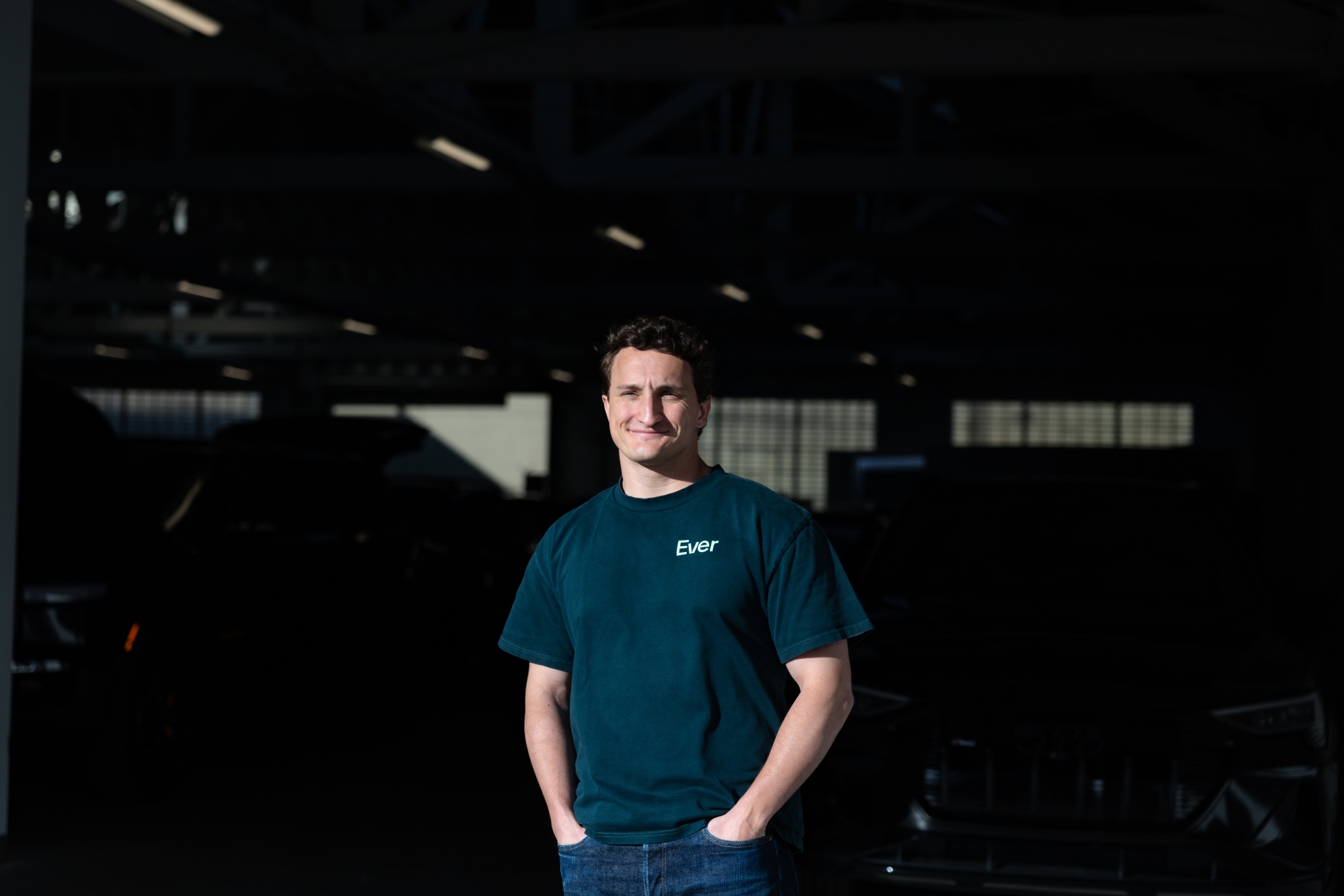
Past energy shocks have resulted in longer-term changes. The 1973 oil embargo pushed American drivers to purchase smaller, more fuel-efficient Japanese cars. More importantly, money began pouring into research that led to the invention of the lithium-ion battery, which dramatically lowered the cost of making EVs and home energy storage devices this decade.
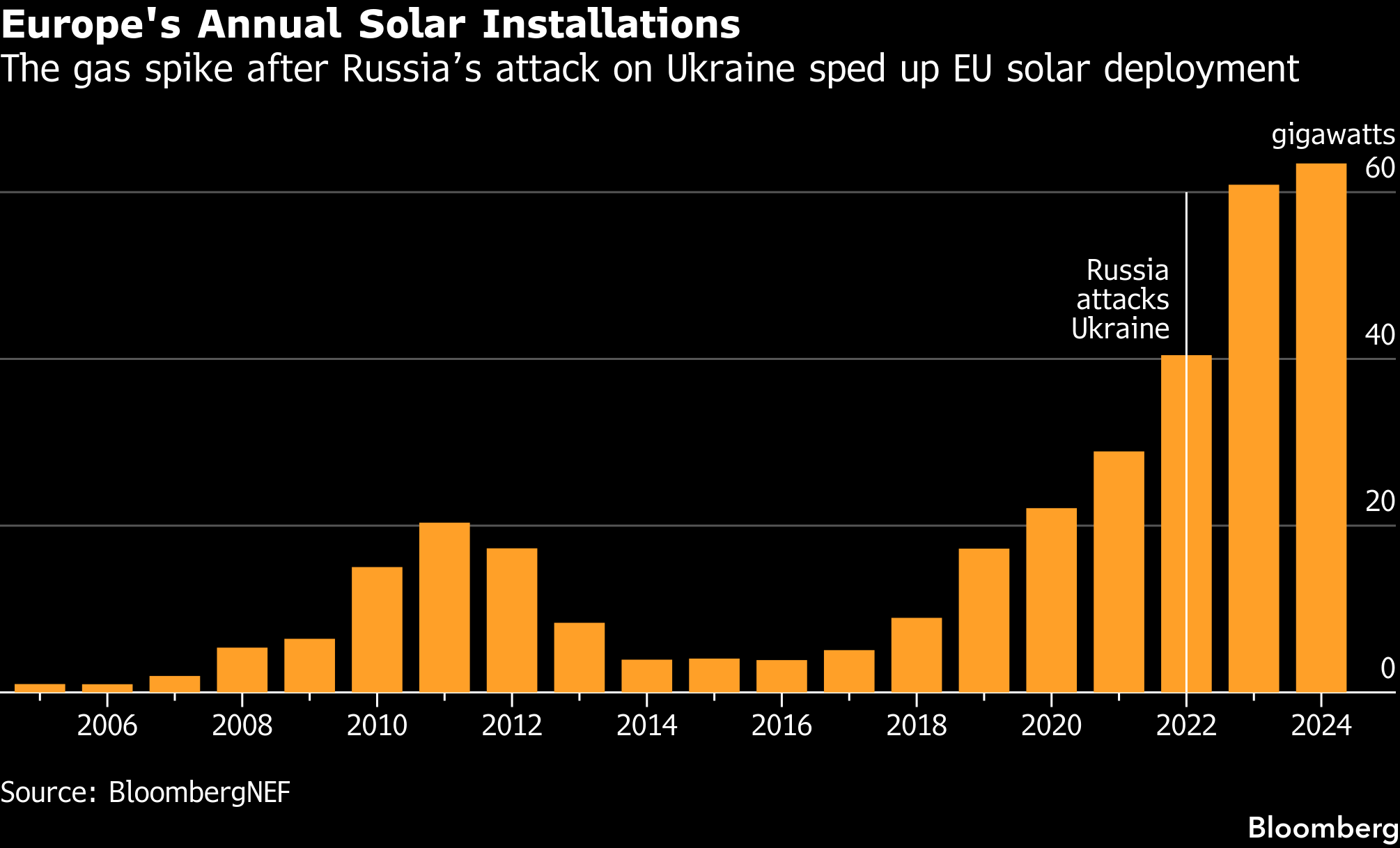
The high oil and gas prices of the 2000s, fueled by the fear that supply could peak, pushed Europe and China to invest in alternatives like solar and batteries. Those devices had become affordable by the time Russia's attack on Ukraine caused another fossil-fuel shock, leading to an accelerated adoption of solar and EVs in rich and poor countries.
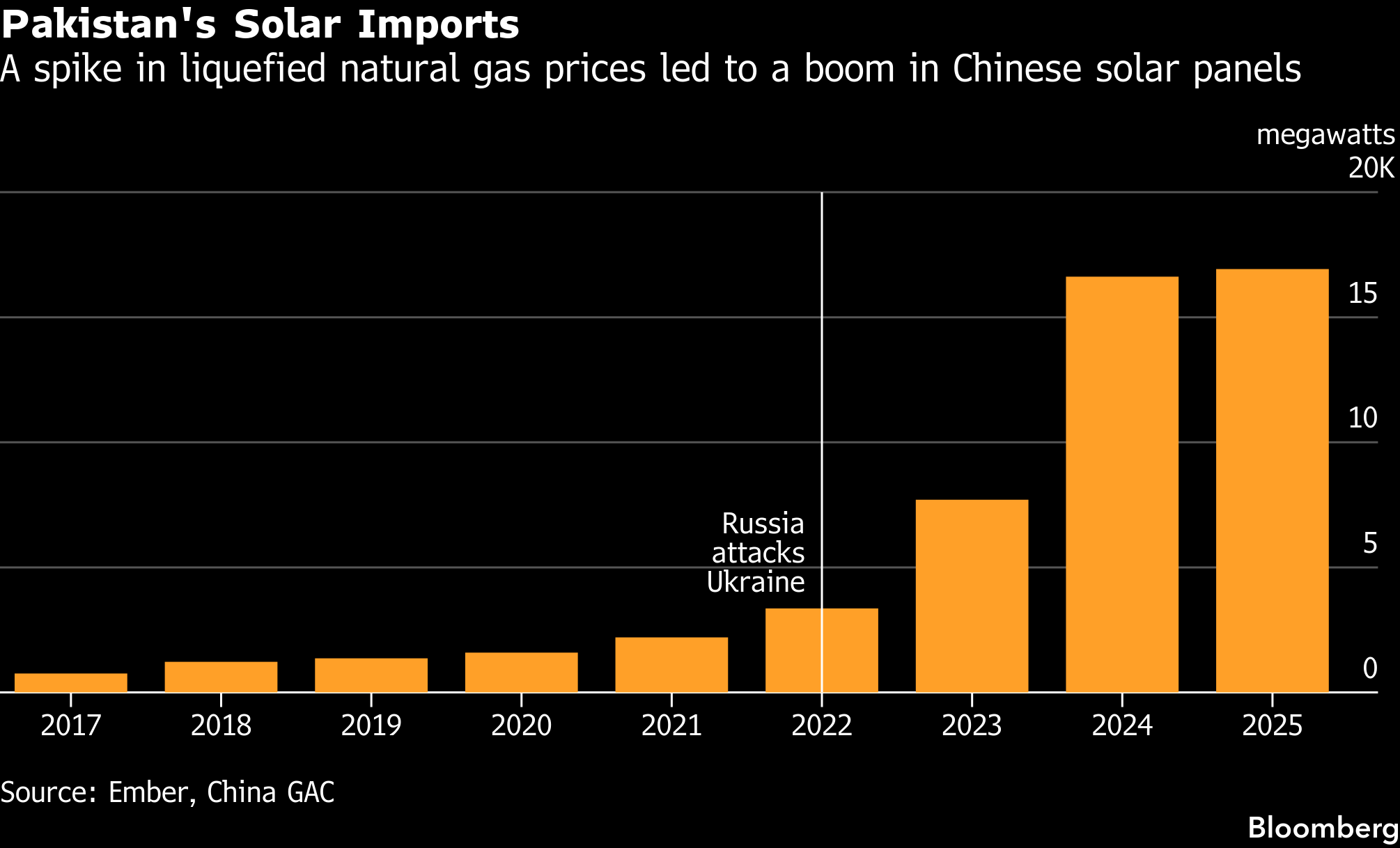
Renewables now account for nearly half of the European Union’s electricity production. Heat pump installations have risen 65% since 2022. In Pakistan, meanwhile, solar panels at homes and businesses have increased the country’s electricity capacity by 50%.
In Germany, where heating oil prices have risen 21% during the war and solar panels are easily available at IKEA and other big retailers, the reaction has been swift.
“A switch was flipped,” said Janik Nolden, chief executive officer of Solarhandel24, which sells solar panels. As temperatures remain chilly in March, calls from prospective buyers have tripled and sales so far have more than doubled from the previous month.
The interest isn’t just from people who want to fully electrify their homes. Some customers are looking at systems that combine solar panels with heating devices for hot water during the summer, even though they will continue to burn oil for other needs. “They were never really fans of solar and were satisfied with oil heating, but it has simply become too expensive,” Nolden said.
High fuel prices in Europe are also sparking a new wave of interest in EVs. In the UK, car site Autotrader recorded a surge in EV inquiries since the first attacks at the end of February. Leads — expressions of interest passed on to dealers — are up nearly 30% for new electric cars since the beginning of the war, the company said.
In Denmark, used EV searches on Bilbasen, a major online car marketplace, have jumped by as much as 80,000 a week, according to Jan Lang, a marketing executive at the company. That’s more than what the site experienced after the Ukraine war.
"Danish consumers are very cost-focused," Lang said. "They go for the car type which is the cheapest, and it is the EV."
The war’s unpredictable course and whipsawing energy markets are also pushing some consumers to seek stability. On Monday, oil prices fell sharply after President Donald Trump claimed the US was in talks with Iran on a resolution, only for Tehran to deny any negotiations were underway.
Michael Lawson, a professional composer and psychotherapist who lives in the small UK village of Easton, isn’t waiting to see how the conflict ends. He pulled the trigger on a heat pump and solar panels for his home soon after the US and Israel first launched strikes against Iran.
“I heard what President Trump was up to and I thought circumstances are going to be unpredictable,” said Lawson, whose heating bill quickly doubled to £800 ($1,100) for a two-month supply. He now expects his annual energy bills to drop as much as £300.
Heat pump installer Damon Blakemore in Sheffield said he's seen a 30% increase in inquiries since the war started, mainly from residents like Lawson whose rural towns aren’t connected to the natural gas network and depend on heating oil deliveries. At Octopus Energy, the country’s biggest energy supplier, calls about home solar were 27% higher than average the week the war started.
On Tuesday, the UK government said it was working with Lidl and Amazon to make plug-in solar available to consumers in the coming months. “The answer to a fossil fuels crisis is not to double down on fossil fuels, but to double down on clean home-grown power that we control,” Energy Secretary Ed Miliband told lawmakers.
For many developing nations, the search for solutions is critical. The energy crisis is hitting hardest in countries across Asiathat depend heavily on imported fuel shipped through the Strait of Hormuz, which has been effectively closed by Iran.

That includes India, where more than 330 million households rely on canisters of liquefied petroleum gas (LPG) for cooking and 90% of the country’s supply comes from the Middle East. Over the past two weeks, delivery times have stretched to 25 days from five in some parts of the country.
The delays, rising prices and fears of shortages sparked a run on induction stoves. Online sellers on Amazon saw daily sales increase by 30 times, while those on Flipkart rose fourfold, according to local media reports. “We are out of supply but hope to bring back the supply soon enough,” Venkatesh Vijayaraghavan, CEO of cookware brand TTK Prestige Ltd., reassured customers on March 14.
Even residents with gas connections have been buying electric cooktops as a backup, if they can afford it.
“I thought it's good to have one around in the house, just in case,” said Prabha Singh Chaddha, a 67-year-old artist based in New Delhi. She bought induction burners, which retail between $25 and $190, for her daughter and herself on Amazon two weeks ago.
In neighboring Pakistan, solar took off after the Ukraine war. Now, signs are emerging that the latest conflict is hastening the nation’s transition to EVs after the price of gasoline jumped more than 20%.
Syed Raza Mohsin, founder of VLEKTRA Electric Motorcycles, said he expects battery-powered two-wheelers to account for 10% to 15% of the market in 2026, up from less than 1% two years ago. “Solar is a very good example of how private citizens themselves found a solution for high energy prices,” he said. “We are seeing similar trends in motorcycles.”
Electric rickshaw maker Tezmo Motors has already sold out its March inventory, according to founder Moez Naseer, and is expecting a “very huge surge of orders.” Naseer said two fleet operators have placed orders since the Iran war started. “We are so petrol reliant, so people are finally figuring it out that we cannot rely on this anymore,” he said.
In the Philippines, the government is stepping in to fill the gap. This week, a state-owned pension fund started offering loans of up to 500,000 pesos ($8,300) for home solar panels after President Ferdinand Marcos Jr. declared a national energy emergency due to the war.
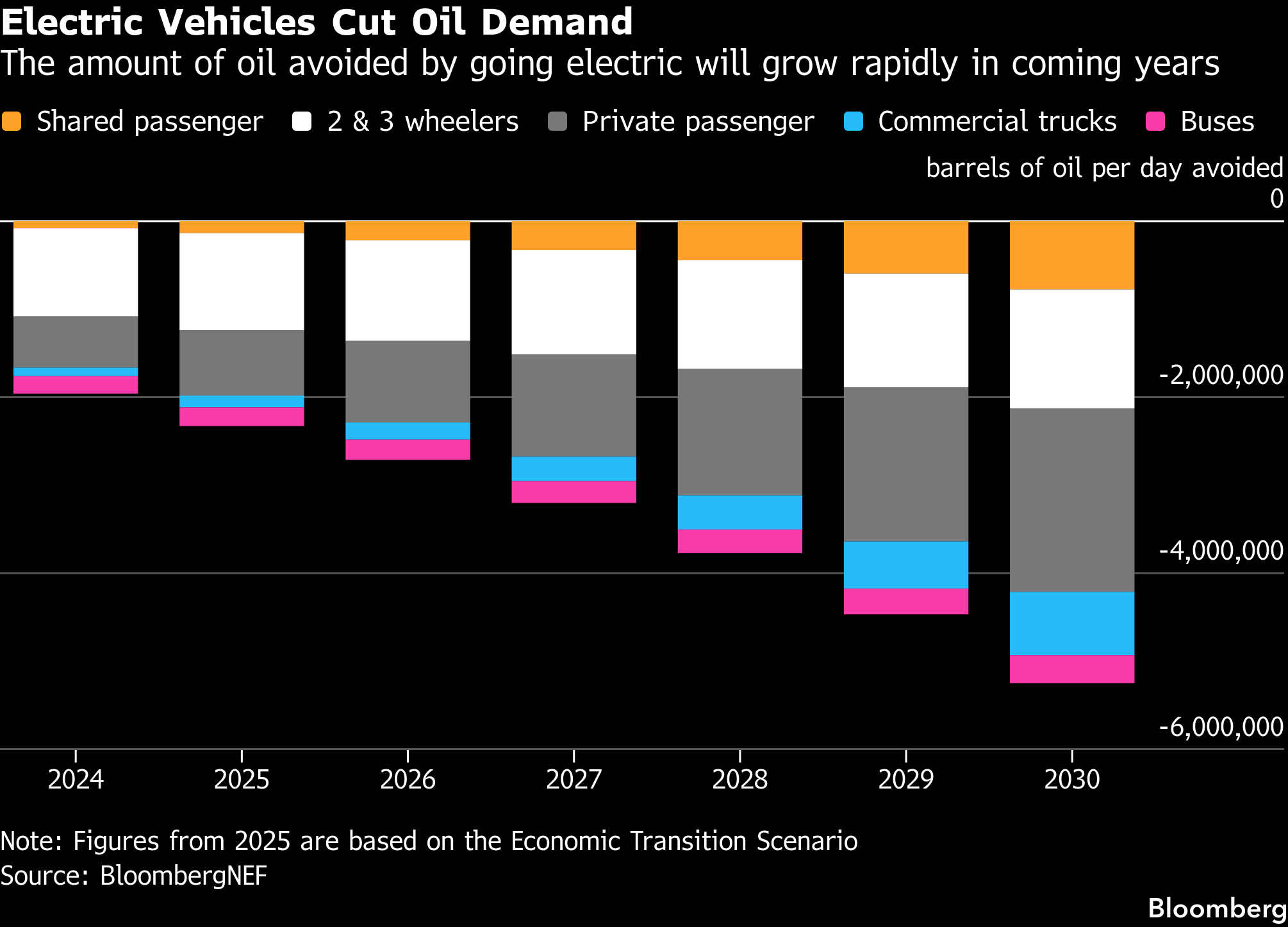
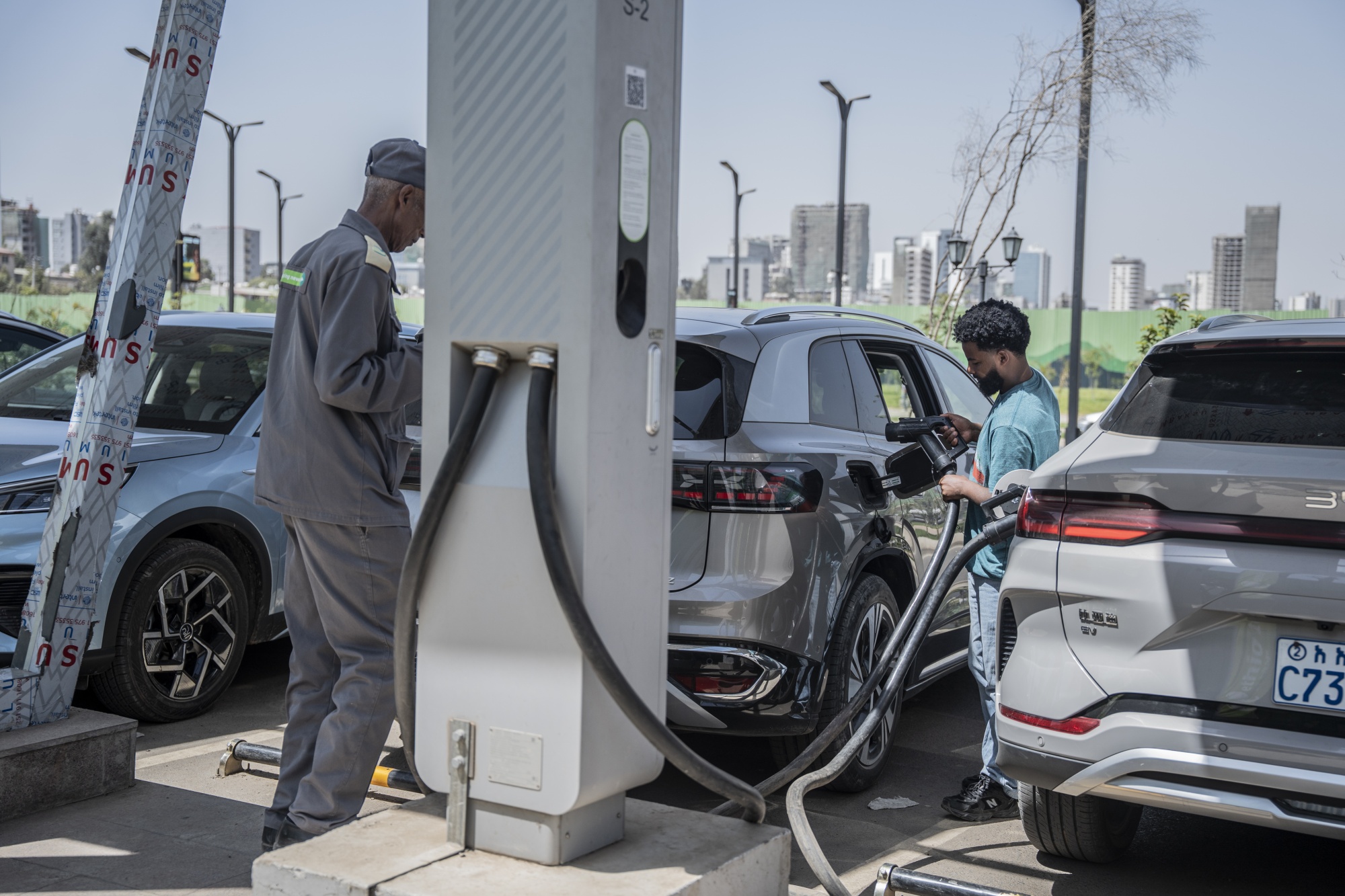
Last Thursday in the Ethiopian capital of Addis Ababa, truck and bus drivers formed long queues at nearly two dozen fuel stations, even as some outlets posted “no gasoline” and “no diesel” signs. The government banned the import of fossil fuel vehicles in 2024 because it could no longer afford to subsidize gasoline. In response to the Iran war, the transport ministry called for a stronger embrace of EVs, by “the private sector, individuals and government institutions.”
In Nigeria, tens of millions of people use gasoline-powered generators for electricity. As fuel prices have risen, there’s been a rush for rooftop solar, though the high upfront cost remains a barrier for many.
"People who don't have solar want to get it, and those who have it want more panels to go fully off-grid,” said Pensang Daniel, an independent solar installer in Lagos. Looking to ease costs, the government announced on March 17 that it had approved the purchase of electric buses for civil servants.
But for many residents of poorer countries, it’s not always about consumer choice. While EVs and solar panels have become cheaper and more available, they’re not equally accessible across the world.
“It’s not just sticker price, but often the infrastructure to support it,” said Claire Curry, head of technology, innovation and research at BloombergNEF. “Are there enough installers for solar panels or heat pumps? Are there enough chargers for EVs? As the infrastructure improves, the uptake increases.”
The incentives are less straightforward for Americans as the country’s domestic natural gas supply insulates it from large spikes in electricity rates. US consumers had access to generous subsidies for electrifying their homes and transportation after 2022, including a $7,500 federal tax credit for EVs, but those have disappeared under the Trump administration.
Even so, there are signs that the jump in pump prices is unnerving drivers. American online searches for electric cars rose 20% in the first week of the war and dealers have reported more inquiries from buyers.
“If you begin to believe that you just don’t know what your gas bill will be every month” that uncertainty can contribute to a decision to go electric, said TD Cowen analyst Itay Michaeli, noting that the last two major hybrid and electric vehicle demand surges coincided with previous oil spikes in 2008 and the Ukraine war in 2022.
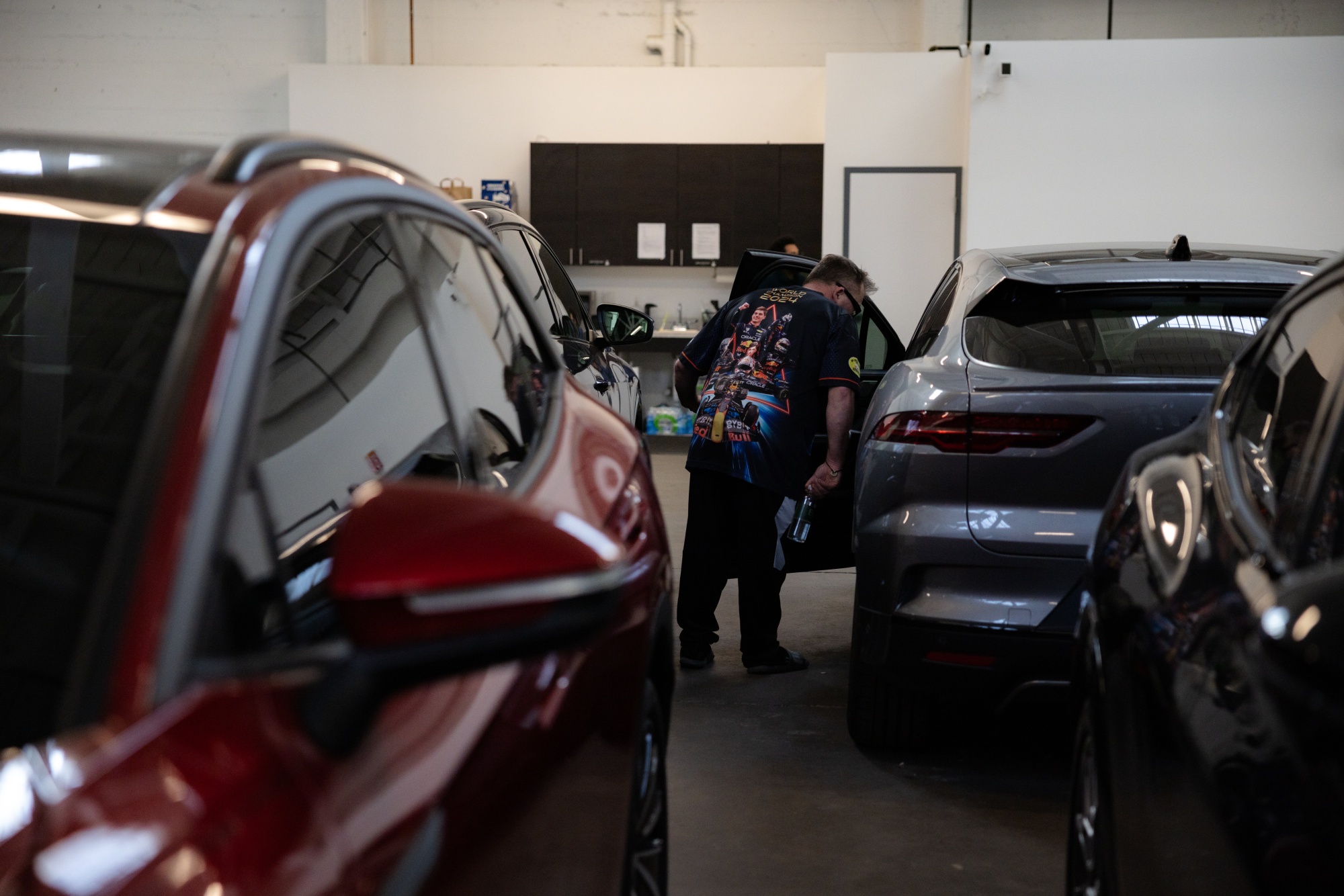
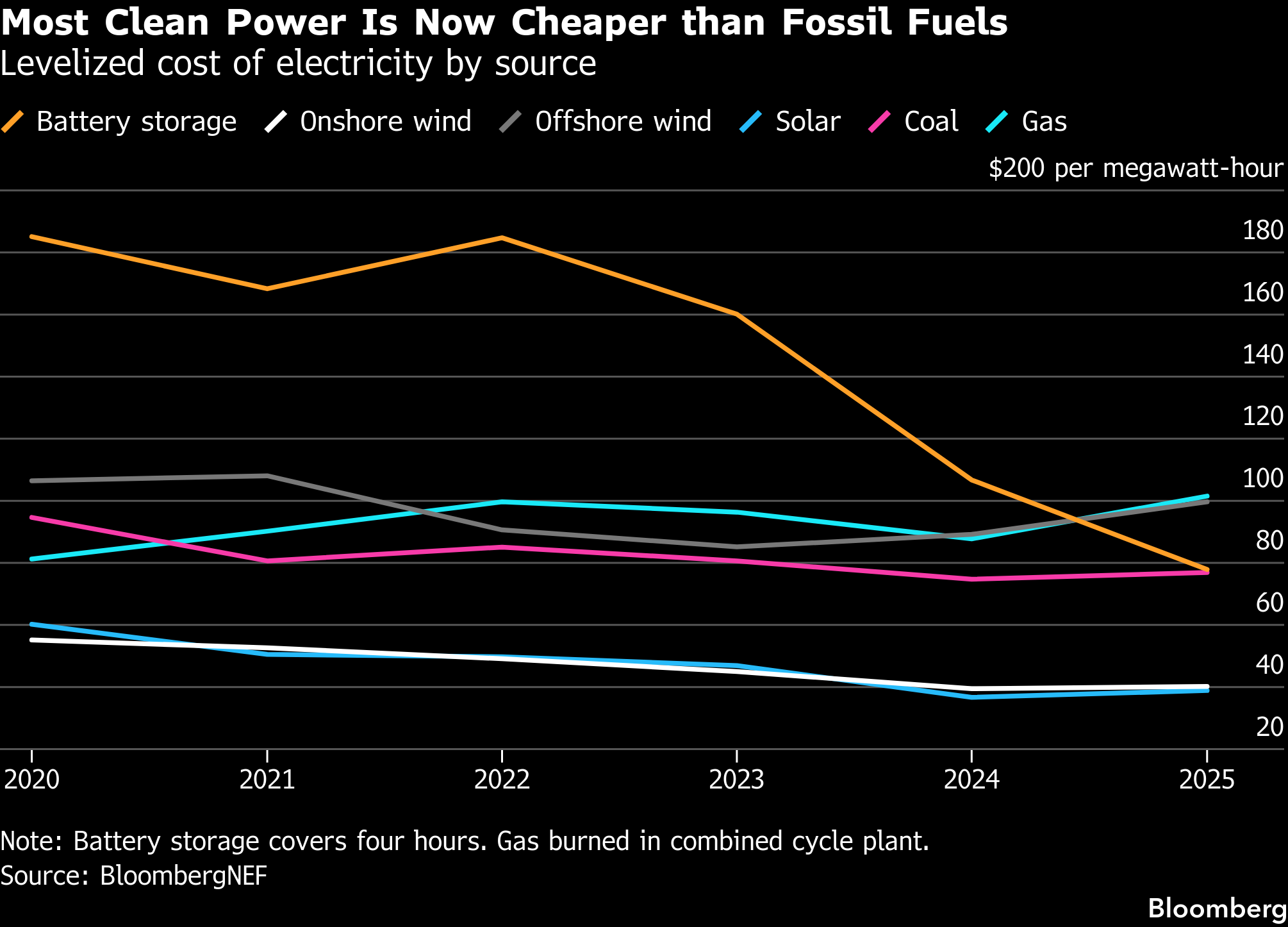
Energy-efficient goods have also become more affordable and widely available since 2022, making up for some of the loss of government help. The used EV market, for instance, barely existed four years ago. Ever has raised $100 million to expand nationwide and its San Francisco showroom features models from nearly every EV maker, including cars that weren’t on the road three years ago. Renters and homeowners can also now buy cheap plug-in solar panel systems to offset electricity costs.
“Americans look for solutions when they feel like they've lost control,” said Mary Powell, CEO of Sunrun Inc., the US’s largest rooftop solar company. “That instinct is driving demand right now.”
Christopher Knittel, an economist at the Massachusetts Institute of Technology Sloan School of Management, said sustained high gas prices will push more drivers to switch to electric or hybrid vehicles. “While I would not expect this to have the same impact as the $7,500 tax credit, it is not out of the question,” he said. “Volatility of gasoline prices also matters.”
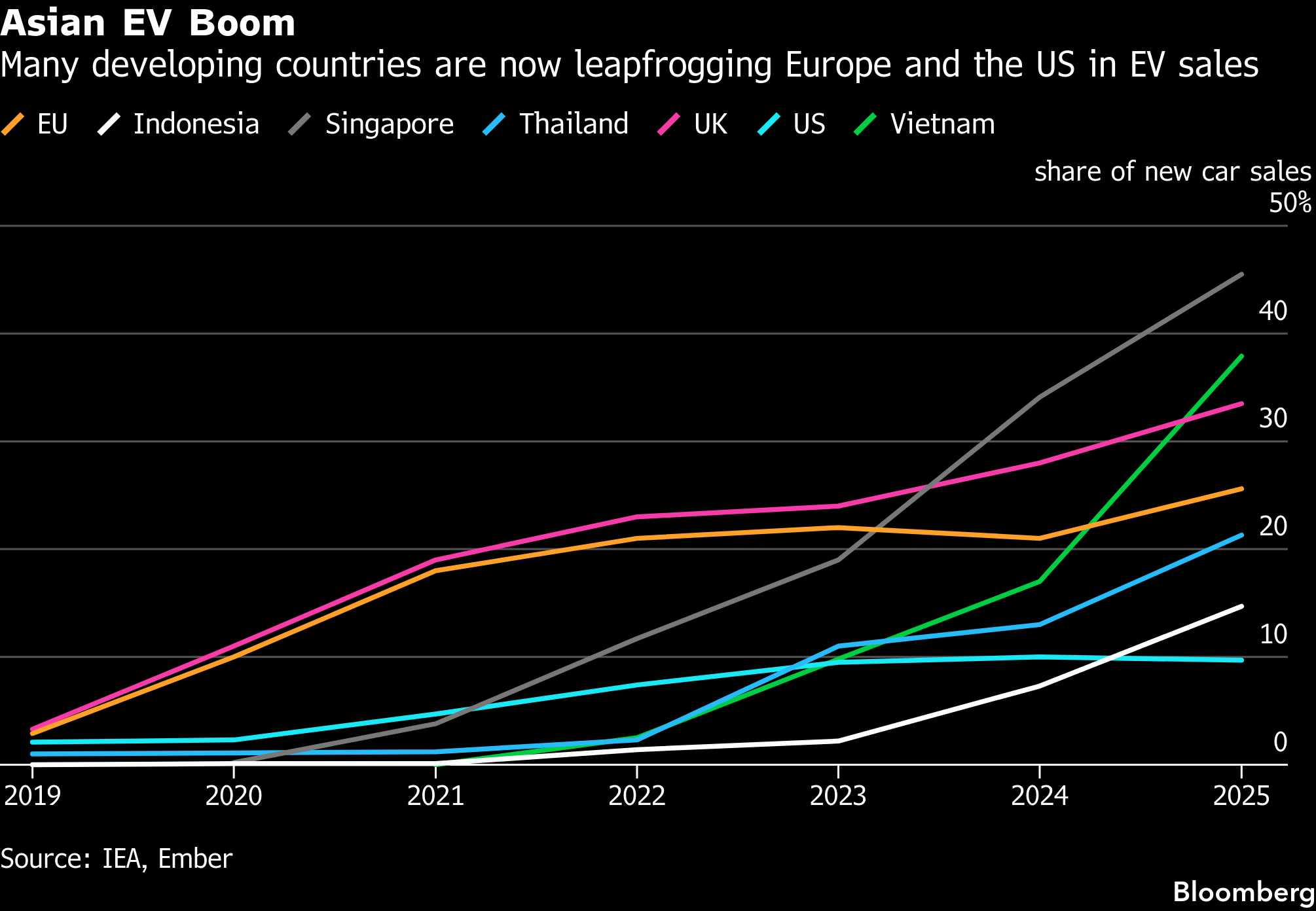
Still, US carmakers are sticking to their decisions to scale back on EVs even as demand grows in the rest of the world. “It takes four to six months of sustained high oil prices before people start to change their car-buying preferences,” General Motors Chief Financial Officer Paul Jacobson said at a conference last week. “I don't think we see that, and we certainly don't see it today.”
Beyond EVs, the war alone, especially if it ends soon, is unlikely to move US residents to further decarbonize their lives in the near-term. But an increase in EV purchases could precipitate investments down the road. For instance, solar installers expect more business if EV sales rise and drivers seek to offset the electricity costs of charging their new cars at home.
“Consumers’ baseline anxiety is high, and now we add this war,” said Oren Tamir, chief executive of NRG Clean Power, a California-based solar installer. “I don’t think the anxiety has peaked yet.”
©2026 Bloomberg L.P.








