

BP’s New CEO Starts in Latest Bid to Revive Embattled Oil Giant


(Bloomberg) -- When Meg O’Neill takes over BP Plc on Wednesday, Big Oil’s first female chief executive officer will benefit from a war-driven surge in prices — but inherit the industry’s toughest cleanup job.
BP’s first outsider CEO faces a list of challenges, which cost her predecessor his job and had raised crucial questions about the future of the more than century-old firm. Following a botched 2020 pivot toward renewables, the company has a mountain of debt, an organizational structure that many in the industry believe is too sprawling, and a portfolio cluttered with low-return units.
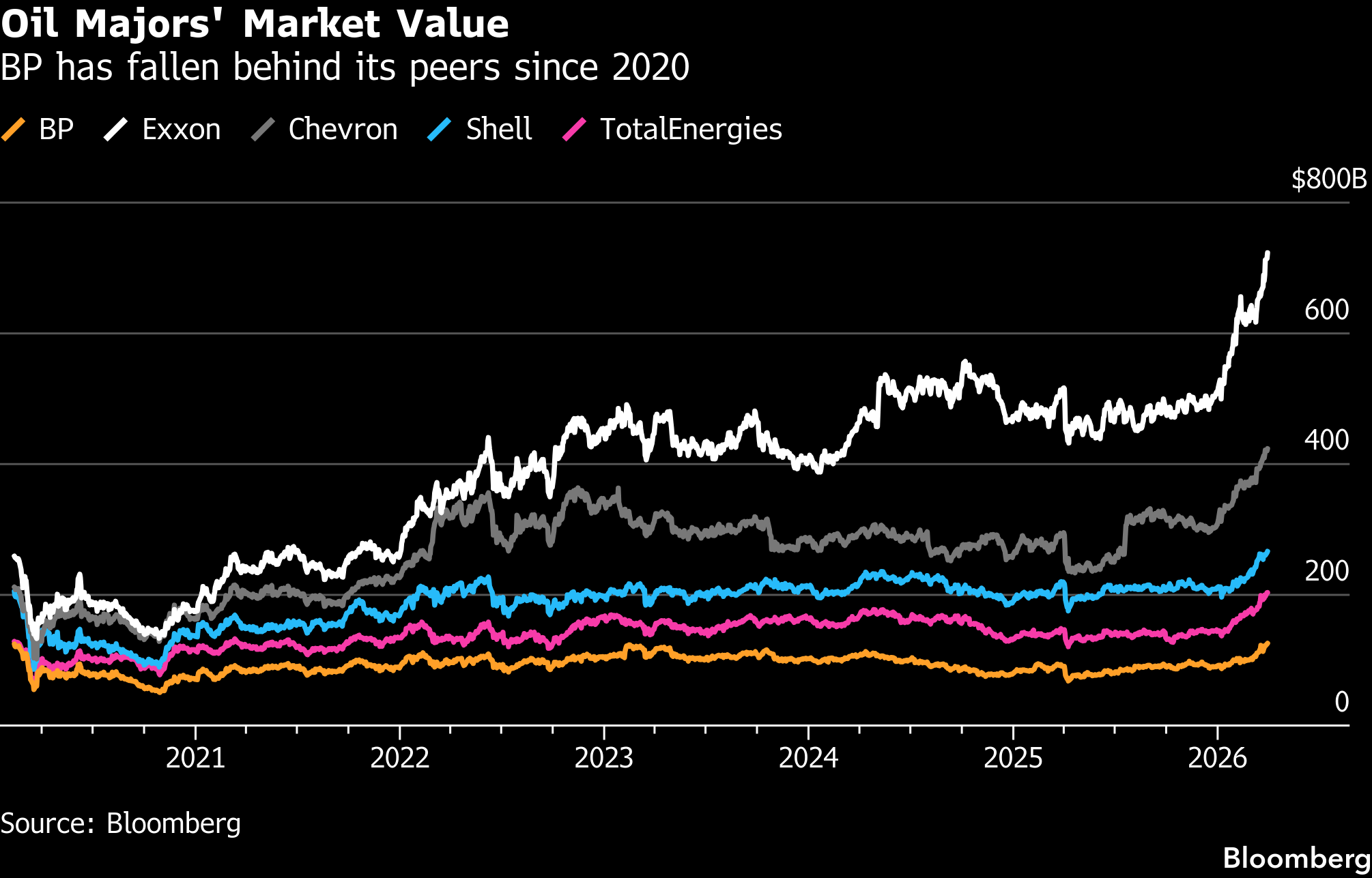
While BP’s share performance has lagged only Exxon Mobil Corp. among its main peers over the past 12 months, its market value is less than a fifth of its rival, and the stock has underperformed competitors over the last five years. When reporting earnings in February, BP was the only one to scrap its share buyback, a cornerstone of the investment case for the largest oil companies.
Although the crude rally due the Middle East conflict will give O’Neill some breathing space, shareholders expect changes. Three investors — including two top-20 shareholders — who asked not to be identified want a simpler company. Two of them want leadership roles reduced or combined. They also want the CEO to cut costs and focus on the strongest upstream assets, such as in the US and Brazil, while shedding legacy assets like North Sea fields, where BP is the last major still operating its own business.
O’Neill has already met with senior leadership to assess the company, and every part of the organization is under review, according to employees who asked not to be identified.
It won’t be easy. Chairman Albert Manifold wants BP “to become a simpler, leaner and more profitable company.” He has told shareholders the turnaround will take at least two years to bear fruit, according to people familiar with the matter who asked not to be identified as the information is private.
“If Meg fails to repair BP’s trajectory, I think it’s a sign that BP is terminally doomed to basically no longer be a major,” said Saul Kavonic, head of energy research at MST Financial, referring to BP’s market value versus peers. He covered O’Neill at Australia’s Woodside Energy Group Ltd., where she spent three years as CEO. “If anyone can fix it, I think it’s her.”
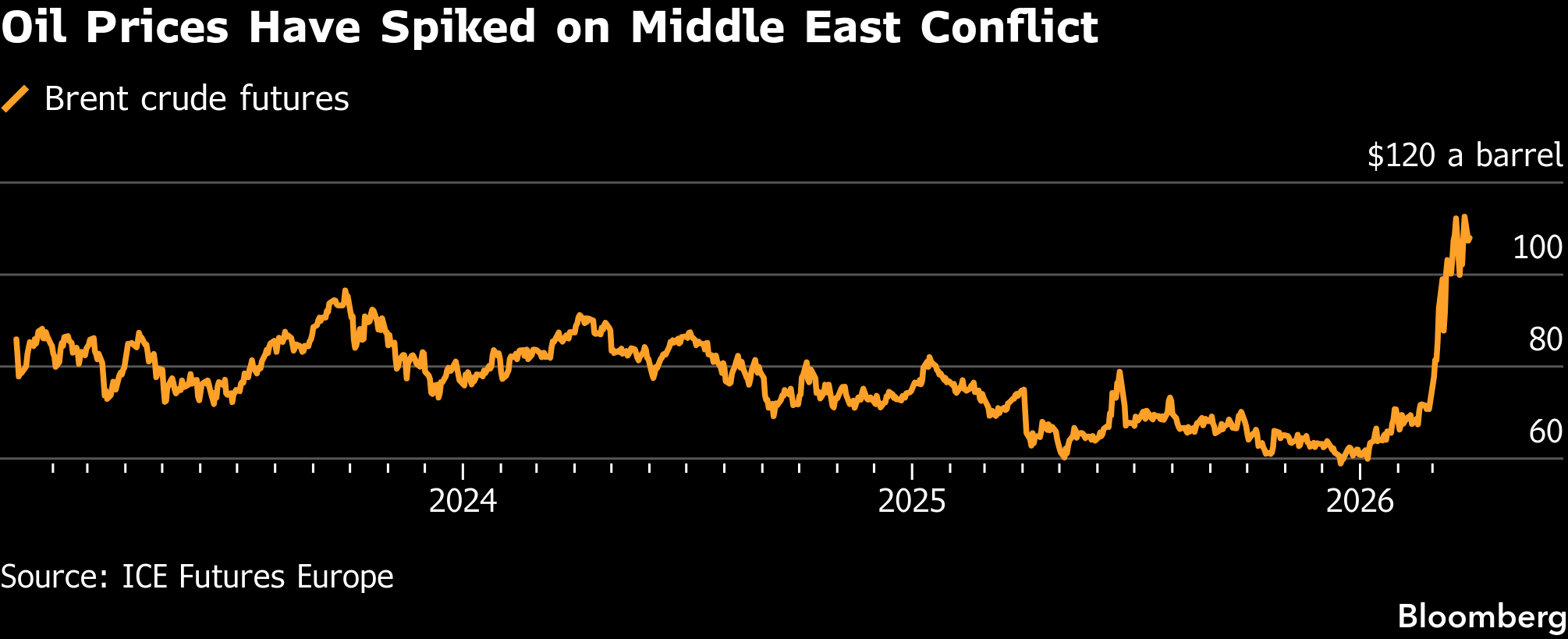
For now, oil companies are getting a big boost from crude’s rally above $100 a barrel as the Iran war causes what the International Energy Agency says is the biggest-ever oil supply disruption. BP calculates that every $1 gain in Brent adds roughly $340 million to its pretax profit.
In terms of supplies, BP is among the least exposed of the majors to Middle East disruptions, with limited volumes routed through the Strait of Hormuz compared with Shell Plc’s vast Qatar operations. BP’s trading arm — perhaps the company’s strongest asset — stands to benefit from the massive price moves.
Still, investors and analysts say any windfall masks deep structural problems.
The London-based company in February slashed a $750 million quarterly stock repurchases program that had already been reduced last year to shore up its balance sheet. Analysts at the time said the move to prioritize balance-sheet repair over investor payouts would help clear the decks for O’Neill.
BP has suffered from corporate disasters and lackluster returns from its renewables efforts. That led to activist investor Elliott Investment Management building a stake and campaigning to return the company to its core oil and gas focus, as well as the eventual departure late last year of Murray Auchincloss, who had replaced Bernard Looney as CEO just two years earlier.
Its proven reserves cover roughly seven years of production, among the shortest of any major. Its cost base is seen as uncompetitive and it hasn’t provided a clear investment case. When interim CEO Carol Howle was asked at the latest earnings why investors should choose BP over rivals, the response was widely seen as inadequate, according to some investors, employees and analysts.
The stock’s underperformance also made it the subject of takeover speculation, with Shell last year evaluating a potential acquisition. More than a dozen investors, employees and analysts who spoke on condition of anonymity described BP as now being at an inflection point.
While it’s not clear what O’Neill’s exact strategy will be, some investors and employees who spoke to Bloomberg would like changes to the leadership team. Several employees said morale at the company has suffered and that staff trust in leadership has weakened.
Previous restructuring under Looney that was meant to simplify BP made it more bloated, so creating a tighter upstream-downstream model may be one area of focus that ties in with Manifold’s push for a simpler company.
BP declined to comment.
The upstream pipeline offers long-term promise. The Bumerangue discovery off Brazil could hold billions of barrels of oil equivalent, and the company’s exploration record particularly over the last year differentiates it from peers struggling to replace reserves.
O’Neill’s overhaul of Woodside could offer insight into how she may revamp BP. There, she focused on expanding the portfolio, growing it from an Australia-focused producer to a global powerhouse in liquefied natural gas. Before that, she spent more than two decades at Exxon and was seen as a rising star.
MST’s Kavonic expects her to make difficult decisions on legacy businesses quickly.
“BP will either be fundamentally different or Meg won’t be there,” he said.
©2026 Bloomberg L.P.








