

Victory of Trump Ally Ends Colombia’s Crusade to Wean World Off Fossil Fuels


(Bloomberg) -- Leia em português
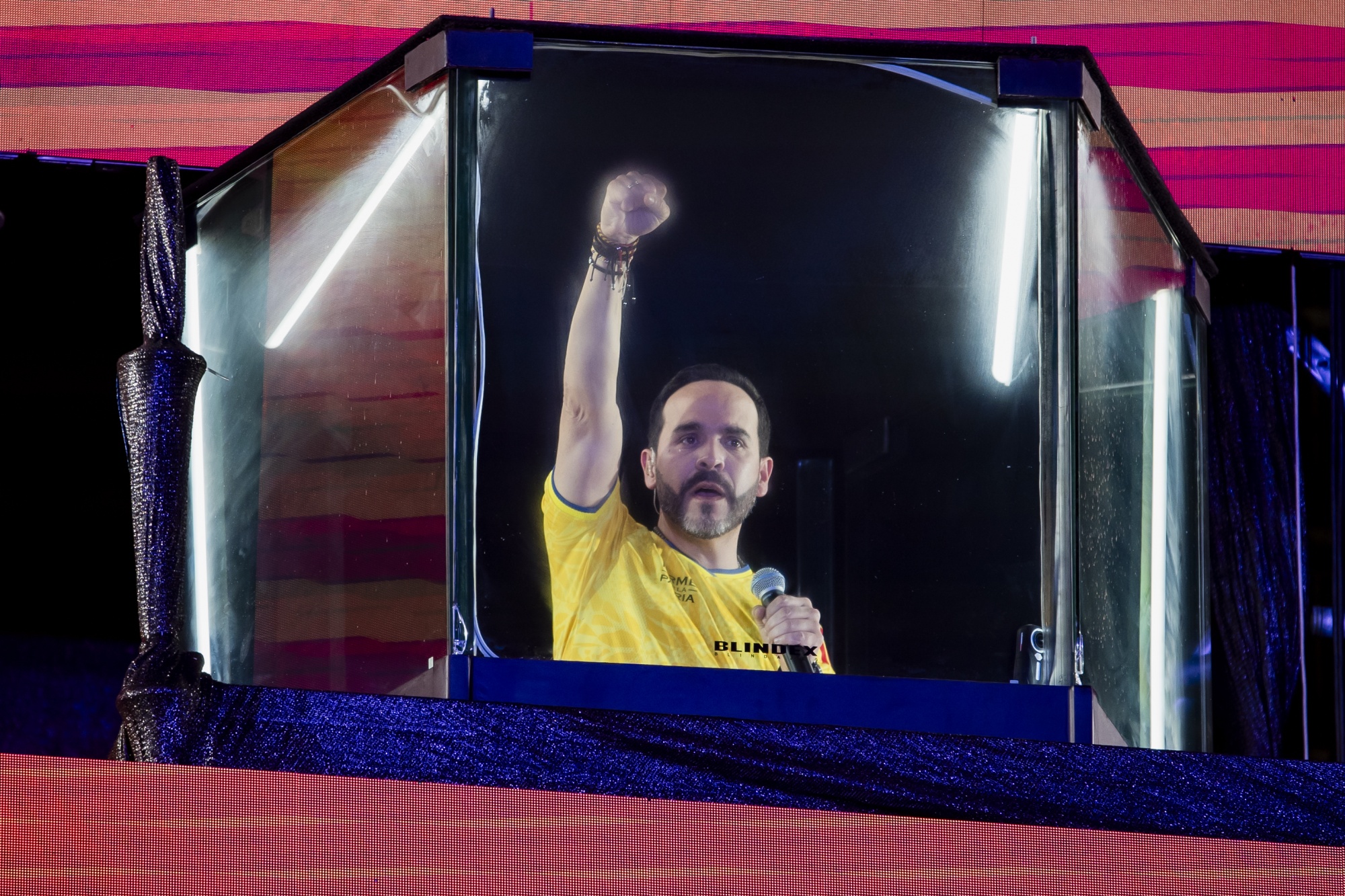
The victory of Abelardo de la Espriella, a conservative backed by US President Donald Trump, in Colombia’s presidential election marks a sharp turn for a country that had sought to be a leader of a global transition away from oil, coal and gas.
De la Espriella narrowly defeated Iván Cepeda, an ally of current President Gustavo Petro, in a runoff election on Sunday, according to a preliminary vote count. The final result is expected later this week, and if it confirms De la Espriella’s win, he will take office on Aug. 7.
Petro, a leftist, came to power in 2022 and made phasing out fossil fuels a central plank of his agenda. As president, he halted new contracts for oil exploration, designated the Amazon off-limits for new oil and mining projects, pushed anti-fracking legislation and expanded renewable energy.
On the world stage, Petro’s government spearheaded a new alliance of dozens of countries seeking to end fossil-fuel dependence — a “coalition of the willing.” Just this April, Colombia hosted the first international talks for a just climate transition in the coastal city of Santa Marta.
“The resistance and inertia within power structures and the economy around today’s archaic energy model — fossil fuels — is so strong that it’s clearly leading toward death,” Petro said in an address to the Santa Marta conference. “Capital may end up committing suicide, taking humanity and life itself with it. Humanity, obviously, cannot allow that.”
De la Espriella, the latest representative of a populist right wave in Latin America that includes Javier Milei of Argentina and Nayib Bukele of El Salvador, has signaled a different priority: reviving production of oil, the country’s primary export, and gas. His call for “fracking to the max” became one of his campaign slogans, echoing Trump’s “drill, baby, drill” embrace of fossil-fuel expansion.
“From just over 700,000 barrels of oil [per day] to 1.2 million, 1.3 million — why not?,” he said during the campaign, during which he called himself “the tiger” and bore a carefully sculpted beard resembling that of Bukele.
Petro’s energy policies had dubious results at home. While solar surged from 2% to 17% of Colombia’s electricity generation, his blocking of new drilling contracts worsened a domestic gas shortage, forcing the country to start importing liquefied natural gas to meet demand and raising costs.
But as a major producer of fossil fuels that nevertheless sought to make them obsolete, Colombia under Petro forged a unique, prominent role in climate diplomacy.
“Petro brought the issue of fossil fuel extraction to the international stage,” said Alex Rafalowicz, the executive director of the Fossil Fuel Non-Proliferation Treaty Initiative. Until several years ago, he noted, “nobody even wanted to say the words ‘fossil fuels’ inside the UN climate talks. It was impossible.”
Juan Carlos Monterrey, chief executive officer of the advisory firm VANGLabs and a former climate envoy for Panama, said Colombia has helped shaped diplomacy heading into COP31 in Turkey later this year. Its legacy of ambition is “concrete and far-reaching,” he said. “What Colombia built was a platform, and that platform now has a life of its own.”
A sharp change in the country’s policy would still matter, Monterrey said, particularly on the regional level. “A drastic shift would undoubtedly generate diplomatic noise, and could temporarily weaken the cohesion of some regional coalitions,” he said.
So far, De la Espriella hasn’t stated a position on the Santa Marta cycle of climate talks initiated under Petro. De la Espriella’s campaign didn’t respond to requests for comment on whether his government would remain in the Santa Marta initiative or withdraw from the fossil-fuel transition process.
The new president will “almost certainly opt for joining the economic and political forces that question and block any progress towards a just transition away from fossil fuels,” said Andrew Miller, advocacy director of Amazon Watch, a US-based nonprofit organization.
But Rafalowicz thinks Colombia may not withdraw entirely from the “coalition of the willing.” With about 60 countries involved, including regional and European partners, Colombia could face diplomatic costs if it abruptly walks away, in his view.
De la Espriella has promised to open up 1.5 million hectares, an area roughly the size of Connecticut, for agriculture in Colombia's eastern savanna, pledging to transform the region into Colombia’s own Mato Grosso — the state that is Brazil’s leading producer of grains and beef. Deforestation, not fossil fuels, is Colombia’s main source of greenhouse gas emissions, and it’s primarily driven by clearing carbon-rich trees to replace them with farmland.
Miller gave Petro a mixed grade on the Colombian Amazon: high marks for intentions and policy direction, but middling marks for implementation. Petro ushered in significant policies such as the Escazú Agreement, an international treaty that bolsters the rights of environmental defenders. Deforestation fluctuated year by year during his presidency, while criminal organizations and illegal gold mining remained rampant.
De la Espriella has promised to improve monitoring of illegal forest clearance and to persecute those responsible. He’s also said he will launch a security-led offensive against illegal mining.
Colombia’s former Environment Minister Susana Muhamad, one of Petro’s closest allies, said environmental gains are vulnerable not only to formal repeal but to noncompliance by the incoming government.
“They may not change the rule or the law; they may simply not implement it — simply not make the effort,” she said.
©2026 Bloomberg L.P.