

China’s Net Zero Strategy Relies on an Unlikely Tool: Lots of Coal


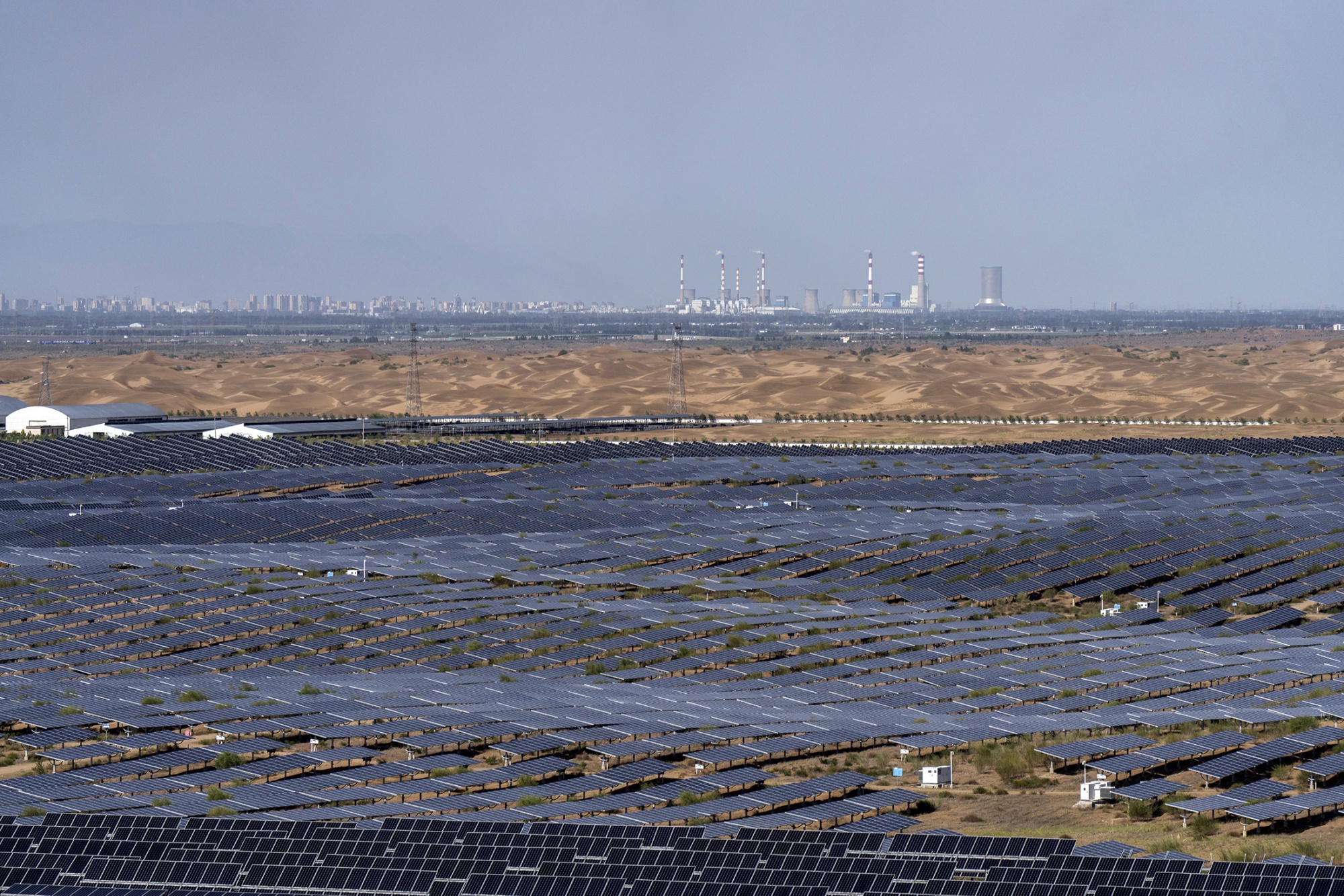
(Bloomberg) -- From a tower looking out over Inner Mongolia’s Dalad Banner clean-energy base, hundreds of thousands of blindingly bright solar panels extend in every direction to meet undulating desert dunes. For a moment, the entire landscape appears to be just sun, sand and distant mountains.
The mirage is broken as Li Kai, a director at the local energy bureau, points to a black strip beyond the edge of the desert. A coal mine, he explains.
In a region that ranks among China’s top producers of both coal and renewables, the two sides of the energy transition have, for now, formed an intimate alliance. Filtered waste water from the mine is funneled to the base to irrigate plants shaded by the solar panels, helping to tame vicious desert sandstorms whose effects can be felt hundreds of miles away in Beijing.
“Our model is quite innovative,” Li said. “We not only utilize the wastewater, but also solve the irrigation problem.” Further in the distance, he adds, a coal-fired power station and a set of batteries ensure the grid can meet electricity demand when the sun isn’t shining.
As China sets out to reach carbon neutrality by 2060, the central government sees its plentiful coal resources as an essential bridge to the clean-energy future. Xianlihoupo — first build, then dismantle — goes Beijing’s maxim, and Inner Mongolia is a testament to that vision of a slow and steady transition.
While trucks loaded with wind turbine towers hurtle down the northern borderland’s highways and power lines criss-cross its mountains, the coal industry here is evolving rather than fading away. The fossil fuel is now being used to balance renewables on the grid, turn deserts green and produce liquid fuels and chemicals needed for plastics.
Inner Mongolia churns out more than 1.2 billion tons of coal every year, roughly a quarter of the nation’s total, and new facilities continue to be built. Coal mining is the region’s biggest industrial employer, providing almost 200,000 jobs, according to the 2023 regional census. It brought in 648.4 billion yuan ($95.4 billion) in annual revenue that year, more than a fifth of the region’s total.
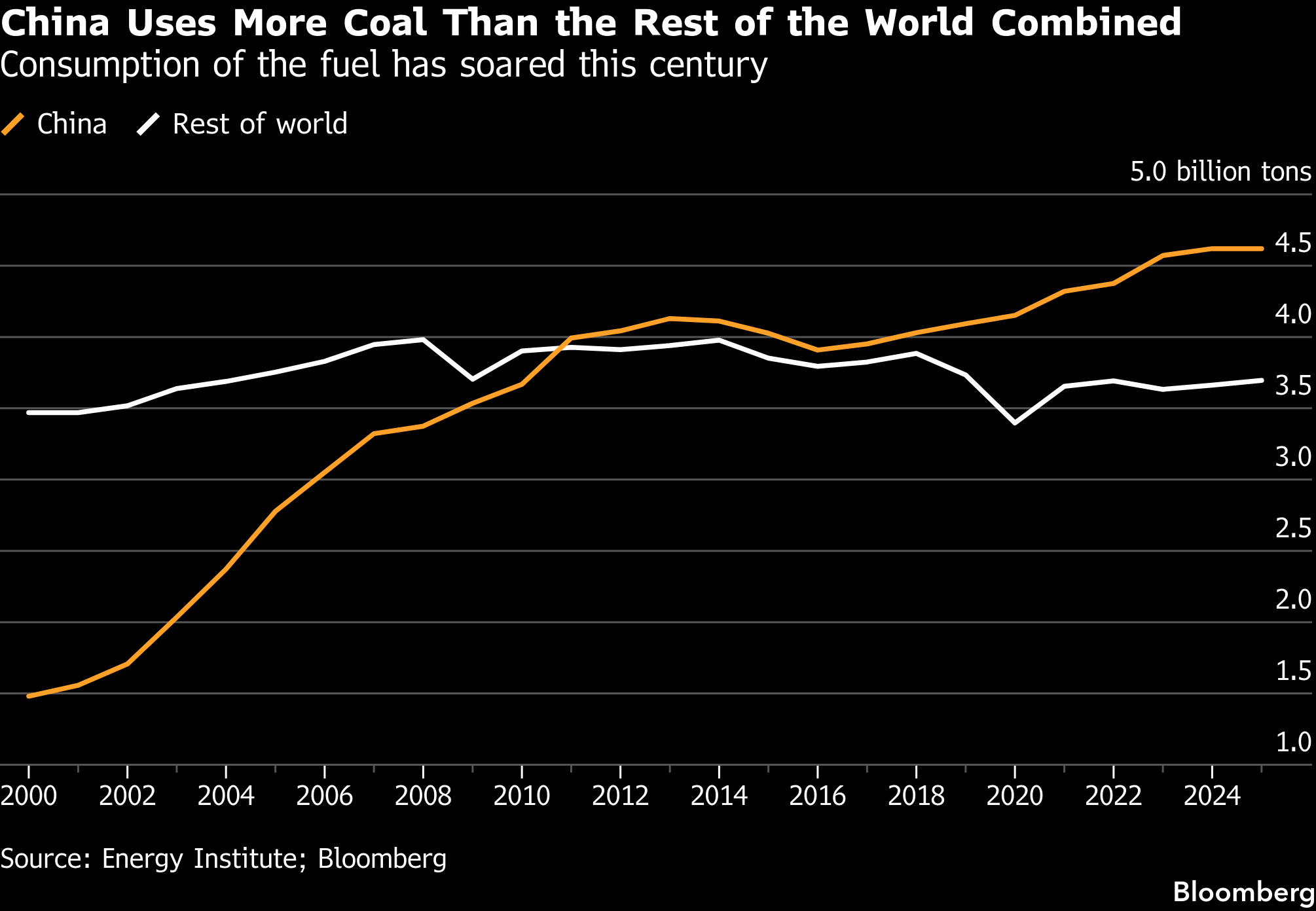
For policymakers in the Inner Mongolian capital of Hohhot, that economic dependence is motivation to extend coal’s use as long as possible. For China at large, it threatens to become a significant barrier to decarbonization.
Local officials will align their development plans with the central government’s long-term vision of carbon neutrality, but progress may be slower in the country’s coal heartland, said Hu Bin, an associate professor at Tsinghua University’s Institute of Climate Change and Sustainable Development. “Short-term fluctuations are inevitable. It is difficult to guarantee steady, rapid progress across the board, given the current economic challenges,” he added.
Flexible Power
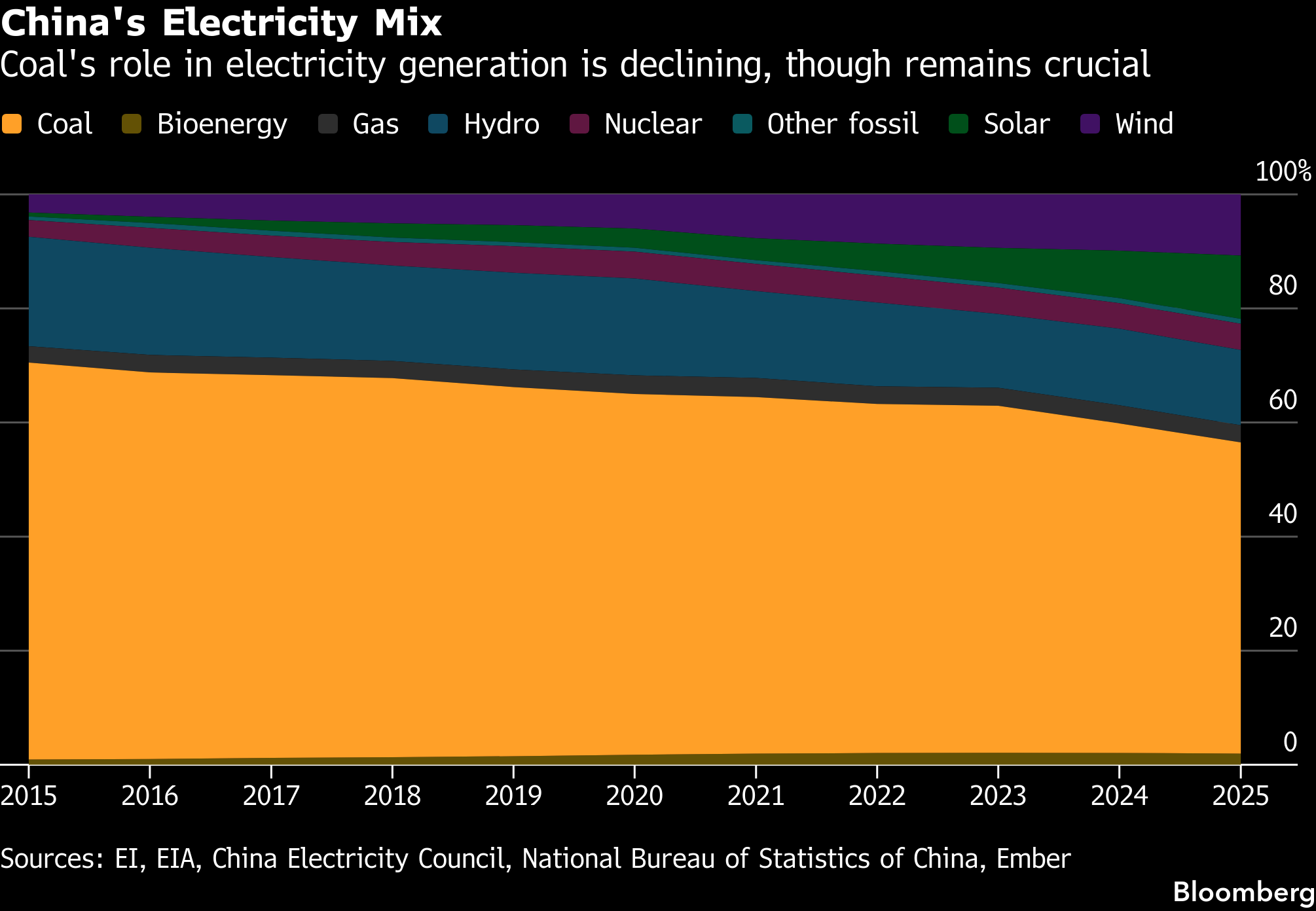
Last year, China achieved a breakthrough by meeting new electricity demand nationwide with clean sources, pushing coal power generation down for the first time in a decade. President Xi Jinping called for the country to reproduce that feat going forward, even as the grid faces new pressure from artificial intelligence, electric vehicles and factory buildouts.
Inner Mongolia has emerged as a leader in this campaign, cutting thermal-power generation by 4.2% last year — more than any other province, according to research by the Center for Research on Energy and Clean Air (CREA).
The region is the nation’s top producer of wind power and now boasts China’s biggest energy-storage systems, with 25 gigawatts of battery capacity installed. But its coal-power network also played a central role. China’s policymakers are pushing for the country’s coal plants to be retrofitted wherever possible by 2027 in order to better support the renewables era. The idea is for the plants to become a more flexible power source, able to run at lower capacity, as well as to ramp up and down more quickly as required.
“It’s a practical part of this larger puzzle — on one hand, to fill in this need for flexibility and then on the other hand, it is also a strategic move to make coal less important to the power system,” said Biqing Yang, an energy analyst at UK-based think tank Ember who wrote a recent report on the issue.
Inner Mongolia has completed all of its coal-power retrofits ahead of schedule, according to Huang Zhiqiang, the region’s executive vice chairman, and running hours at the newly flexible plants have fallen in the last two years accordingly.
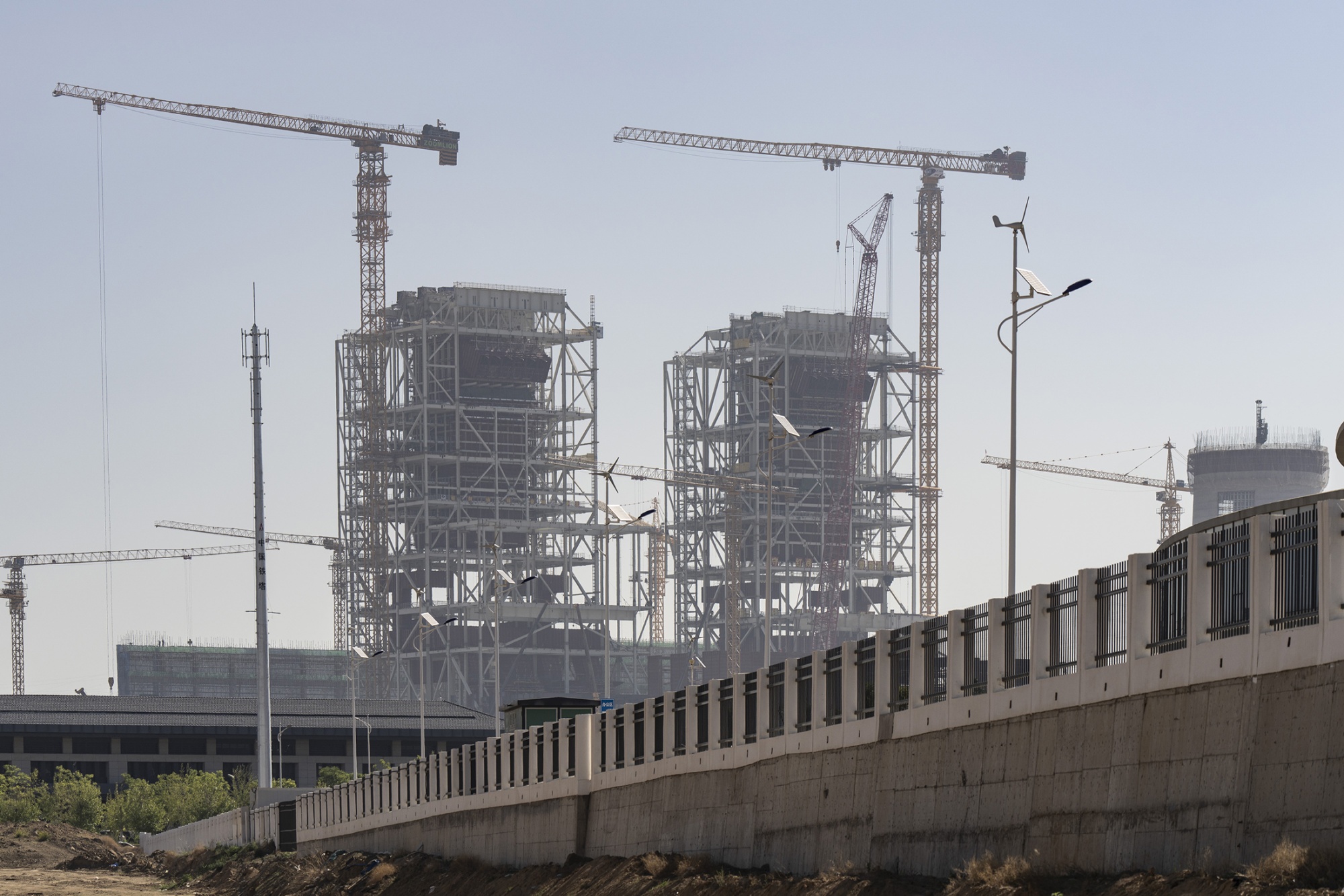
But that hasn’t stopped the region from developing more coal power. Inner Mongolia also had China’s largest pipeline of coal power plants under construction last year, more than 20 gigawatts of capacity, according to Global Energy Monitor (GEM).
“Inner Mongolia in particular has a lot of local incentives to keep building, and there’s overall a bias toward overbuilding capacity rather than risk shortages,” said David Fishman, a principal at the Lantau Group who focuses on China’s power sector.
Policymakers still describe coal power as a necessary layer of energy security. The fear is that renewables and batteries, whose economics remain uncertain, will fail to keep up with growing electricity demand. Lagging infrastructure and a power market that still favors long-term contracts mean that new renewable energy capacity in China doesn’t always translate to an equivalent increase in generation.
But the coal construction boom may extend the fuel’s use long after clean resources can provide sufficient backup, according to Kevin Tu, managing director of Agora Energy China, a Beijing-based think tank.
“If retrofitting coal-fired power plants for better flexibility is used as an excuse to permit more greenfield power capacity, then this could be quite counterproductive,” he said at a press briefing in June.
Coal to Chemicals
A new growth spurt in the region’s already formidable coal-to-chemicals industry also threatens to turbocharge emissions.
To date, China has invested in 75 projects to convert coal deposits into chemicals used in manufacturing, plastics production and fuels, according to GEM. Coal use in the sector rose 70% between 2019 and 2025, Bloomberg Intelligence data show, and Inner Mongolia became the industry’s central hub.
The Iran war’s soaring oil prices gave coal-based production an extra boost. Across China, 34 projects are in the pipeline, seven of which are in Inner Mongolia, including a 23.8 billion yuan ($3.5 billion) coal-to-olefins project that entered construction this spring.
“The Iran war did not create China’s coal-to-chemicals boom, but it accelerated a trend that was already gathering momentum,” said Aiqun Yu, a research analyst at GEM who has focused on the sector.
Local officials have welcomed the industry as a way of reducing reliance on foreign imports.
“Increasing production of coal-based chemical products will improve self-sufficiency in oil and gas domestically, helping to mitigate and offset energy security challenges at the industrial level,” said Mongolia’s executive vice chairman Huang at a press conference in Hohhot last month.
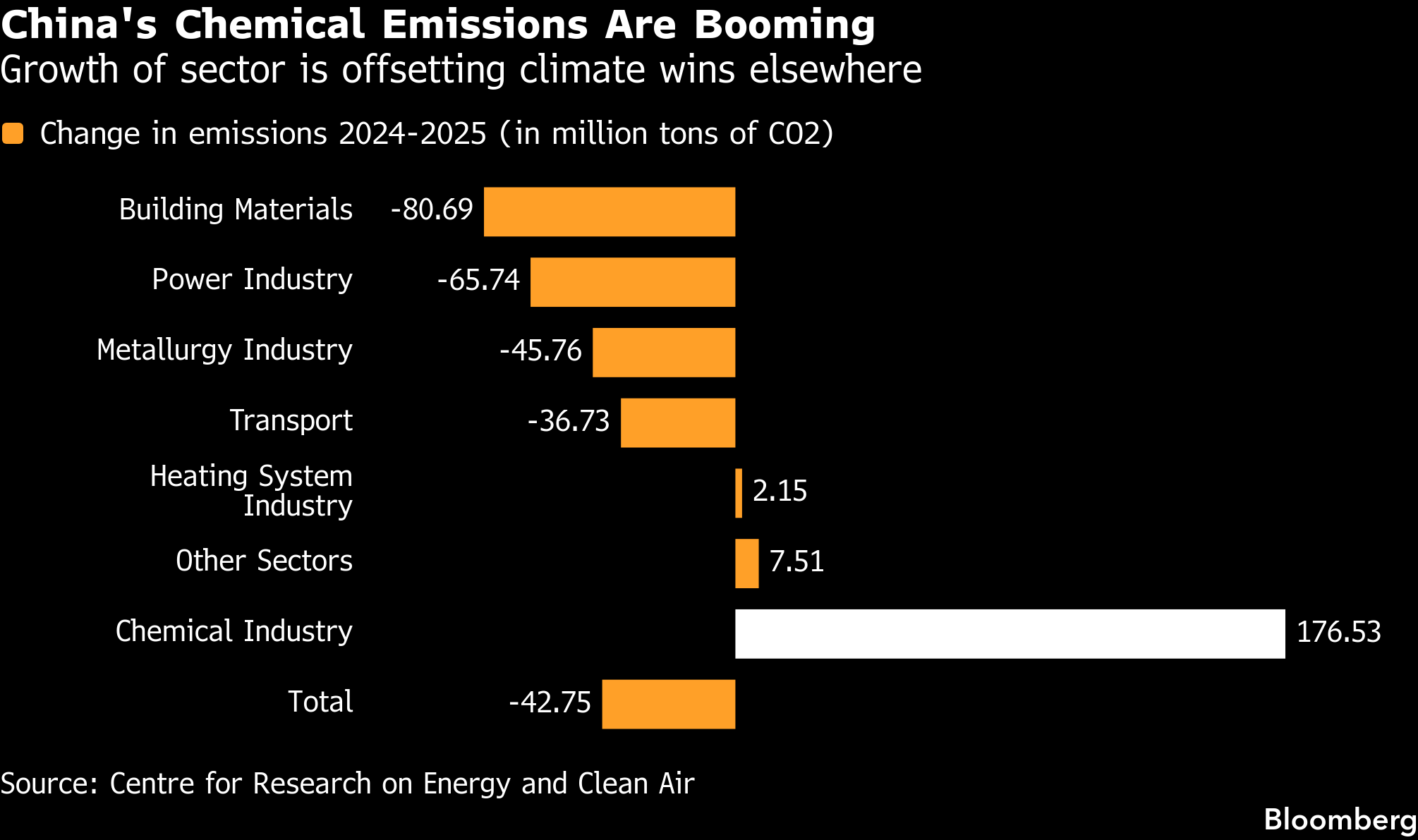
But coal-to-chemicals projects are emissions-intensive, with a carbon footprint as much as eight times higher than petrochemical alternatives. Last year, carbon emissions in China’s chemicals sector grew 12%, according to CREA research, even as they fell in all other major sectors.
If all the coal-to-chemicals projects in China’s pipeline come to fruition, GEM estimates they will consume 300 million tons of coal annually, about 6% of China’s annual production. The latest set of projects have been paired with green hydrogen or carbon capture storage projects, but Yu says this only marginally decreases their emissions.
The industry “risks creating long-lived assets that could lock China into higher emissions for decades,” she said.
New Pathways
In its local five-year plan, Inner Mongolia set a target of peaking carbon emissions ahead of the national deadline of 2030. (All other Chinese regions and provinces did the same.) China has pledged to reduce greenhouse gas emissions by between 7% and 10% nationwide by 2035.
“Now it’s getting to a more painful period of the transition,” said Ember’s Yang. “That is, going into this plateau and then we need to drive this plateau down to an absolute decline.”
For Inner Mongolia and other coal-rich regions, ensuring the energy transition is minimally disruptive to regional revenue and employment is key. The calculus may start to change, though, with the implementation of a new national evaluation system this year, which will grade local officials on their carbon emissions in addition to their economic output.
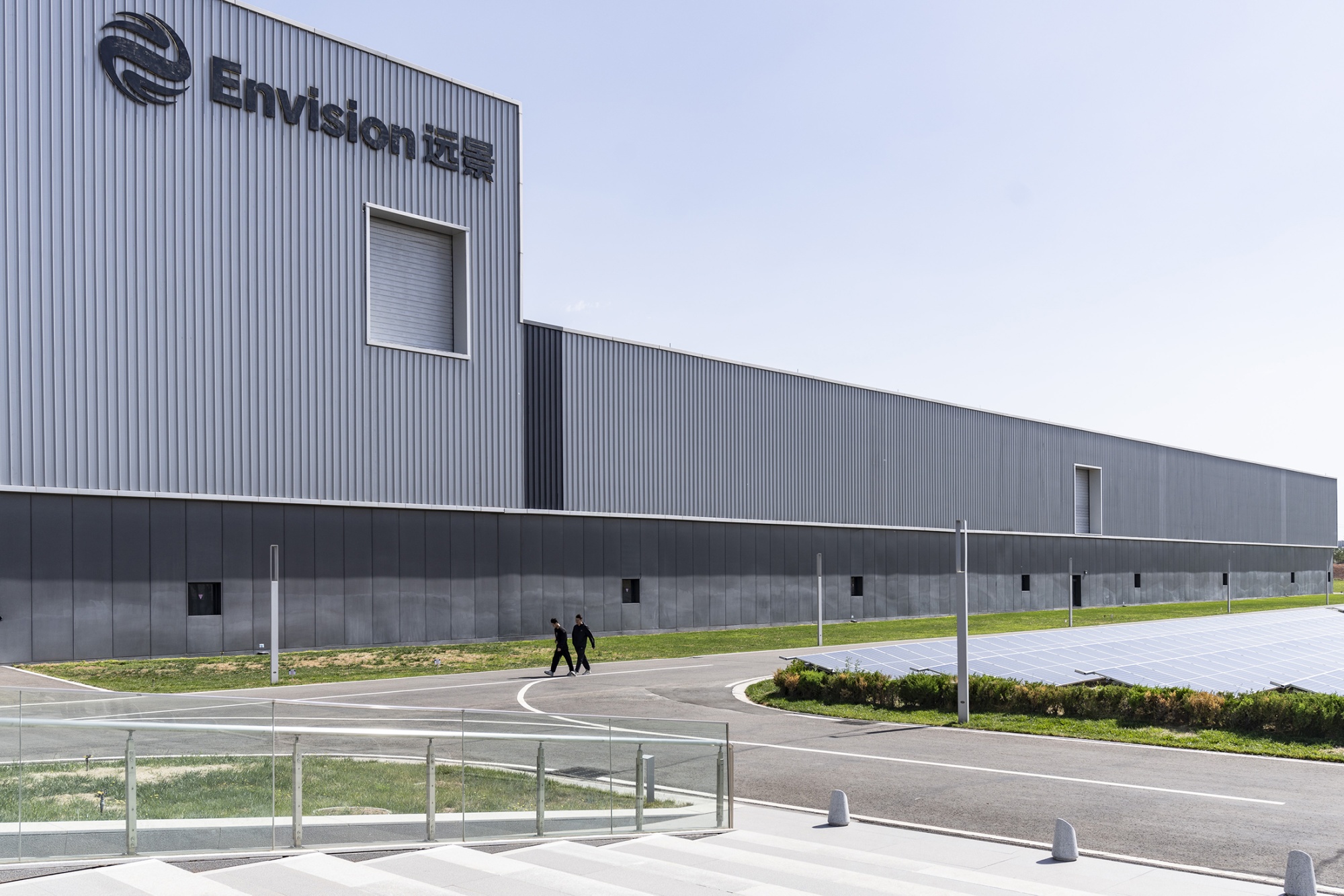
Already, Hohhot’s officials have started trying to build out new economic pathways. They are pitching the region as a data-center hub, given its proximity to northeastern cities including Beijing and cheap, clean electricity. And they’ve attracted green giants like Envision Energy Co., battery maker Contemporary Amperex Technology Co. Ltd. and Ming Yang Smart Energy Group Ltd., one of China’s largest wind-energy producers, to manufacture locally.
At Ming Yang’s factory and testing center near the industrial city of Baotou, 100-meter-long blades for future wind turbines underwent final quality tests. They waved like conductors’ batons in the howling wind as He Changguo, the company’s general manager for northern manufacturing, spoke to reporters.
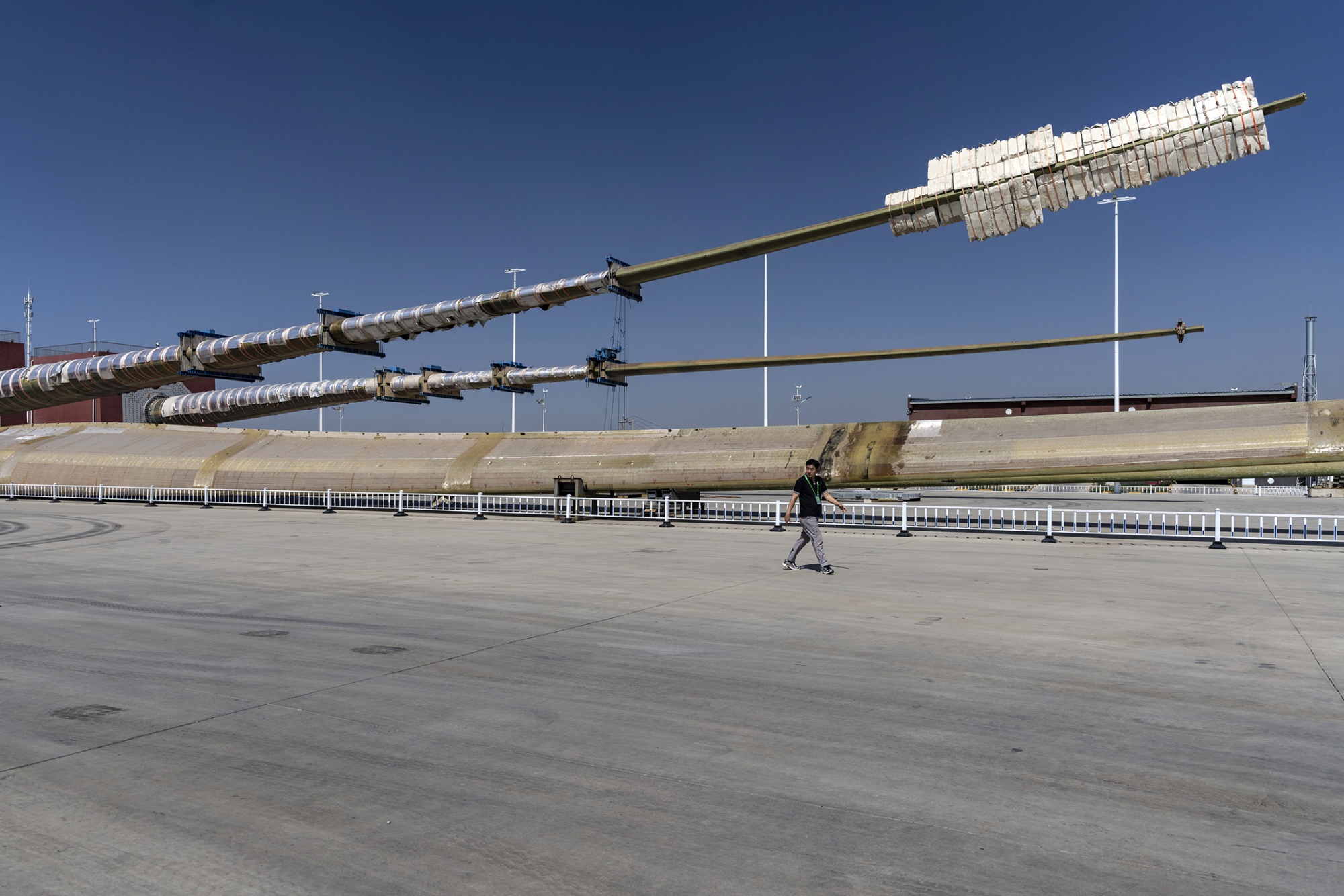
The wind business still sees room to grow, he said, particularly as the largest emitters move into the “dismantling” phase of the energy transition.
“Global demand for replacing traditional energy sources will be robust,” he said. “We are far from reaching the level of demand for wind and solar power, among other new energy sources, needed to achieve carbon neutrality.”
©2026 Bloomberg L.P.