

TPG-Backed Firm Seals Carbon Investment Deal With Indonesia


(Bloomberg) -- Rubicon Carbon, a company backed by TPG Inc.’s Rise Climate fund, will finance carbon credit projects in Indonesia as the Southeast Asian nation aims to accelerate supply and strikes trading deals with other countries.
Indonesia’s government has formed a co-investment partnership with Rubicon Carbon that will combine public and private capital for so-called blue carbon deals through a dedicated vehicle, Minister of Marine Affairs and Fisheries Sakti Wahyu Trenggono said in a statement to Bloomberg News.
“Indonesia is committed to unlocking the full potential of its blue carbon economy, while ensuring that coastal communities remain at the center of its development,” Trenggono said. Blue carbon projects are typically focused on the sequestration of carbon dioxide by coastal ecosystems, like mangroves or salt marshes.
Under the collaboration, Indonesia’s government will support projects with land access, permitting and assistance in engaging with local communities. No financial details were disclosed.
A spokesperson for Rubicon Carbon declined to comment on the specifics of the co-investment partnership.
The first stage of the partnership, which is expected to deliver Indonesia’s biggest blue carbon mangrove restoration initiative, will cover up to 70,000 hectares (172,974 acres) along the northern coast of Java and has the potential to be expanded if an initial pilot is successful, Trenggono said.
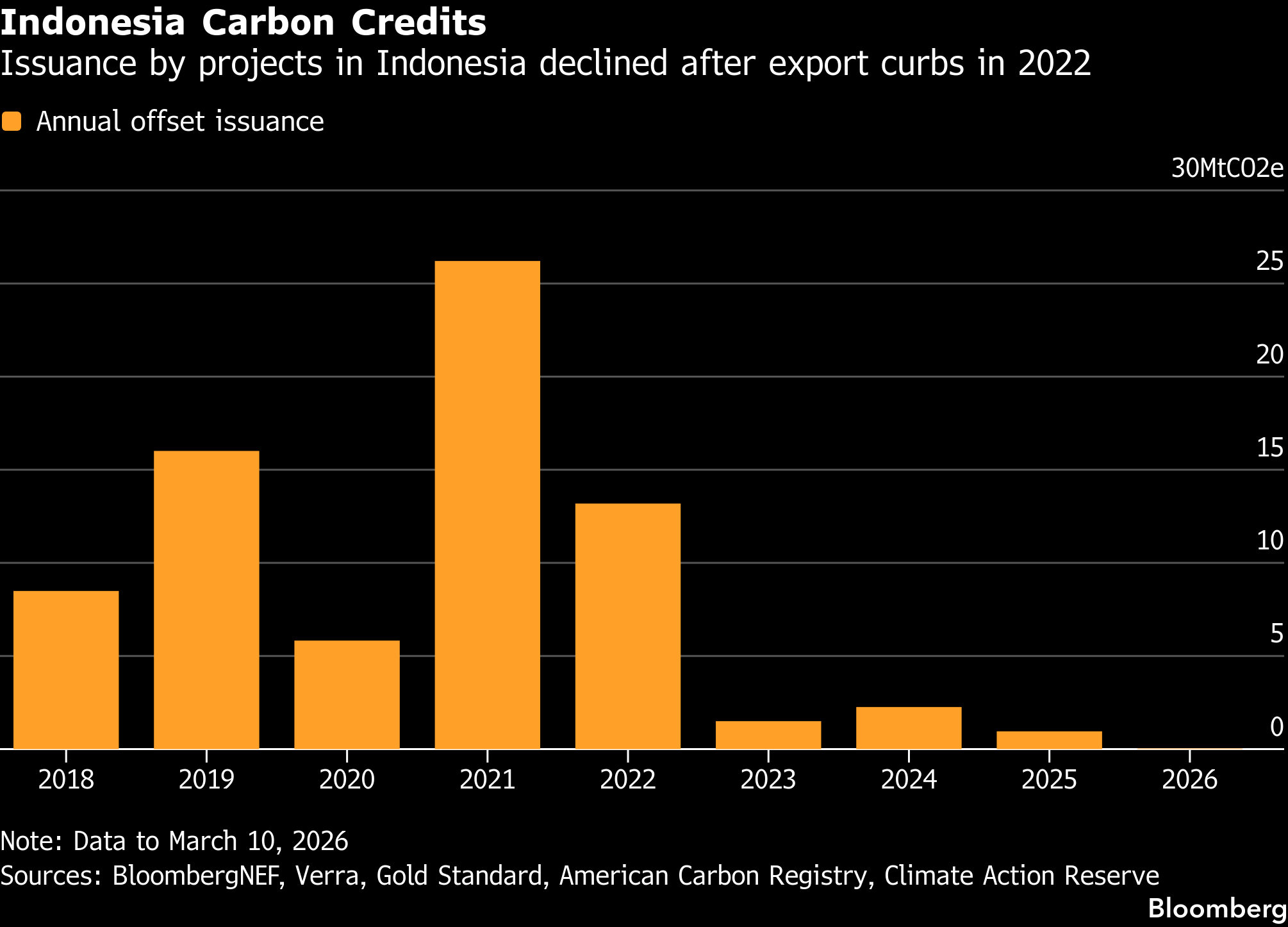
President Prabowo Subianto previously set out an ambition to generate billions of dollars in revenue from carbon credits and has taken policy steps to revive the sector. The country was among Asia’s largest suppliers of voluntary credits before exports were restricted in 2022, as the previous government reviewed the role of domestic offsets in meeting the nation’s own climate goals.
Run by former Bank of America Corp. executive Tom Montag, Rubicon Carbon was established to facilitate and profit from an anticipated boom in carbon markets in response to the worsening climate crisis. Touted by advocates as an indispensable solution in a world aiming to reach net zero emissions, the market has stalled in recent years amid a string of scandals and corporate backtracking on emissions goals.
“Indonesia has an extraordinary opportunity to become a global leader in blue carbon,” Montag said last month in a LinkedIn post on Rubicon Carbon’s account. The company said at the time it had signed a letter of intent to advance a strategic collaboration with Indonesia’s government.
Indonesia views a partnership with Rubicon Carbon “as an important milestone” in furthering its participation in a carbon credit mechanism being overseen by the United Nations under Article 6 of the Paris Agreement, which allows for country-to-country trading of credits. The initial blue carbon project in Java “is being designed from the outset with future Article 6 cooperation in mind,” the ministry said in its statement.
Norway and Singapore are among nations to have signed initial agreements over potential trading of carbon credits with Indonesia.
Found in shallow waters with distinctive latticed roots, mangroves create a defense against flooding and a vibrant habitat for aquatic life. They are also seen as a critical climate solution because they can sequester more carbon in their soils by area than tropical forests.
And while Indonesia is home to about 20% of the world’s mangroves, more than any other country, over a third of these ecosystems are currently degraded.
The partnership, which was facilitated by advisory firm Equatorise, will help protect, restore and manage blue carbon ecosystems that “are among Indonesia’s most valuable climate assets,” Trenggono said.
He said collaboration with Rubicon Carbon began with an initial engagement at the World Economic Forum in Davos with the firm’s chief market relations officer, Filipe Blackwood Oliveira, and was finalized with the help of Flora Ji, a veteran former Shell Plc executive who is now head of Rubicon’s Asian operations.
Rubicon Carbon was launched in 2022 with an initial capital commitment of $300 million from TPG entities. Jim Coulter, founding partner and executive chair of TPG, sits on Rubicon’s board.
(Updates with TPG funding for Rubicon Carbon in final paragraph.)
©2026 Bloomberg L.P.