

A Winter Without Snow Depletes Europe’s Clean Energy Reservoir


(Bloomberg) -- High in the mountains of southern Norway, where winter is usually measured in meters of snow, engineers are confronting an unfamiliar sight.
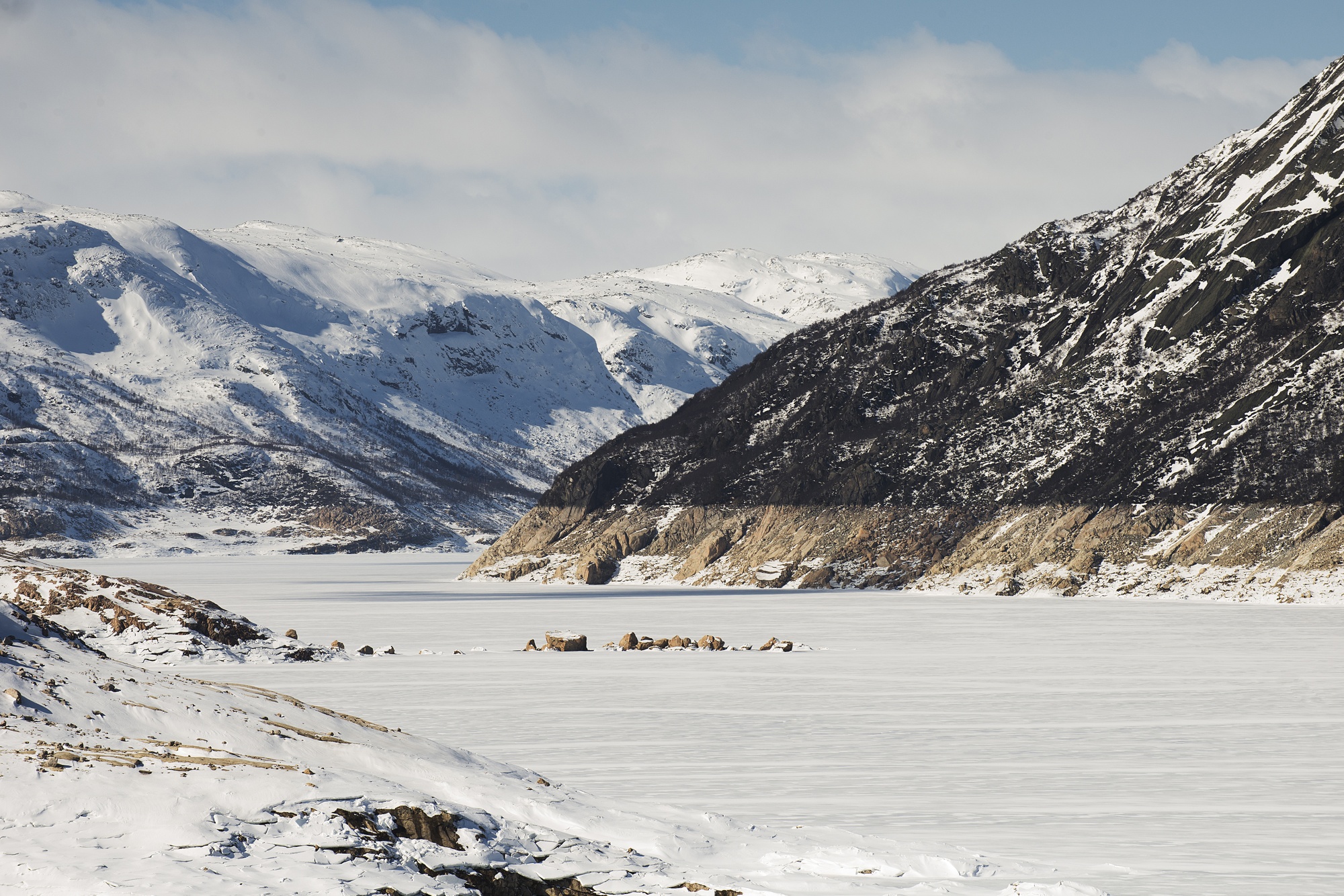
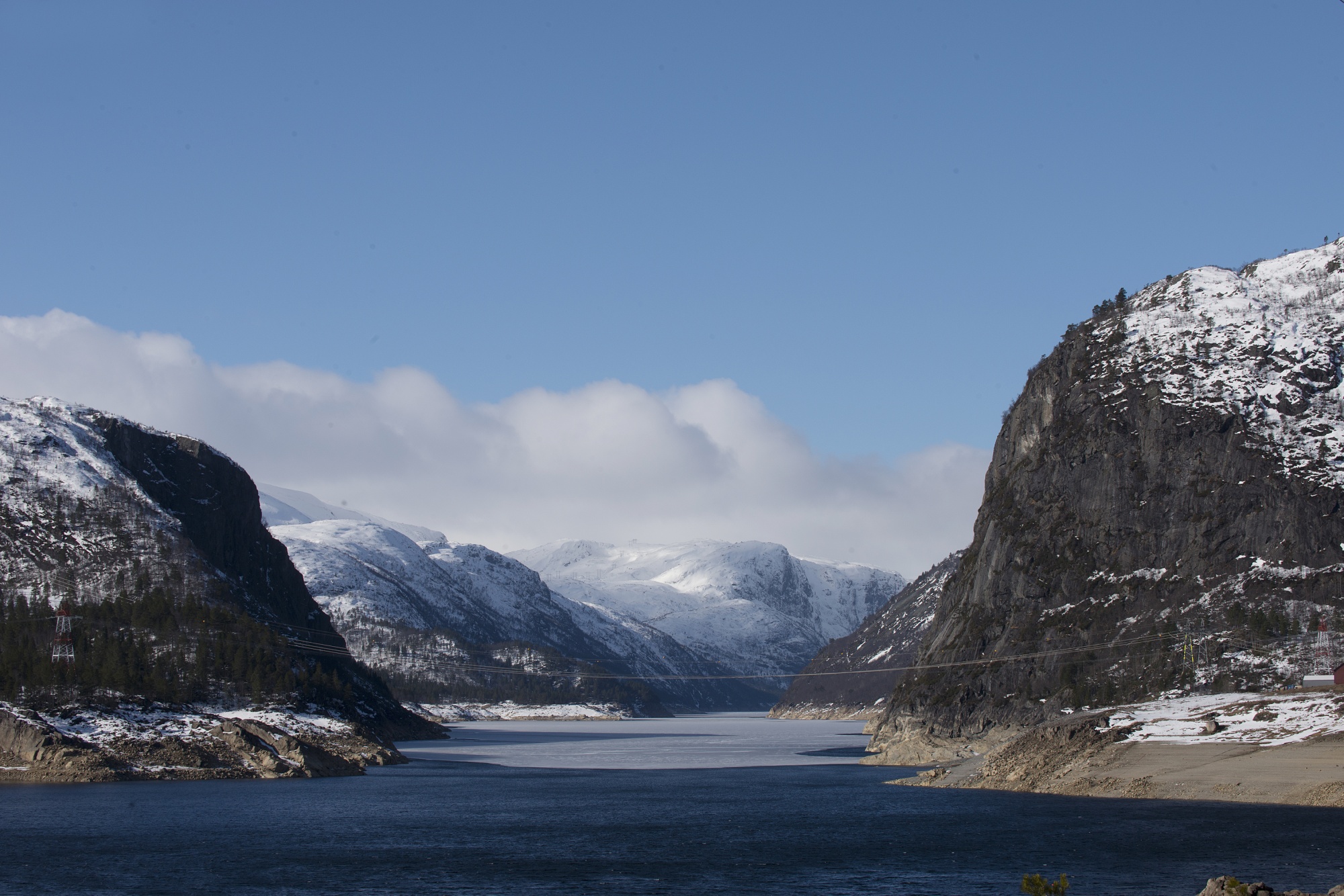
Standing atop the Vatndals dam on a recent day, the hydrologist Sverre Eikeland looked out over craggy slopes that should still be blanketed in white powder. The reservoir, large enough to fill nearly half a million Olympic swimming pools, depends on spring melt to replenish and generate electricity. But after Norway’s driest winter in decades, the water level is far below where it should be, prompting companies to limit outflows.
“Less snow means less energy stored in that snow,” said Eikeland, who advises power utility A Energi. “There should be more.”
Norway, with its thousands of dams, is often called Europe’s biggest battery. Under normal conditions, the country’s hydropower system produces enough electricity to meet domestic demand and export large volumes. Last year, net sales abroad amounted to about 15% of its production.
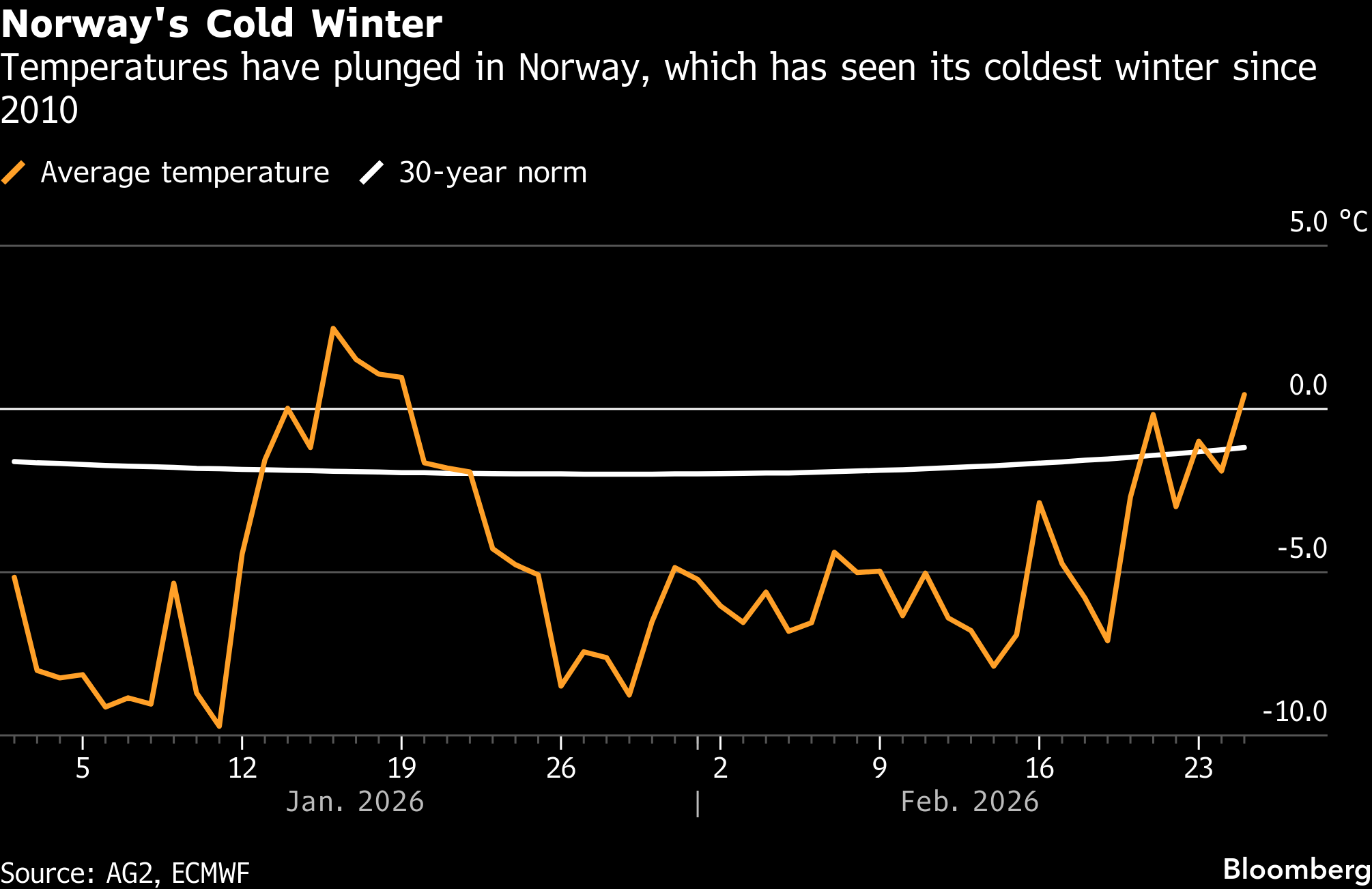
But months of dry weather have upended that pattern. This winter was Norway’s coldest since 2010, the result of persistent high pressure near Greenland that blocked flows of moist Atlantic air into the Nordic region. With little precipitation, snow reserves have fallen to their lowest levels in two decades, creating a deficit of about 25 terawatt-hours of energy, according to Tuomo Saloranta, a hydrologist at the Norwegian Water Resources and Energy Directorate. That’s nearly a fifth of Norway’s total hydropower output last year.
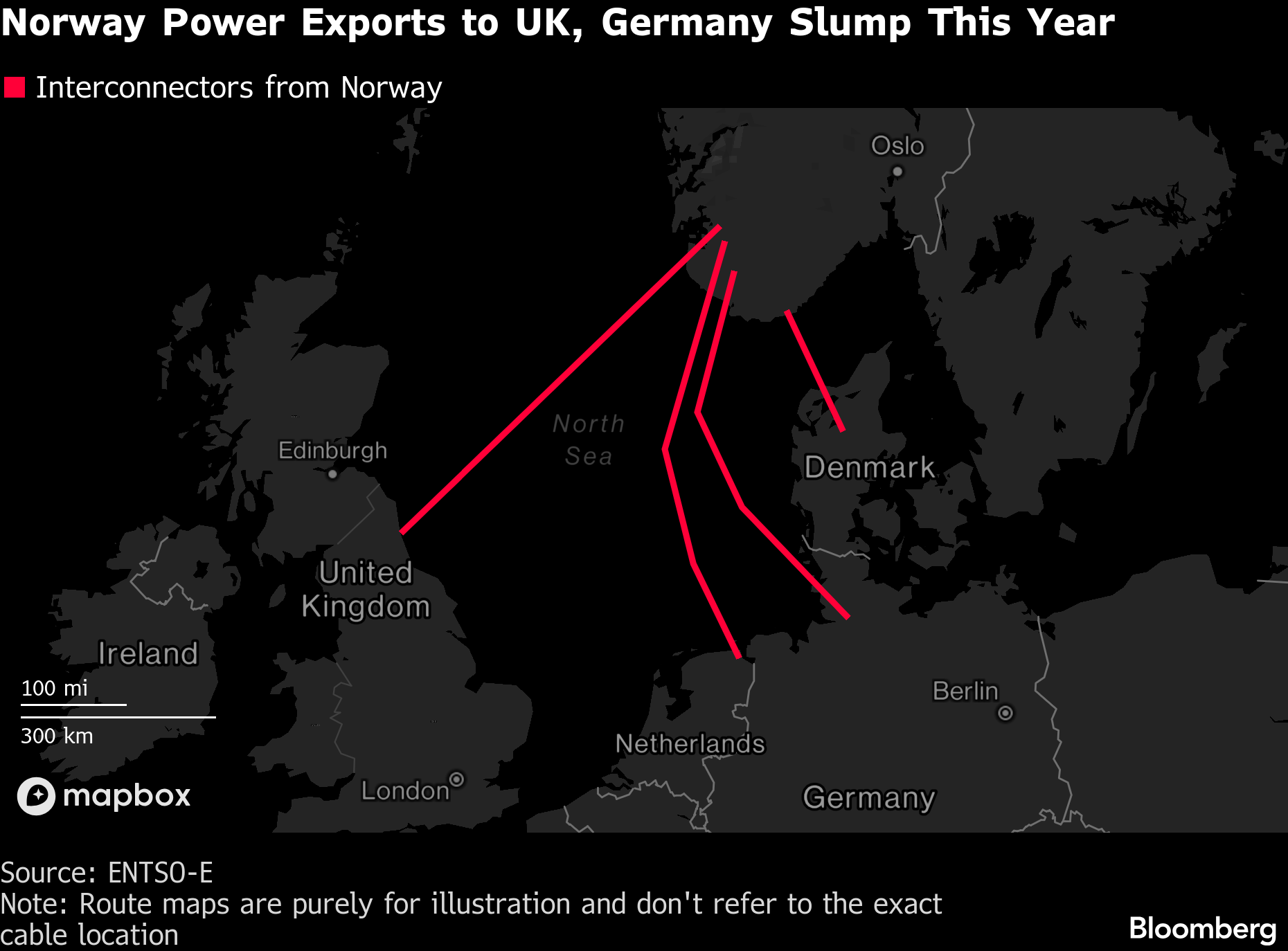
The shortfall is already rippling through electricity markets, slashing exports to the UK and Germany and pushing Nordic prices sharply higher. More than half of the region’s supply comes from hydropower, and in Norway it accounts for nearly all generation. While hydro is generally more predictable than wind and solar, it still depends on sufficient precipitation and snow accumulation.
“We’re a weather-based system,” said Kari Ekelund Thorud, executive vice president for energy at Norsk Hydro ASA, one of Norway’s biggest power users. “We are much more vulnerable if the weather goes the wrong way.”
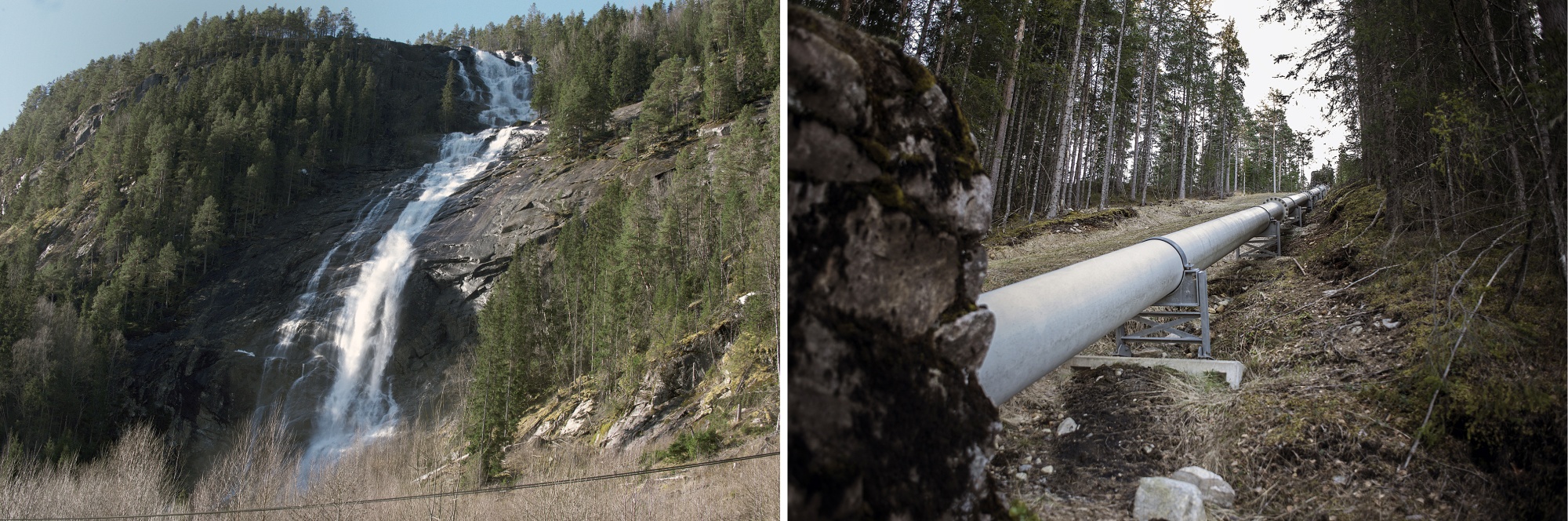
Waterways like the one Eikeland oversees are ubiquitous in Norway. Stretching more than 200 kilometers (124 miles), the Otra river, fed by the Vatndals reservoir and surrounding lakes, runs through long, sparsely populated valleys dotted with small farms and holiday cabins. Forests on either side are home to moose, deer and beavers.
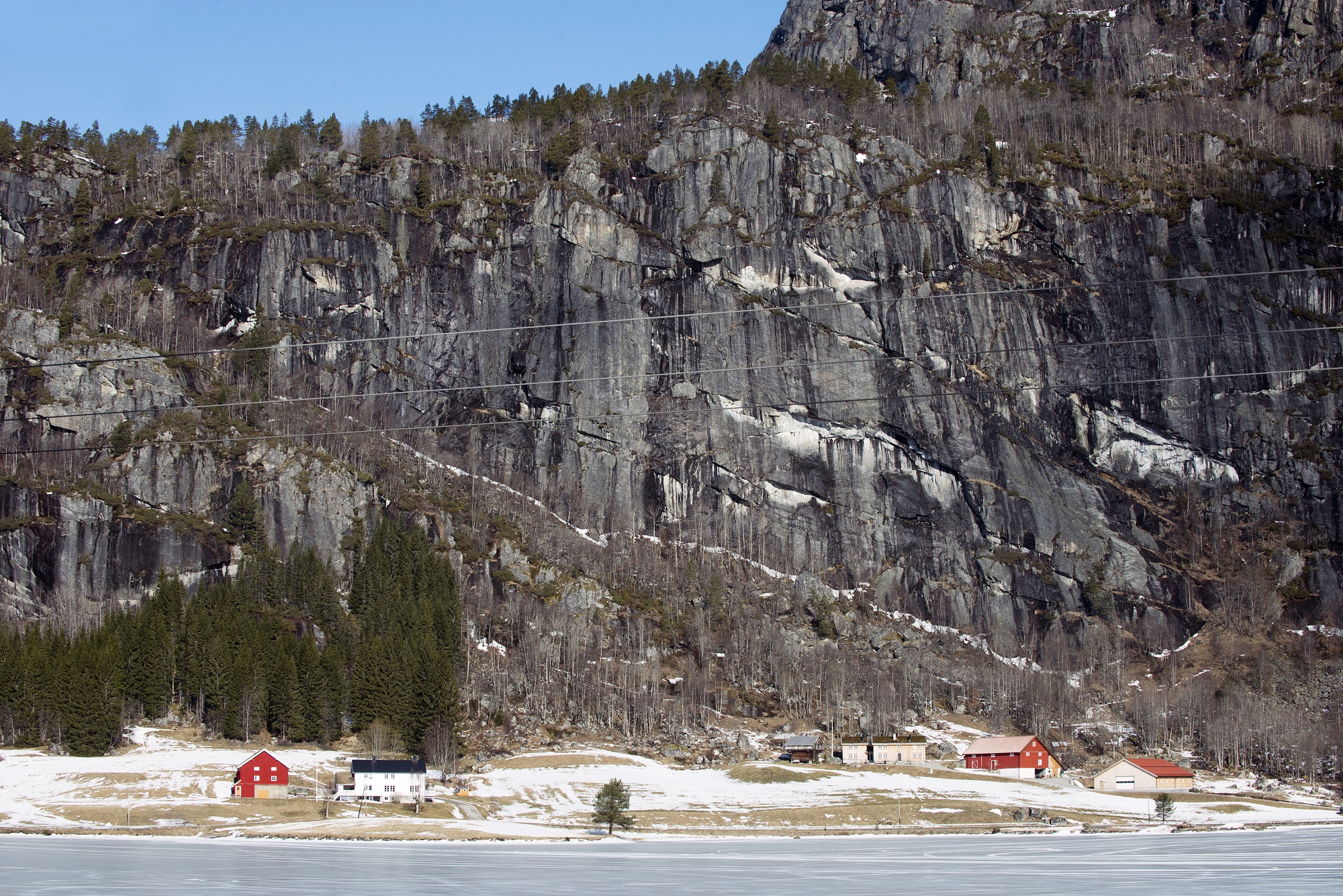
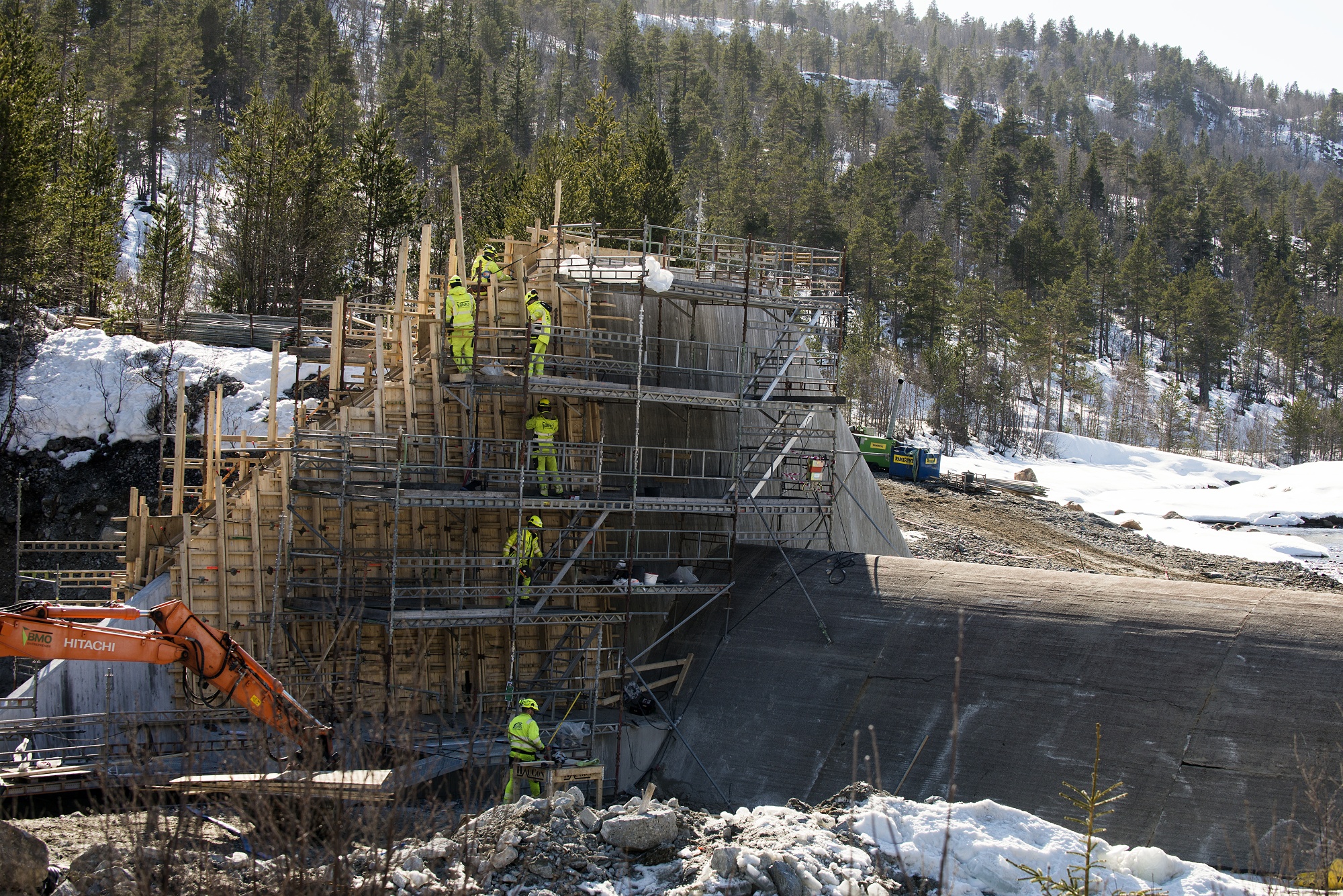
Yet for all its seemingly untouched beauty, the river is highly managed through a network of hydropower stations, pumped-storage plants and dams. Strict rules govern how much the water can rise or fall. Nearly every drop is accounted for: Close to 80% of annual rainfall is captured, and only one waterfall remains undeveloped.
Annual snowmelt is key to keeping the system balanced. This year, when A Energi measured the snowpack — using rods to extract cores and measure density — staff realized they had a problem.
“There was no snow in February, and now none in March,” said Lars Erik Omland, who leads the company’s market analysis team. “We gradually realized that this would be a winter with little snow.”
Consumers are already feeling the pinch. Electricity sales to the UK and Germany — major export markets — have plunged by about 50% and 40% this year, respectively, while winter energy prices in northern Sweden have surged to more than four times their 2025 levels. The Nordic region’s ski resorts have also come under pressure, facing the double burden of producing more artificial snow while struggling with steep electricity costs.
In Sweden, Ulf Svensson, who heats his home with electric radiators, got a shock when he received his latest bill.
“I never thought it would be this high,” he said, citing a monthly charge of more than 10,000 kronor ($1,000). “We’ve always had really low rates here up north.”
Fading Price Advantage
The surge in electricity prices comes at a difficult moment for Europe, as the region contends with higher gas prices tied to the war in the Middle East. In the UK, windier-than-average weather has helped keep the country supplied despite a drop in imports from Norway. Even so, the most expensive hours are still often covered by fossil fuels — a challenging dynamic as exports through the Persian Gulf have effectively come to a standstill.
For traders, the scale of Norway’s shortfall is distilled into a single number. The so-called hydrological balance measures the amount of energy stored in snowpack, reservoirs and groundwater relative to seasonal norms, and is monitored several times a day alongside indicators like French nuclear output and European gas storage.
The deficit widened in late February to its lowest level since 2011 and remained close to that mark through most of March before improving slightly this week. In southern Norway, which is linked to the continent and the UK by subsea power cables, snow levels are the weakest for this time of year since 1996.
Nordic day-ahead power prices have this year traded just shy of Germany’s — a market that’s been 60% more expensive over the past decade. The convergence underscores how quickly the region’s traditional price advantage can disappear if water reserves shrink.
“When the Nordic region has a hydrological deficit, the export of relatively cheap power to markets like the UK and Germany drops significantly,” said Staffan Bergh, head of analysis at industry consultant Bodecker Partners AB. “They then often have to rely on more expensive production, which typically drives up spot prices and volatility.”
This year’s frigid winter has also boosted electricity demand. Oslo recorded more than 30 consecutive days with temperatures below 0C (32F), the longest such stretch in about 16 years, according to the Norwegian Meteorological Institute. Prolonged freezing conditions have raised heating demand and stored precipitation as snow and ice, delaying inflows to reservoirs.
At the same time, wind generation has dropped sharply. Wind speeds across Scandinavia in January and February 2026 were well below long-term climate norms, sinking to the lowest levels recorded since 2013, according to the University of Maine’s Climate Change Institute. By contrast, the UK and Germany saw stronger output during the same period, which has helped stabilize the European market.
For now, the depleted hydro balance is supporting forward power contracts through the end of the year, boosting returns for generators across the region.
With winter ending, the window to rebuild reserves is closing fast. Rain storms alone likely won’t be enough.
“It’s clear that more than a single event is needed to refill the reservoirs,” said Tarjei Breiteig, head of hydrology and meteorology at A Energi. “Even if it’s extreme, it has to be part of a longer trend over time to correct the situation. That said, it can swing really fast.”
©2026 Bloomberg L.P.