

Iran Turns to China Rail Link to Try to Bypass US Blockade


(Bloomberg) -- Iran is ramping up trade with China via rail in a bid to blunt the impact of a US blockade of its ports and adapt to pressure designed to strangle its economy.
The number of cargo trains going from Xi’an in central China to the Iranian capital Tehran has risen from around one per week before the conflict to one every three or four days since the start of blockade on April 13, according to people with knowledge of the shipments.
Freight costs have surged, with quotes for shipping a standard 40-foot container along the route as high as $7,000 this week, roughly 40% more than typical levels, the people said, speaking on condition of anonymity as they aren’t authorized to speak with the media.
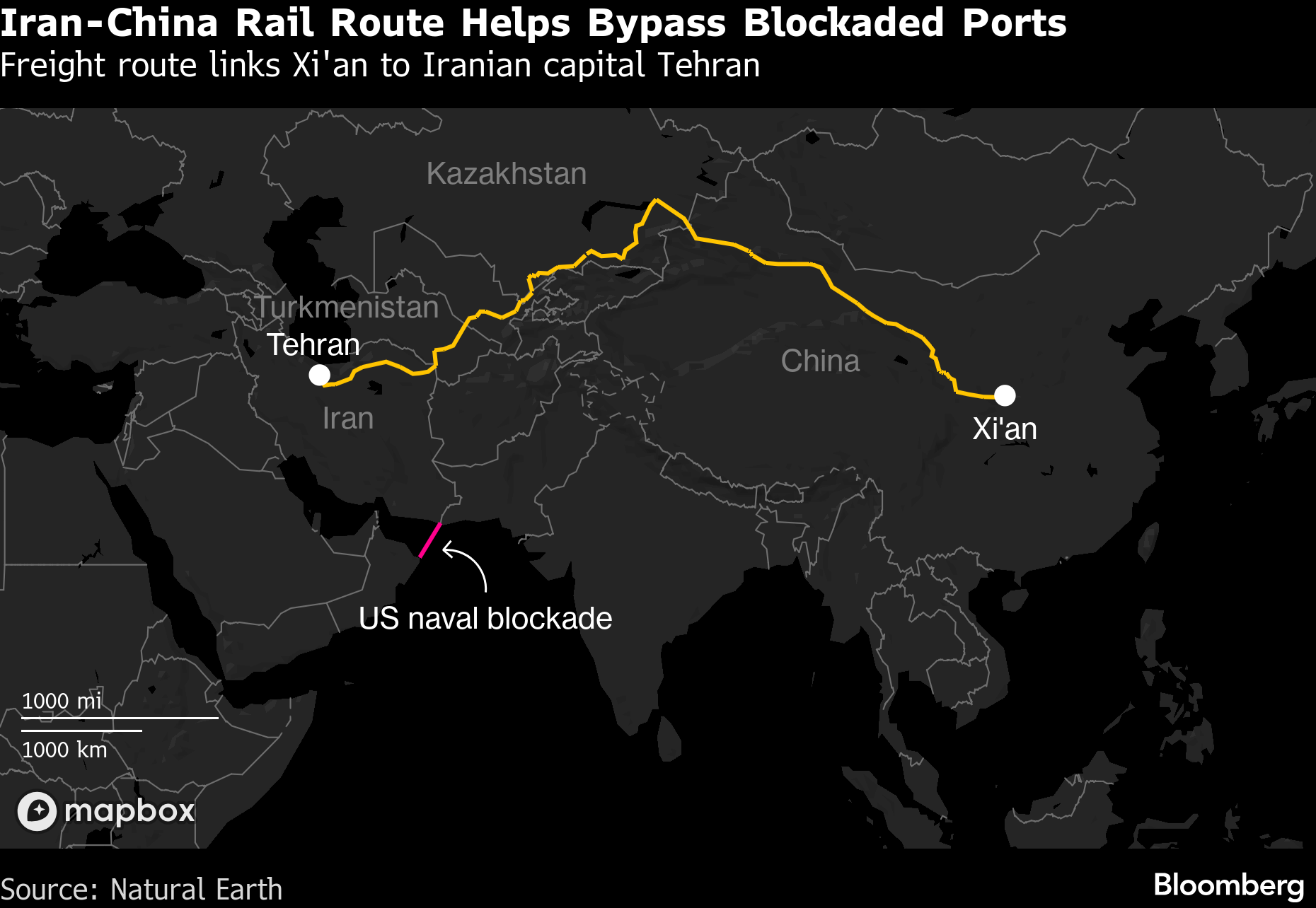
The route, which runs through Kazakhstan and Turkmenistan can only go a small way toward making up for the US blockade.
The naval operation began around three weeks ago. It’s preventing Tehran from exporting most its oil and importing vital grain supplies. There are already signs of strain on the Iranian economy, with the rial slumping.
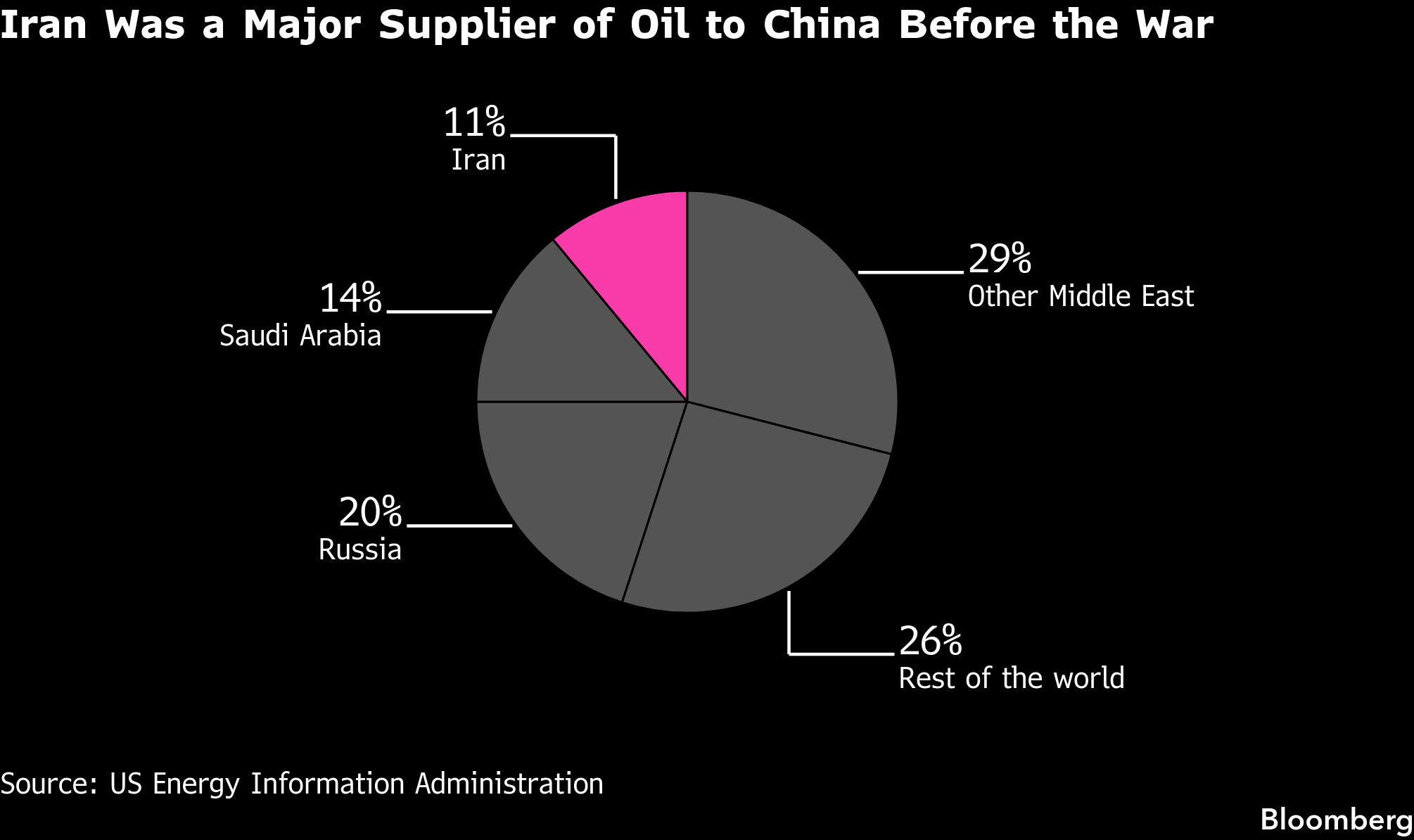
The rail route also adds to Iran’s reliance on the world’s biggest manufacturing nation, with Beijing buying almost all Iran’s oil.
For now the trade is mostly one-way, with containers headed for Iran with industrial and consumer goods, including automotive parts, generators and electronics, the people said. Iranian officials have said they are considering using rail routes to export products like petrochemicals and fuel at some stage.
“Previously these trains never ran at all in some weeks; now they’re fully booked for May,” said Altan Dursun, managing director of Turkey-based Silkroad-Avrasya Multimodal Logistics, a rail-freight booking agency that specializes in trade with China.
Plans are underway to add further capacity in June, Dursun added. Each train from Xi’an carries around 50 standard 40-foot containers, he said, while a long-haul container ship can hold thousands.
Islamic Republic of Iran Railways, the country’s state owned rail operator, didn’t respond to requests for comment.
Since the war erupted in late February with US and Israeli attacks on Iran, China has repeatedly called for a ceasefire and denied it’s sent arms to its besieged partner.
Beijing has stepped up diplomacy in recent days, ahead of a crucial meeting next week between US President Donald Trump and Chinese counterpart Xi Jinping.
China hosted Iranian foreign minister Abbas Araghchi and called for the reopening of the Strait of Hormuz “as soon as possible.” A day later, US Republican Senator Steve Daines thanked China for working to end the war.
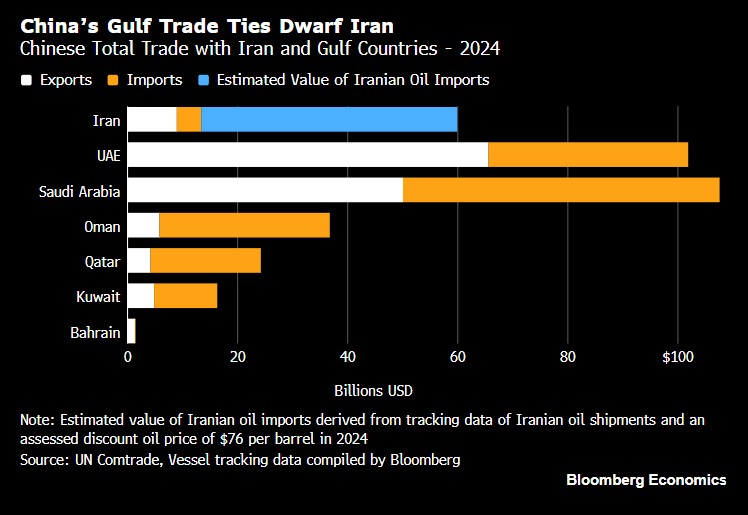
Extensive financial and trade ties with other Persian Gulf states have left Beijing trying to balance commitments in a region where it’s amassed about $270 billion worth of investments and construction projects over the past two decades.
The China route is one node in a broader years-long effort by Tehran to expand logistics corridors with allies and insulate itself from western pressure.
In October, Iran started exporting diesel by train, for the first time, to Afghanistan using the 225 kilometer (140 mile) Khaf-Herat rail line that connects Iran’s northeastern Khorasan-e Razavi province to Herat, state media reported.
In February last year, China inaugurated a direct freight train route to Hairatan in northern Afghanistan, Xinhua reported, and months later Uzbekistan and Afghanistan announced plans to extend the rail line to Herat, which is about 130 kilometers from the Iranian border.
State-run Press TV described the Xi’an link as a “vital just-in-case solution to keep bilateral trade from the tentacles of US hegemony,” in a report marking its operation last year.
Besides the China line, Iran has committed to spending billions of dollars on a north-south route connecting it to Russia.
Iran can transfer 40% of its usual maritime trade to land routes, the head of the national shipping association’s container committee, Kambiz Etemadi, said last week, according to the semi-official Fars news agency.
Demand for trucks from Turkey has also increased since the start of the blockade, one Istanbul freight firm said, adding that most of the new cargoes were carrying food and sunflower oil.
Iran’s ambassador to neighboring Pakistan met with the country’s minister for railways on Thursday to discuss projects to increase freight volumes, the ministry said on X.
With Iran’s sea ports largely cut off, any alternative import routes are welcome as Tehran tries to keep the economy moving and minimize supply shortages that are pushing up inflation. A rapid depreciation in the currency sparked deadly protests against the Islamic Republic in January, and the rial has since weakened to fresh record lows against the dollar.
President Masoud Pezeshkian criticized traders for “profiteering and hoarding” on Wednesday, vowing “serious action against any violations that disrupt societal peace.”
©2026 Bloomberg L.P.








