

US Expands Threats to Iran Energy, Water Even as It Hails Talks


(Bloomberg) -- The White House threatened further escalation of attacks on Iran, including critical civilian energy infrastructure, as the fifth week of war jolts global markets with little sign of relief.
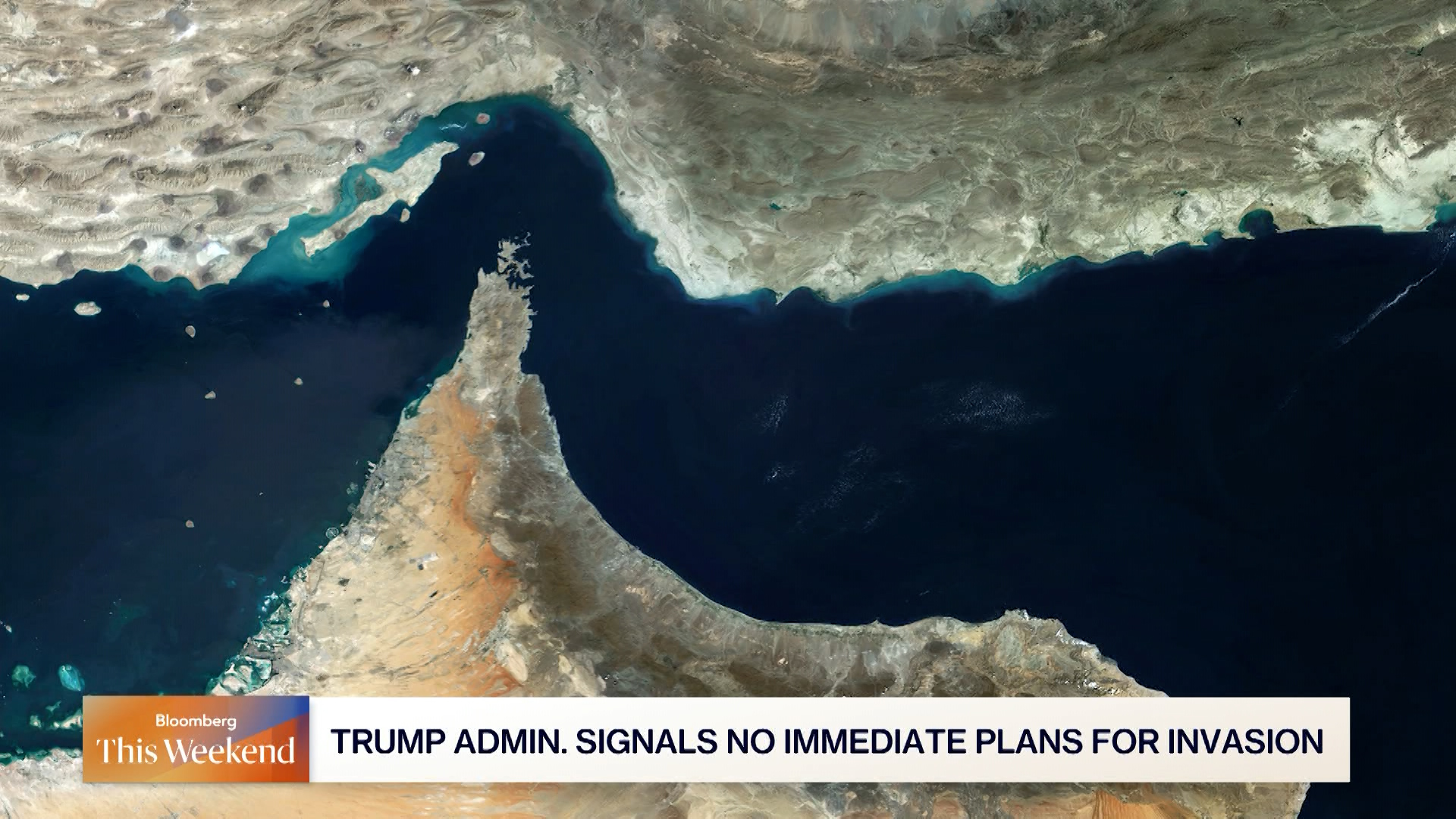
President Donald Trump earlier on Monday posted on social media that if Tehran doesn’t re-open the Strait of Hormuz, “we will conclude our lovely ‘stay’ in Iran by blowing up and completely obliterating” electricity plants, oil facilities and “possibly” desalination infrastructure.
Trump has regularly vacillated between saying a deal with Iran is imminent and warning he’s prepared to increase the military tempo. The threat to water facilities would constitute a war crime as defined by the Geneva Conventions.
White House Press Secretary Karoline Leavitt said the US is “conducting more intense, targeted strikes with devastating combat power with each passing day” and the US operations are proceeding “according to plan,” even as she echoed the president in saying talks are on track. The administration hasn’t identified which Iranian officials it’s dealing with, directly or indirectly.
Despite the mystery surrounding peace talks, Leavitt said the Iranians were “increasingly eager” to negotiate and agreed to “some of the points” that the US has put forward to end the conflict. Iran has consistently said peace talks aren’t progressing and has signaled it can carry on fighting for much longer.
“These folks are appearing more reasonable behind the scenes,” Leavitt added.
The back-and-forth on negotiations happened as Israel and Iran exchanged missile strikes. The conflict is threatening to cause severe economic damage around the world, with the closure of the critical Hormuz waterway choking supplies of energy, fertilizer and other critical commodities.
The most active Brent crude contract for June settlement rose more than 2% to trade near $108 a barrel on Monday. Brent is on track for a record monthly increase and oil’s advance since the start of the year is now around 90%, stoking expectations of slower growth and faster inflation worldwide.
Treasury Secretary Scott Bessent told Fox News the US is “going to retake control” of Hormuz, ensuring safe navigation “through US escorts or a multinational escort.” The US announced such a plan in the early days of the war, though it hasn’t yet been executed.
Egyptian President Abdel-Fattah El-Sisi on Monday issued an appeal to Trump to end the conflict, saying only the US president is capable of doing so. He warned of the dangers of rising energy prices on the economies of developing nations and political stability. Egypt is, along with Pakistan and Turkey, trying to mediate between Iran and the US.
The US military said over the weekend that about 3,500 sailors and Marines have arrived in the Middle East on an amphibious assault ship. The Tripoli Amphibious Ready Group is also carrying fighter aircraft.
The Israel Defense Forces said it’s carrying out airstrikes on Iran a day after attacks resulted in power outages in Tehran and nearby areas. Iran said it’s striking Israel, which reported an attack on the Bazan oil refinery in Haifa, although not to production facilities.
The United Arab Emirates issued multiple alerts overnight and Saudi Arabia and Kuwait reported interceptions of drones and missiles.
Trump told reporters aboard Air Force One on Sunday that an agreement to end fighting could come soon, claiming that Iran agreed to “most of” the 15 demands the US has issued, without offering specifics.
Iran suggested that isn’t the case, having publicly rejected the proposal last week.
“The demands conveyed to us have been excessive and illogical,” Foreign Ministry Spokesman Esmail Baghaei said in a press conference on Monday, according to the semi-official Tasnim news agency.
US Secretary of State Marco Rubio declined to say who the US is engaged with on the Iran side, telling ABC it would put them in danger as “there’s some fractures going on there internally.”
Iran has insisted on its own conditions to end hostilities, issuing a five-point plan that includes demands — such as the payment of war reparations — that Trump and Israel are unlikely to accept. Tehran also has called for an end to the war on all fronts, a likely reference to Israel’s parallel operation against Iran-allied Hezbollah in Lebanon.
Tehran-backed Houthi militants in Yemen entered the war over the weekend, launching missiles and drones at Israel.
More than 4,750 people have been killed so far, roughly three-quarters of them in Iran. More than 1,100 people have died in Lebanon, where more than a million people have been displaced. Dozens of people have been killed in Israel and Arab Gulf states.
Three United Nations peacekeeper troops have been killed in Lebanon over the past 24 hours.
Iran’s weekend strikes on Middle Eastern aluminum plants are threatening to send a fragile market into crisis, raising the prospect of record prices for the metal.
In an interview with the Financial Times, Trump said he wants to “take the oil in Iran,” which would involve occupying the country’s main export hub of Kharg Island — also the location of an Iranian naval base.
“Our men are waiting for American soldiers to enter on the ground,” Iranian Parliament Speaker Mohammad Bagher Ghalibaf said, according to Tasnim.
Trump is also considering a military operation to seize Iran’s near-bomb-grade uranium, three diplomatic officials briefed on the matter told Bloomberg News earlier this month.
Pakistan said it was ready to facilitate peace talks between the US and Iran in the coming days after hosting a meeting of foreign ministers from Saudi Arabia, Turkey and Egypt. Pakistani Foreign Minister Ishaq Dar, who didn’t elaborate on the timeline or the likelihood of such talks taking place, called for creating the right conditions for structured discussions between the parties.
Trump has pushed for negotiations as US gas prices soar in a congressional election year. He twice delayed a deadline for Tehran to agree to reopen the Strait of Hormuz — through which about a fifth of the world’s oil and liquefied natural gas typically flows.
©2026 Bloomberg L.P.