

Oil Falls, Stocks Jump on Iran De-Escalation Hopes: Markets Wrap


(Bloomberg) -- Oil fell and equities rallied as US diplomatic efforts fueled cautious optimism that the Middle East conflict, now approaching a month, may begin to ease, tempering concerns over prolonged disruption.
Brent crude slid 4.7% to $99.55 a barrel, underpinning a 1.9% advance in Asian equities and gains in sovereign bonds, as the prospect of easing tensions in Iran tempered inflation risks and damped expectations for policy tightening. Stock futures for the US and Europe pointed to gains extending beyond the region. The dollar edged lower.
Fueling the optimism was a 15-point US plan intended to help bring the war with Iran to a close. Earlier, Israel’s Channel 12 reported that Washington was seeking a one-month ceasefire. Even so, attention stayed fixed on the Strait of Hormuz — a vital artery for Middle East oil flows — that remains effectively closed for ships.
“Crude remains the tip of the spear in this headline-driven market,” said Rebecca Babin, a senior energy trader at CIBC Private Wealth Group. “Reports that a potential 30-day ceasefire may be in the works are easing worst-case pricing scenarios and concerns around demand destruction. Signs there may be an off-ramp are reducing some of the risk premium in the market.”
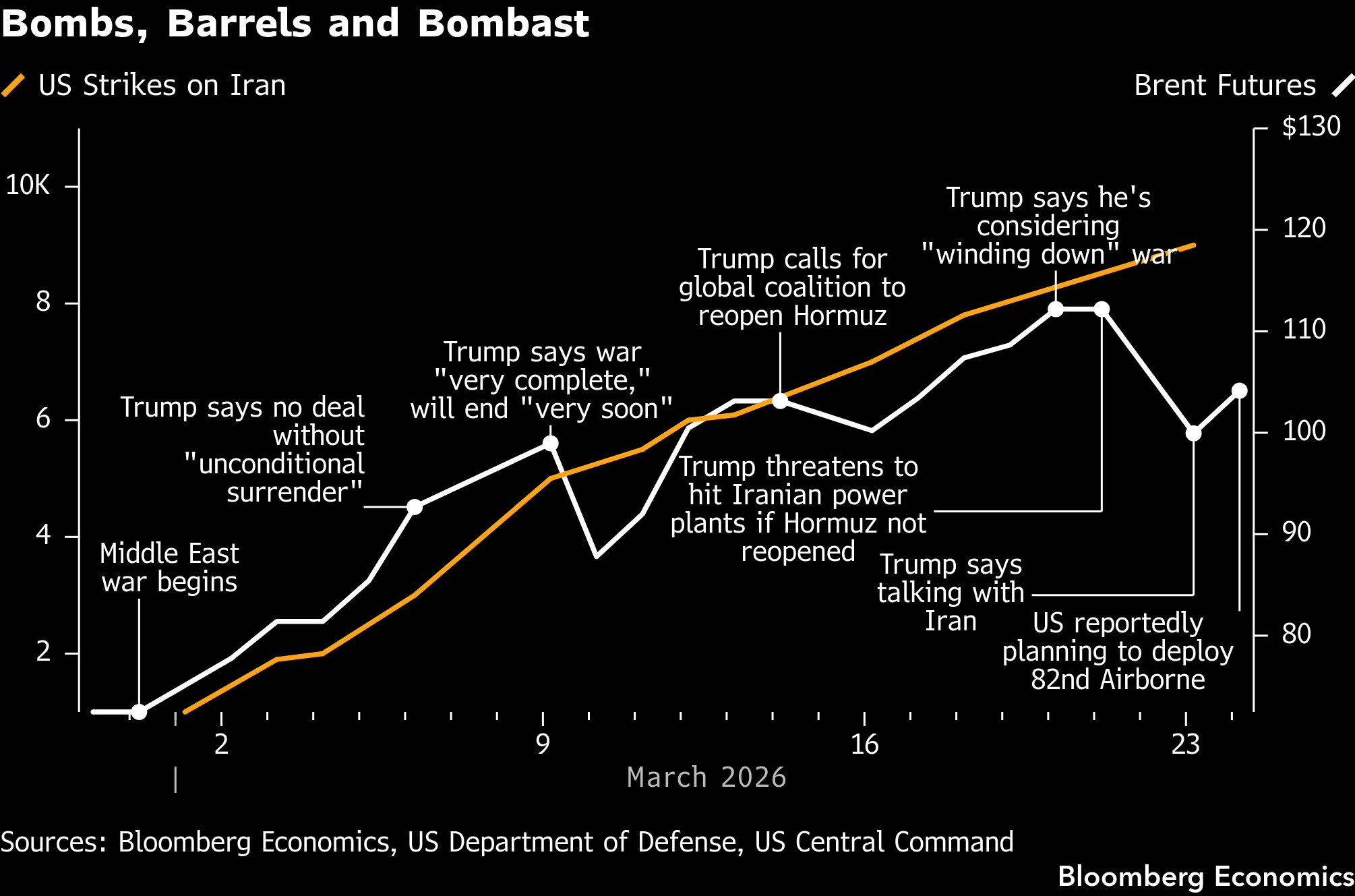
Financial markets have whipsawed since the conflict erupted in late February, with headline-driven swings leaving traders “stopped out” of positions. Rising volatility in crude is clouding risk assessment, as surging commodities heighten inflation concerns and raise the prospect that policymakers may keep borrowing costs elevated or even tighten further.
The US plans highlight the intensifying urgency within the Trump administration to resolve the conflict as the economic toll mounts.
President Donald Trump has been pushing talks with Iran in a bid to halt the fighting, yet those efforts have been clouded by uncertainty over the structure of negotiations, the Iranian participants and how any deal would be structured.
The details of the 15-point proposal remain unclear, though Trump has publicly mused that any agreement would have to include a prohibition on Iran ever obtaining a nuclear weapon or enriching radioactive material for civilian purposes.
Investors such as Qian Su, head of investment management for Asia at Indosuez Wealth Management, said it’s hard to take Trump at his word.
“We’re defensive, we’re not chasing headlines, we’re waiting for more prominent signs of real resolution on the ground before buying in at a better timing,” she said.
What Bloomberg’s Strategists Say...
“The increasingly soothing US rhetoric about potential peace negotiations is the focus for investors as they drive stocks and bonds higher, along with sending crude futures lower. That may be a vulnerable strategy given that the actions of the three main parties to the conflict — the US, Iran and Israel — signal very little actual de-escalation.”
— Garfield Reynolds, MLIV Asia Team Leader. Click here for full analysis.
In other corners of the market, gold rose for a second day to trade around $4,575 an ounce, and Bitcoin advanced to just under $71,000.
Attention was also on the bond markets with Federal Reserve officials Michael Barr and Austan Goolsbee signaling that inflation continues to be a key concern for policymakers. The drop in crude oil, however, eased concern about prices and damped the case for the Fed to pivot to a rate hike.
Yields on policy-sensitive two-year Treasuries fell three basis points to 3.86%.
“It’s hard to take a firm signal from these headlines,” said Oliver Levingston, G-10 FX and rates strategist at BofA. “Investors who believe there will be an eventual partial reversal in the oil price spike should be long rates, especially in reals & intermediate tenor.”
Even as reports suggested a possible de-escalation, the conflict continued to rage. Kuwaiti authorities said on Wednesday they were dealing with a fire after drones targeted a fuel tank at the airport, according to the country’s aviation regulator. Israel said it carried out a wave of strikes at targets across Tehran.
Also, the Trump administration ordered the 82nd Airborne Division to deploy about 2,000 soldiers to the region, according to a person familiar with the matter, as the White House weighed options to ease Iran’s hold on the Strait of Hormuz.
Meanwhile, Iran started charging transit fees on some commercial vessels passing through the waterway, people familiar with the matter said. Yet Tehran said non-hostile foreign ships are allowed to cross the waterway on its terms.
“It all comes down to the re-opening of the Strait of Hormuz,” said Matt Maley at Miller Tabak. “So, if we hear that ‘good progress is being made’ in the negotiations at the end of this week, it won’t be enough, if the Strait remains very restricted.”
Corporate News:
- SpaceX aims to file a prospectus for an initial public offering as soon as this week, the Information reported, kicking off one of the year’s most-anticipated market debuts.
- SK Hynix Inc. seeks to list in the US this year, a move that would help it keep pace with artificial intelligence’s voracious demand for memory.
- Merck & Co. is in advanced talks to buy drugmaker Terns Pharmaceuticals Inc., according to people familiar with the matter.
Some of the main moves in markets:
Stocks
- S&P 500 futures rose 0.8% as of 1:23 p.m. Tokyo time
- Nikkei 225 futures (OSE) rose 2.6%
- Japan’s Topix rose 2.7%
- Australia’s S&P/ASX 200 rose 1.8%
- Hong Kong’s Hang Seng was little changed
- The Shanghai Composite rose 0.9%
- Euro Stoxx 50 futures rose 1.1%
Currencies
- The Bloomberg Dollar Spot Index fell 0.1%
- The euro was little changed at $1.1603
- The Japanese yen fell 0.1% to 158.91 per dollar
- The offshore yuan was little changed at 6.8955 per dollar
Cryptocurrencies
- Bitcoin rose 1% to $70,781
- Ether rose 0.6% to $2,160.41
Bonds
- The yield on 10-year Treasuries declined two basis points to 4.34%
- Japan’s 10-year yield declined 1.5 basis points to 2.250%
- Australia’s 10-year yield declined nine basis points to 4.95%
Commodities
- West Texas Intermediate crude fell 4.2% to $88.49 a barrel
- Spot gold rose 2.2% to $4,572.10 an ounce
This story was produced with the assistance of Bloomberg Automation.
©2026 Bloomberg L.P.








