

Japan Stocks Face Earnings Risk as Iran Conflict Lifts Oil Costs


(Bloomberg) -- Japan’s equity rally built on strong corporate earnings is beginning to look vulnerable as the escalating conflict in Iran pushes crude oil prices higher, stoking concern that rising energy costs could erode profits.
A 10% gain in Brent crude prices would shave 1% to 2% off Japanese companies’ net income, said Kazunori Tatebe, chief strategist at Daiwa Asset Management Co. Brent is trading at about $104 a barrel, more than 50% above last year’s average — a heavy burden for a nation that imports almost all of its oil.
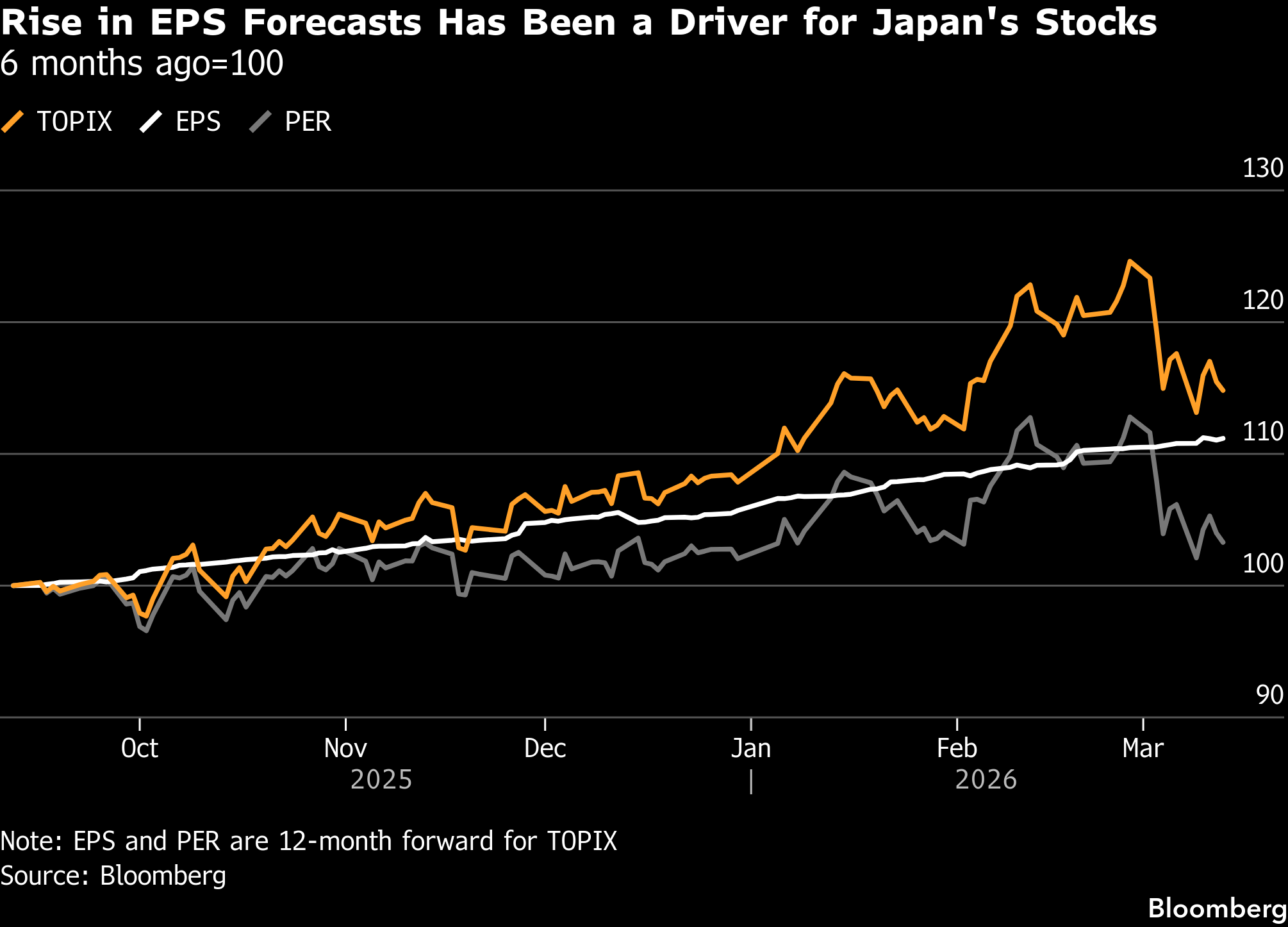
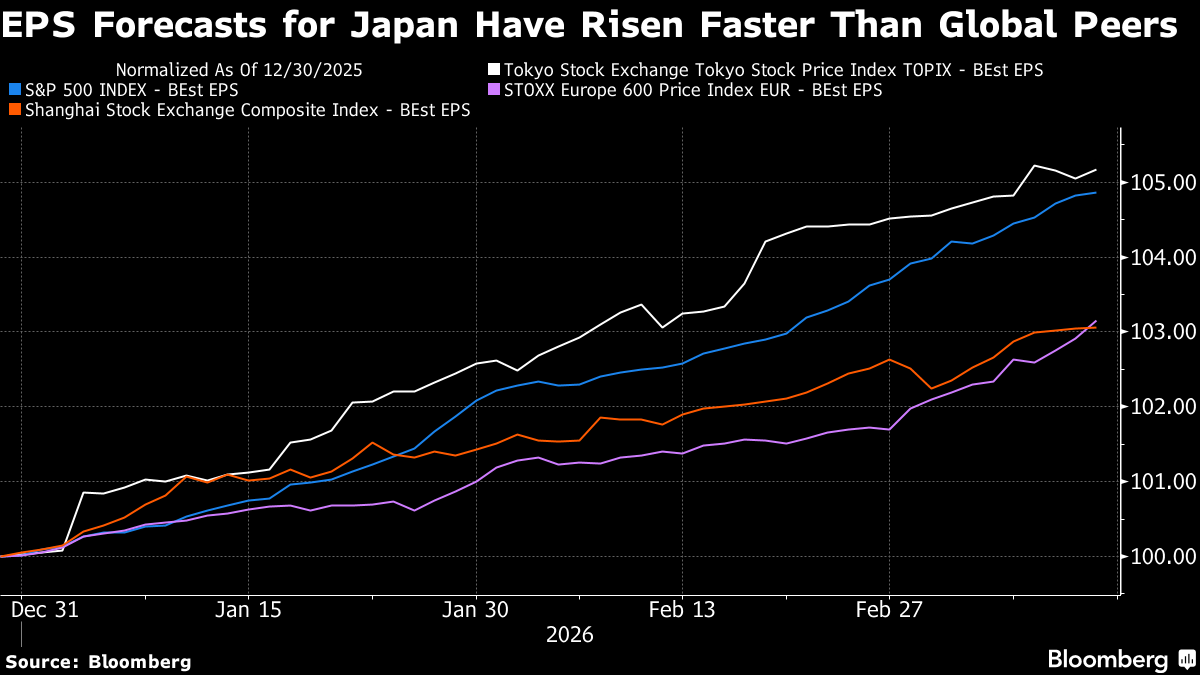
The outlook for strong earnings was a key factor behind Japan’s Topix climbing 15% over the past six months, beating indexes in the US, Europe and China. While expectations of fiscal stimulus and corporate reforms have also supported the rally, the prospect of solid profit growth has been a key driver.
“Investors had anticipated double-digit profit growth for Japanese firms next fiscal year, but with the sharp rise in oil prices, they are beginning to consider the possibility of single-digit growth — and a decline in profits in the worst case,” said Shingo Ide, chief equity strategist at NLI Research Institute.
Mamoru Shimode, a strategist at Resona Asset Management Co., warned that Japanese companies may issue more conservative outlooks if the conflict continues past April, when many firms begin reporting full-year results.
Meanwhile, sectors expected to make large contributions to profit growth in fiscal 2026 — including electronics, transportation equipment and banks — may also come under pressure from a softening US labor market and a slowdown in AI data-center investment. If these industries weaken, the overall earnings outlook for the Topix could be revised downward, strategists at SMBC Nikko Securities including Hikaru Yasuda said in a report on Monday.
“It’s not just raw material prices — transportation costs will rise as well, and a global economic slowdown could curb demand,” NLI Research’s Ide said. Real wages, which recently turned positive for the first time in 13 months, could start to decline, and “a wide range of industries are unlikely to escape adverse impacts,” he added.
Shoji Hirakawa, chief global strategist at Tokai Tokyo Intelligence Lab, points out that past oil-related stock market crashes were triggered after crude oil prices more than doubled and the US Federal Reserve hiked rates. But “current oil prices are up only about 50% year-on-year; moreover, demand remains robust, meaning the trend of rising corporate earnings among Japanese firms is unlikely to be derailed,” he said.
Nomura Securities Co. forecasts that if the rise in crude oil prices in the fiscal year ending in March 2027 is around 20–30% year-on-year, the outlook for double-digit profit growth can be maintained.
©2026 Bloomberg L.P.