

Crude Oil Drives Higher as Traders Brace for Longer Mideast War


(Bloomberg) -- Oil pushed higher as traders braced for the Iran war potentially stretching into April and attacks continued across the Middle East, with transit through the critical Strait of Hormuz still all but halted.
Global benchmark Brent rose toward $110 a barrel after erasing an early drop, while West Texas Intermediate was near $95. President Donald Trump pushed back a deadline for striking Iran’s energy by 10 days, prolonging uncertainty over the course of the war well into next month.
“The market is getting an understanding that there is no certain end to the conflict,” said Carl Larry, an oil and gas analyst at Enverus. “We’re heading into another weekend with risk still to the upside.”
The extension allows more time for talks, but also for the US to amass additional forces in the region. These already include Marine Expeditionary Units and soldiers from the Army’s 82nd Airborne Division, according to people familiar with the matter. Separately, the Wall Street Journal said the Pentagon is looking at sending up to 10,000 extra ground troops.
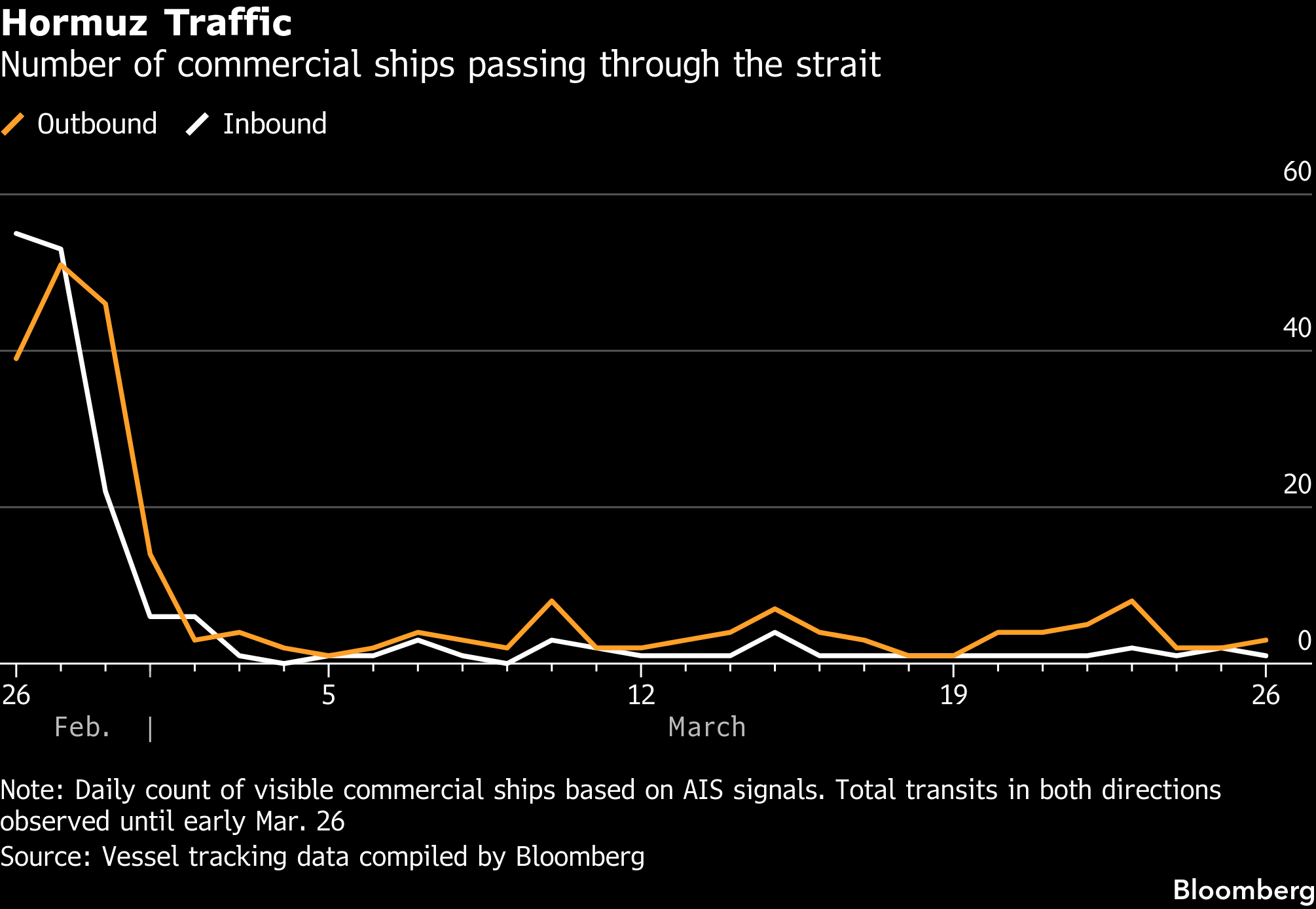
Brent crude is on pace for a record monthly gain in March, as the war between the US, Israel and Iran has rocked the oil-rich Middle East. With Tehran forcing the near-complete closure of the Strait of Hormuz, the conflict has severely restricted flows of energy that are vital to the global economy.
Attacks continued on Friday. Among them, Israel said it struck Iran’s primary facility for the production of missiles and sea mines in the city of Yazd, and Kuwait said drones targeted Shuwaikh port, resulting in damage. Saudi Arabia intercepted drones in its eastern region.
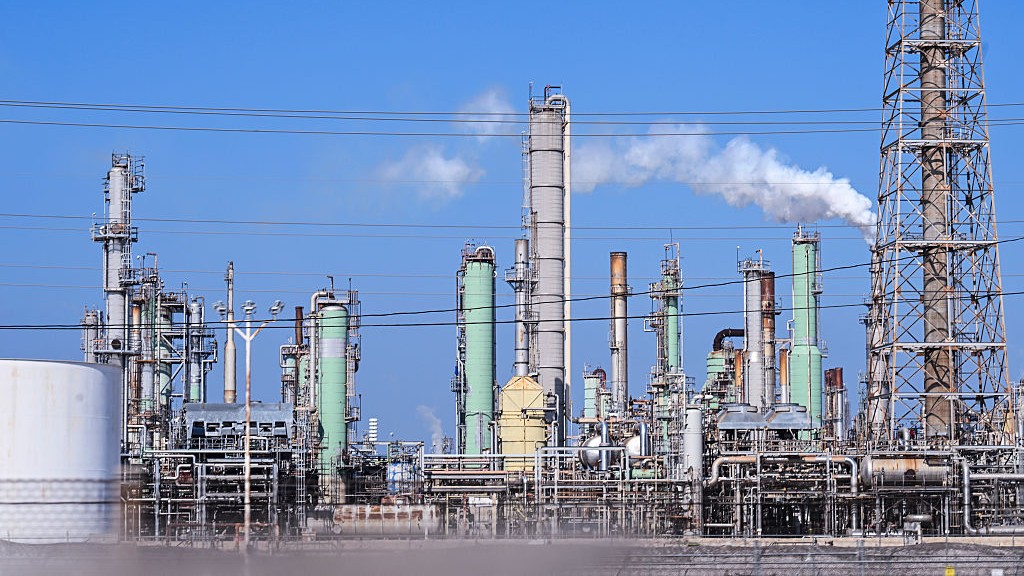
Trump’s move “takes some near-term heat out of the market, but risks still lean to the upside,” said Ewa Manthey, commodities strategist at ING Groep NV. With about 8 million barrels a day of supply already offline, and a much larger volume of flows through the Persian Gulf still vulnerable, “the geopolitical premium is unlikely to fade meaningfully,” she said.
While there was a roughly 60% probability of the war finishing by end-March, there were 40% odds of a longer conflict, possibly through June, according to Macquarie Group Ltd. analysts including Peter Taylor. The latter scenario could drive oil to $200 a barrel, they wrote in a note.
On the diplomatic front, the Trump administration is trying to arrange a meeting for Vice President JD Vance in Pakistan this weekend to discuss an off-ramp to the war in Iran, CNN reported, citing two US officials. Other top administration staff could also join the meeting, CNN said.
Iran confirmed on Thursday, through the Tasnim news agency, that it’s waiting for a response after rejecting a 15-point, US plan to end the war and offering its own conditions. Those include recognition of Tehran’s authority over Hormuz, which links the Persian Gulf to global markets.
The vital waterway carried about a fifth of global oil flows before the war started at the end of February. Despite the broader standstill, the past day has seen a marginal increase in Iran-linked ships — mostly bulk carriers and LPG vessels — attempting to pass through.
The United Arab Emirates has told the US and other allies it would participate in a multinational maritime task-force intended to reopen the strait of Hormuz, the Financial Times reported, citing three people familiar with the situation. Abu Dhabi would deploy its own navy, two of the people said.
Iran permitted Malaysian vessels trapped in the Gulf to return home through the strait, Malaysia’s Prime Minister Anwar Ibrahim said in a televised address on Thursday evening. Anwar has recognized Tehran’s right to protect its sovereignty, while also urging a rapid resolution to the conflict.
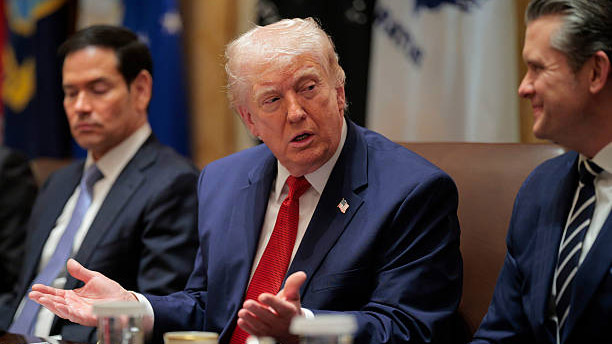
On Thursday, Trump said during a Cabinet meeting that Iran had allowed 10 oil tankers to sail through the strait as a goodwill gesture. Treasury Secretary Scott Bessent, meanwhile, said that an insurance program meant to boost shipping through the artery would begin soon.
Brent has surged by about 51% so far in March, and petroleum product costs from diesel to jet fuel have rallied even more, burdening businesses and consumers. The increases have triggered concern about a simultaneous spike in global inflation and slowdown in growth.
In the US, several Federal Reserve officials expressed growing anxiety over the economic outlook due to the war. One of them, Governor Lisa Cook, said the spike in oil prices had shifted the balance of risks, leaving inflation as a bigger concern than employment for now.
Across the Asia-Pacific, India cut taxes on diesel and gasoline to cushion the impact of surging crude prices on its refiners, and Vietnam froze some fuel levies until mid-April to help ensure national security. New Zealand said there was evidence of increased demand, partially from hoarding or stockpiling.
©2026 Bloomberg L.P.








