

Oil Pares Early Gains as US, Iran Halt Attacks After Flare-Up


(Bloomberg) -- Oil pared early gains after the US and Iran agreed to stop attacking each other, following flare-ups over the weekend that saw a supertanker hit near the Strait of Hormuz.
Brent was near $72 a barrel after jumping as much as 1.9% at the start of trading, while West Texas Intermediate was around $70. Both sides will stand down for now and vessels can move freely before peace talks resume this week, according to a US official who spoke on condition of anonymity.
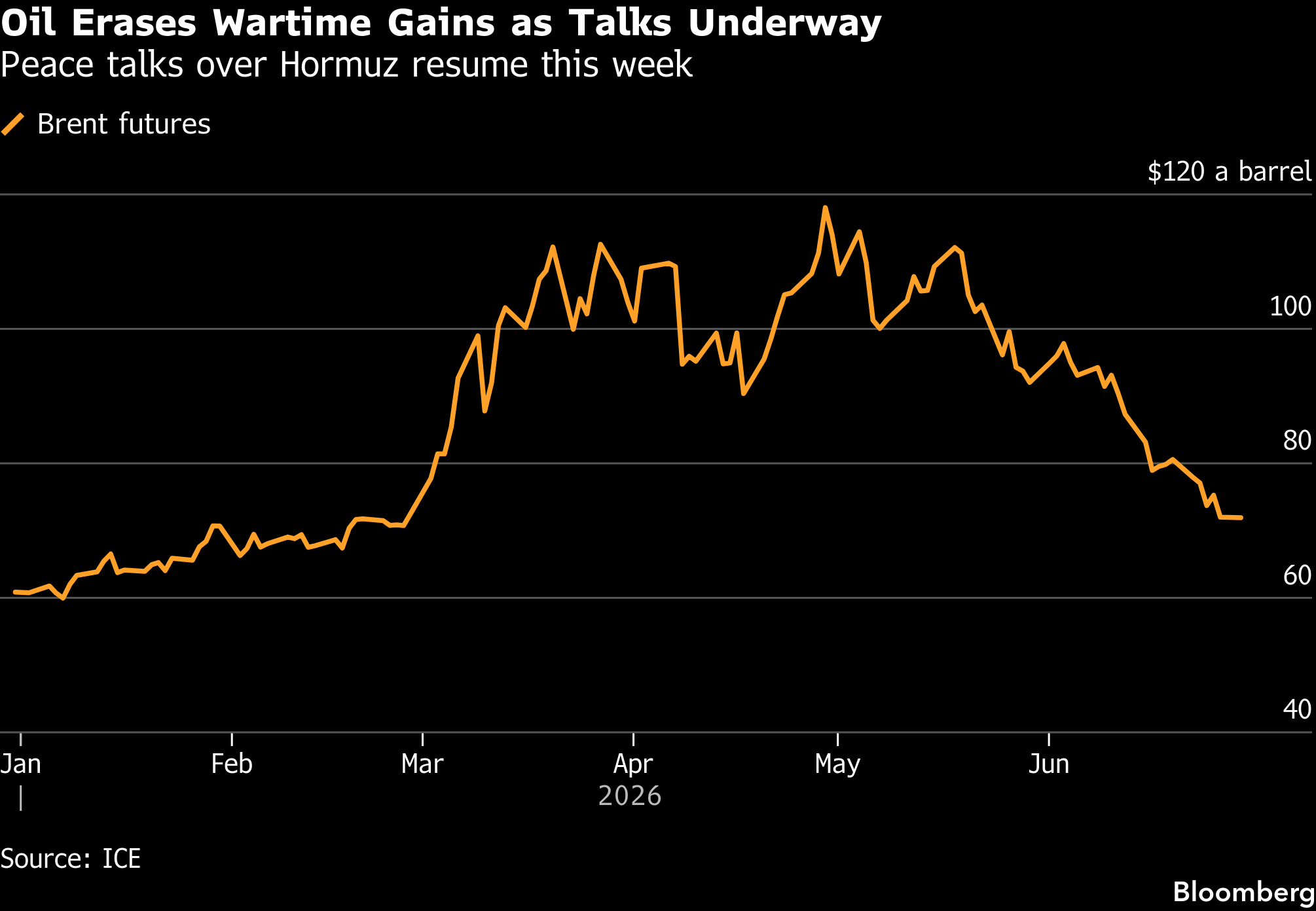
Oil has erased almost all of its gains since the US and Israel first attacked Iran at the end of February. About a fifth of the world’s crude and liquefied natural gas traveled through the Strait of Hormuz before the conflict, and a resumption in negotiations offers the prospect of a more permanent peace deal that will see a full reopening of the key waterway.
“The market feels increasingly comfortable treating these moves as tactical rather than structural,” said Haris Khurshid, chief investment officer at Chicago-based Karobaar Capital LP. “Until something fundamentally changes, traders are happy to fade both the rallies and the sell-offs.”
Tehran targeted the Kiku over the weekend. The very large crude carrier had loaded about 2 million barrels of oil in Qatar and last signaled its location off Fujairah, a United Arab Emirates port in the Gulf of Oman.
Oil and natural gas shipments through the strait — which had picked up again following an interim agreement between the sides — eased following the latest flare-up. Shipowners will likely remain wary of crossing the chokepoint and hundreds of ships remain trapped in the Gulf.
Over the weekend, a Saudi Aramco-operated helicopter crashed in Ras Tanura — Saudi Arabia’s energy heartland — near the Gulf coast, the country’s press agency said, without elaborating on the cause. It wasn’t immediately clear if the incident on Sunday affected any energy facilities.
Elsewhere, Russian President Vladimir Putin acknowledged that the country faces fuel supply problems including queues at gas stations. He confirmed that a full ban on diesel exports is among measures under discussion to mitigate supply tightness.
©2026 Bloomberg L.P.