

Oil Jumps as Conflict Over Hormuz Escalates With Fresh Strikes


(Bloomberg) -- Oil jumped as the US completed another wave of strikes against Iran, with the two sides disputing whether the Strait of Hormuz was open.
Global benchmark Brent rose above $79 a barrel, after rallying by more than 5% last week, while West Texas Intermediate was near $74. US Central Command said on Monday it struck dozens of targets on Sunday to degrade Iran’s ability to attack international shipping passing through the waterway.
Iran had said on Sunday the strait would be closed “until further notice,” as the Islamic Republic’s forces launched retaliatory drone and missile assaults on American allies across the Middle East, including Jordan and Qatar. In addition, Kuwait said an offshore drilling platform had been hit and damaged.
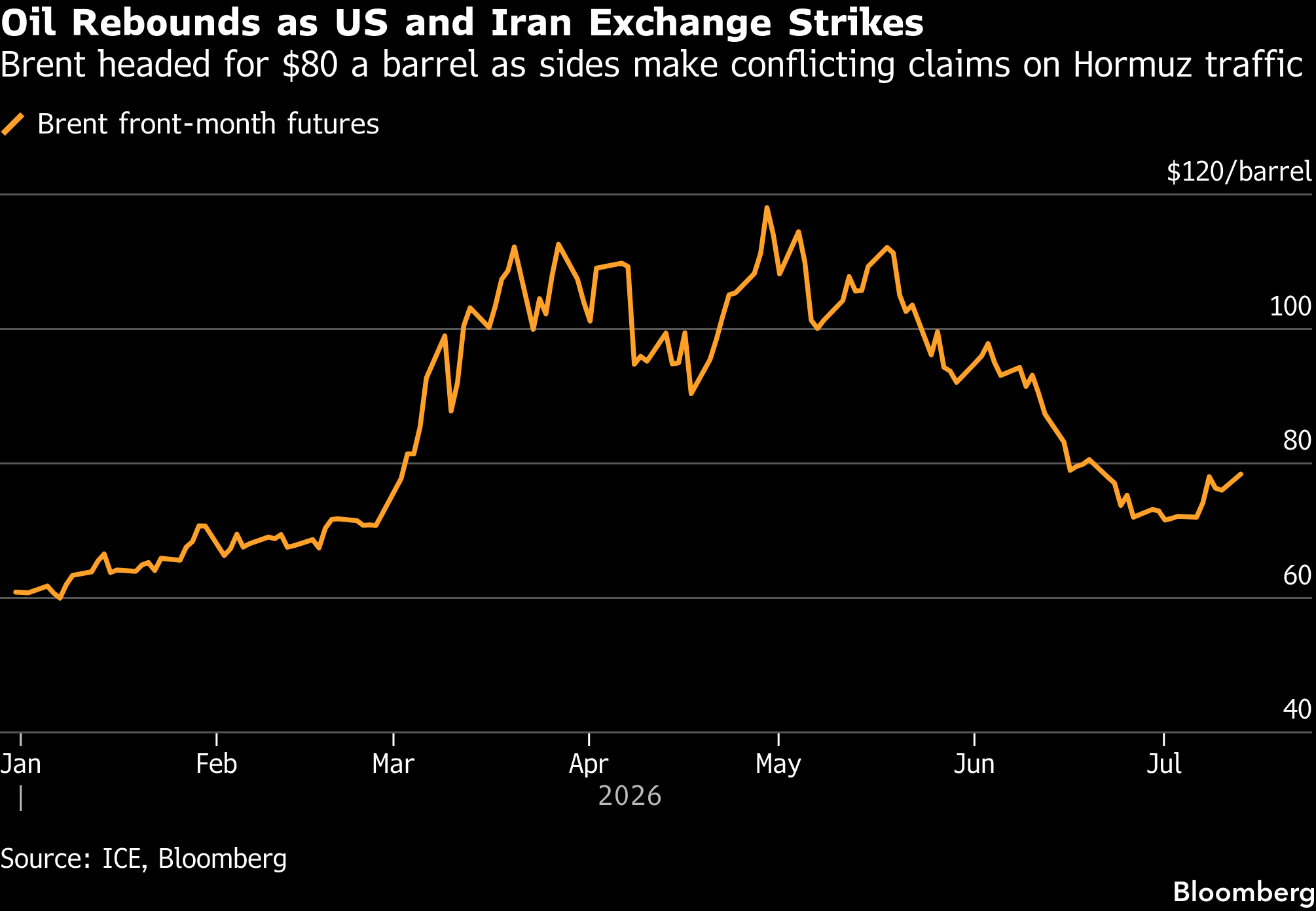
Crude has rebounded this month as the uncertainty reinserted a war premium into prices, erasing some of the declines seen in May and June after an interim peace deal offered the prospect of more supply. The flare-up risks derailing efforts to rebuild inventories, the International Energy Agency said on Friday — a reminder of what’s at stake for the global economy if the conflict continues.
The latest flare-up remains escalatory but “well short of all-out hostilities,” said Saul Kavonic, senior energy analyst at MST Marquee. “We are likely to see oil prices inch higher for as long as the strikes continue and passage through the strait remains more hesitant.”
Traffic through Hormuz — which normally carried about a fifth of global crude and liquefied natural gas supplies — was almost nonexistent on Monday, extending a slowdown since tensions flared up last week. Even so, the Joint Maritime Information Center said the southern shipping lane coordinated by Oman remains available.
European natural gas also rose on concern the escalation could hamper shipments. Futures added as much as 2.7% after gaining almost 8% last week.
The re-escalation has dimmed prospects for diplomacy. Iran’s top negotiator Mohammad Bagher Ghalibaf declared the “era of one-sided deals is OVER,” while Tehran insisted Washington must honor commitments on Hormuz and the normalization of its oil exports before talks can resume. President Donald Trump, meanwhile, declared the ceasefire “OVER” but said the US remained willing to continue negotiations.
The attack on the Kuwaiti drilling facility at the weekend marked the first direct strike on energy infrastructure in weeks, and if the conflict expanded to target energy infrastructure more broadly, oil could head to $100, Kavonic said.
In the past month, Persian Gulf producers including the United Arab Emirates marketed additional crude after the interim agreement eased concerns over exports. The Emiratis, in particular, were among the most successful in getting barrels out using shuttle tankers that sail dark, or with transponders off.
©2026 Bloomberg L.P.