

Oil Dips as Traders Weigh Hormuz Flows Against US-Iran Attacks

(Bloomberg) -- Oil slid in thin summer trading as signs of increased flows through the Strait of Hormuz offset concerns over a fresh wave of hostilities from Iran to the Black Sea.
West Texas Intermediate fell 1% to settle below $84 a barrel, while Brent closed near $89. Open interest in the global benchmark trended lower ahead of its expiry on Friday, distorting price action.
Traders hesitated to make big bets as they weighed US and Iran exchanging air strikes Thursday against a recent pick up in shipping through Hormuz, which connects the Gulf to global markets. Kpler, a market intelligence firm, said 14 commodity vessels transited the waterway in both directions on Wednesday, up from single digits last week. Meanwhile, China’s massive crude inventories remain robust, suggesting buyers there can continue relying on stockpiles while keeping imports subdued.
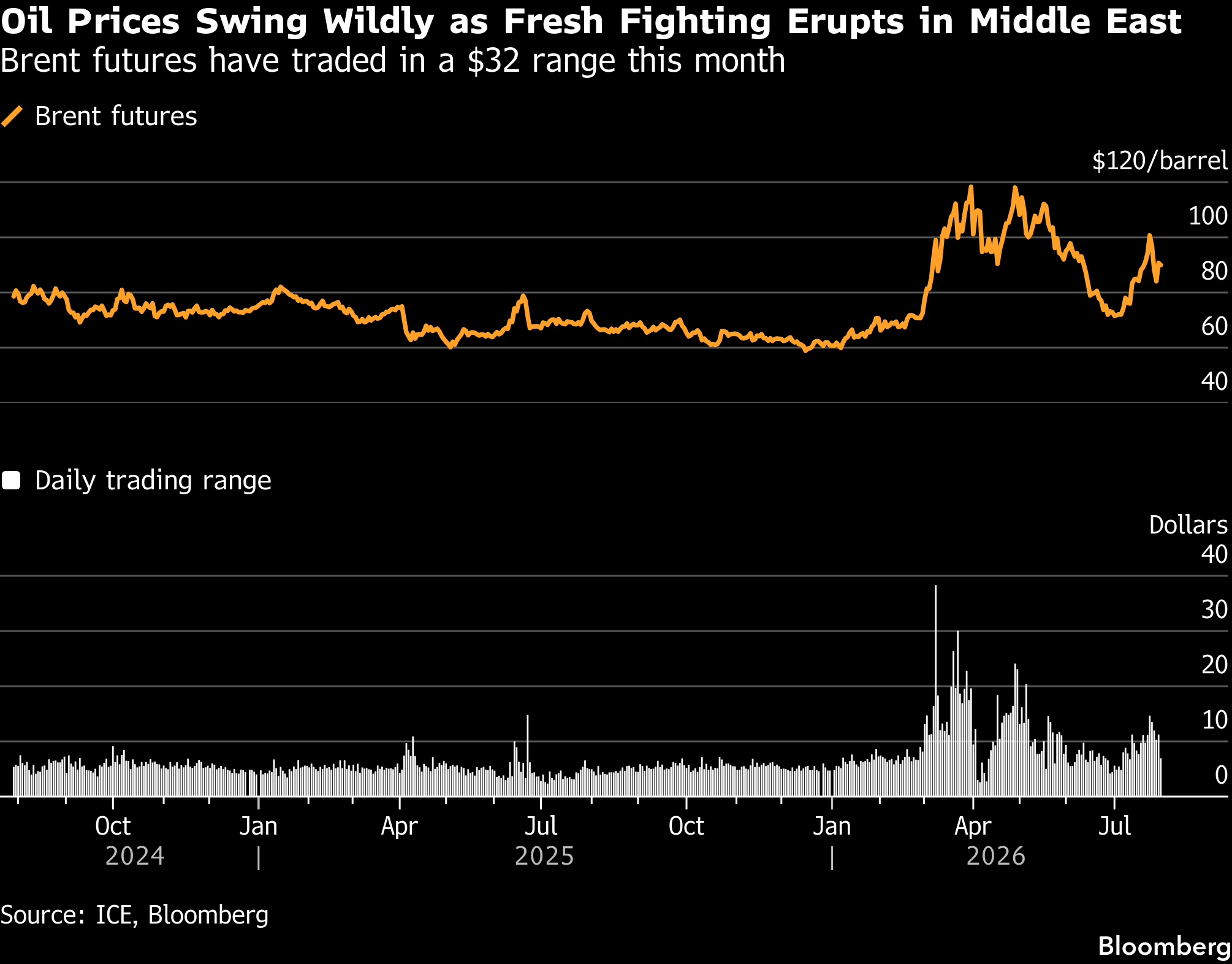
Energy markets have been rocked by a fresh round of volatility this month, as investors navigated a short-lived pause in hostilities between Tehran and Washington, followed by renewed fighting. Early Thursday, the US hit dozens of Iranian military targets in an operation aimed at degrading Tehran’s ability to threaten US troops, its Arab allies and commercial shipping in the region, US Central Command said in a post on X.
Hormuz lies at the heart of the dispute, with Tehran insisting on control and attacking tankers challenging its authority. To avoid the waterway, Saudi Arabia has rerouted flows through its East-West pipeline that links to the Red Sea, but that pathway is now being challenged by the Tehran-backed Houthis. Riyadh’s forces joined with the US to hit targets in Iraq that are linked to Tehran-backed militants.
The market is also monitoring two attacks on ships attempting to load at the Caspian Pipeline Consortium terminal on Russia’s Black Sea coast, the main export route for Kazakh barrels. Last week, similar attacks led to days without shipments and helped push oil prices above $100 a barrel.
“CTAs are sellers of WTI crude oil on the day, but the supply picture continues to tighten,” TD Cowen analysts wrote in a note. Attacks at the CPC terminal “will continue to see Russian crude exports reduced one to two million barrels a day compared to June averages, and could become a more prolonged outage as drone attacks persist,” they said.
Meanwhile, Russia extended a diesel export ban until Sept. 1, sending heating oil futures up as much as 3.7% on Thursday. The tighter product market could ultimately support crude prices if refiners elsewhere increase runs to offset the loss of Russian supply.
©2026 Bloomberg L.P.