

Brent Oil Tops $90 as Middle East Attacks Threaten Hormuz Flows


(Bloomberg) -- Brent crude jumped after the US and Iran escalated hostilities, including the targeting of vessels attempting to transit the Strait of Hormuz and an attack on a key oil facility in Kuwait over the weekend.
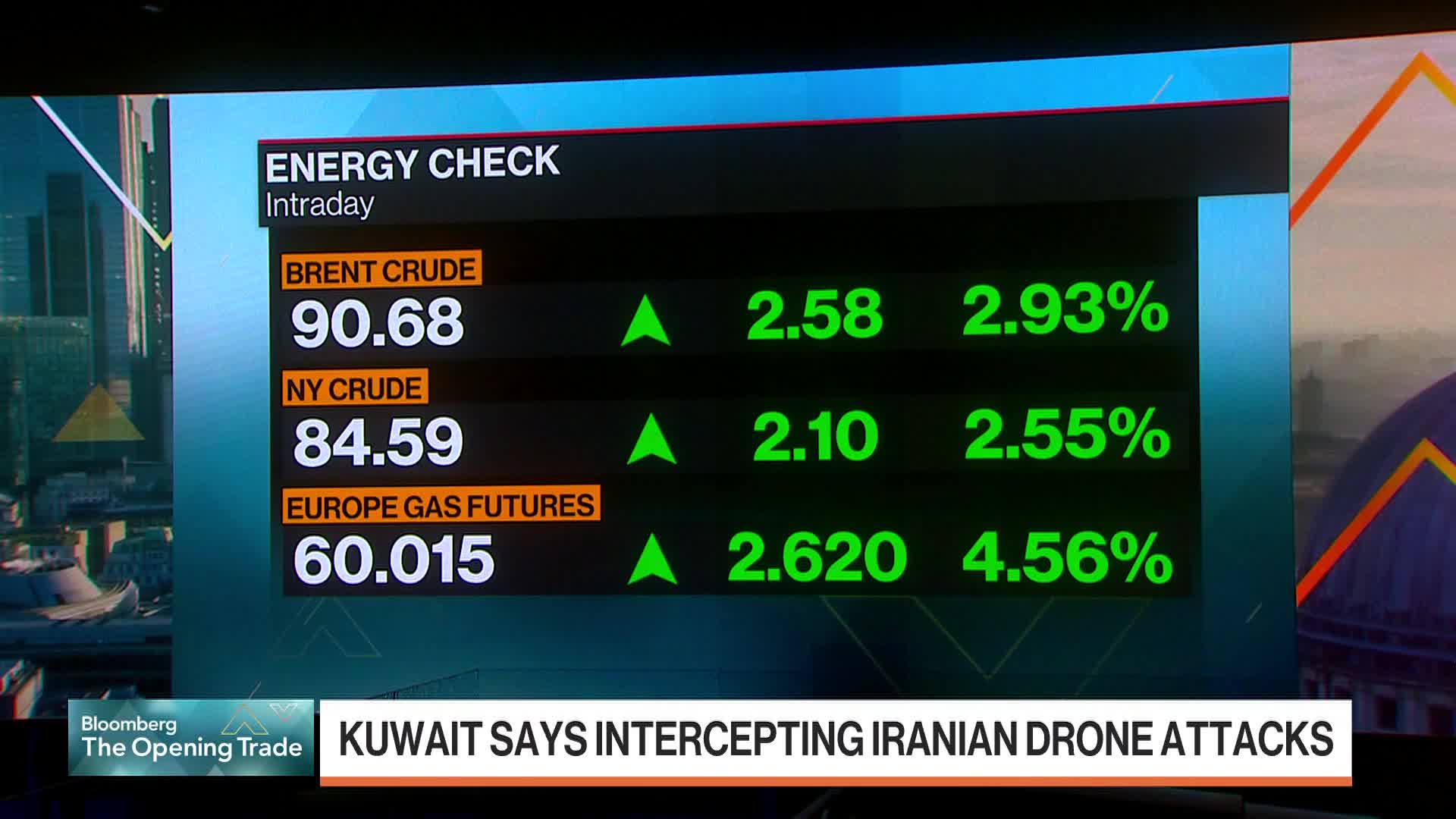
The global benchmark rose almost 4% before paring gains to trade around $90 a barrel, the highest since mid-June, while West Texas Intermediate was above $84. Iran said a ceasefire with the US had effectively collapsed, raising the prospect of deeper disruptions to energy flows through the strait.
The US conducted its ninth consecutive night of strikes against Iran in an effort to further degrade the country’s military capabilities used to attack commercial vessels and civilian mariners, according to US Central Command. Kuwait also reported intercepting Iranian drone attacks.
The Iranian Navy said Sunday that it had halted four unidentified vessels attempting to use an “unsafe route” through Hormuz after they disregarded warnings. Two “met with accidents and were stopped in their tracks,” while the others “abandoned the route and turned back,“ the navy said.
The UK Maritime Trade Operations said it had received information from military authorities that a vessel is on fire northwest of Kumzar, Oman. The cause of the blaze has not been verified, it added.
A week of tit-for-tat attacks by both sides has expanded beyond strictly military targets to include bridges, utilities and port facilities, signaling little prospect of a return to the fragile truce. Kuwait Petroleum Corp. said Iran struck an oil facility on Saturday, causing significant damage.
Intensifying strikes “all point to scope for the conflict to broaden in scope and length,” said Saul Kavonic, senior energy analyst at MST Marquee. “Targeting of oil infrastructure in the region, or any successful attempts by the Houthis to hinder the Red Sea route, would be needed to accelerate” price gains.
The Iran-backed Houthi militants in Yemen have disrupted commercial shipping through the Red Sea chokepoint in periods of elevated tension in the Middle East. Last week, their chief threatened to attack Saudi oil facilities after firing ballistic missiles and drones on the kingdom.
Escalating hostilities in the Middle East have raised concerns over a supply crunch. Excluding China, global stockpiles are at a record low, according to JPMorgan Chase & Co., leaving the world with “little room for error.”
Kuwait bore the brunt of Iran’s retaliation over the weekend, while Bahrain was also targeted. Israel said Sunday that it intercepted an Iranian drone near the Israel-Syria border. US forces struck Qeshm Island in the Gulf, as well as southern cities including Shadegan, Iranian media reported.
The US has resumed blockading Hormuz while Iran’s attacks on ships around the waterway have jeopardized the “shuttle run” trade through which Gulf producers ferried out cargoes. US Energy Secretary Chris Wright said the number of ships going through Hormuz is down, but larger tankers are now transiting. He made the remarks in an interview with ABC’s .
Iran was hit “very hard” again in response to recent US troop deaths, President Donald Trump told reporters on Sunday. Separately, Secretary of State Marco Rubio said Iran continues to send signals that it wants to negotiate.
©2026 Bloomberg L.P.