

UAE Defies Hormuz Risks to Keep Crude Flowing to Global Market


(Bloomberg) -- The United Arab Emirates has moved more oil through the Strait of Hormuz than any other producer over the past two months, providing a much-needed buffer for global markets reeling from a historic energy crisis.
Supertanker Romania Prosperity appeared in the Gulf of Oman on Tuesday after switching off its transponder in late July, laden with crude from the UAE’s Abu Dhabi National Oil Co., according to Kpler. It’s one of dozens of such exits from the Gulf as the state-run producer embarks on a novel marketing drive.
Individual ships spotted on ship-tracking databases give clues about the trade, but the real number is likely larger due to these dark crossings. Since the start of June, Adnoc has sold over 130 million barrels in an unprecedented seven tenders, according to traders familiar with the matter, asking not to be identified as they’re not authorized to speak publicly.
That’s equivalent to more than a month of crude demand from Japan, Asia’s third-largest consumer.
Workarounds like Adnoc’s have been vital to limiting losses from the conflict and have helped keep oil markets in check, countering expectations of far more acute shortages and price spikes. The global benchmark, Brent, was trading around $79 a barrel on Thursday.
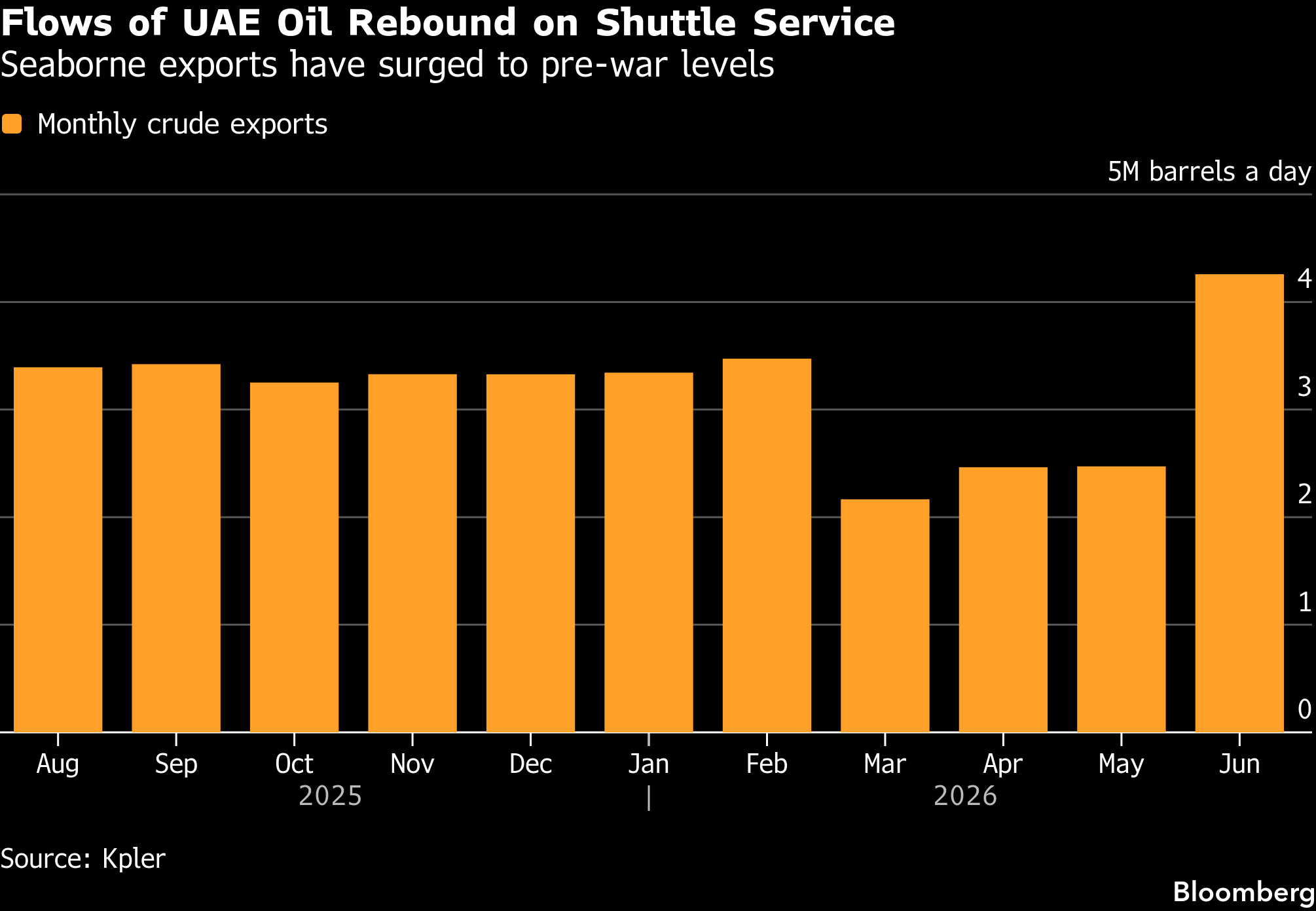
The UAE has been so successful in getting its crude out of the Gulf that Vortexa estimates it was the only Middle Eastern producer to reach pre-war levels of seaborne exports in June and July. Most of those barrels have been picked up by Asian refiners, including in Japan and China.
That milestone was achieved even after the US ramped up a bombing campaign against Iran last month, and the Islamic Republic attacked more ships around the strait. The practice of shuttling barrels out of the gulf — dark crossings that supply waiting vessels outside Hormuz — has picked up again after those strikes, people familiar with the matter said last week.
A comprehensive deal to reopen the strait — should one be reached — would likely boost the volume of oil leaving the Gulf, but the stop-start nature of negotiations over recent months means analysts and traders expect shuttling to continue in some form.
An Adnoc spokesperson said the company doesn’t comment on positions, movements or routing of its vessels as a matter of policy.
“Adnoc’s barrels have helped stabilize supply into Asia,” said June Goh, senior oil market analyst for Sparta Commodities SA. Refineries in the region can’t easily replace the medium-sour crude that’s typically produced in the Middle East, making any oil exiting the gulf so essential, she added.
It’s not just oil the UAE has managed to ferry out successfully, the producer has also been getting vital supplies of liquefied natural gas to global customers. An Adnoc tanker called the Mubaraz loaded with LNG recently appeared near India after turning off its transponder inside the gulf last month.
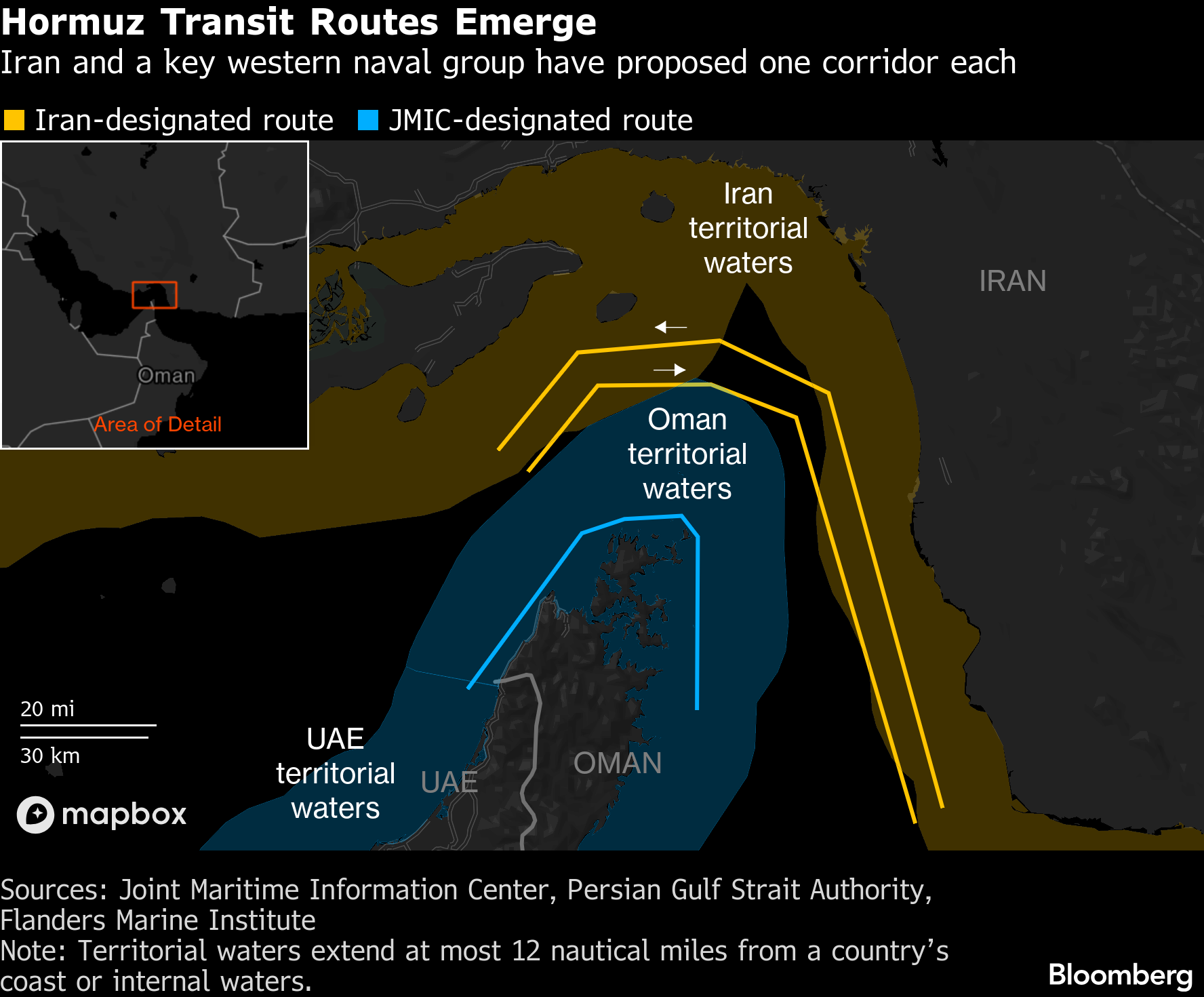
The UAE splurged on logistics to make its workaround possible. The nation snapped up tankers at exorbitant rates to embark on daring shuttle runs through Hormuz. Iraq and Kuwait have also been able to ferry out some supplies, but volumes have been smaller.
Once tankers carrying UAE crude exit Hormuz, the cargo is typically transferred to another vessel in the Gulf of Oman before being exported to buyers around the world. At times, this process has been delayed by escalating hostilities in the region.
The UAE has also been able to make use of a pipeline stretching across the country to get extra barrels out, bypassing Hormuz.
Adnoc has made the most of its dominant position. When traders submitted crude bids last month below the regional Dubai oil benchmark after wider prices fell, the company told some of them to raise their offers.
However, that has not advanced the UAE’s efforts to build a benchmark futures contract around its flagship crude, Murban.
Saudi Arabia has also kept large volumes of its crude flowing during the war by piping oil to its Red Sea port of Yanbu, allowing the kingdom to bypass Hormuz. Recent threats and attacks from Iran-backed Houthi militants have disrupted that trade, according to Xavier Tang, senior market analyst for Vortexa, potentially prompting refiners to lean even more on the UAE for barrels.
©2026 Bloomberg L.P.








