

One of Seven Stranded Malaysian Vessels Sails Through Hormuz


(Bloomberg) -- One of seven Malaysian-owned commercial vessels stranded in the Strait of Hormuz has been “granted safe passage” and is heading to its destination, Malaysia’s Ministry of Foreign Affairs said.
This follows high-level diplomatic engagement, including a telephone conversation on March 26 between Prime Minister Anwar Ibrahim and Iranian President Masoud Pezeshkian. On Tuesday, Anwar said he told the Iranian leader during the call that the stranded Malaysian vessels “will cause difficulty,” and was assured that instructions would be issued to facilitate their safe passage.
Malaysia has maintained cordial diplomatic ties with Iran. Anwar has acknowledged Tehran’s right to defend its sovereignty while calling for a rapid resolution to the conflict.
Iran has cleared seven Malaysian tankers to traverse the Strait of Hormuz, which has become a flashpoint of the war in the Middle East. The vessels — which won’t be subject to a toll that Iran charges to ships passing through the vital waterway — include those owned by Malaysian energy giant Petroliam Nasional Bhd., shipping firm MISC Bhd. and Sapura Energy Bhd., the Star newspaper reported in March.
A spokesman for the Ministry of Foreign Affairs declined to comment on details of the vessel that sailed through the Strait of Hormuz and the others.
“Malaysia remains firmly committed to the principle of freedom of navigation, safety and security of maritime passage, in accordance with international law,” the ministry said in a statement Tuesday. Malaysia’s Minister of Foreign Affairs Mohamad Hasan spoke with his Iranian counterpart, Abbas Araghchi, on March 24.
Despite global uncertainties and the prospect of “price disruptions,” Malaysia doesn’t face an oil supply crisis, with its own production and long-standing import agreement with Australia, Anwar said on Tuesday.
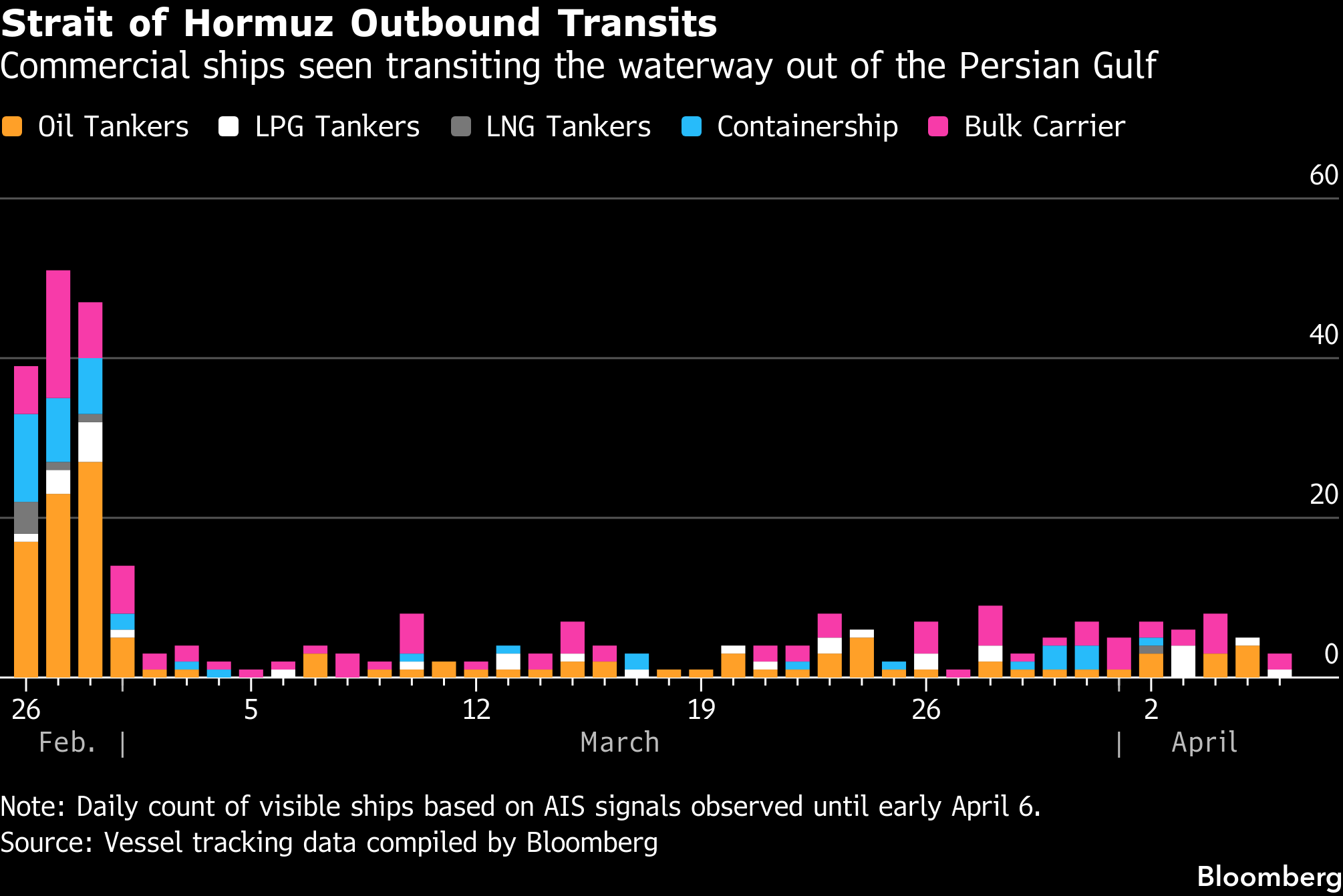
The effective closure of the strait, which typically carries about a fifth of global oil and liquefied natural gas flows, has roiled markets and triggered a broad energy crisis. Two loaded LNG carriers that had seemingly aborted an attempt to exit the Persian Gulf via the Strait of Hormuz are now headed toward Qatar.
President Donald Trump said any agreement to end the Middle East conflict must guarantee freedom of navigation through the strait, making the reopening of the key oil chokepoint a “very big priority” in ongoing talks with Iran. He also warned that if Tehran fails to meet his Tuesday 8 p.m. Eastern Time deadline, the US could launch sweeping strikes on Iranian infrastructure, including bridges and power plants.
(Updates with Anwar’s comment in second paragraph.)
©2026 Bloomberg L.P.








