

Oil Climbs as Traders Weigh Trump’s Call War Could End in Weeks


(Bloomberg) -- Oil edged higher as traders weighed President Donald Trump’s call that the Iran war could end within weeks against more US troops arriving in the region and the continued near-closure of the Strait of Hormuz.
Brent crude rose above $105 a barrel after declining 3.2% on Tuesday, while West Texas Intermediate was near $103. Trump told reporters that the US could leave Iran within two to three weeks, and indicated an agreement with Tehran may be reached but wasn’t necessary for the war to end.
Trump has regularly vacillated between saying an Iran deal is imminent and warning he’s prepared to ramp up military operations. The president will give an address to the nation at 9 p.m. Eastern time on Wednesday to provide an update on Iran, White House Press Secretary Karoline Leavitt said.
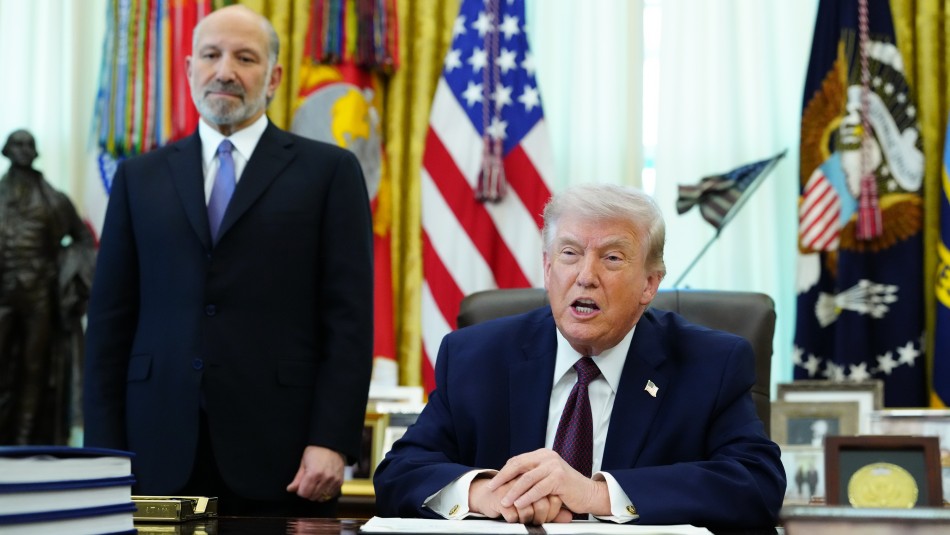
Even if the war ended within Trump’s timeframe, it would take time for normal flows to resume through the crucial Strait of Hormuz and some energy facilities have been damaged during the conflict. A third US aircraft carrier strike group is also heading to the Middle East and the market remains on edge about a possible deadly ground invasion of Iran by American troops.
“The market is complacent thinking that things normalize quite quickly, and I think that complacency is a risk factor for markets,” Dominic Schnider, head of commodities at UBS Group AG’s wealth management unit, said in a Bloomberg TV interview. “It’s unseen that we have such a supply shock, and yet prices are not even higher than 2022,” he said, referring to Russia’s invasion of Ukraine.
The effective closure of the waterway has choked off supplies of crude and gas to global markets, driving up energy prices and raising fears over an inflation crisis. The retail price of US gasoline topped $4 a gallon for the first time since August 2022, which will likely heap more pressure on Trump.
US officials haven’t explicitly specified who they’re talking to in Iran, and the Islamic Republic’s Foreign Minister Abbas Araghchi told Al Jazeera he had received messages from the US Middle East envoy but no formal negotiations were taking place. Tehran has also listed certain requirements to be met, including maintaining sovereignty over the Strait of Hormuz.
“I would say that within two weeks, maybe two weeks, maybe three,” Trump told reporters at the White House on Tuesday, adding that he would leave it to other nations to resolve issues with the strait. “We’ll leave because there’s no reason for us to do this.”
The president said that military goals had largely been accomplished and the US would leave when Tehran was not able to obtain nuclear weapons, claiming the regime in power now was better than the previous leadership. In a social-media post on Tuesday, Trump also called on allies to wrest control of Hormuz.
The Wall Street Journal reported that the United Arab Emirates has urged the US and military powers in Europe and Asia to form a coalition to open the strait by force. The newspaper cited an official from the UAE.
Unless Hormuz fully reopens, “dips are likely to be bought not sold,” said Priyanka Sachdeva, a senior market analyst at brokerage Phillip Nova Pte. “Even if it starts to deescalate, shipping costs, insurance and tanker movements will take time to return to normal,” she added.
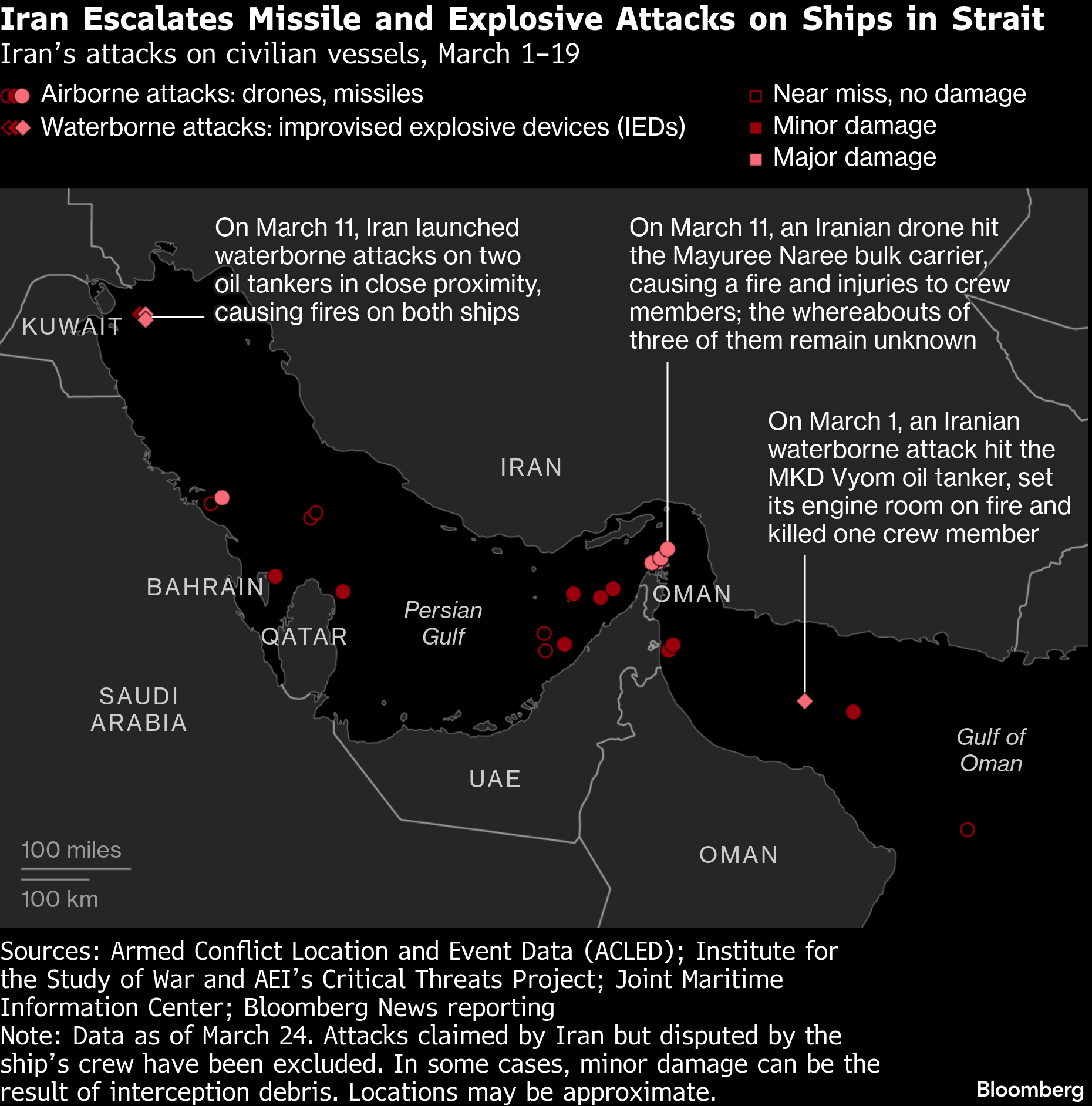
China and Pakistan issued a joint call on Tuesday for an immediate ceasefire and for shipping to be safeguarded through Hormuz. The appeals were part of a five-point joint proposal to restore peace and stability in the Gulf and Middle East following talks between foreign ministers from both sides.
The number of vessels transiting Hormuz with their signals on is ticking higher, with weekly two-way transits climbing to an average of seven vessels through Monday, up from five the previous week, according to Bloomberg-compiled tracking data. Tehran has approved many of the transits.
Trading volumes were lower than usual during the Asian session, with traders pointing to uncertainty around shipments through Hormuz should the US end its military operations. Thinner liquidity could exaggerate price swings.
“I think the exaggeration and panic is starting to come out of the back of the futures price curves in crude oil,” said Dennis Kissler, senior vice president for trading at BOK Financial Securities Inc. “The market is feeling at least a short term de-escalation and possibly more talks.”
©2026 Bloomberg L.P.