

Price Shock Is Boon for Oil Stocks, Curse for Renewables


(Bloomberg) -- The war in the Middle East is causing unprecedented turmoil in oil markets, supercharging shares in European energy companies that are expected to benefit from higher prices and turning other stocks into laggards.
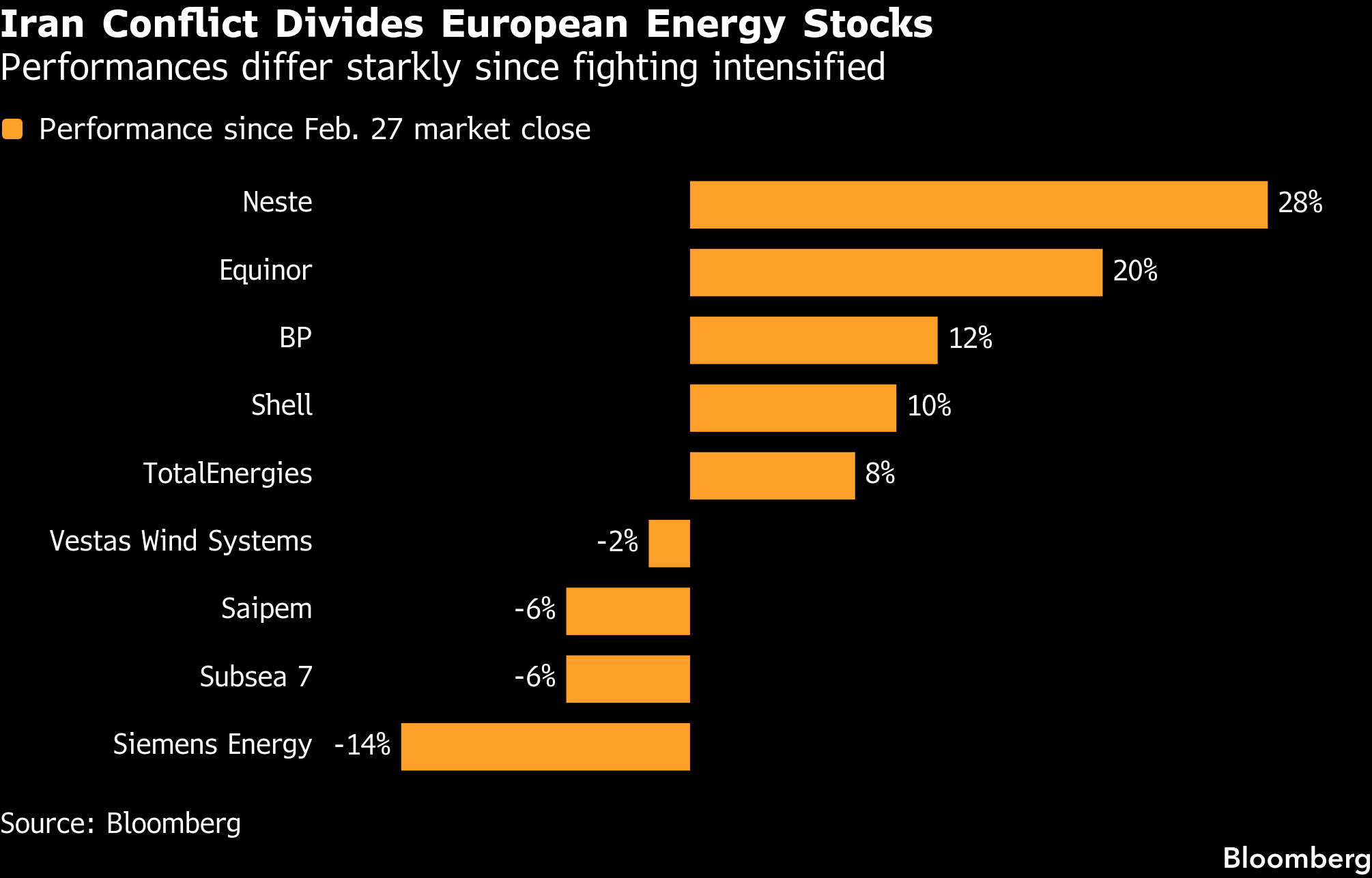
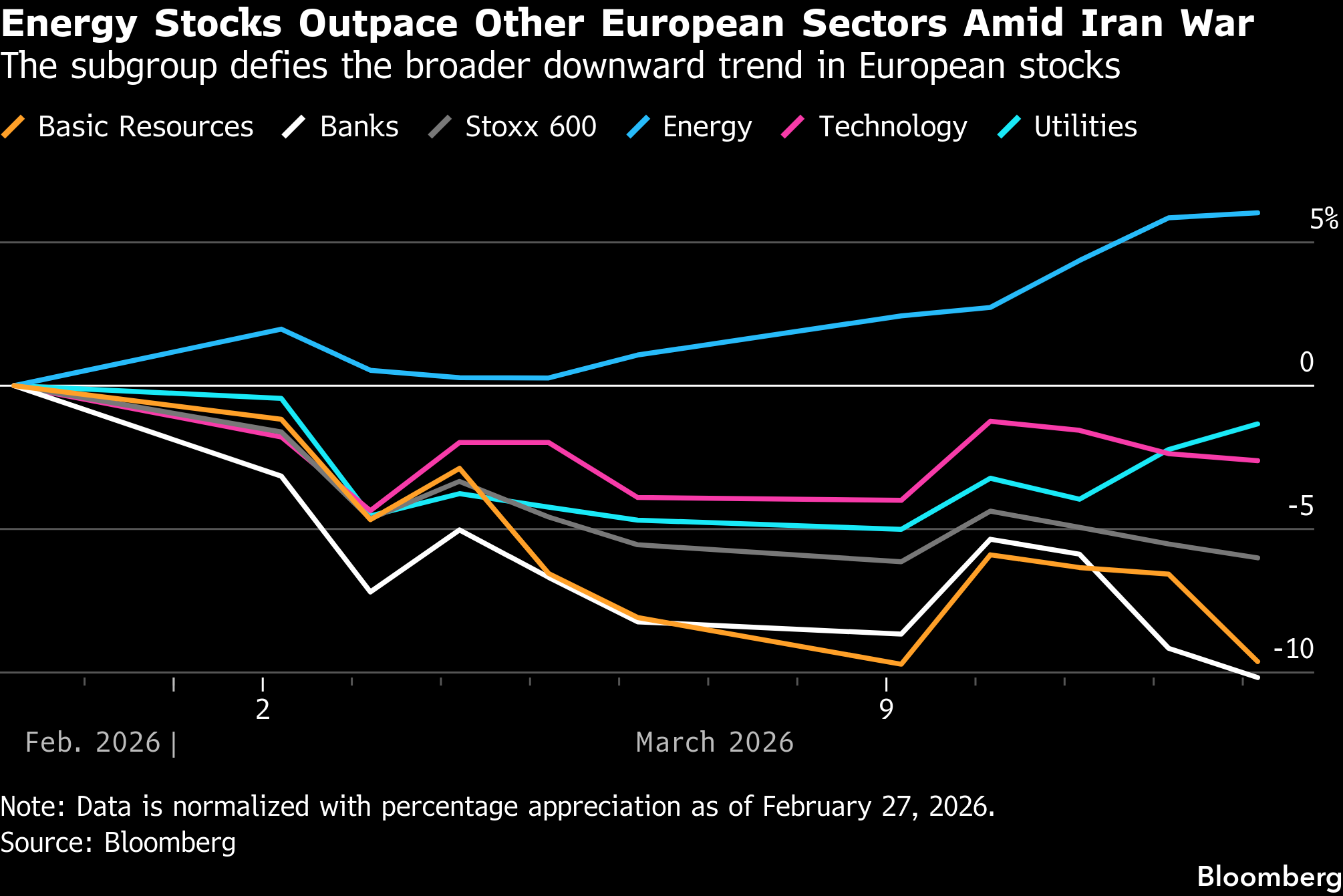
Much depends on how the Iran conflict develops, but investors have so far flocked to companies that are in a position to capitalize on higher refining margins and product prices in Europe. The Stoxx 600 energy sector index has climbed 6% since the war broke out.
“While almost all companies in the sector will benefit, relative performance within the energy sector will depend to an extent on the outcome of the conflict and the impact on the various commodities,” Berenberg analysts including Henry Tarr wrote in a note.
Yet within the broader universe of European energy companies, some stocks are selling off. Shares in infrastructure firms with significant operations in the region have declined, along with some renewables and clean-energy stocks that stand to lose from higher inflation and borrowing costs.
With few signs of de-escalation and Brent crude prices at $ a barrel, here’s a look at how energy-related stocks are faring:
Oil and Gas
Repsol SA is a top pick at Berenberg, with analysts saying the Spanish oil and gas firm is poised to benefit from prices that could stay high beyond the end of the conflict because refineries have been damaged. The company has no production operations in the Middle East.
Shares in others firms with little or no regional exposure, including Equinor ASA and Galp Energia SGPS SA, had raked in double-digit percentage gains through the end of last week. Simon Wong, a portfolio manager at Gabelli Funds, said that Equinor and Repsol are relatively unhedged, allowing them to capture more of the upside from higher energy prices.
Other companies have significant operations in the region, which helps explain the difference in share price performance. TotalEnergies SE, for example, has the highest Gulf exposure among Western energy majors, according to Bloomberg Intelligence, and is trading only slightly above the broader index. The French company has been forced to shut down roughly 15% of its total output, but said the higher oil price “more than offsets” the loss of Middle East production.
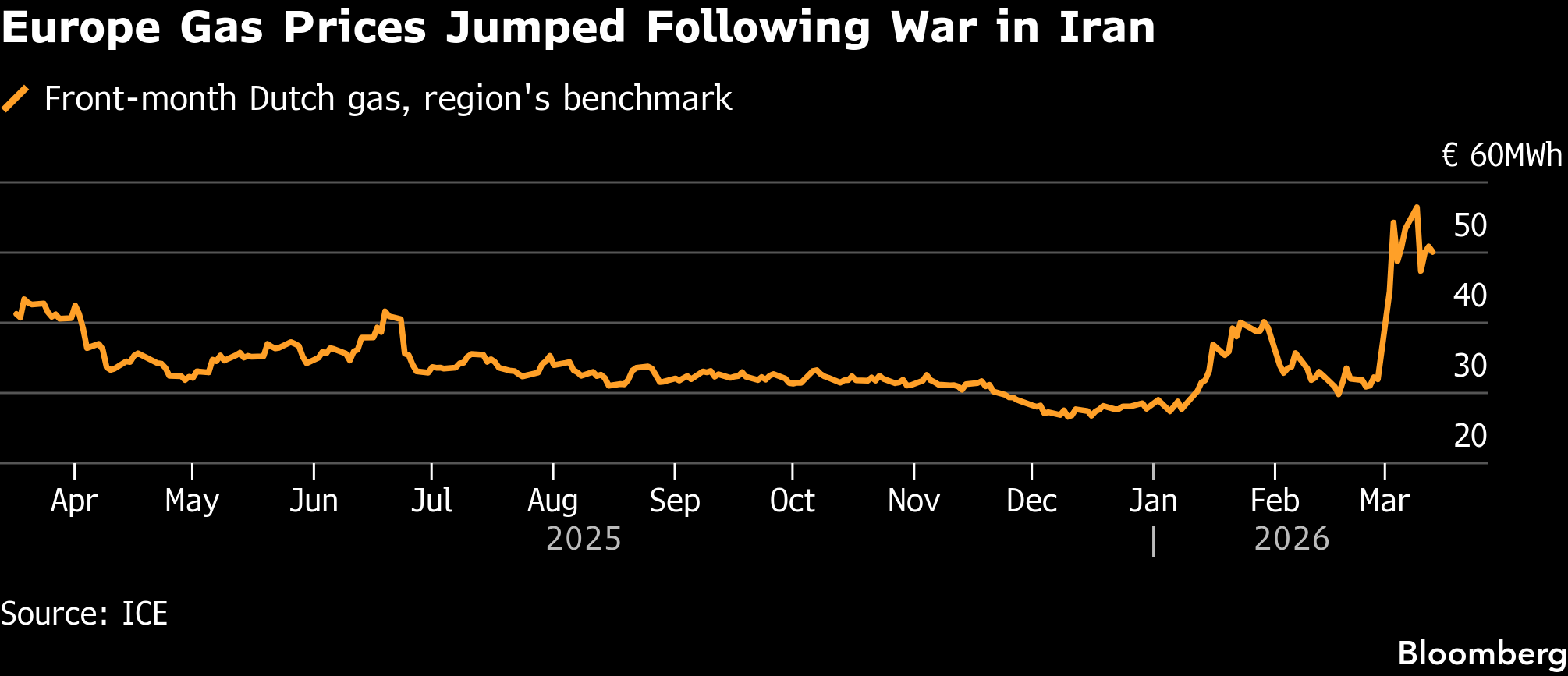
European gas storage is roughly 30% full, increasing the need for LNG imports ahead of next winter.
Alternative Fuels
The crisis means higher prices for alternatives to fossil fuel-based products. Shares in Neste Oyj, a Finnish producer of renewable diesel and jet fuel, have gained 28% since the war’s outbreak.
The uplift could continue even after fighting ends, if refineries in the region are offline. “Once the issue is resolved, you can’t just turn them back on,” said Florence Schmit, an energy strategist at Rabobank. “That obviously adds another delay to volumes that can go into the market.”
Renewables
The prospects of supply chain disruption, along with higher inflation and interest rates, are feeding anxiety about renewables. While Jefferies is telling global clients to not panic, the sector has so far performed much worse than fossil fuel peers in Europe.
Vestas Wind Systems A/S and Nordex SE are among the laggards. The worry is that higher inflation and borrowing costs will weigh on capital-intensive renewable developers and equipment makers. A similar situation in 2022 sparked a selloff that lasted into 2025.
Siemens Energy AG trades at the low-end of the energy subgroup. The company provides power to artificial intelligence hyperscalers and its large-scale projects “face execution risk if geopolitical tensions delay awards or financing across the Middle East,” said Omid Vaziri of Bloomberg Intelligence.
Looking long-term, Jens Zimmermann, a research analyst at Gabelli Funds, said he doesn’t expect investors to lose interest in renewables because the Middle East crisis highlights Europe’s dependence on imported fossil fuels.
Oil Services
Oil-field services stocks have fallen behind as risks to operations in the Middle East overshadow the long-term benefits from higher prices.
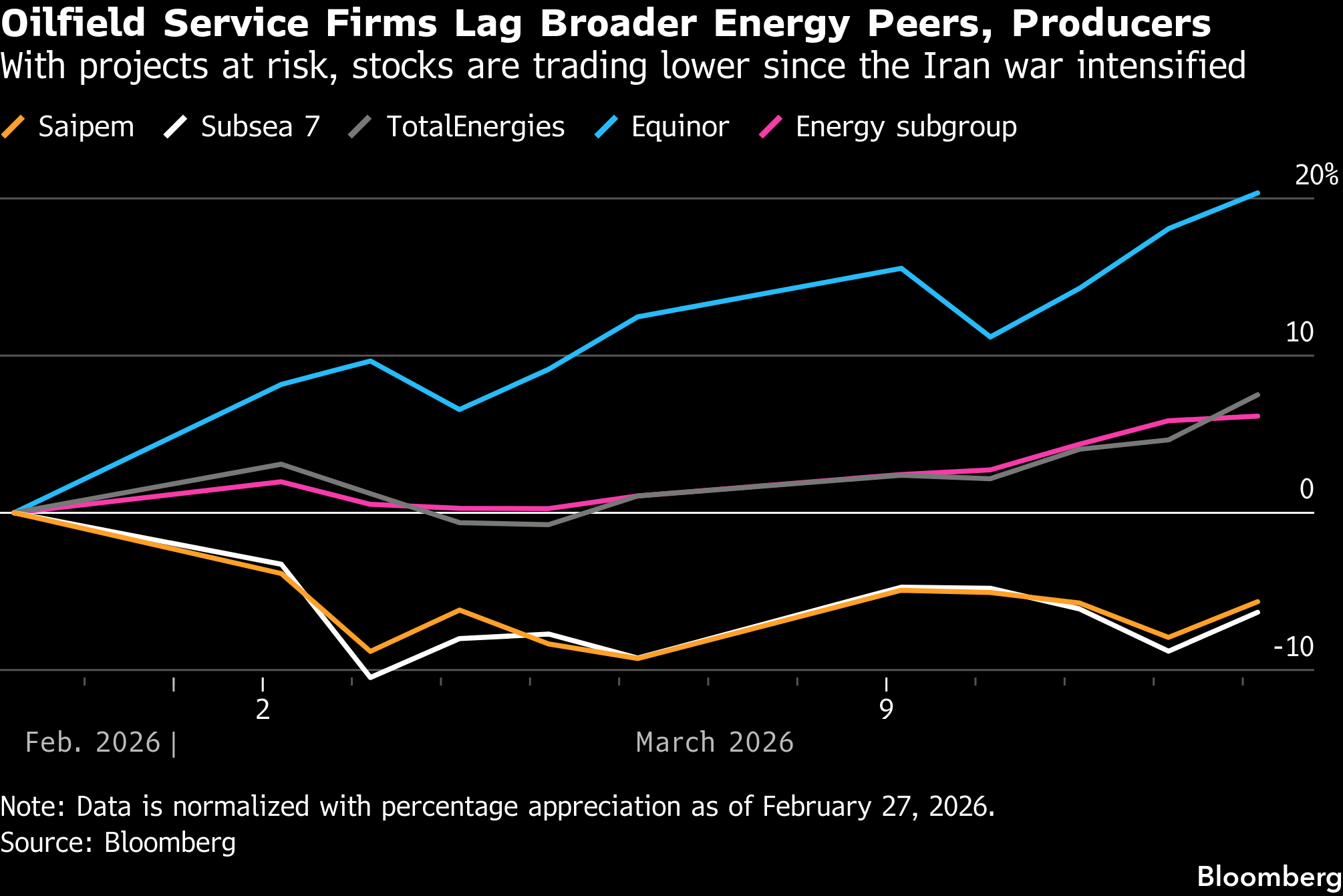
Saipem SpA and Subsea 7 SA — which are on a path to merge — both have exposure to the Middle East through offshore engineering and subsea contracts. Around a quarter of Saipem’s backlog has exposure to the region and Subsea 7 has about 10% of its backlog in the area, including a contract with Saudi Aramco, according to Arctic Securities. Subsea 7 and Saipem shares are both down 6%.
“Traders fear that contracts with players in the Middle East might be canceled or force majeure might be declared on them,” said Lukas Daul, an analyst at Arctic Securities. “Higher energy prices benefit oil service companies as well, but oil majors won’t invest for now of course with all the uncertainty.”
(Updates with additional context in paragraph 8)
©2026 Bloomberg L.P.








