

Houthis Join War as Iran Retaliates Over Atomic Site Attacks


(Bloomberg) -- The Houthis launched ballistic missiles at Israel on Saturday morning, marking their entry into the month-long Iran war that has already caused chaos in energy markets and killed thousands of people.
The Yemen-based Houthis, who are supported by Iran, said they would continue operations until US-Israeli attacks on the Islamic Republic and its proxy militant groups, including Hezbollah in Lebanon, cease.
Israel’s military said it identified the launch of a missile from Yemen toward its territory, but did not immediately say if the projectile was intercepted.
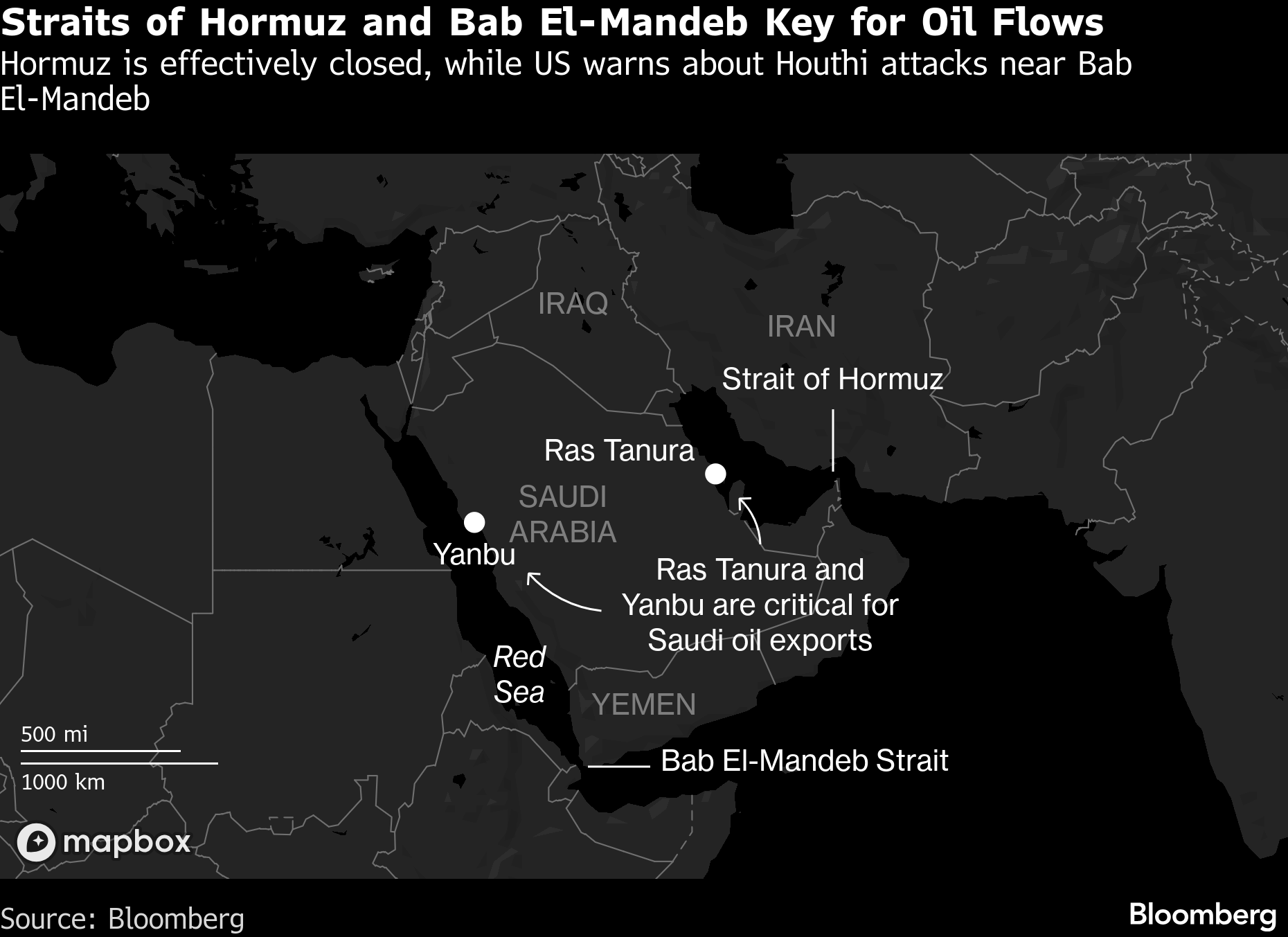
The move by the Houthis — announced via a statement on Telegram — opens a new front in the war and introduces fresh risks to global oil flows. While the group didn’t say it would target tankers or other vessels transiting the southern Red Sea and the Bab El-Mandeb Strait, it has the capability to do so. It effectively shut the waterway to most Western shippers after the Israel-Hamas war in Gaza began in 2023, forcing vessels to reroute and disrupting a key energy corridor.
Moreover, the Saudi Arabian port of Yanbu, which the kingdom is using to bypass the closed Strait of Hormuz for its oil exports, is well within the range of Houthi missiles.
Israel’s government wasn’t surprised by the Houthis joining Iran in attacking the Jewish state, an Israeli official familiar with the matter said. Israeli authorities believe the group could mount strikes on ships too and once again close the Bab El-Mandeb strait, the official said, asking not to be named discussing sensitive matters.
Iran, meanwhile, launched what it said were retaliatory strikes on Gulf Arab states and Israel after US-Israeli attacks on its atomic facilities and steel plants on Friday.
The United Arab Emirates on Saturday reported fires at its Kezad industrial site in the emirate of Abu Dhabi. Those followed ballistic missile interceptions that wounded at least six people.
Emirates Global Aluminum, the Middle East’s largest producer, said its Al Taweelah site was damaged during Iranian drone and missile attacks.
Oman said its Salalah port was targeted by multiple drones, halting operations and injuring one person.
An Iranian strike on Prince Sultan Air Base in Saudi Arabia on Friday left at least 15 US troops wounded, including five seriously, and damaged several refueling aircraft, the Associated Press reported.
Iran fired six ballistic missiles and almost 30 drones at the base, the AP reported, citing unnamed officials. The US military hasn’t commented yet publicly. The AP also said more than two dozen US troops have been wounded in Iranian attacks on the same base — about 60 miles (97 kilometers) south east of Riyadh — in the past week.
Kuwait said its airport came under several drone attacks on Saturday, with a radar system sustaining major damage.
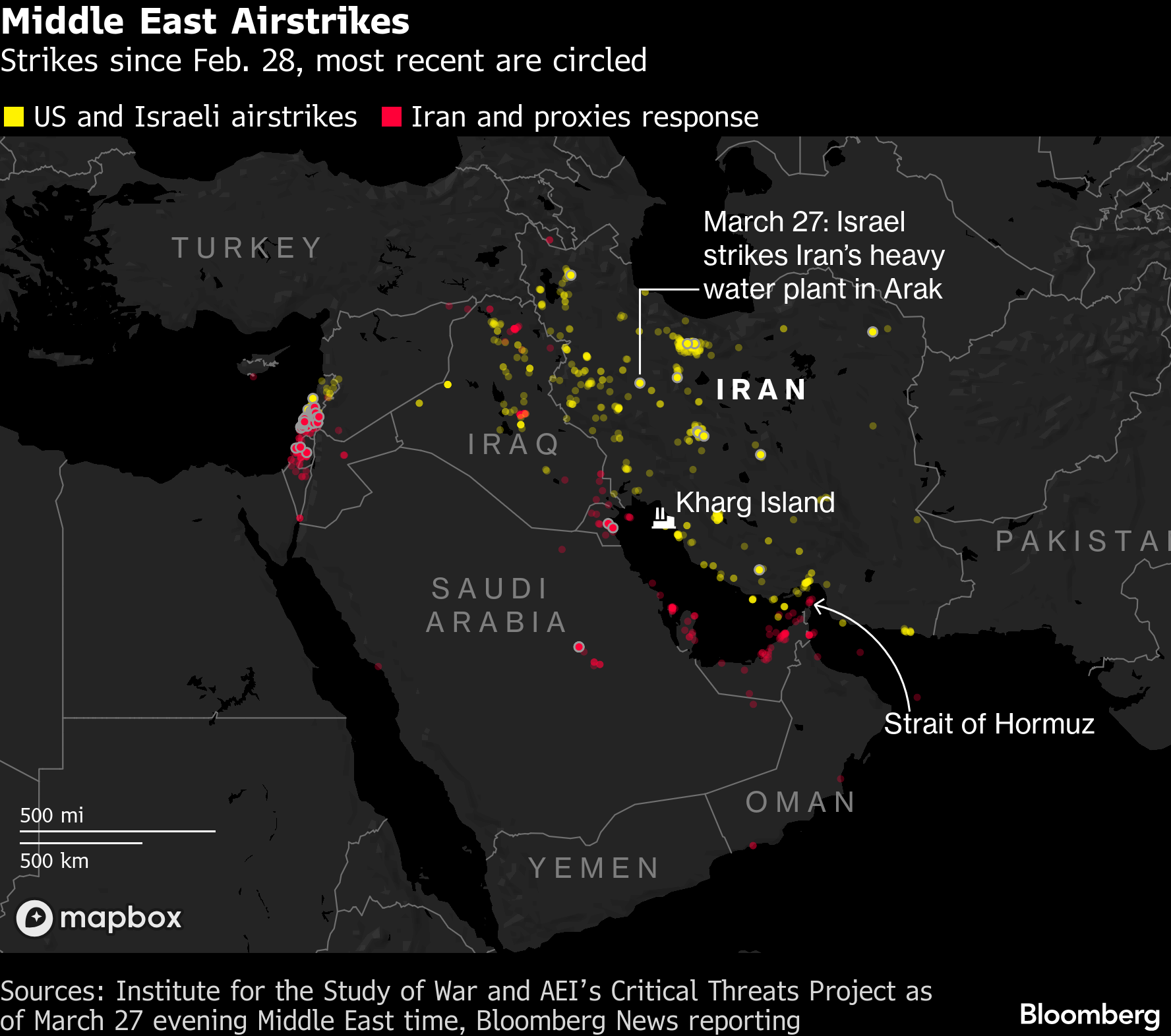
One person was killed in an Iranian strike on Tel Aviv, according to Israel’s emergency services. The Israeli military also said nine soldiers were injured, at least one of them severely, in southern Lebanon on Friday.
The escalation is adding to fears the conflict will drag on. There’s still little sign that Iran and the US will meet for peace talks soon, even though President Donald Trump has pushed for negotiations this week. He delayed his deadline to April 6 for Tehran to agree to reopen the vital Strait of Hormuz or have its power plants demolished.
Iran rejected a 15-point proposal from Trump, which essentially offered Tehran sanctions relief in return for it dismantling nuclear facilities and reducing its missile arsenal, as well reopening Hormuz. The waterway — through which a fifth of the world’s oil and liquefied natural gas supplies normally flow — has been all but closed since the US and Israel started the war on Feb. 28 with strikes on Iran.
Iran, for its part, is insisting on war reparations, recognition of some form of control over Hormuz and pledges that the US and Israel won’t attack it in future.
Steve Witkoff, a Trump special envoy who was leading the US’s indirect negotiations with Iran before the conflict started, said there could be a meeting “this week.” If so, Pakistan is a likely venue, with the nation establishing itself as a key mediator between the two sides.
It was unclear if Witkoff meant US-Iran talks or discussions between mediators.
The foreign ministers of Pakistan, Saudi Arabia, Turkey and Egypt are set to visit Islamabad on March 29-30 to discuss efforts to deescalate the conflict. Pakistan’s Prime Minister Shehbaz Sharif spoke to Iranian President Masoud Pezeshkian for more than an hour on Saturday as part of those mediation efforts.
Oil Rises
Oil continued to rise in the past few days, with traders’ optimism about a ceasefire in the near-term fading. Brent crude closed on Friday above $112 a barrel, extending the international benchmark’s advance since the start of the conflict to more than 55%.
The conflict has caused fuel shortages and led to fears of lower growth and faster inflation, or stagflation, across the global economy.
US stocks fell to their lowest level in more than seven months on Friday. US Treasury 10-year yields climbed toward their highest level since July.
The war has left over 4,500 people dead, according to governments and non-governmental agencies. Around three-quarters of fatalities have been in Iran, while almost 1,100 people have died in Lebanon, where more than a million people have been displaced. Dozens of people have been killed in Israel and Arab Gulf states.
Friday’s airstrikes by the US-Israeli alliance targeted a heavy water research reactor that’s part of Iran’s Arak nuclear complex, as well as a yellowcake production plant in Yazd province. Two of Iran’s biggest steelmakers were also hit.
Fars reported explosions across several districts of Tehran early Saturday, including strikes near Mehrabad Airport west of the capital. It’s the main hub for domestic flights.
For all that Trump says Iran should negotiate peace, he is also saying the US can continue with strikes on the Islamic Republic. On Friday, he said more than 3,500 targets remained in Iran and “that’ll be done pretty quickly.”
“They are talking now, they want to make a deal,” Trump told reporters in Miami. “Iran is being decimated.”
US Secretary of State Marco Rubio told his Group of Seven counterparts on Friday that the war would take more weeks, but not months, according to a person familiar with the matter.
Trump’s extended deadline to April 6 allows more time for the US to amass troops in the region, with speculation growing of a land deployment.
Yet his administration is signaling to allies that it has no immediate plans for a ground invasion of Iran, according to people familiar with the matter, who asked not to be identified discussing private deliberations.
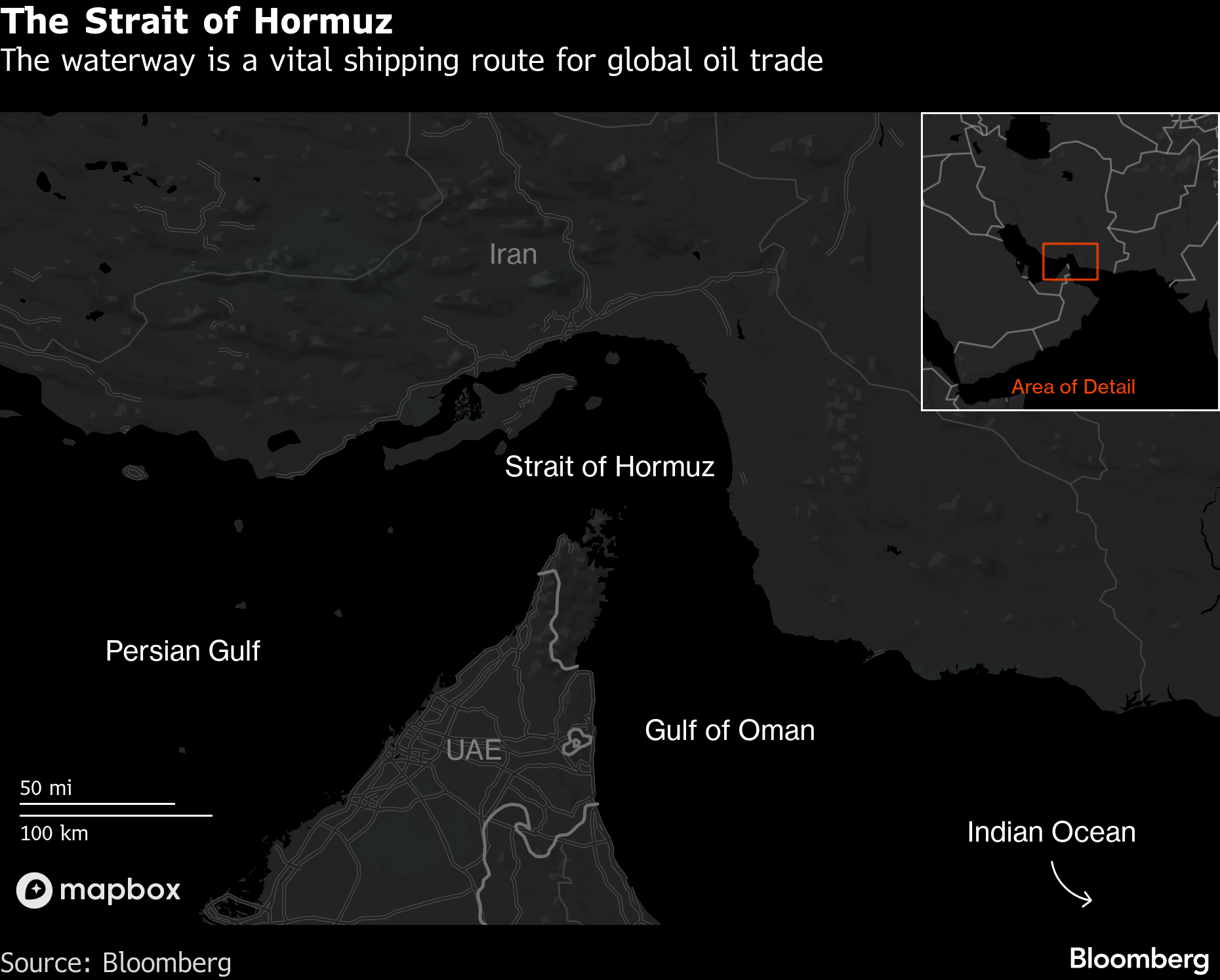
Military analysts say that Trump, if he does use ground troops, could opt for a takeover of the small Kharg Island in the Persian Gulf. That’s where Iran exports nearly all its oil from.
The US could try to take control of the Iranian side of the Strait of Hormuz in a bid to reopen the waterway to oil and gas tankers and container ships. It could also send special forces to retrieve Iran’s roughly 440 kilograms (970 pounds) of highly-enriched uranium. All options would be exceptionally risky for US troops, military analysts have said.
(Updates with damage on Emirates Global Aluminium site in Abu Dhabi in ninth paragraph.)
©2026 Bloomberg L.P.