

Hormuz Tracker: Saudi Crude Heads to Pakistan in Rare Transit


(Bloomberg) -- A small cargo of Saudi crude is heading to Pakistan after crossing the Strait of Hormuz along a route hugging the Iranian coastline. A total of seven vessels were visible leaving the Persian Gulf on Saturday.
In addition to the oil tanker, two liquefied petroleum gas tankers and four bulk carriers headed out of the Gulf on Saturday, according to tracking data compiled by Bloomberg.
All seven ships appear to have followed a northerly route that passes through a narrow gap between the two Iranian islands of Larak and Qeshm as Tehran tightens its grip on the waterway. Iran’s parliament is working on a draft bill that would impose a fee on vessels seeking safe passage.
Shipping through Hormuz remains at a small fraction of prewar levels.
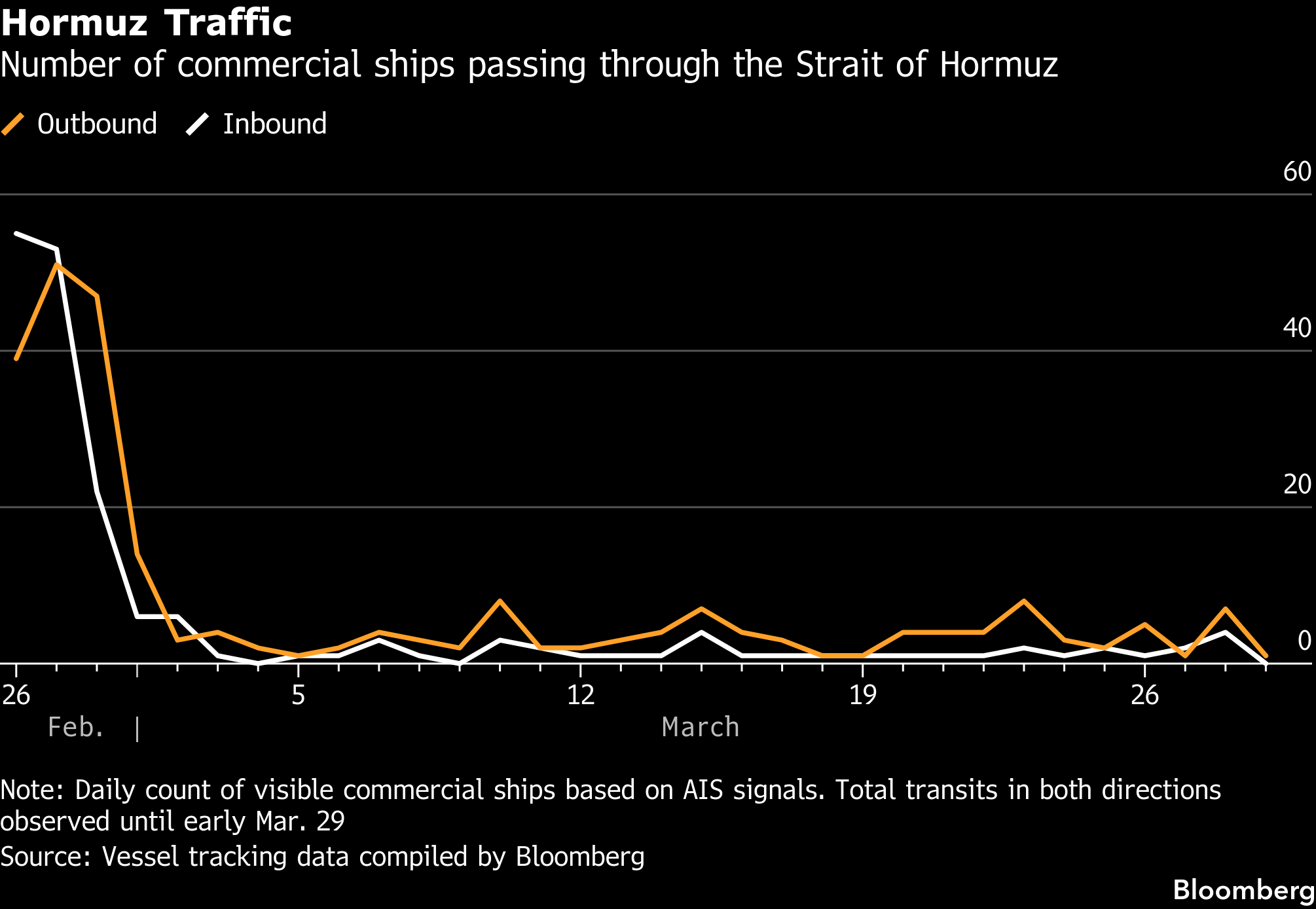
Vessel-tracking is hampered by electronic interference of ships’ signals, and some disable their AIS transponders in high-risk waters, further reducing the timeliness and reliability of tracking data.
Iran-linked crude tankers continue to cross Hormuz with their transponders turned off, with the flow averaging about 1.6 million barrels a day in the first 23 days of March, according to Tankertrackers.com.
It was reported this weekend that Tehran has given approval for seven Malaysian tankers to leave the Persian Gulf. The stranded vessels will be able to sail soon, the Star said, citing Malaysian Foreign Minister Mohamad Hasan. Iran has also agreed to allow 20 more Pakistani-flagged ships to pass through Hormuz, according to Pakistan Foreign Minister Ishaq Dar.
Outbound Transits
The most notable outbound transit on Saturday was the oil tanker P. Aliki, hauling about 650,000 barrels of Saudi crude to Pakistan, according to vessel-tracking data compiled by Bloomberg.
In addition, two LPG carriers that crossed the strait Saturday — initially reported in yesterday’s tracker — are heading for India.
Four bulk carriers were seen making the outbound transit on Saturday, with two Iranian-flagged vessels adding to an initial two reported yesterday.
Separately, on Sunday morning, the Iran-linked crude tanker Tawanna also left the Persian Gulf. The ship, which loaded crude from Kharg Island earlier this month according to Vortexa, is sanctioned by the US, the UK and the European Union for previous involvement in the Russian oil trade.
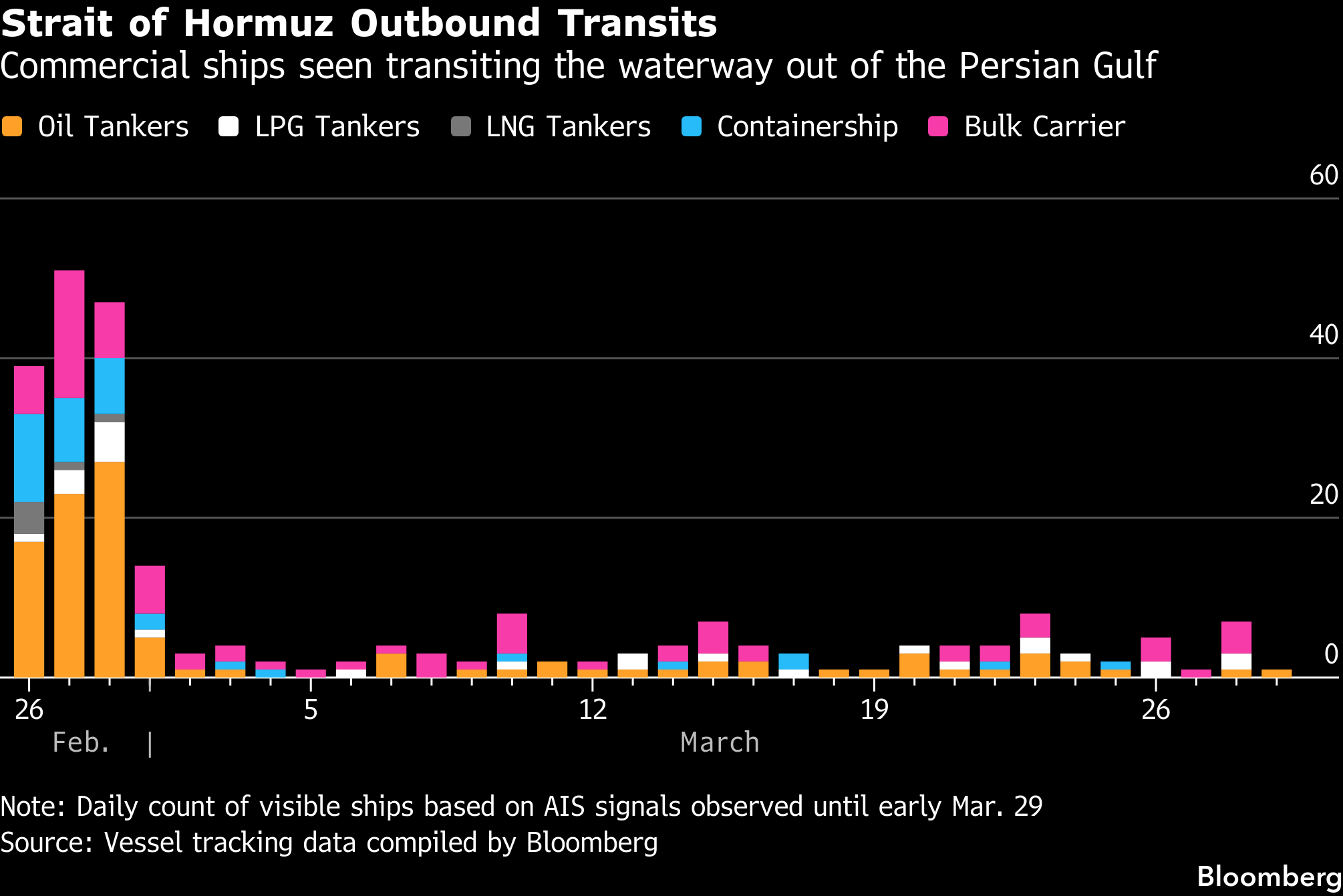
With vessels going dark in high-risk waters, transit counts may initially appear lower and may be revised upward as delayed data becomes available.
Inbound Transits
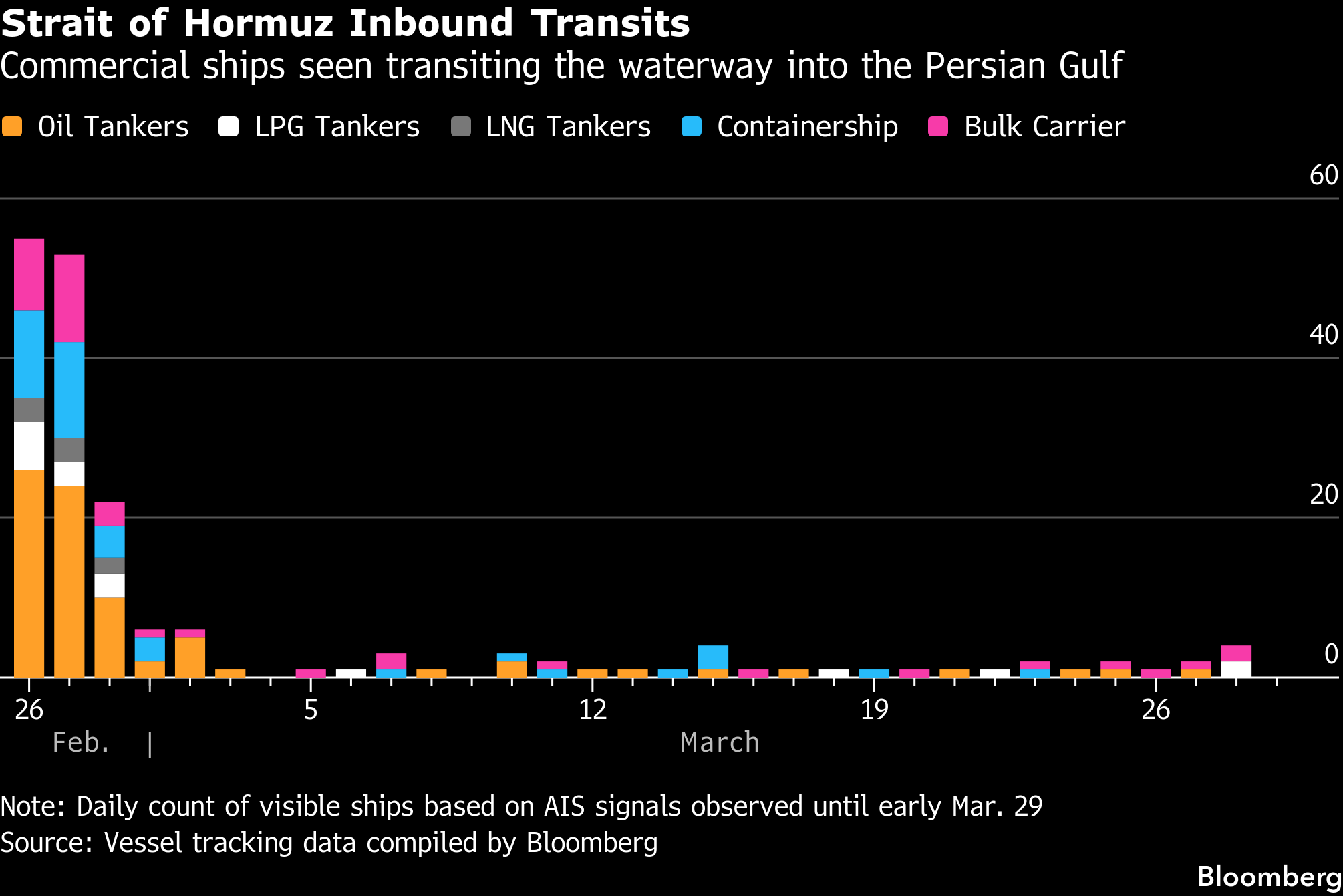
Two small LPG carriers and one bulk carrier were observed entering the Persian Gulf on Saturday. One of the LPG carriers and the bulker are heading along the Iranian coast. The other tanker is taking a more southerly route.
One bulk carrier has been observed making the inbound transit on Sunday morning. It’s carrying food supplies to the Iranian port of Bandar Imam Khomeini, according to its AIS signal.
NOTES:
Because vessels can move without transmitting their location until they’re well away from Hormuz, automated positioning signals were compiled over a large area covering the Gulf of Oman, the Arabian Sea and the Red Sea to detect those that may have departed or entered the Persian Gulf.
When potential transits are identified, signal histories are examined to determine whether the movement appears genuine or is the result of spoofing — where electronic interference can falsify the apparent position of a ship.
Some transits may not have been detected if vessels’ transponders haven’t been switched back on. Iran-linked oil tankers often steam from the Persian Gulf without broadcasting signals until they reach the Strait of Malacca about 10 days after passing Fujairah in the UAE. Other ships may be adopting similar tactics and won’t show up on tracking screens for many days.
This tracker will be published during heightened tensions involving Iran, and aims to capture traffic for all classes of commercial shipping.
©2026 Bloomberg L.P.








