

Japan’s LNG Stocks Seen to Benefit from Middle East Supply Risk


(Bloomberg) -- Japanese liquefied natural gas-related stocks stand to benefit from rebuilding war-damaged energy infrastructure in the Persian Gulf and the construction of new facilities elsewhere to diversify away from the Middle East.
Heightened awareness of Middle East risks has fueled expectations for a build-up of alternative LNG supply chains in the US, Canada, Australia and Southeast Asia.
“Turmoil in the Middle East is likely to trigger a structural shift in global energy procurement,” said Kazuhiro Toyoda, head of Japanese equities at Schroder Investment Management (Japan) Ltd., who had recently been looking for stocks that will profit. “Companies positioned to benefit from developments such as expansion of LNG terminals could emerge as attractive investment opportunities.”
Concerns over LNG supply remain acute following the March attack that halted production in Qatar, which accounts for roughly 20% of global LNG exports. While the country aims to restore most of its export capacity within two months of the re-opening of the Strait of Hormuz, a full recovery is expected to take several years.
That is fueling optimism about Japanese firms involved in infrastructure, equipment, and materials.
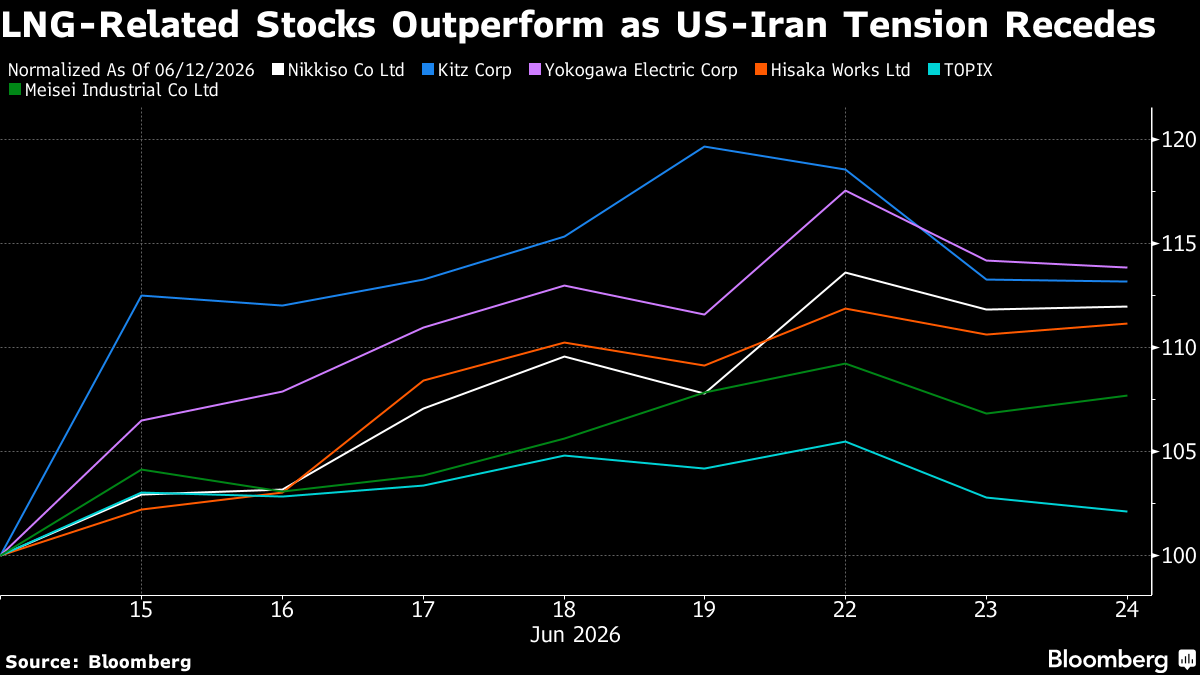
Capital has already begun flowing into the sector. Since the agreement between the US and Iran, shares of companies such as Nikkiso Co., which manufactures pumps used in LNG transportation, and plant suppliers Kitz Corp. and Yokogawa Electric Corp., have outperformed the Topix benchmark.
The country’s firms are an indispensable part of every stage in the LNG supply chain, which includes plant contractors and turbine suppliers.
“Japan has traditionally been strong in LNG plants, equipment, and components. Over the long term, expanding LNG supply capacity will remain necessary, and this theme is likely to continue supporting related Japanese stocks,” said Fumio Matsumoto, chief strategist at Okasan Securities Co.
While major engineering and construction firms such as JGC Holdings Corp. may face concerns over project profitability, companies further down the value chain may offer lower risk, he said.
Some don’t expect the tailwind for LNG-related stocks to last long. There hasn’t yet been a tangible push for new projects outside the Middle East and the market is largely driven by expectations.
“While reconstruction demand is expected in the Middle East, it remains unclear whether the number of projects will increase in other regions,” said Naoki Fujiwara, senior fund manager at Shinkin Asset Management Co. “Looking further ahead, a significant increase in demand for fossil fuels appears unlikely.”
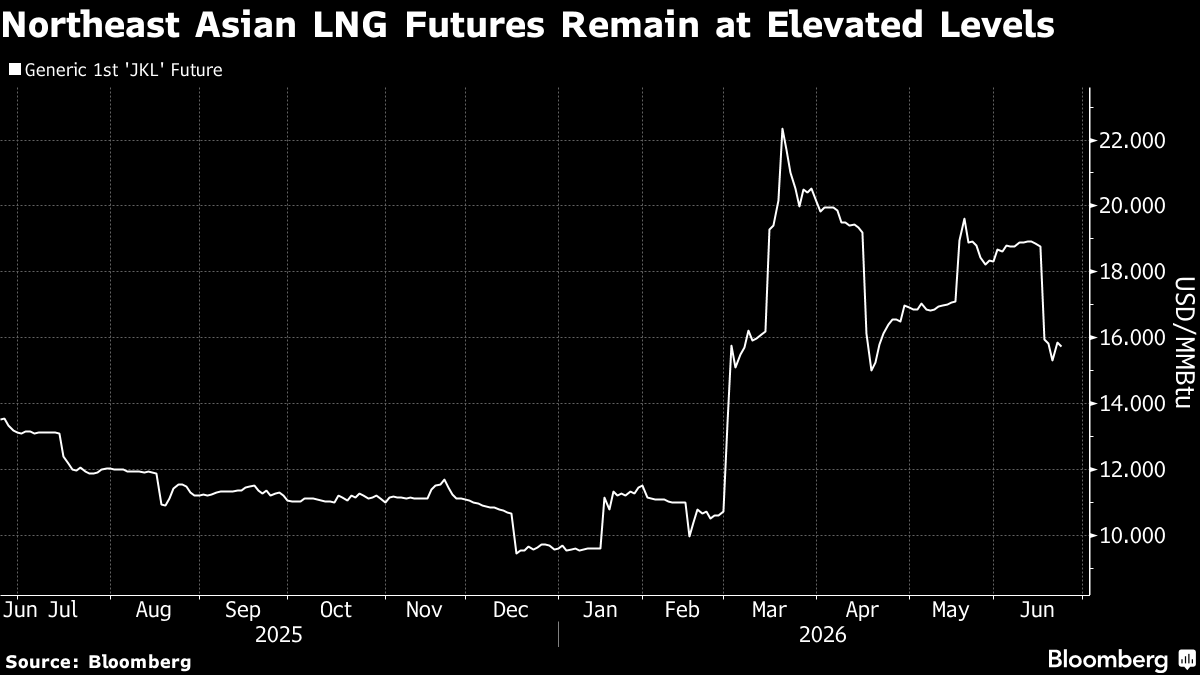
Yet analysts say LNG prices also imply concern about the supply chain. LNG futures for Northeast Asia, which is home to some of the fuel’s largest consumers, remain more than 40% higher than the level before the Iran war.
“There are fewer alternative supplies of LNG compared to crude oil, which is why LNG prices across East Asia remain high,” said Satoru Yoshida, a commodities analyst at Rakuten Securities Inc.
Even if the strait reopens, hurdles such as mine clearance and facility restoration will remain, and transportation costs may rise due to factors like insurance premiums, making the trend toward diversifying supply sources inevitable, he added.
©2026 Bloomberg L.P.








